Executive Summary
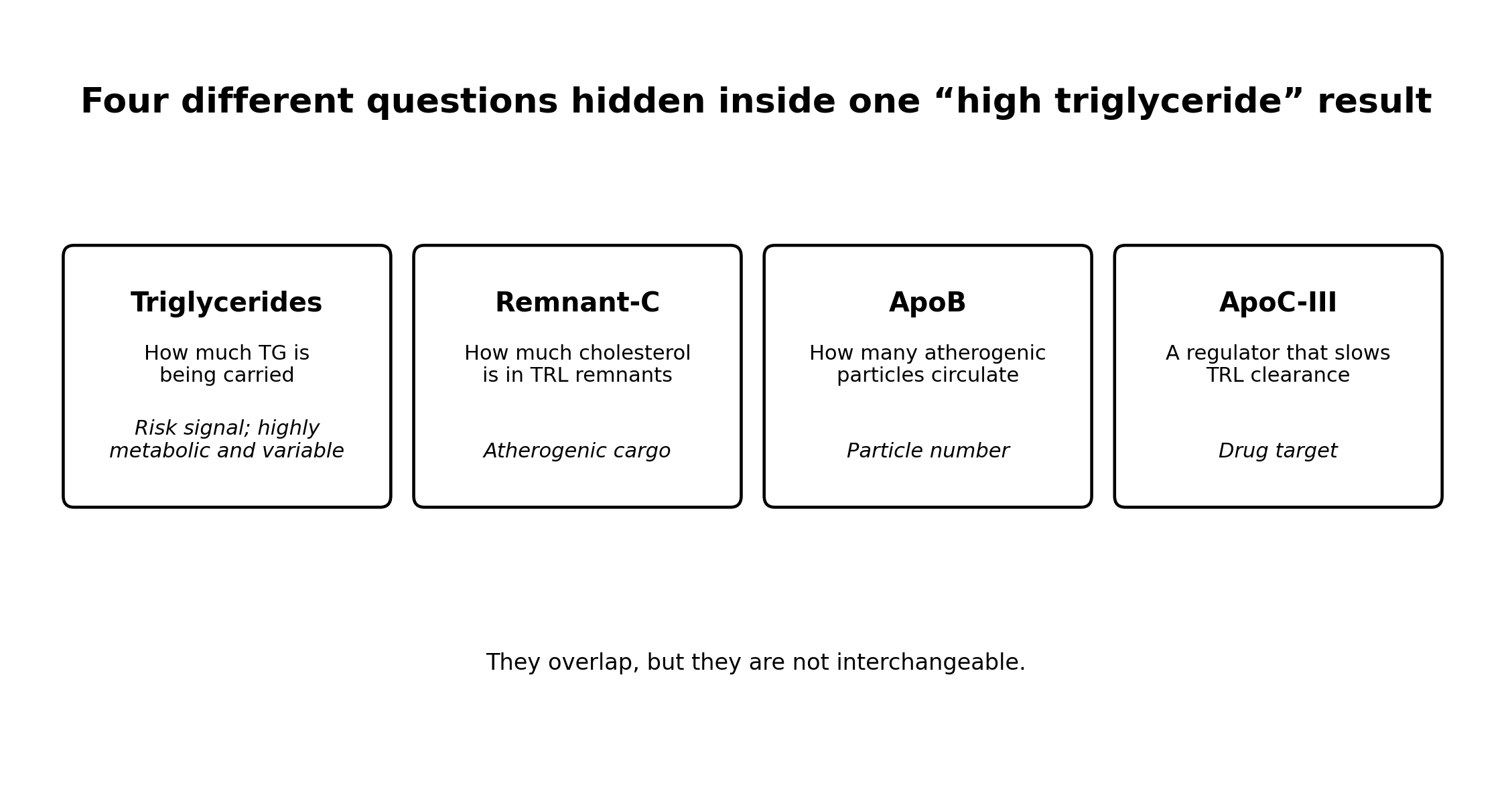
Triglycerides are easy to measure and easy to misunderstand. A high triglyceride value is not simply “fat in the blood,” and lowering the number does not automatically translate into fewer heart attacks. The biologically important story is carried by triglyceride-rich lipoproteins (TRLs), their cholesterol-enriched remnants, the apoB particles that transport them, and proteins such as apolipoprotein C-III (ApoC-III) that regulate how quickly they are cleared.
The 2026 ACC/AHA dyslipidemia guideline explicitly recognizes triglyceride-rich remnant particles as part of atherogenic lipoprotein risk beyond LDL-C and recommends selective ApoB measurement, especially when triglycerides exceed 200 mg/dL, diabetes is present, or achieved LDL-C is already low.[1]
For ASCVD prevention, statins and control of apoB-containing particle burden remain foundational. For selected statin-treated high-risk patients with persistent moderate hypertriglyceridemia, icosapent ethyl has randomized outcomes evidence from REDUCE-IT, whereas mixed EPA+DHA formulations have not reproduced the same cardiovascular benefit.[9,11] For severe hypertriglyceridemia, the clinical priority shifts toward preventing pancreatitis. In familial chylomicronemia syndrome (FCS), the ApoC-III era is now real: olezarsen (Tryngolza) and plozasiran (Redemplo) are FDA-approved therapies that directly target ApoC-III biology.[15-18]
Triglycerides are a metabolic signal; remnant cholesterol is atherogenic cargo; ApoB is particle number; ApoC-III is a clearance regulator — and the treatment strategy depends on which problem is actually present.
| Question | Best short answer |
|---|---|
| Are triglycerides themselves the main atherogenic culprit? | Usually they are a marker of triglyceride-rich apoB particles and their remnants; the cholesterol carried in remnants is central to arterial retention. |
| Does a normal LDL-C eliminate triglyceride-related risk? | No. LDL-C can look acceptable while ApoB, non-HDL-C or remnant burden remains elevated. |
| Should everyone with TG >150 mg/dL take a fibrate or fish oil? | No. Treatment depends on ASCVD risk, TG severity, secondary causes and the specific therapy. |
| Is icosapent ethyl the same as OTC fish oil? | No. REDUCE-IT tested prescription purified EPA 4 g/day, not generic mixed omega-3 supplements. |
| What is new in 2026? | ApoC-III-directed therapies are now approved for FCS, and modern guidelines place greater emphasis on remnant risk and ApoB. |
1. The Key Distinction: Triglycerides Are Not the Particle
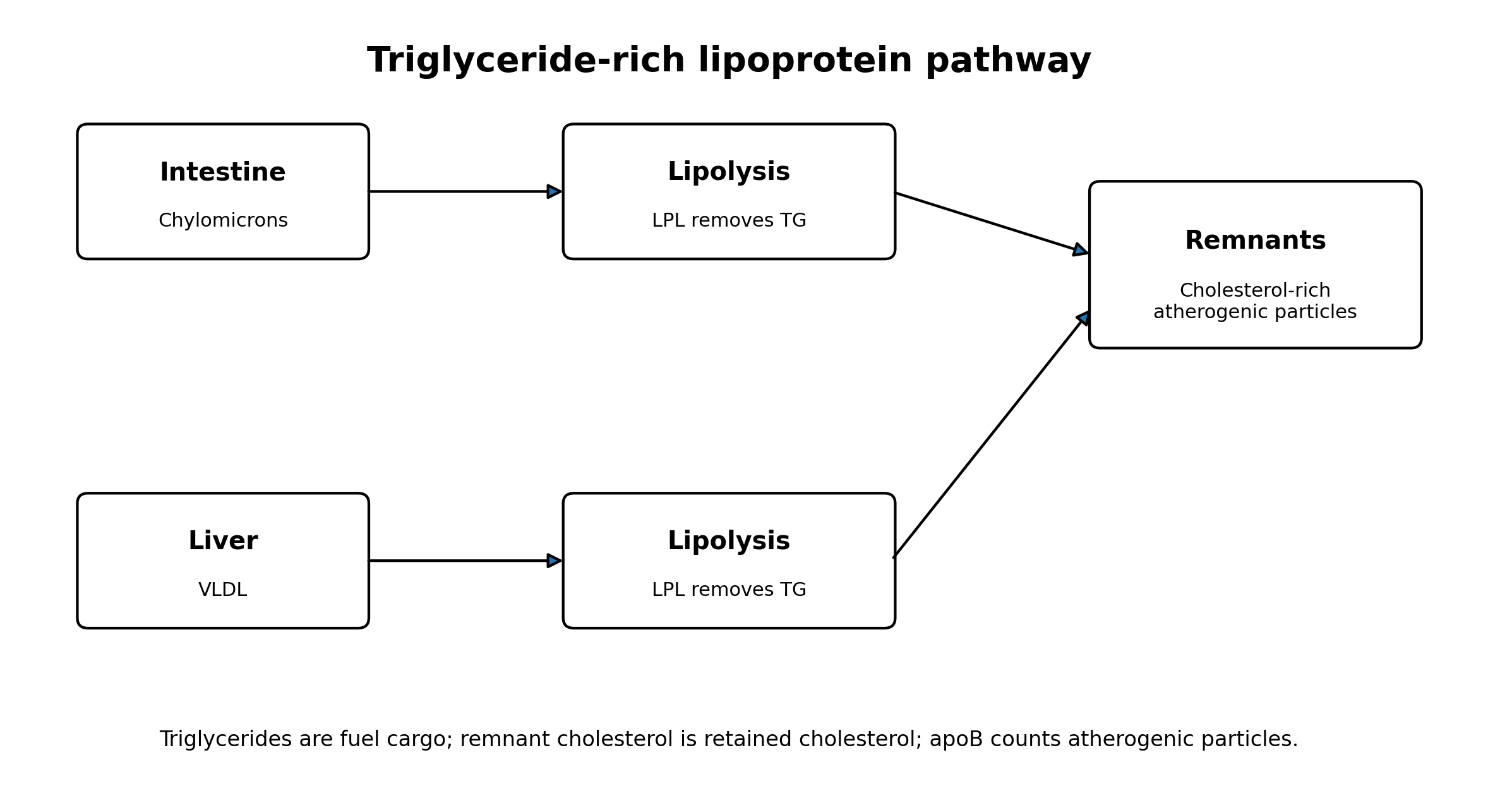
A lipid panel reports triglyceride concentration in plasma, but atherosclerosis is a particle disease. Triglycerides travel inside lipoproteins. In the fasting state, the liver secretes very-low-density lipoproteins (VLDL). After a meal, the intestine adds chylomicrons. Lipoprotein lipase (LPL) hydrolyzes triglyceride from these particles, shrinking them and creating remnant particles that retain cholesterol and apoB.[2]
This distinction explains an apparent paradox: a drug can lower triglycerides substantially yet fail to reduce cardiovascular events if it does not meaningfully reduce the number or arterial exposure of atherogenic apoB-containing particles. PROMINENT is the modern textbook example. Pemafibrate lowered triglycerides but did not reduce cardiovascular events; ApoB actually rose modestly.[12]
When triglycerides are elevated, ask two separate questions: (1) Is the patient at risk of pancreatitis because triglycerides are extremely high? (2) Is there residual ASCVD risk because the number or cholesterol content of atherogenic particles remains high?
2. What Are Triglyceride-Rich Lipoproteins and Remnants?
Triglyceride-rich lipoproteins comprise chylomicrons and VLDL and the particles generated as they are progressively lipolyzed. Their remnants include chylomicron remnants and VLDL remnants (often overlapping with intermediate-density lipoproteins). The European Atherosclerosis Society consensus emphasizes that these particles are metabolically dynamic and can be highly cholesterol enriched.[2]
Large nascent chylomicrons are generally too large to enter the arterial wall efficiently. As triglyceride is removed, the particles become smaller. Remnants can then cross the endothelium, become trapped in the arterial intima, and deliver substantial cholesterol per particle. The EAS notes that some remnant particles may contain several-fold more cholesterol than an LDL particle.[2]
That is why “high triglycerides” often behave as a signpost. The triglyceride molecule is not what accumulates in plaque. Rather, elevated TG frequently identifies a circulation crowded with remnant-producing apoB particles, delayed clearance, insulin resistance, or all three.
| Particle / marker | Where it comes from | Why it matters |
|---|---|---|
| Chylomicron | Intestine after fat absorption | Very TG-rich; severe accumulation drives chylomicronemia and pancreatitis risk. |
| VLDL | Liver | Major carrier of endogenous TG; one apoB100 per particle. |
| Remnant particle | Partially lipolyzed chylomicron or VLDL | Smaller, cholesterol-enriched and capable of arterial retention. |
| LDL | Further VLDL remodelling | Cholesterol-rich apoB particle; established causal driver of ASCVD. |
| ApoB | One structural apoB per VLDL/remnant/IDL/LDL particle | Best practical count of total atherogenic particle number. |
| Remnant-C | Cholesterol contained in remnant particles | A practical estimate of cholesterol exposure from TRL remnants. |
3. Remnant Cholesterol: The Risk LDL-C Can Miss
Remnant cholesterol is commonly estimated as total cholesterol minus HDL-C minus LDL-C. In routine practice this calculated value is useful, but it is not a perfect direct measurement because LDL-C itself may be calculated and remnant particles are heterogeneous. The value is best interpreted as a pragmatic estimate rather than a chemically pure fraction.
Observational, genetic and mechanistic data consistently support remnant cholesterol as a contributor to ASCVD risk. In the Copenhagen studies, genetic elevations in remnant cholesterol were associated with higher ischemic heart disease risk.[3] In PREDIMED, remnant-C was associated with major cardiovascular events even when LDL-C was not; a remnant-C level of at least 30 mg/dL identified higher risk in that cohort.[4] More recent data extend the association to young adults and to peripheral artery disease.[5,6]
A key nuance: this does not mean remnant cholesterol “matters more than LDL” in every patient. Both are components of apoB-mediated risk. A person with high LDL particle exposure and low triglycerides can still develop severe atherosclerosis. The practical message is that LDL-C alone may under-represent risk when metabolism shifts toward VLDL and remnants.
Causal evidence for apoB-containing lipoproteins is very strong. For remnant cholesterol specifically, genetic and observational evidence is strong, but routine clinical treatment targets and standardized assays remain less mature than for LDL-C and non-HDL-C.
4. ApoC-III: The Brake on Triglyceride Clearance
Apolipoprotein C-III is a small apolipoprotein carried mainly on triglyceride-rich particles. It raises plasma triglycerides through several mechanisms: it inhibits LPL-mediated lipolysis, slows hepatic clearance of remnant particles, and appears to influence VLDL production. In simple terms, ApoC-III keeps TG-rich particles in circulation longer.[7,8]
Human genetics made ApoC-III a compelling drug target. Independent 2014 studies showed that people carrying loss-of-function variants in APOC3 had roughly 39% to 44% lower triglycerides and approximately 40% lower coronary or ischemic vascular disease risk.[7,8] Genetics does not prove that a drug will reproduce lifelong exposure, but it is unusually strong target-validation evidence.
The therapeutic implication is now clinically visible. Olezarsen is an antisense oligonucleotide directed at APOC3 mRNA; plozasiran is a small interfering RNA directed at APOC3. Both markedly reduce triglycerides in familial chylomicronemia syndrome, and both have now received U.S. approval for adults with FCS.[15-18]
| Therapy | Mechanism | U.S. status as of Aug 2026 | Dosing concept | Evidence focus |
|---|---|---|---|---|
| Olezarsen (Tryngolza) | APOC3-directed antisense oligonucleotide | FDA approved Dec 19, 2024 for adults with FCS | Subcutaneous monthly | TG lowering and pancreatitis reduction in FCS |
| Plozasiran (Redemplo) | APOC3-directed siRNA | FDA approved Nov 18, 2025 for adults with FCS | Subcutaneous every 3 months | TG lowering and pancreatitis reduction in persistent chylomicronemia/FCS |
| Conventional fibrate | PPAR-alpha agonism | Established generic therapy | Daily oral | TG lowering; ASCVD outcome benefit inconsistent in statin era |
| Icosapent ethyl | Purified EPA ethyl ester | Established in selected high-risk patients | 2 g twice daily | ASCVD outcomes; effect not explained by TG lowering alone |
5. Why Triglycerides Rise
Most elevated triglycerides are multifactorial. The liver is responding to substrate supply, insulin signaling, alcohol, hormones, medications and genetics. This makes triglycerides one of the most metabolically sensitive values on a lipid panel.
Insulin resistance, prediabetes and type 2 diabetes, especially with visceral adiposity.
Excess alcohol intake, which can sharply increase hepatic VLDL production in susceptible people.
Refined carbohydrate and caloric excess, particularly when accompanied by weight gain.
Hypothyroidism, nephrotic syndrome, chronic kidney disease and some liver disorders.
Medications including selected estrogens, retinoids, glucocorticoids, some antipsychotics, protease inhibitors and other agents.
Pregnancy, where triglycerides physiologically rise and can become dangerous in genetically predisposed patients.
Genetic disorders ranging from common polygenic hypertriglyceridemia to rare familial chylomicronemia syndrome.
Before escalating medication, confirm whether the triglyceride value reflects a persistent phenotype. A single high result after alcohol excess, uncontrolled diabetes, an acute illness or an unusually large meal may not represent the patient’s usual state.
6. Fasting vs Nonfasting Triglycerides
Nonfasting lipid testing is acceptable for routine cardiovascular risk assessment in many patients because humans spend much of the day in the postprandial state and remnant metabolism is biologically relevant. However, fasting measurement remains particularly useful when triglycerides are markedly elevated, when familial chylomicronemia is suspected, when a prior result is difficult to interpret, or when treatment decisions depend on the severity category.
At very high triglyceride concentrations, calculated LDL-C becomes less reliable. This is one reason non-HDL-C and ApoB become especially useful: they summarize atherogenic cholesterol or particle number without pretending that all risk resides in LDL alone.[1]
| TG level | Clinical interpretation (general) | Primary concern |
|---|---|---|
| <150 mg/dL (<1.7 mmol/L) | Generally normal range | Overall ASCVD risk still depends on ApoB/LDL-C and other factors |
| 150-499 mg/dL (1.7-5.6 mmol/L) | Mild-moderate hypertriglyceridemia | Metabolic health and residual ASCVD risk |
| ≥500 mg/dL (≥5.6 mmol/L) | Severe hypertriglyceridemia | Pancreatitis risk begins to matter increasingly |
| ≥1000 mg/dL (≥11.3 mmol/L) | Very severe; often chylomicronemia physiology | Pancreatitis prevention becomes urgent |
Thresholds are clinical conventions rather than abrupt biological cutoffs; the 2026 ACC/AHA guideline highlights TG-lowering therapies especially for pancreatitis prevention at TG ≥1000 mg/dL.[1]
7. Two Different Clinical Problems: ASCVD Risk vs Pancreatitis Risk
The most important management distinction is whether triglycerides are being treated primarily as part of atherosclerotic risk or as a pancreatitis hazard. Those are overlapping but not identical problems.
Moderate hypertriglyceridemia is usually a marker of increased VLDL/remnant exposure, insulin resistance and higher apoB particle burden. In this range, the first cardiovascular priority is to optimize global risk and apoB-containing lipoproteins. By contrast, once triglycerides become very high, chylomicrons accumulate and the probability of acute pancreatitis rises. Then, rapid reduction of triglyceride-rich particles, very-low-fat dietary strategies in selected patients, alcohol avoidance and specialist evaluation can become more urgent than fine-tuning LDL-C.
| Scenario | Main biological problem | What usually takes priority |
|---|---|---|
| TG 220 mg/dL, ApoB high, diabetes | VLDL/remnant + apoB excess | ASCVD particle reduction + metabolic treatment |
| TG 220 mg/dL, ApoB low, no diabetes, low global risk | Mild metabolic signal | Lifestyle and risk-context interpretation |
| TG 780 mg/dL | Severe hypertriglyceridemia | Secondary causes + pancreatitis-oriented TG lowering |
| TG 2000 mg/dL with recurrent pancreatitis | Chylomicronemia | Urgent specialist management; consider genetic/FCS pathway |
8. Lifestyle: The Highest-Yield First Intervention
Lifestyle can lower triglycerides far more than it lowers genetically determined Lp(a). The magnitude varies with the cause. In insulin resistance, even modest weight loss and improved glycemic control can substantially reduce hepatic VLDL secretion.
Weight reduction when excess adiposity is present, with emphasis on preserving lean mass and improving insulin sensitivity.
Reducing refined carbohydrates and sugar-sweetened beverages, especially when triglycerides rise in parallel with glucose or waist circumference.
Limiting or eliminating alcohol when TG are persistently high; in severe hypertriglyceridemia, abstinence may be essential.
Regular aerobic and resistance exercise.
Treating diabetes, hypothyroidism and other secondary drivers.
In severe chylomicronemia, using a clinician-guided very-low-fat diet rather than generic “heart healthy” advice.
The diet question is more nuanced than “low fat versus low carb.” For moderate hypertriglyceridemia driven by insulin resistance, reducing refined carbohydrate and total energy excess is often highly effective. For FCS or severe chylomicronemia, dietary fat itself can be the immediate substrate that generates chylomicrons, so specialized very-low-fat intake is central.
9. Statins First: Why LDL/ApoB Still Matter When TG Are High
The 2026 ACC/AHA guideline states that statin therapy remains the foundation of pharmacotherapy for persistently elevated triglycerides when the goal is ASCVD risk reduction.[1] This is not because statins are the strongest triglyceride-lowering drugs; they are not. It is because decades of randomized evidence show that reducing apoB-containing LDL particles reduces cardiovascular events.
When triglycerides are elevated, a patient may have more VLDL and remnant particles for a given LDL-C. ApoB can therefore reveal residual particle risk that LDL-C underestimates. The 2026 guideline specifically highlights ApoB measurement when TG exceed 200 mg/dL, in diabetes, or when achieved LDL-C is below 70 mg/dL.[1]
If a treatment lowers triglycerides but leaves ApoB unchanged — or increases it — the arterial benefit may be much smaller than the triglyceride number suggests.
10. Icosapent Ethyl: Why REDUCE-IT Was Different
REDUCE-IT randomized 8,179 statin-treated patients with established cardiovascular disease or diabetes plus risk factors, triglycerides 135-499 mg/dL, and LDL-C 41-100 mg/dL to icosapent ethyl 2 g twice daily or placebo. Over a median 4.9 years, the primary composite endpoint occurred in 17.2% versus 22.0%, corresponding to a 25% relative risk reduction and an absolute difference of 4.8 percentage points.[9]
The triglyceride reduction itself was modest relative to the size of the event reduction, and benefit was seen across baseline and achieved TG subgroups. This is one reason the mechanism is thought to extend beyond simple TG lowering and may include membrane, inflammatory, thrombotic and plaque effects.[9]
EVAPORATE added an imaging signal: in a small CCTA trial, low-attenuation plaque volume fell 17% with icosapent ethyl while increasing substantially in the comparator group over 18 months.[10] This is mechanistically interesting, but EVAPORATE was not an outcomes trial and should not be used to imply that every patient taking EPA will have measurable plaque regression.
Just as important is what REDUCE-IT does not prove. STRENGTH tested a high-dose EPA+DHA carboxylic acid formulation in 13,078 high-risk patients and found no reduction in major adverse cardiovascular events (HR 0.99).[11] Therefore, the evidence for icosapent ethyl cannot be generalized to ordinary fish-oil supplements or to all omega-3 formulations.
| Trial | Intervention | Population | Main result | What it teaches |
|---|---|---|---|---|
| REDUCE-IT | Icosapent ethyl 4 g/day | Statin-treated, TG 135-499 mg/dL, high CV risk | 25% relative reduction in primary composite endpoint | A specific purified EPA therapy can reduce events in selected high-risk patients. |
| EVAPORATE | Icosapent ethyl 4 g/day | Statin-treated, elevated TG, coronary plaque on CCTA | Lower low-attenuation plaque progression | Supports a plaque-biology signal; small imaging trial. |
| STRENGTH | EPA+DHA omega-3 carboxylic acids 4 g/day | High-risk, hypertriglyceridemia, low HDL-C | No MACE benefit | Do not generalize REDUCE-IT to mixed omega-3 products. |
11. Fibrates: Effective TG Lowering, Inconsistent ASCVD Benefit
Fibrates can lower triglycerides substantially, especially when baseline levels are high. Their role, however, depends on the clinical objective. In severe hypertriglyceridemia they remain useful tools to reduce TG and are commonly used when pancreatitis prevention is the immediate goal. For routine ASCVD event reduction on top of contemporary statin therapy, the evidence is less compelling.
FIELD studied fenofibrate in 9,795 people with type 2 diabetes who were not routinely receiving statins at entry. The primary coronary endpoint was not significantly reduced, although some secondary outcomes improved and interpretation was complicated by differential statin use.[13] ACCORD-Lipid similarly did not show a significant overall cardiovascular benefit from adding fenofibrate to simvastatin, though a hypothesis-generating subgroup with high TG and low HDL-C appeared to benefit.[14]
PROMINENT provided the clearest modern lesson. More than 10,000 patients with type 2 diabetes, triglycerides 200-499 mg/dL and low HDL-C were randomized to pemafibrate or placebo. Pemafibrate lowered triglycerides, VLDL cholesterol, remnant cholesterol and ApoC-III, but did not reduce cardiovascular events; importantly, ApoB increased by about 4.8% relative to placebo.[12]
Lowering TG is not sufficient if the intervention does not reduce the number of atherogenic apoB particles reaching the arterial wall. Cardiovascular biology follows particles, not just a laboratory concentration.
12. The ApoC-III Era: Olezarsen and Plozasiran
Familial chylomicronemia syndrome is a rare disorder in which severe impairment of the LPL pathway produces extreme triglyceride elevation and recurrent pancreatitis. Conventional drugs often work poorly because the underlying clearance pathway is defective. ApoC-III inhibition provides a way to improve triglyceride-rich lipoprotein metabolism through additional clearance mechanisms.
In the BALANCE phase 3 trial, olezarsen reduced triglycerides in genetically confirmed FCS and was associated with fewer acute pancreatitis episodes at the effective dose.[15] The FDA approved Tryngolza (olezarsen) on December 19, 2024 as an adjunct to diet to reduce triglycerides in adults with FCS.[16]
Plozasiran was evaluated in PALISADE in patients with persistent chylomicronemia, including patients with and without a genetic FCS diagnosis. It produced very large triglyceride reductions and lowered pancreatitis incidence.[17] The FDA approved Redemplo (plozasiran) on November 18, 2025 for adults with FCS, dosed once every three months.[18]
These approvals are major advances, but they should not be interpreted as evidence that ApoC-III drugs are routine therapy for every person with triglycerides of 200 or 300 mg/dL. The approved indication is FCS. Broader severe-hypertriglyceridemia and ASCVD outcome programs will determine how far this therapeutic class ultimately expands.
13. What About Olezarsen or Plozasiran for Ordinary Hypertriglyceridemia?
This is one of the most important questions for the next several years. ApoC-III is genetically validated and the drugs produce impressive biochemical effects. But cardiovascular prevention requires outcomes evidence, not only a lower triglyceride number. The history of fibrates and PROMINENT is precisely why this distinction matters.
For a future ApoC-III therapy to become a broad ASCVD-prevention drug, trials will need to show that lowering ApoC-III and remnant exposure translates into fewer myocardial infarctions, strokes and cardiovascular deaths with acceptable long-term safety. Until then, it is appropriate to describe these agents as transformative for FCS and promising for broader residual-risk biology — not as established replacements for LDL/ApoB-lowering therapy.
14. A Practical Treatment Hierarchy
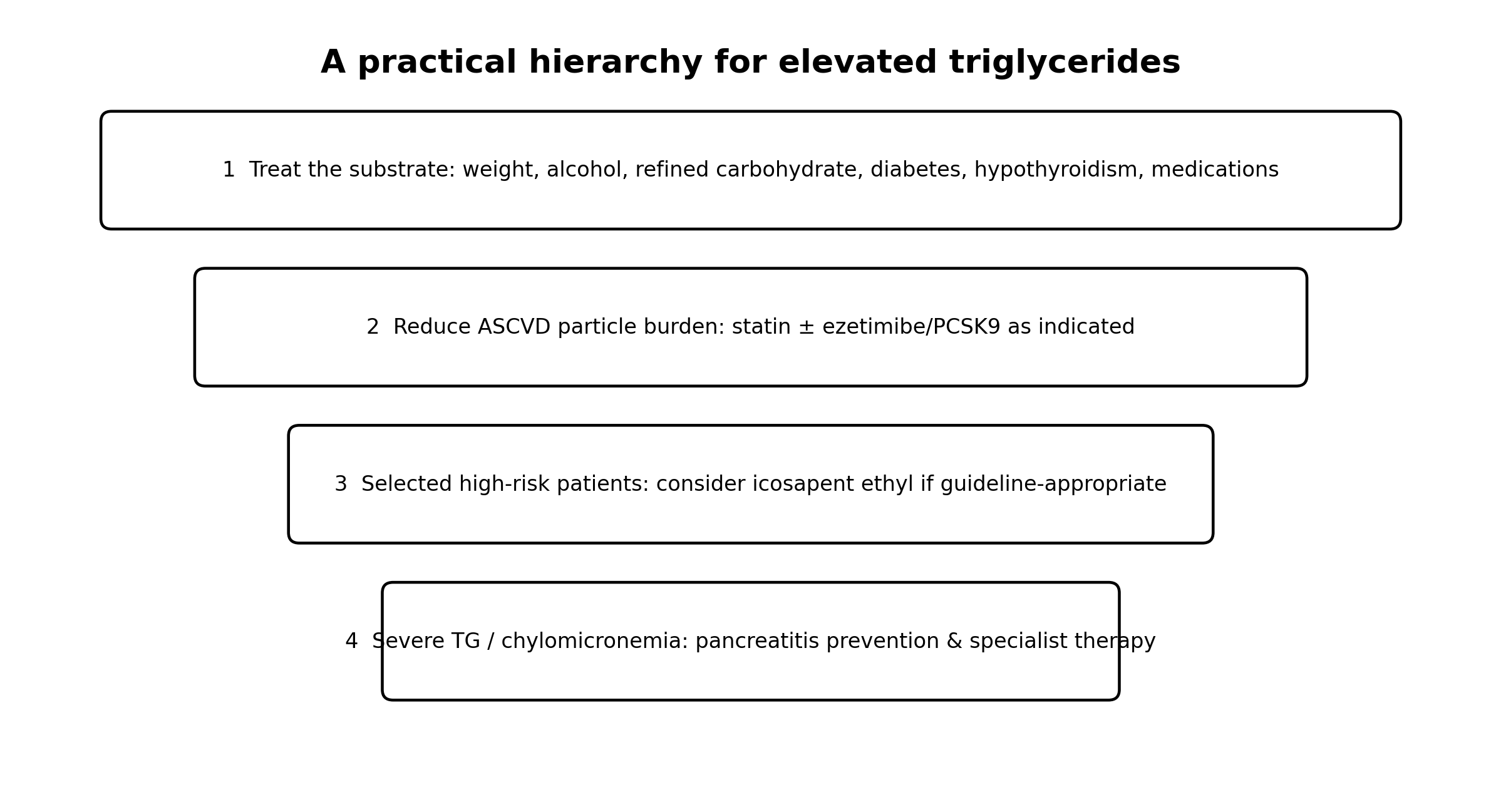
Step 1 — Confirm and explain the phenotype. Repeat testing when needed; review fasting status, alcohol, glucose, thyroid status, kidney/liver disease and medications.
Step 2 — Separate pancreatitis risk from ASCVD risk. A TG of 230 mg/dL and a TG of 2,300 mg/dL are not simply different points on the same treatment scale.
Step 3 — Quantify atherogenic particle burden. Use LDL-C and non-HDL-C; add ApoB when TG are elevated, diabetes is present, or LDL-C appears discordantly low.[1]
Step 4 — Treat global ASCVD risk aggressively when appropriate. Statins remain foundational, with ezetimibe, PCSK9-directed therapy and other LDL-lowering options according to risk and guideline targets.
Step 5 — Consider therapy specific to the residual phenotype. Icosapent ethyl may be appropriate in selected high-risk statin-treated patients. Fibrates have an important role in severe TG management but are not universal event-reduction drugs. ApoC-III agents are specialist therapies currently approved for FCS.
15. Clinical Scenarios
Scenario A: TG 240 mg/dL, LDL-C 72 mg/dL, ApoB 105 mg/dL
The LDL-C looks close to many traditional targets, but ApoB reveals a high number of atherogenic particles. The priority is not simply to “lower triglycerides.” The more coherent strategy is to address insulin resistance/secondary causes and intensify apoB-containing lipoprotein reduction according to total ASCVD risk.
Scenario B: TG 240 mg/dL, LDL-C 58 mg/dL, ApoB 65 mg/dL, established ASCVD
Here the particle burden is much better controlled. Persistent TG may represent residual metabolic/remnant risk. If the patient meets contemporary eligibility criteria, prescription icosapent ethyl becomes a more relevant discussion than a generic fish-oil supplement. Bleeding and atrial fibrillation risk should be considered.[9]
Scenario C: TG 850 mg/dL after heavy alcohol intake and uncontrolled diabetes
The immediate task is to remove secondary drivers and reduce pancreatitis risk. Alcohol cessation, rapid glycemic improvement, dietary intervention and TG-lowering medication may be needed. Once triglycerides are safer, ASCVD risk can be reassessed with LDL-C/non-HDL-C/ApoB.
Scenario D: TG 1,800 mg/dL since youth with recurrent pancreatitis
This pattern warrants evaluation for persistent chylomicronemia and possible FCS. A lipid specialist may consider genetic testing and FCS-specific therapies such as olezarsen or plozasiran when diagnostic criteria and labeling are met.[15-18]
16. Myth vs Fact
| Myth | Fact |
|---|---|
| “Triglycerides clog arteries directly.” | Triglycerides mainly identify TG-rich lipoprotein metabolism; remnant apoB particles and their cholesterol cargo are the more direct atherogenic actors. |
| “If LDL-C is normal, high triglycerides do not matter.” | LDL-C can underestimate risk when VLDL/remnant particle number is high. ApoB and non-HDL-C can reveal discordance. |
| “Any fish oil gives the REDUCE-IT benefit.” | False. REDUCE-IT tested prescription icosapent ethyl. STRENGTH did not show benefit with an EPA+DHA formulation. |
| “If a drug lowers TG by 50%, it must reduce heart attacks.” | False. PROMINENT lowered TG substantially without reducing cardiovascular events. |
| “ApoC-III drugs are the new treatment for everyone with TG >150.” | No. Current U.S. approvals are for adults with FCS. Broader indications require additional evidence. |
| “Very high TG are just a heart-disease issue.” | At very high levels the immediate danger may be acute pancreatitis, changing management priorities. |
17. Frequently Asked Questions
Should triglycerides be measured fasting?
Not always. Nonfasting lipids are useful for routine risk assessment, but fasting values are especially helpful when TG are markedly elevated, the result is unexpected, or chylomicronemia is suspected.
What is remnant cholesterol?
A practical estimate of the cholesterol carried in triglyceride-rich remnant particles. It is commonly calculated as total cholesterol minus HDL-C minus LDL-C.
Is remnant-C better than ApoB?
They answer different questions. Remnant-C estimates cholesterol cargo in remnants; ApoB estimates the total number of atherogenic particles. ApoB is more standardized for clinical use.
What triglyceride level is dangerous for pancreatitis?
Risk rises progressively, becoming a major clinical concern with severe hypertriglyceridemia and especially at ≥1000 mg/dL. Individual risk varies.
Is fenofibrate useless?
No. It is effective for TG lowering and remains useful in severe hypertriglyceridemia. What is weak is the evidence for universal added ASCVD event reduction on top of statins.
Should I take 4 g of ordinary fish oil if my TG are high?
Do not assume OTC fish oil is equivalent to icosapent ethyl. The outcome evidence is formulation-specific and high-dose omega-3 products can have adverse effects.
Can ApoC-III therapy prevent heart attacks?
That remains an active research question. Current approvals are based on severe TG/FCS and pancreatitis-related evidence, not broad ASCVD-outcome prevention.
Why can ApoB be high when LDL-C is low?
Because LDL-C measures cholesterol mass, while ApoB counts particles. With insulin resistance and high TG, particles may carry less cholesterol per particle, creating discordance.
18. What to Ask at Your Next Appointment
Is my triglyceride elevation persistent, and should it be confirmed fasting?
Do I have a reversible secondary cause such as alcohol excess, diabetes, hypothyroidism or a medication effect?
What are my non-HDL-C and ApoB, and do they suggest more particle risk than LDL-C alone?
Is my current problem mainly ASCVD risk, pancreatitis risk, or both?
Do I meet evidence-based criteria for icosapent ethyl rather than generic omega-3 supplementation?
If TG are severe, do I need a fibrate, prescription omega-3, specialist diet, genetic evaluation or lipid-clinic referral?
If I have recurrent pancreatitis or persistent chylomicronemia, should FCS and ApoC-III-directed therapies be considered?
Key Take-Home Messages
Triglycerides are a metabolic marker, not a direct count of atherogenic particles.
Remnant particles are apoB-containing, cholesterol-enriched and atherogenic.
ApoB is especially valuable when TG are elevated because LDL-C can underestimate particle burden.
Statins remain the foundation for ASCVD prevention in patients with persistent hypertriglyceridemia.
Icosapent ethyl has cardiovascular-outcomes evidence in selected high-risk statin-treated patients; do not generalize this to ordinary fish oil.
Fibrates lower triglycerides but have not consistently reduced cardiovascular events in the statin era.
At TG ≥1000 mg/dL, pancreatitis prevention becomes a major treatment priority.
ApoC-III is now a validated therapeutic pathway: olezarsen and plozasiran are FDA-approved for adults with FCS.
The next frontier is proving whether targeted remnant/ApoC-III reduction lowers ASCVD events in broader populations.
References
1. Blumenthal RS, Morris PB, Gaudino M, et al. 2026 ACC/AHA/AACVPR/ABC/ACPM/ADA/AGS/APhA/ASPC/NLA/PCNA Guideline on the Management of Dyslipidemia. Circulation. 2026;153(17):e1154-e1276. doi:10.1161/CIR.0000000000001423.
2. Ginsberg HN, Packard CJ, Chapman MJ, et al. Triglyceride-rich lipoproteins and their remnants: metabolic insights, role in atherosclerotic cardiovascular disease, and emerging therapeutic strategies — a consensus statement from the European Atherosclerosis Society. Eur Heart J. 2021;42:4791-4806.
3. Varbo A, Benn M, Tybjærg-Hansen A, Jørgensen AB, Frikke-Schmidt R, Nordestgaard BG. Remnant cholesterol as a causal risk factor for ischemic heart disease. J Am Coll Cardiol. 2013;61:427-436.
4. Castañer O, Pintó X, Subirana I, et al. Remnant cholesterol, not LDL cholesterol, is associated with incident cardiovascular disease. J Am Coll Cardiol. 2020;76:2712-2724.
5. Jung HN, Heo JH, Kim MJ, et al. Remnant Cholesterol as an Independent Cardiovascular Risk Factor in Young Adults: An Age-Stratified Cohort Study. J Am Coll Cardiol. 2025;86(21):2047-2058. doi:10.1016/j.jacc.2025.09.015.
6. Wadstrom BN, Borges MC, Wulff AB, Davey Smith G, Sanderson E, Nordestgaard BG. Elevated Remnant and LDL Cholesterol and the Risk of Peripheral Artery Disease: A Mendelian Randomization Study. J Am Coll Cardiol. 2025;85(12):1353-1368. doi:10.1016/j.jacc.2024.12.033.
7. Crosby J, Peloso GM, Auer PL, et al. Loss-of-function mutations in APOC3, triglycerides, and coronary disease. N Engl J Med. 2014;371:22-31.
8. Jørgensen AB, Frikke-Schmidt R, Nordestgaard BG, Tybjærg-Hansen A. Loss-of-function mutations in APOC3 and risk of ischemic vascular disease. N Engl J Med. 2014;371:32-41.
9. Bhatt DL, Steg PG, Miller M, et al. Cardiovascular risk reduction with icosapent ethyl for hypertriglyceridemia. N Engl J Med. 2019;380:11-22.
10. Budoff MJ, Bhatt DL, Kinninger A, et al. Effect of icosapent ethyl on progression of coronary atherosclerosis in patients with elevated triglycerides on statin therapy: final results of the EVAPORATE trial. Eur Heart J. 2020;41:3925-3932.
11. Nicholls SJ, Lincoff AM, Garcia M, et al. Effect of high-dose omega-3 fatty acids vs corn oil on major adverse cardiovascular events in patients at high cardiovascular risk: the STRENGTH randomized clinical trial. JAMA. 2020;324:2268-2280.
12. Das Pradhan A, Glynn RJ, Fruchart JC, et al. Triglyceride lowering with pemafibrate to reduce cardiovascular risk. N Engl J Med. 2022;387:1923-1934.
13. Keech A, Simes RJ, Barter P, et al. Effects of long-term fenofibrate therapy on cardiovascular events in 9795 people with type 2 diabetes mellitus: the FIELD study. Lancet. 2005;366:1849-1861.
14. ACCORD Study Group; Ginsberg HN, Elam MB, Lovato LC, et al. Effects of combination lipid therapy in type 2 diabetes mellitus. N Engl J Med. 2010;362:1563-1574.
15. Stroes ESG, Alexander VJ, Karwatowska-Prokopczuk E, et al. Olezarsen, Acute Pancreatitis, and Familial Chylomicronemia Syndrome. N Engl J Med. 2024;390(19):1781-1792. doi:10.1056/NEJMoa2400201.
16. U.S. Food and Drug Administration. FDA approves drug to reduce triglycerides in adult patients with familial chylomicronemia syndrome (Tryngolza [olezarsen]). December 19, 2024.
17. Watts GF, Rosenson RS, Hegele RA, et al; PALISADE Study Group. Plozasiran for Managing Persistent Chylomicronemia and Pancreatitis Risk. N Engl J Med. 2025;392(2):127-137. doi:10.1056/NEJMoa2409368.
18. U.S. Food and Drug Administration. Redemplo (plozasiran) Drug Trials Snapshot / approval. November 18, 2025.
19. Toth PP. Triglycerides and Cardiovascular Risk: Getting to the Heart of the Matter. J Am Coll Cardiol. 2024;84(11):1007-1009. doi:10.1016/j.jacc.2024.07.027.
20. Nordestgaard BG, Varbo A. Triglycerides and cardiovascular disease. Lancet. 2014;384:626-635.
21. Miller M, Stone NJ, Ballantyne C, et al. Triglycerides and cardiovascular disease: a scientific statement from the American Heart Association. Circulation. 2011;123:2292-2333.
22. Mach F, Baigent C, Catapano AL, et al. 2019 ESC/EAS Guidelines for the management of dyslipidaemias: lipid modification to reduce cardiovascular risk. Eur Heart J. 2020;41(1):111-188. doi:10.1093/eurheartj/ehz455.
23. Ference BA, Kastelein JJP, Ray KK, et al. Association of triglyceride-lowering LPL variants and LDL-C-lowering LDLR variants with risk of coronary heart disease. JAMA. 2019;321:364-373.
24. Hegele RA, Ginsberg HN, Chapman MJ, et al. The polygenic nature of hypertriglyceridaemia: implications for definition, diagnosis, and management. Lancet Diabetes Endocrinol. 2014;2:655-666.
25. Brahm AJ, Hegele RA. Chylomicronaemia — current diagnosis and future therapies. Nat Rev Endocrinol. 2015;11:352-362.