Berberine for Cholesterol: What the Evidence Shows and the Drug Interaction Risk
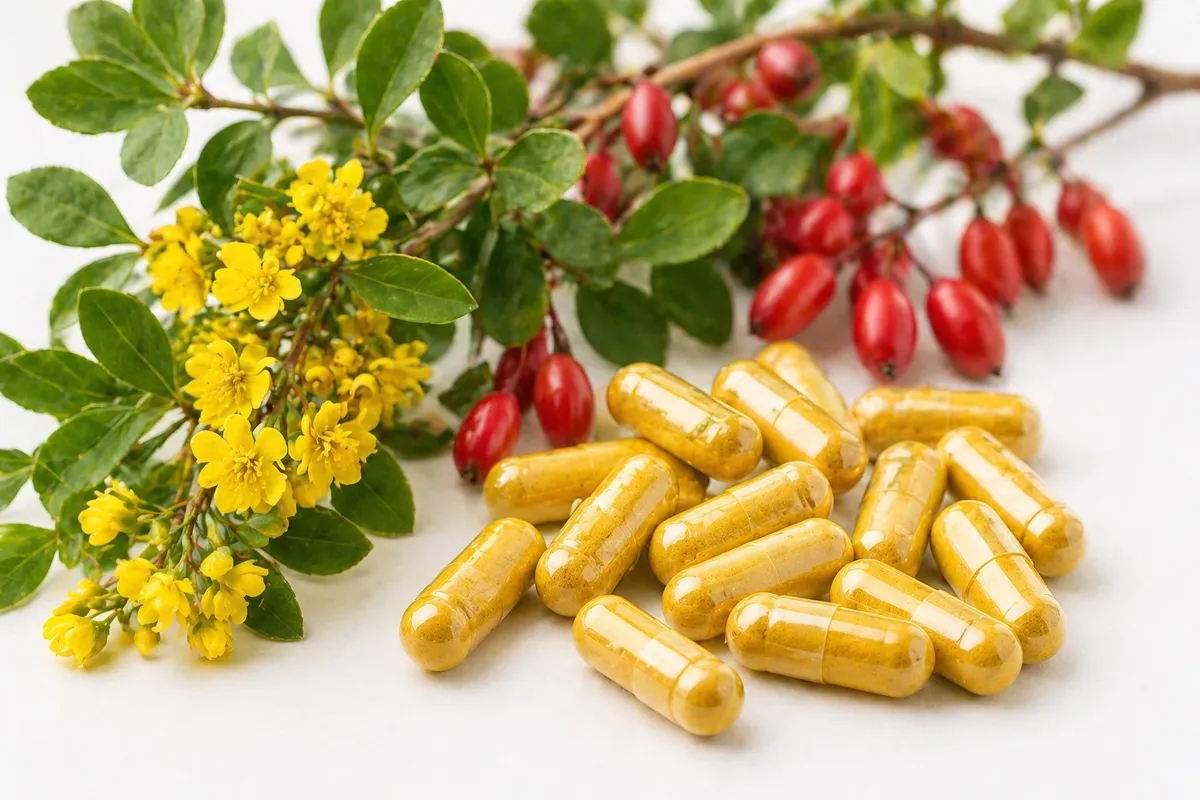
Berberine is one of the most discussed cholesterol supplements online — and one of the most misrepresented. Proponents position it as a natural statin or even as “nature’s Ozempic.” Critics dismiss it entirely. The actual evidence is more nuanced than either position.
Berberine has real modest effects on LDL and other metabolic markers. It also has real drug interaction risks that most supplement guides entirely ignore. This guide presents both sides honestly, because the drug interaction issue is clinically significant enough that it changes whether berberine is appropriate for a large segment of the people considering it.
What berberine is
Berberine is a plant alkaloid found in several plants including barberry (Berberis vulgaris), goldenseal (Hydrastis canadensis), and Oregon grape (Mahonia aquifolium). It has been used in traditional Chinese and Ayurvedic medicine for centuries, primarily for gastrointestinal conditions.
In modern pharmacological research, berberine has shown effects on multiple metabolic pathways — including glucose metabolism, cholesterol synthesis, and inflammation. It activates AMP-activated protein kinase (AMPK) and appears to upregulate LDL receptors, similar in concept to how statins work (though through a different mechanism).
What the evidence shows for cholesterol
Meta-analysis data
A 2015 meta-analysis in Phytomedicine analyzing 11 randomized trials found that berberine significantly reduced LDL cholesterol, total cholesterol, and triglycerides compared to placebo or control. Mean LDL reduction was approximately 0.65 mmol/L (25 mg/dL).
A 2019 meta-analysis in Frontiers in Pharmacology confirmed these findings across 46 trials, reporting consistent reductions in LDL, total cholesterol, and triglycerides with berberine use.
The National Center for Complementary and Integrative Health (NCCIH) summarizes the evidence as: berberine may have modest effects on blood glucose and may reduce cholesterol levels, but the evidence base is still limited and requires more rigorous study.
Important limitations of the evidence
The berberine evidence base has significant methodological limitations that temper enthusiasm:
- Trial quality: Most trials are short-term (4–12 weeks) and many are from China, where standard of care differs from Western clinical practice, making direct applicability uncertain.
- Heterogeneity: Trial populations, doses, berberine preparations, and outcomes vary considerably, limiting meta-analytic conclusions.
- Publication bias: Positive results are more likely to be published, a particular concern in traditional medicine research.
- Comparators: Many trials compare berberine to placebo rather than to active comparators (statins, ezetimibe), making it difficult to assess relative effectiveness.
The drug interaction risk — this is the critical section
Berberine is a potent inhibitor of multiple cytochrome P450 enzymes, including CYP2D6, CYP2C9, and CYP3A4. These enzymes are responsible for metabolizing a large proportion of commonly prescribed medications. When berberine inhibits these enzymes, it can significantly alter how your body processes other drugs — in either direction.
What CYP inhibition means in practice
When berberine inhibits CYP enzymes that metabolize another drug:
- The other drug is metabolized more slowly
- Blood levels of the other drug rise higher than expected
- Side effects and toxicity risk increase
Alternatively, if a drug requires CYP activation (a prodrug), berberine can reduce its efficacy by slowing conversion to the active form.
Medications with clinically significant berberine interactions
| Drug category | Examples | Risk |
|---|---|---|
| Anticoagulants | Warfarin | Increased bleeding risk (CYP2C9 inhibition raises warfarin levels) |
| Statins | Simvastatin, atorvastatin | Increased statin exposure, potentially higher myopathy risk |
| Cyclosporine | Cyclosporine | Significantly elevated cyclosporine levels |
| Beta-blockers | Metoprolol | CYP2D6 inhibition raises metoprolol levels |
| Antidepressants | Several SSRIs, TCAs | CYP2D6 inhibition |
| Diabetes medications | Metformin, sulfonylureas | Additive hypoglycemia risk plus possible PK interactions |
| Antiarrhythmics | Amiodarone | QT prolongation risk (berberine itself may prolong QT) |
Berberine and glucose metabolism
Berberine's effects on blood glucose are arguably better-evidenced than its cholesterol effects. Multiple meta-analyses show berberine reduces fasting glucose, HbA1c, and insulin resistance in people with type 2 diabetes or metabolic syndrome.
This dual effect on cholesterol and glucose makes berberine potentially interesting for people with metabolic syndrome who have both elevated LDL and impaired glucose metabolism. However, the drug interaction risk is particularly acute in this population, who are often taking metformin, sulfonylureas, or other diabetes medications.
The claim that berberine is “nature’s Ozempic” overstates the evidence significantly. GLP-1 agonists have large cardiovascular outcomes trials; berberine has short-term surrogate marker trials. The comparison is not scientifically justified.
European regulatory position
The European Food Safety Authority (EFSA) and French food safety agency (ANSES) have both assessed berberine supplements. ANSES specifically noted in 2020 that berberine-containing supplements used for glucose and cholesterol positioning carry risks due to CYP enzyme interactions and raised concerns about their use alongside medications. No cholesterol-related health claim for berberine has been authorized at the European level. This makes berberine a poor choice for cross-jurisdiction marketing and a higher-risk ingredient for any UK or EU-focused product.
Who berberine may be appropriate for
Potentially appropriate if:
- You have mild-to-moderate LDL elevation with metabolic syndrome or insulin resistance
- You are taking no other medications (or have confirmed with your pharmacist that your medications have no significant berberine interactions)
- You have tried plant sterols and psyllium and want to explore additional adjuncts
- You understand the evidence limitations and are using it as one component of a broader lifestyle approach
Not appropriate if:
- You take warfarin or any anticoagulant
- You take statins (potential for elevated statin exposure and increased myopathy risk)
- You take cyclosporine
- You take antiarrhythmic medications
- You are pregnant or breastfeeding (potential risk of elevated bilirubin in neonates)
- You have high cardiovascular risk requiring primary medical management
Dosing if you proceed
Clinical trials typically use berberine hydrochloride at doses of 500mg two to three times daily (total 1000–1500mg/day), taken with meals. GI side effects (nausea, diarrhea, abdominal cramping) are common at initiation and usually improve over 2–4 weeks.
Look for standardized berberine hydrochloride (BBR HCl) products with third-party testing. Berberine content varies significantly across products; unstandardized “berberine complex” products with unknown alkaloid content should be avoided.
Find out what approach is right for your risk profile
Our quiz analyzes your LDL, cardiovascular risk, medications, and treatment preferences.
Take the 2-minute quiz → Free · No account required · Based on 2026 clinical guidelinesSources
- National Center for Complementary and Integrative Health (NCCIH). Berberine. Updated 2023. nccih.nih.gov
- Lan J, et al. Meta-analysis of the effect and safety of berberine in the treatment of type 2 diabetes and hyperlipemia. J Ethnopharmacol. 2015;161:69-81. PMID: 25498346
- Agence nationale de sécurité sanitaire de l'alimentation (ANSES). Opinion on berberine-containing food supplements. 2020.
- Cicero AFG, et al. Effects of berberine on lipid profile in subjects with low cardiovascular risk. Expert Rev Cardiovasc Ther. 2012. PMID: 22360799