Psyllium Fiber for LDL: The Evidence, the Dose, and How to Use It
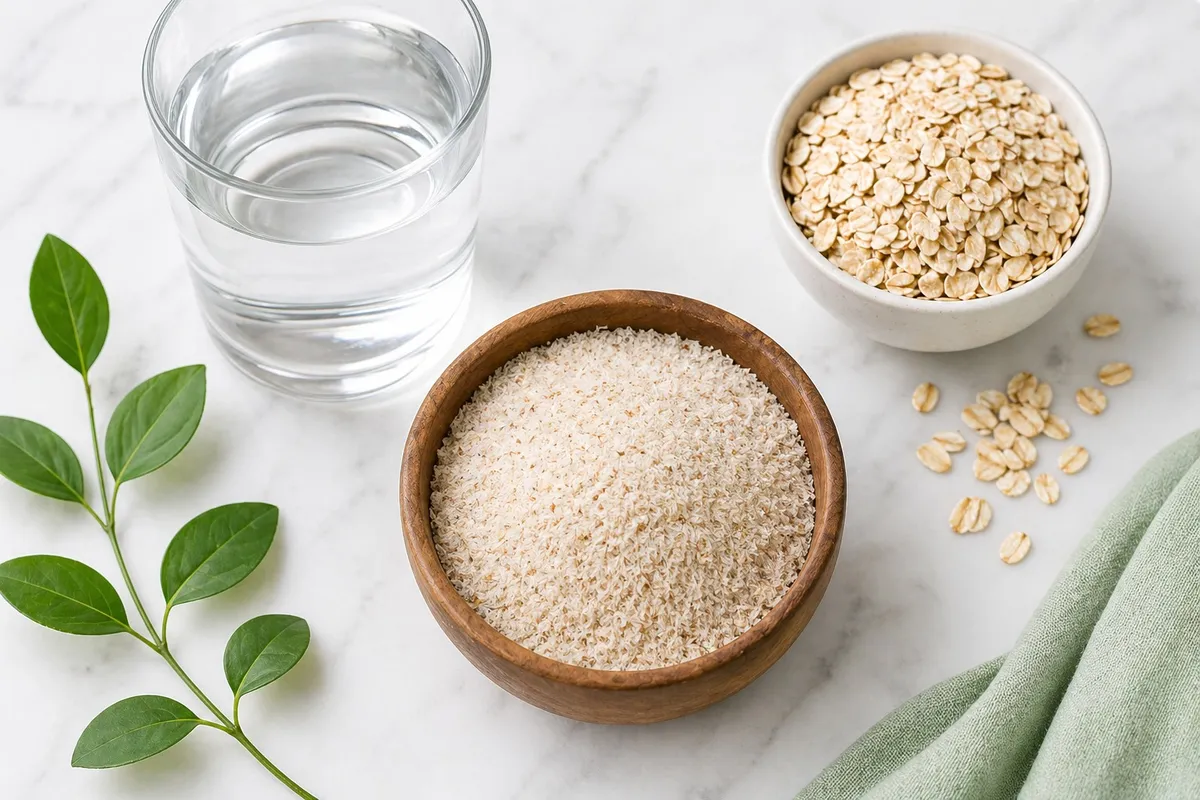
Psyllium husk is the most evidence-supported single-ingredient fiber supplement for LDL reduction. It's inexpensive, widely available, and has decades of clinical trial data behind it. It's also one of the most commonly used incorrectly — wrong dose, wrong timing, insufficient water — which explains why many people try it and see no meaningful result.
This guide covers what the evidence actually shows, exactly how to use psyllium to get the clinical effect seen in trials, and who it's and isn't appropriate for.
What psyllium is and how it works
Psyllium is a soluble fiber derived from the husks of Plantago ovata seeds. When mixed with water, it forms a viscous gel in the digestive tract. This gel performs two cholesterol-relevant functions simultaneously.
Bile acid binding: Psyllium binds bile acids in the small intestine, preventing their reabsorption. The liver must then synthesize new bile acids from cholesterol, increasing cholesterol demand and pulling more LDL from the bloodstream via LDL receptor upregulation.
Cholesterol absorption reduction: The viscous gel also physically impedes cholesterol absorption in the gut, similar in mechanism to plant sterols but through a different pathway.
Because these mechanisms are distinct from statins and from plant sterols, psyllium's LDL-lowering effects are additive with both. Adding psyllium to an existing statin regimen produces additional LDL reduction on top of the statin's effect.
What the evidence shows
The core meta-analysis evidence
A 1999 meta-analysis published in The American Journal of Clinical Nutrition, analyzing 12 randomized controlled trials, found that 10.2g of psyllium per day reduced LDL cholesterol by approximately 7% compared to control. Total cholesterol was reduced by approximately 5%. The effect was consistent across trials and populations.
A 2018 Cochrane systematic review of fiber supplements broadly confirmed these findings. Soluble fiber supplementation reduced LDL and total cholesterol with a dose-response relationship — more fiber produced more reduction, with diminishing returns above approximately 10g/day.
A 2020 meta-analysis in Nutrition, Metabolism and Cardiovascular Diseases specifically analyzing psyllium across 21 trials found a mean LDL reduction of 0.33 mmol/L (approximately 13 mg/dL) at doses of 5–15g/day. The effect was more pronounced in people with higher baseline LDL.
FDA health claim
Psyllium is one of very few dietary supplements with an FDA-authorized health claim: foods providing at least 7g of soluble fiber per day from psyllium husk, as part of a diet low in saturated fat and cholesterol, may reduce the risk of heart disease. This claim requires specific daily intake and dietary context — it's not unconditional, but it reflects the strength of the evidence relative to most supplements.
Dose-response relationship
| Daily dose | Approximate LDL reduction |
|---|---|
| 3–4g | ~2–3% |
| 5–6g | ~4–5% |
| 7–8g | ~5–6% |
| 10–12g | ~7–8% |
| 15g+ | ~8–9% (diminishing returns) |
10g/day is the dose most consistently studied and the most commonly recommended starting point for LDL reduction. This is substantially higher than the amount in a typical serving of psyllium-containing breakfast cereal (usually 1–3g).
How to use psyllium correctly
Dose: 10g per day
The 10g target can be split across the day — 5g with breakfast and 5g with dinner, or 3–4g with each of three meals. Either approach is effective. The key is reaching the total daily dose consistently.
Check labels carefully. Psyllium products vary widely. Some list "psyllium husk" by weight including the whole husk. Others list "psyllium husk powder" which may be more concentrated. The relevant number is the soluble fiber content, not the total weight of the product.
Water — this is not optional
Psyllium must be taken with a full glass of water (at least 240ml / 8oz) immediately after mixing or swallowing. Insufficient water is both ineffective and potentially dangerous — psyllium can swell in the esophagus and cause obstruction if taken with too little liquid. Each dose should be followed by an additional glass of water if possible.
Medication spacing — critical for people on other drugs
Psyllium can reduce the absorption of other medications by binding them in the gut. Take psyllium at least 1–2 hours before or after any other medication. This applies particularly to: statins, thyroid medications, diabetes medications, blood pressure medications, and blood thinners. This is the most frequently missed practical instruction and can significantly affect how well your other medications work.
Introducing psyllium gradually — preventing GI side effects
Starting immediately at 10g/day frequently causes bloating, gas, and abdominal discomfort — which leads most people to stop. The correct approach is gradual introduction:
- Week 1: 3–4g per day (one dose)
- Week 2: 5–6g per day (two doses)
- Week 3: 7–8g per day
- Week 4: 10g per day (target dose)
Most people experience minimal GI effects if they ramp up this way. The gut microbiome adapts to the increased fiber over 2–3 weeks.
When to take psyllium for best effect
Taking psyllium with or just before meals produces better LDL lowering than taking it between meals. The mechanism — bile acid binding and cholesterol absorption reduction — operates most effectively when food (particularly fat) is present in the gut simultaneously.
Timing to results: 6–8 weeks
LDL reduction from psyllium is not immediate. Most studies show measurable LDL changes after 4–8 weeks of consistent daily use. Plan to retest your lipid panel after 8–12 weeks at the target dose. Testing 2 weeks in won't tell you much.
Psyllium formats — which to choose
Psyllium husk powder
Most cost-effective. Mixes into water, juice, or yogurt. Becomes viscous quickly — drink immediately after mixing. Some people find the texture off-putting initially. Typical dose: 1 teaspoon = approximately 5g.
Psyllium husk capsules
More convenient, no texture issue. The practical problem: reaching 10g/day typically requires 6–10 capsules depending on the product. This is a large daily pill burden. Look for products with at least 500mg psyllium husk per capsule and check that the capsule count required to reach 5g is manageable.
Foods with added psyllium
Certain breakfast cereals (Metamucil bars, some oat cereals) contain added psyllium. These can contribute to daily dose but are rarely sufficient alone to reach 10g. They're useful as a supplement to powder or capsules.
Third-party testing
Look for products with NSF, USP, or Informed Sport certification. Psyllium is a natural product with varying purity across suppliers. Third-party testing confirms the product contains what the label says and is free from contaminants.
Psyllium in the Portfolio Diet context
Psyllium is one of the four components of the Portfolio Diet — the most evidence-supported dietary pattern for LDL reduction. Combined with plant sterols, soy protein, and nuts, the LDL-lowering effects are additive:
| Intervention | LDL reduction |
|---|---|
| Psyllium 10g/day | 5–7% |
| Plant sterols 2g/day with meals | 8–10% |
| Soy protein 25g/day | 3–5% |
| Nuts 30g/day | 3–5% |
| Combined (real-world adherence) | 15–25% |
Who psyllium is appropriate for
Good candidates:
- People with mild-to-moderate LDL elevation (130–189 mg/dL) and low-to-moderate cardiovascular risk managing through lifestyle
- People already on statin therapy who want additional LDL lowering from a low-risk adjunct
- People with elevated triglycerides — psyllium modestly reduces triglycerides alongside LDL
- People with diabetes or insulin resistance — soluble fiber also improves glycemic control
Less appropriate situations:
- LDL ≥190 mg/dL — the 5–7% reduction from psyllium is unlikely to be sufficient. Clinical evaluation and statin therapy should be the priority.
- Established cardiovascular disease — psyllium can be used alongside medication, but should not be a substitute for evidence-based medical management in high-risk patients.
- Difficulty swallowing — psyllium is a choking hazard if taken without adequate water. Not appropriate for people with swallowing difficulties.
Safety and contraindications
Bowel obstruction risk: Do not use psyllium if you have any condition that narrows the digestive tract, or have had bowel surgery, without discussing with your clinician first.
Allergy: Rare psyllium allergy has been reported, particularly with occupational exposure. If you develop hives, difficulty breathing, or swelling after starting psyllium, discontinue and seek medical attention.
Pregnancy: Fiber supplementation is generally considered safe in pregnancy, but discuss with your OB/GYN before adding psyllium. Medication spacing is especially important if you're taking prenatal vitamins or other supplements.
Questions to ask your doctor or pharmacist
- "Are any of my current medications particularly sensitive to absorption interference from psyllium?"
- "Given my LDL level and risk profile, is psyllium a reasonable first step or should we be considering medication?"
- "Should we check my lipid panel after 8–12 weeks of consistent psyllium use to see if it's working?"
Find out if psyllium is right for your situation
Our quiz analyzes your full risk profile and tells you whether a lifestyle-first approach is appropriate, or whether your profile suggests a different priority.
Take the 2-minute quiz → Free · No account required · Based on 2026 clinical guidelinesSources
- Brown L, et al. Cholesterol-lowering effects of dietary fiber: a meta-analysis. Am J Clin Nutr. 1999;69(1):30-42. PMID: 9925120
- Jovanovski E, et al. Effect of viscous fiber supplementation on obesity indicators. Eur J Nutr. 2019;58(3):1255-1268. PMID: 29546548
- Jenkins DJ, et al. Assessment of the longer-term effects of a dietary portfolio. Am J Clin Nutr. 2006;83(3):582-591. PMID: 16522904
- Grundy SM, et al. 2018 AHA/ACC Guideline on the Management of Blood Cholesterol. JACC. 2019;73(24):e285-e350. PMID: 30423393