Executive Summary
Ezetimibe blocks the NPC1L1 cholesterol transporter in the small intestine, reducing absorption of both dietary and biliary cholesterol.
Monotherapy typically lowers LDL-C by about 18%. Added to a statin, the incremental reduction is commonly about 15-25%, depending on background therapy and baseline LDL-C.
IMPROVE-IT randomized 18,144 recent ACS patients to simvastatin plus ezetimibe or simvastatin alone. Average achieved LDL-C was about 54 vs 70 mg/dL and the combination modestly but significantly reduced long-term cardiovascular events.
IMPROVE-IT was important scientifically because it showed that event reduction follows additional LDL lowering even when the added drug is not a statin.
Ezetimibe has a favorable safety profile and is especially useful when high-intensity statin therapy is not tolerated or when LDL-C goals are not reached with statin alone.
In 2026 practice, ezetimibe remains one of the first add-on choices because it is generic, oral, inexpensive and backed by outcomes evidence.
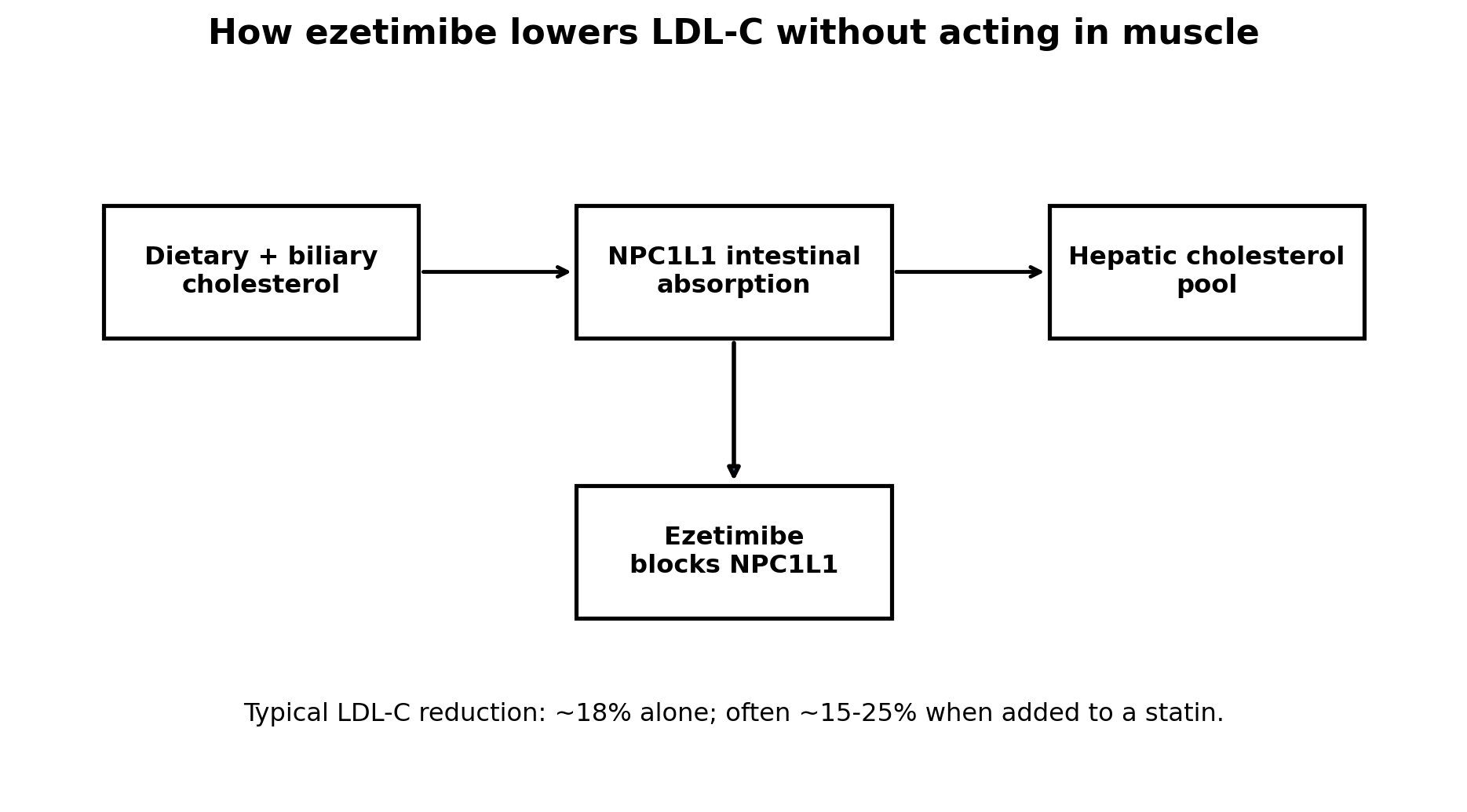
Figure 1. Ezetimibe lowers intestinal cholesterol absorption through NPC1L1 inhibition.
1. What it does to LDL-C
In primary hypercholesterolemia trials, ezetimibe monotherapy lowered LDL-C by about 18% and ApoB by roughly 15%.
Because its mechanism differs from statins, the effects are additive.
2. IMPROVE-IT
Patients had recent acute coronary syndrome and relatively low baseline LDL-C. The combination lowered average LDL-C to the mid-50s mg/dL and produced a modest but statistically significant reduction in the primary cardiovascular endpoint.
The trial also provided reassuring long-term safety data at very low achieved LDL-C.
3. When it is most useful
Ezetimibe is particularly attractive in statin intolerance, in combination with moderate-dose statin when higher statin doses cause symptoms, and as a rapid inexpensive step before injectable or newer oral therapies.
It can also be combined with bempedoic acid, including as a fixed-dose tablet in some markets.
4. What it does not do
Ezetimibe is not as potent as a PCSK9 inhibitor and should not be expected to lower LDL-C by 50-60% alone.
It does not meaningfully lower Lp(a).
| Therapy | Approximate LDL-C effect | Hard outcomes evidence? |
|---|---|---|
| Ezetimibe alone | ~18% | Indirect/limited monotherapy outcomes |
| Ezetimibe + statin | Additional ~15-25% | Yes: IMPROVE-IT |
| Bempedoic acid + ezetimibe | ~35-40% combined in trials | Bempedoic outcomes proven; fixed-combo outcome not separately tested |
5. FAQ
Does ezetimibe cause muscle pain?
It can, but muscle adverse effects are much less prominent than with statins and rates are generally low.
Can it be used without a statin?
Yes, especially in statin intolerance, though combination therapy usually lowers LDL-C more.
Does it affect the liver?
Serious liver toxicity is uncommon. Liver-enzyme monitoring depends on context, especially when combined with a statin.
Is it "weaker" because it only lowers LDL 18%?
Potency and usefulness are different. Its value is additive, safe, oral LDL lowering with outcomes evidence.
References
1. Cannon CP, Blazing MA, Giugliano RP, et al. Ezetimibe Added to Statin Therapy after Acute Coronary Syndromes. N Engl J Med. 2015;372:2387-2397.
2. American College of Cardiology. IMPROVE-IT trial summary. Updated 2021.
3. American College of Cardiology. Ezetimibe monotherapy trial summary: approximately 18% LDL-C reduction.
4. Blumenthal RS, Morris PB, Gaudino M, et al. 2026 ACC/AHA Dyslipidemia Guideline.