Executive Summary
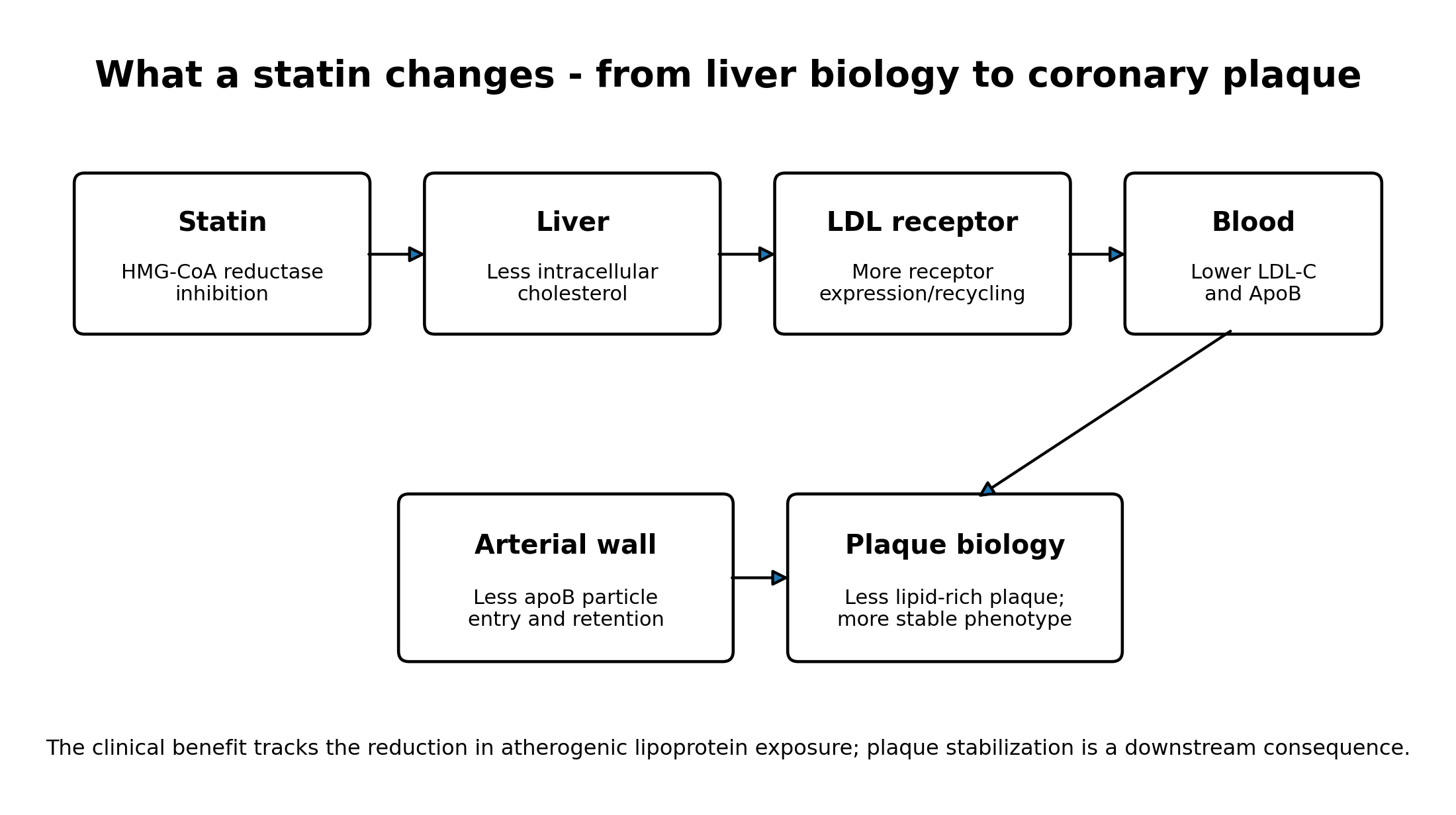
Statins remain the foundation of pharmacologic prevention of atherosclerotic cardiovascular disease (ASCVD) in 2026. Their central action is not mysterious: inhibition of hepatic HMG-CoA reductase lowers intracellular cholesterol, increases hepatic LDL-receptor activity, and reduces circulating LDL-C and the number of atherogenic apoB-containing particles. Across randomized trials, the cardiovascular benefit tracks the magnitude and duration of LDL lowering.
What modern imaging added is a more nuanced picture. Statins do not simply “melt plaque.” Intensive therapy can slow or reverse atheroma volume in selected coronary segments, reduce lipid-rich and low-attenuation plaque, and shift plaque toward a denser, more calcified phenotype that is generally interpreted as stabilization. This explains a clinically important paradox: coronary calcium can increase while cardiovascular risk falls.
Statins also lower high-sensitivity C-reactive protein (hsCRP), and some of their vascular effects are described as anti-inflammatory or pleiotropic. However, the strongest causal and clinical evidence remains the reduction in exposure to apoB-containing lipoproteins. A fall in hsCRP is useful biology, not a reason to reframe statins as primarily anti-inflammatory drugs.
Safety evidence is also stronger than public perception suggests. Muscle symptoms occur, but blinded trials show that much of the symptom burden attributed to statins is also seen with placebo. The 2026 CTT meta-analysis found no causal excess for most adverse effects listed on statin labels. Statins do modestly increase glycaemia and new-onset diabetes risk in a dose-dependent fashion, particularly in people already near the diagnostic threshold; for patients at meaningful ASCVD risk, the vascular benefit generally outweighs that hazard.
A statin should be judged by the reduction in atherogenic lipoprotein exposure and cardiovascular risk - not by whether a repeat CAC score falls, whether every plaque disappears, or whether social-media lists of side effects sound alarming.
| Question | Evidence-based answer |
|---|---|
| Do statins reduce heart attacks and strokes? | Yes. Randomized trials and CTT meta-analyses show roughly a one-fifth reduction in major vascular events per 1 mmol/L (38.7 mg/dL) reduction in LDL-C. |
| Can statins regress plaque? | Sometimes modestly by IVUS, especially with intensive therapy; stabilization and compositional change may be more important than volume shrinkage. |
| Can CAC rise on a statin? | Yes. Statins can increase calcium density while reducing lipid-rich plaque. CAC progression alone is not a measure of treatment failure. |
| Do statins reduce inflammation? | They commonly reduce hsCRP, but their best-established clinical mechanism remains reduction of apoB/LDL exposure. |
| Do statins lower Lp(a)? | No. They may modestly increase Lp(a) in some patients, yet still reduce overall ASCVD risk by lowering LDL/apoB. |
| Are side effects common? | Symptoms are common in practice, but blinded evidence shows the pharmacologic excess is much smaller than unblinded experience suggests. |
1. What Statins Actually Do
Statins inhibit 3-hydroxy-3-methylglutaryl coenzyme A reductase (HMG-CoA reductase), the rate-limiting enzyme in hepatic cholesterol synthesis. The liver responds to lower intracellular cholesterol by increasing LDL-receptor expression. More LDL receptors remove more circulating LDL particles and related apoB-containing lipoproteins from the blood.
The important word is particles. LDL-C measures the amount of cholesterol inside LDL particles; ApoB approximates the total number of circulating atherogenic particles, including LDL, VLDL remnants, IDL and Lp(a). Lowering LDL-C with a statin usually lowers ApoB as well, reducing the probability that apoB particles enter and become retained in the arterial wall.
The 2026 ACC/AHA multisociety dyslipidemia guideline restores explicit LDL-C and non-HDL-C treatment goals while retaining percentage LDL-C reduction as a core treatment concept. The 2025 ESC/EAS focused update likewise keeps statins as first-line lipid-lowering therapy and preserves the principle that higher-risk patients benefit from lower LDL-C targets.[1,2]
2. The Trials That Established Statins
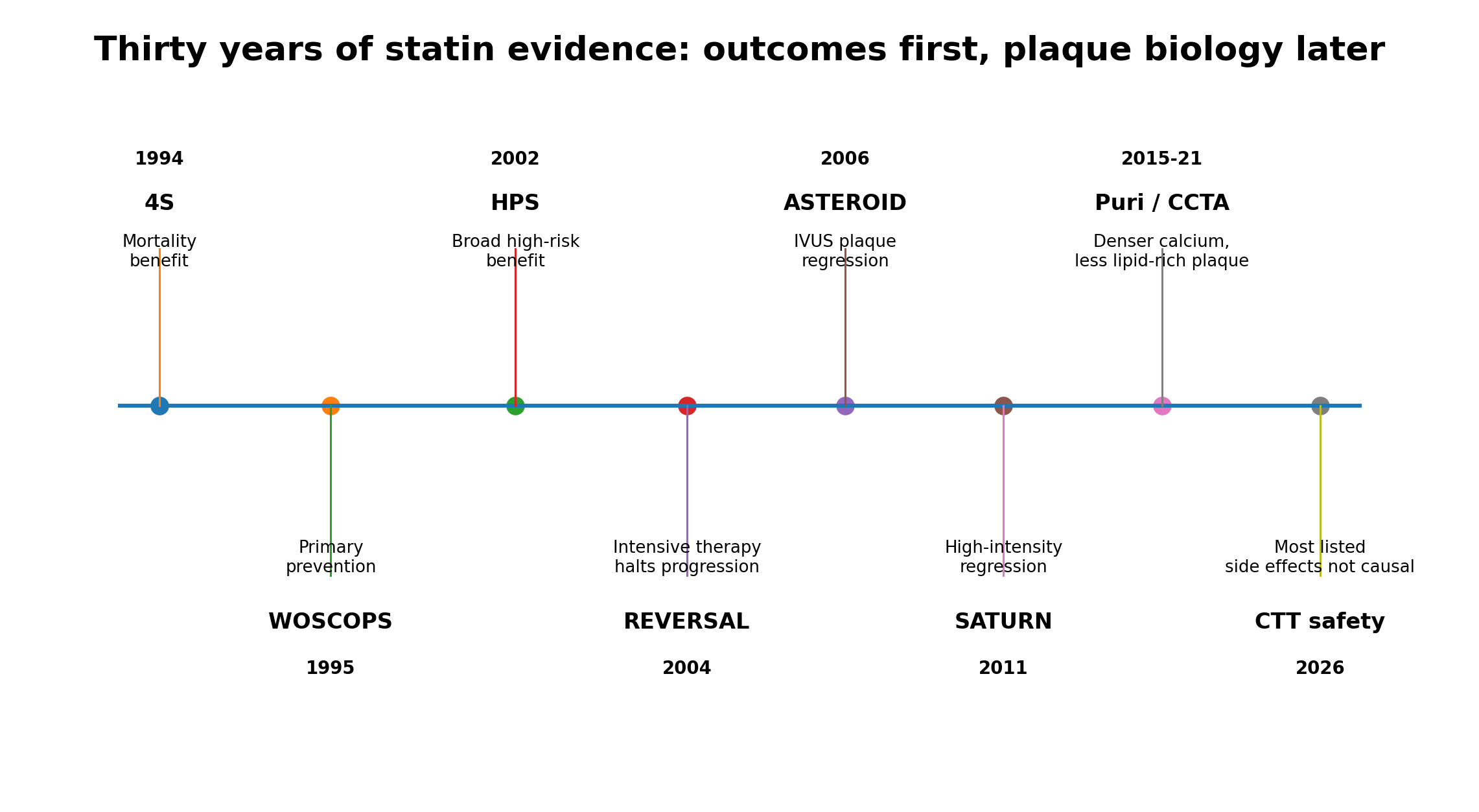
The modern statin story began with hard clinical outcomes, not imaging. The Scandinavian Simvastatin Survival Study (4S) randomized 4,444 patients with established coronary disease and hypercholesterolemia to simvastatin or placebo. Over a median 5.4 years, simvastatin reduced all-cause mortality by about 30% and coronary mortality by about 42%.[3] This was a landmark because a cholesterol-lowering drug had reduced death, not merely improved a laboratory value.
WOSCOPS then demonstrated primary-prevention benefit in men with hypercholesterolemia and no previous myocardial infarction. Pravastatin reduced the combined risk of nonfatal myocardial infarction or coronary death by about 31%.[4] The Heart Protection Study broadened the evidence base further: in more than 20,000 high-risk participants, simvastatin produced a roughly one-quarter proportional reduction in major vascular events across a wide range of baseline cholesterol values and clinical subgroups.[5]
Later primary-prevention trials extended the principle beyond obviously high LDL-C. JUPITER enrolled apparently healthy adults with LDL-C below 130 mg/dL but hsCRP at least 2 mg/L; rosuvastatin 20 mg reduced the primary cardiovascular endpoint by 44% relative to placebo, although the trial was stopped early.[6] HOPE-3 showed benefit from rosuvastatin 10 mg in an ethnically diverse intermediate-risk population without clinical cardiovascular disease.[7]
The most generalizable estimate comes from the Cholesterol Treatment Trialists (CTT) Collaboration. Across large randomized trials, each 1 mmol/L (about 38.7 mg/dL) reduction in LDL-C with statin therapy lowers major vascular events by about one fifth. More intensive LDL lowering produces additional benefit.[8,9] Absolute benefit, however, depends on baseline risk: a 20% relative reduction prevents far more events in a person with established ASCVD than in a very-low-risk young adult.
| Trial | Population / intervention | What it changed |
|---|---|---|
| 4S (1994) | 4,444 patients with CHD; simvastatin vs placebo | Established mortality and coronary event reduction. |
| WOSCOPS (1995) | Primary prevention; pravastatin vs placebo | Showed coronary-event prevention before first MI. |
| HPS (2002) | 20,536 high-risk participants; simvastatin 40 mg | Demonstrated broad benefit across baseline LDL-C and subgroups. |
| JUPITER (2008) | LDL-C <130 mg/dL, hsCRP >=2 mg/L; rosuvastatin 20 mg | Linked LDL lowering and inflammatory-risk selection in primary prevention. |
| HOPE-3 (2016) | Intermediate-risk adults without CVD; rosuvastatin 10 mg | Supported moderate-intensity statin therapy in a diverse primary-prevention population. |
3. From Event Reduction to Plaque Biology
Clinical trials answered the most important question first: statins reduce cardiovascular events. Imaging studies later asked why and what happens inside the artery. Intravascular ultrasound (IVUS) made it possible to quantify coronary atheroma volume rather than judging disease only by the angiographic lumen.
REVERSAL compared intensive atorvastatin 80 mg with moderate pravastatin 40 mg in patients with coronary disease. Intensive therapy achieved lower LDL-C and hsCRP and halted progression of coronary atherosclerosis, while the moderate arm showed continued progression.[10] The study shifted the discussion from “statin or no statin” to treatment intensity and achieved atherogenic burden.
ASTEROID then treated patients with rosuvastatin 40 mg for two years. Mean LDL-C fell to about 61 mg/dL. Percent atheroma volume decreased by 0.98%, total atheroma volume fell by 6.8%, and all three prespecified IVUS measures showed regression.[11] The magnitude of shrinkage was modest, but the conceptual impact was large: coronary atherosclerosis was not necessarily a one-way process.
SATURN directly compared two high-intensity regimens - atorvastatin 80 mg and rosuvastatin 40 mg. Both produced regression in percent atheroma volume; regression occurred in roughly two thirds of participants. Rosuvastatin achieved slightly lower LDL-C, but the between-group difference in the primary IVUS endpoint was not significant.[12]
Plaque regression is not the same as plaque disappearance. A 1% change in percent atheroma volume can coexist with substantial clinical benefit because event prevention depends on total biological risk, plaque composition, thrombosis and future plaque activity - not simply the visible size of one lesion.
4. The Calcification Paradox
One of the most misunderstood findings in preventive cardiology is that statins can increase coronary plaque calcification. This sounds alarming only if all calcium is assumed to represent worsening disease. Modern pathology and imaging suggest a different interpretation.
In a pooled serial-IVUS analysis, Puri and colleagues found that statin therapy promoted coronary atheroma calcification independent of whether plaque volume progressed or regressed. The authors interpreted this as a potential stabilization mechanism.[13] Serial CCTA data later showed a similar pattern: statin use was associated with reductions in low-attenuation and fibro-fatty plaque alongside increases in high-density and very-high-density calcium. Overall plaque progression was slower as calcium density increased.[14]
This does not mean that coronary calcium is harmless. A high baseline CAC score remains a powerful marker of cumulative atherosclerotic burden and future risk. The nuance is temporal: once a person is on effective therapy, more dense calcification within existing plaque can accompany healing or stabilization. Therefore, repeating CAC simply to see whether the number falls is generally a poor way to monitor treatment response.
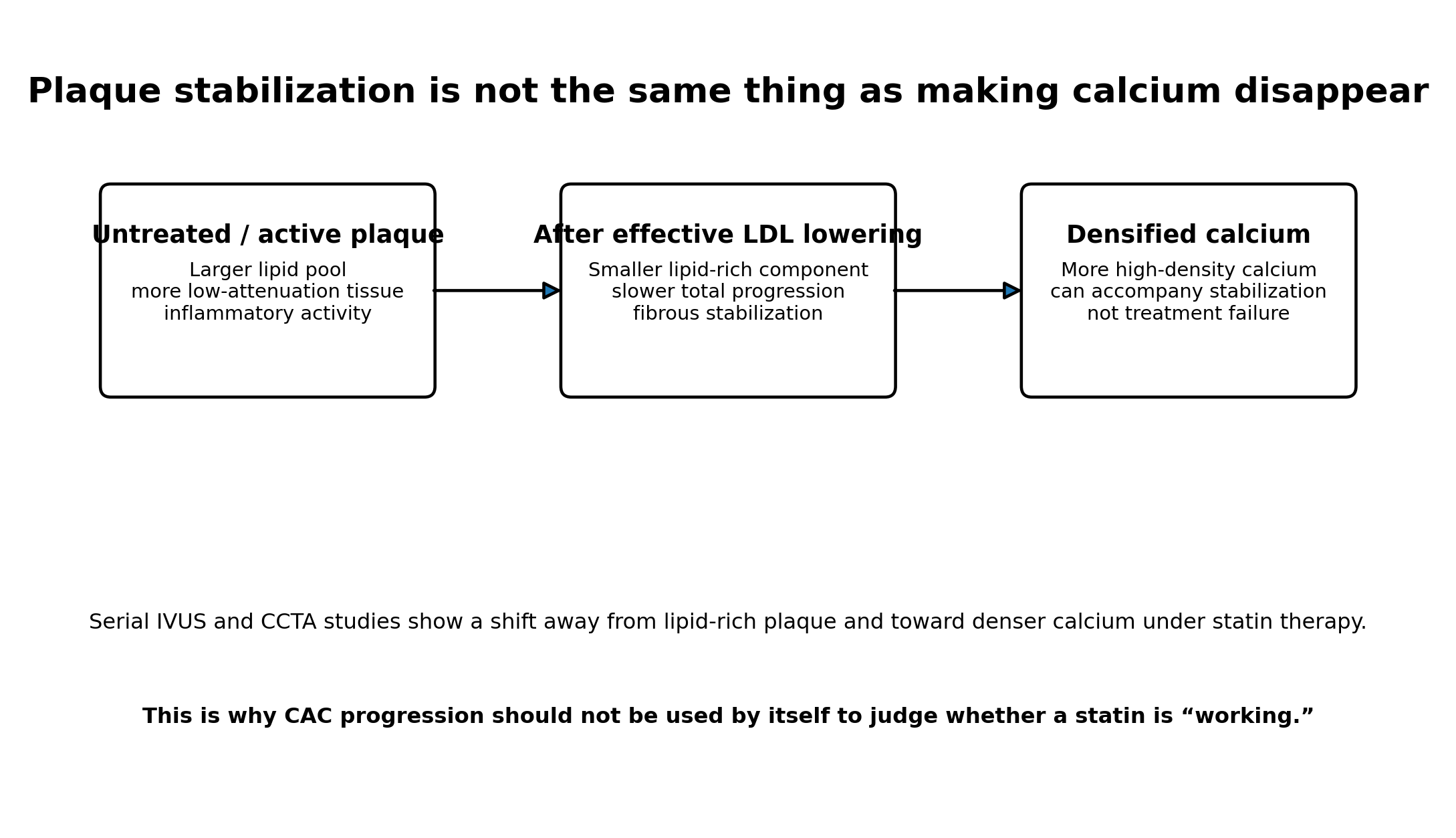
MYTH: “My CAC score increased, so the statin failed.” FACT: CAC progression cannot by itself distinguish ongoing plaque growth from treatment-associated calcium densification. Clinical response should be judged using risk factors, LDL-C/non-HDL-C/ApoB, adherence and the total clinical context.
5. Statins and Inflammation: Important, but Often Oversimplified
Statins commonly lower hsCRP in addition to LDL-C. In REVERSAL, more intensive atorvastatin lowered both LDL-C and CRP more than moderate pravastatin.[10] In JUPITER, the trial population was selected for elevated hsCRP, and rosuvastatin reduced both LDL-C and hsCRP while lowering cardiovascular events.[6] These observations helped establish the concept of residual inflammatory risk.
However, it is easy to overinterpret “pleiotropic” statin effects. The most robust randomized and genetic evidence across lipid-lowering drug classes shows that sustained reduction in apoB-containing lipoproteins drives ASCVD risk reduction. Statins may improve endothelial function, inflammatory signaling and thrombogenic biology, but these effects should not be used to argue that LDL lowering is incidental.
A useful model is sequential rather than competitive: apoB particle retention initiates and sustains atherosclerosis; inflammatory responses influence plaque progression and vulnerability; statins reduce the upstream particle burden and also dampen some downstream inflammatory activity. A patient can therefore have excellent LDL-C but residual inflammatory risk, or low hsCRP but residual lipoprotein risk.
6. Statins and Lipoprotein(a): A Frequently Misunderstood Interaction
Statins are not Lp(a)-lowering drugs. A subject-level meta-analysis of six randomized trials found that statins increased Lp(a) by approximately 8.5% to 19.6% in statin-versus-placebo comparisons, with some variation by statin and dose.[15] This can be unsettling for a patient who already has genetically elevated Lp(a).
The correct interpretation is not that statins are harmful in high Lp(a). Elevated Lp(a) increases lifetime ASCVD risk; reducing LDL-C and ApoB lowers a separate, modifiable component of risk. Until dedicated Lp(a)-lowering outcome therapies are proven and available, aggressive control of LDL-C/ApoB, blood pressure, smoking, diabetes and other risk factors remains central.
If Lp(a) rises modestly after starting a statin while LDL-C and ApoB fall substantially, the usual response is not to stop the statin. The net cardiovascular effect is generally favorable in a patient who has an indication for LDL lowering.
7. High-Intensity vs Moderate-Intensity Statins
Guidelines classify statin intensity by expected percentage LDL-C reduction, not by milligram number alone. Rosuvastatin 20-40 mg and atorvastatin 40-80 mg are high-intensity regimens, typically targeting an LDL-C reduction of at least 50%. Moderate-intensity regimens generally lower LDL-C by about 30% to 49%. Individual responses vary, so the achieved lipid result matters more than the label on the dose.
| Intensity | Common examples | Expected LDL-C reduction | Typical use concept |
|---|---|---|---|
| High | Atorvastatin 40-80 mg; rosuvastatin 20-40 mg | >=50% | Established ASCVD, severe hypercholesterolemia/FH, or high-risk settings when tolerated and appropriate. |
| Moderate | Atorvastatin 10-20 mg; rosuvastatin 5-10 mg; simvastatin 20-40 mg; pravastatin 40-80 mg | 30-49% | Many primary-prevention settings, older/frail patients, interaction concerns, or partial intolerance. |
| Low | Lower-dose regimens | <30% | Occasionally useful when higher doses are not tolerated; often combined with non-statin therapy if risk warrants. |
The 2026 ACC/AHA guideline uses the PREVENT-ASCVD equations for primary-prevention risk estimation in adults aged 30 to 79, adds 30-year risk assessment, and allows CAC to reclassify uncertain decisions. It also restores explicit LDL-C and non-HDL-C goals. In secondary prevention, most patients with very-high-risk ASCVD have an LDL-C goal below 55 mg/dL.[1]
The important clinical principle is “maximally tolerated, goal-directed therapy,” not “maximum statin at all costs.” A patient who cannot tolerate atorvastatin 80 mg but does well on rosuvastatin 5 mg plus ezetimibe may achieve an excellent ApoB/LDL result with fewer symptoms. Modern lipid management is combination therapy when needed, not a test of endurance.
8. Muscle Symptoms: Real Symptoms, Smaller Pharmacologic Effect Than Many Assume
Muscle pain is the most common reason people stop statins. The clinical challenge is that muscle aches are also extremely common without statins. Observational practice therefore tends to overestimate causality.
The 2022 CTT individual-participant meta-analysis included more than 150,000 participants from large double-blind randomized trials. Statin therapy caused a small excess of mostly mild muscle pain or weakness, concentrated mainly in the first year; most reported muscle symptoms in statin-treated patients were not actually caused by the drug.[16]
SAMSON made the nocebo problem unusually visible. Participants who had previously stopped statins because of side effects cycled through atorvastatin, placebo and no-tablet months. Symptom scores were nearly identical during statin and placebo months, yielding a nocebo ratio of 0.90. Half the participants had restarted statin therapy six months after the trial.[17]
None of this means that true statin myopathy does not exist. It does, and severe myopathy or rhabdomyolysis is rare but important. Drug interactions, hypothyroidism, renal impairment, strenuous new exercise and other contributors should be considered when symptoms are significant.
MYTH: “If my muscles hurt after starting a statin, the statin must be the cause.” FACT: Timing alone cannot establish causality because background symptoms and expectation effects are common. A structured dechallenge/rechallenge can be much more informative.
9. Diabetes, Liver, Cognition and the 2026 Safety Update
Statins modestly increase blood glucose and the probability of a new diabetes diagnosis. In the 2024 CTT individual-participant meta-analysis, low- or moderate-intensity statins increased new-onset diabetes by about 10% relative to placebo, while higher-intensity therapy produced a larger relative increase. Most excess diabetes diagnoses occurred in people whose baseline glycaemia was already near the diagnostic threshold.[18]
This is a genuine adverse effect, but risk must be compared with benefit. In a person with established ASCVD or high predicted risk, preventing myocardial infarction, ischemic stroke and revascularization usually outweighs a modest increase in diabetes risk. Lifestyle interventions that improve weight, muscle mass, diet and insulin sensitivity remain valuable alongside statin treatment.
Liver enzyme elevations can occur, but serious statin-induced liver injury is rare. Routine fear of progressive liver failure is not supported by randomized evidence. In 2026, the CTT Collaboration published the most comprehensive randomized assessment of adverse effects attributed to statins on product labels. Across 23 large double-blind trials and more than 150,000 participants, there was no statistically robust causal excess for most listed conditions, including memory impairment, depression, sleep disturbance and sexual dysfunction. Small excesses were seen for selected laboratory abnormalities and a few outcomes.[19]
| Concern | What randomized evidence supports | Practical interpretation |
|---|---|---|
| Muscle pain / weakness | Small pharmacologic excess; much of reported symptom burden also occurs on placebo | Evaluate severity, CK when appropriate, interactions and rechallenge rather than assuming permanent intolerance. |
| New-onset diabetes | Small dose-dependent increase, concentrated in people near the glycaemic threshold | Monitor metabolic risk; vascular benefit usually dominates when ASCVD risk is meaningful. |
| Liver enzymes | Small increase in biochemical abnormalities | True severe liver injury is rare; investigate major elevations or symptoms. |
| Memory / dementia | No meaningful causal excess in large randomized data | Not a routine reason to avoid indicated statin therapy. |
| Depression / sleep / sexual dysfunction | No convincing causal excess in the 2026 CTT label analysis | Consider alternative causes rather than attributing automatically to statins. |
10. What "Statin Intolerance" Actually Means
The National Lipid Association defines statin intolerance as one or more adverse effects associated with statin therapy that resolve or improve with dose reduction or discontinuation. It can be complete - inability to tolerate any dose - or partial, where a patient cannot tolerate the dose required to achieve the treatment objective.[20] Most patients with symptoms can tolerate some statin exposure after adjustment.
A practical approach is to separate urgent problems from tolerability problems. Severe weakness, marked CK elevation, dark urine, acute kidney injury, or systemic illness requires prompt clinical evaluation. More common muscle aches without major laboratory abnormalities can often be approached by stopping temporarily, correcting reversible factors, trying a different statin, reducing the dose, using intermittent dosing in selected patients, and adding non-statin therapy to achieve the lipid goal.
1. Confirm that a statin is actually indicated and define the LDL-C/ApoB goal.
2. Review timing, muscle distribution, exercise changes, thyroid status, renal function and interacting drugs.
3. If symptoms are significant, dechallenge until they improve and document the response.
4. Rechallenge with a lower dose or a different statin when clinically appropriate.
5. Use the maximally tolerated dose - even a small amount can contribute meaningful LDL lowering.
6. Add ezetimibe, bempedoic acid, a PCSK9-directed therapy or other evidence-based treatment when the statin dose alone is insufficient or not tolerated.
“Statin intolerant” should not automatically mean “no lipid-lowering therapy.” The real therapeutic target is atherogenic particle exposure. Modern combinations can achieve substantial LDL-C/ApoB reduction even when statin dosing is limited.
11. Who Should Be Thinking About Statins in 2026?
Statin decisions are no longer based on total cholesterol alone. Contemporary guidelines integrate established ASCVD, LDL-C level, diabetes and other comorbidities, age, predicted 10- and 30-year risk, risk-enhancing factors such as Lp(a), and selective coronary artery calcium scoring.[1,2]
Established ASCVD: statins remain foundational, usually as part of an aggressive combination strategy when LDL-C goals are not achieved.
Severe primary hypercholesterolemia or familial hypercholesterolemia: early and substantial LDL lowering is central because lifetime exposure matters.
Primary prevention: use absolute risk, lifetime exposure and risk modifiers rather than a single LDL-C cutoff in isolation.
Uncertain decisions: CAC can help reclassify risk in selected asymptomatic adults. A high CAC burden usually strengthens the case for intensive LDL lowering.
Elevated Lp(a): does not make a statin an Lp(a) treatment, but it can increase the rationale for reducing the modifiable ApoB/LDL component of risk.
The 2026 ACC/AHA framework uses PREVENT-ASCVD risk: lipid-lowering therapy can be considered at borderline 10-year risk (3% to <5%) and should be considered at intermediate risk (5% to <10%) after clinician-patient discussion. These are decision frameworks, not automatic prescriptions. CAC, family history, Lp(a), ApoB, patient preferences, competing illness and life expectancy can materially change the decision.[1]
12. What Statins Cannot Do
| What statins can do | What they cannot reliably do |
|---|---|
| Lower LDL-C and ApoB exposure | Directly normalize genetically elevated Lp(a) |
| Reduce MI, ischemic stroke and revascularization risk | Eliminate all residual cardiovascular risk |
| Slow or modestly regress atheroma in imaging trials | Erase established coronary calcium |
| Shift plaque toward a more stable phenotype | Guarantee that an individual plaque will never rupture |
| Lower hsCRP in many patients | Replace exercise, smoking cessation, blood-pressure control or diabetes management |
| Work synergistically with non-statin therapy | Make repeated CAC scanning a useful treatment-monitoring strategy |
This distinction matters because statins are sometimes oversold by supporters and undersold by critics. They are neither a magic shield nor an obsolete cholesterol pill. They are a highly studied tool that reduces a major causal exposure in atherosclerosis, with a benefit proportional to baseline risk, LDL reduction and treatment duration.
13. A Practical "What Should I Do Tomorrow?" Checklist
1. Know why you are taking the statin: established ASCVD, high LDL-C/FH, elevated calculated risk, high CAC, diabetes/CKD context, or another evidence-based indication.
2. Record baseline LDL-C, non-HDL-C and, when useful, ApoB. Measure Lp(a) at least once in adulthood according to current guidelines.
3. Recheck the lipid response after starting or changing therapy to confirm the expected percentage reduction and goal attainment.
4. Do not use a rising CAC score as the sole reason to stop an effective statin.
5. If muscle symptoms occur, do not ignore them - but do not assume causality from timing alone. Use a structured evaluation.
6. If LDL-C/ApoB remain above goal, consider combination therapy rather than escalating side effects indefinitely.
7. Monitor glycaemia in people at risk for diabetes, while remembering that vascular risk reduction often remains the larger clinical priority.
8. Keep lifestyle treatment active: exercise, diet quality, body composition, sleep, smoking avoidance and blood-pressure control address risks that a statin cannot.
9. For high Lp(a), treat the modifiable ApoB/LDL burden aggressively when appropriate; a statin is not intended to lower Lp(a) itself.
10. Base decisions on absolute cardiovascular risk and patient preferences, not on social-media anecdotes or a single biomarker.
Frequently Asked Questions
If my LDL-C is already "normal," can a statin still help?
Yes, if absolute cardiovascular risk is high enough. HPS, JUPITER and HOPE-3 showed that benefit is not restricted to people with dramatically elevated LDL-C. Risk context matters.
Do statins remove soft plaque?
They can reduce lipid-rich and low-attenuation plaque and can modestly regress total atheroma in some imaging studies. “Remove” is too strong; stabilization is a better clinical concept.
Why would a statin increase calcium?
Existing plaque can become more densely calcified as lipid-rich tissue is replaced by a more stable phenotype. This is one reason CAC progression should not be interpreted like untreated natural-history progression.
Should I take CoQ10 automatically with a statin?
Evidence for routine CoQ10 prevention of statin-associated muscle symptoms is inconsistent. It is not a substitute for evaluating the cause of symptoms.
Can I take a statin every other day?
Intermittent dosing is sometimes used in partial intolerance, especially with long half-life statins, but it should be individualized and the achieved LDL-C/ApoB response should be verified.
Do statins cause dementia?
Large randomized evidence does not support a meaningful causal increase in memory impairment or dementia.
Do statins cause diabetes?
They modestly increase glycaemia and new diabetes diagnoses, especially at higher intensity and in people already near the diagnostic threshold. The benefit-risk balance depends on baseline ASCVD risk.
If my Lp(a) rises on a statin, should I stop it?
Usually not when there is a clear statin indication. Lowering LDL-C/ApoB reduces a separate causal pathway and generally lowers overall risk despite a modest Lp(a) increase.
What if I truly cannot tolerate statins?
Use the maximally tolerated dose if any, then build an evidence-based non-statin regimen around the patient-specific LDL-C/ApoB goal.
How do I know the statin is working?
Confirm adherence and measure the achieved LDL-C/non-HDL-C/ApoB reduction. Clinical benefit accrues over time; plaque imaging is not usually required simply to prove pharmacologic efficacy.
References
1. Blumenthal RS, Morris PB, Gaudino M, et al. 2026 ACC/AHA/AACVPR/ABC/ACPM/ADA/AGS/APhA/ASPC/NLA/PCNA Guideline on the Management of Dyslipidemia. Circulation. 2026;153(17):e1154-e1276. doi:10.1161/CIR.0000000000001423.
2. Mach F, Koskinas KC, Roeters van Lennep JE, et al. 2025 Focused Update of the 2019 ESC/EAS Guidelines for the management of dyslipidaemias. Eur Heart J. 2025;46(42):4359-4378. doi:10.1093/eurheartj/ehaf190. Correction: Eur Heart J. 2026;47(6):697. doi:10.1093/eurheartj/ehaf1036.
3. Scandinavian Simvastatin Survival Study Group. Randomised trial of cholesterol lowering in 4444 patients with coronary heart disease: the Scandinavian Simvastatin Survival Study (4S). Lancet. 1994;344:1383-1389. PMID: 7968073.
4. Shepherd J, Cobbe SM, Ford I, et al. Prevention of coronary heart disease with pravastatin in men with hypercholesterolemia. N Engl J Med. 1995;333:1301-1307. doi:10.1056/NEJM199511163332001.
5. Heart Protection Study Collaborative Group. MRC/BHF Heart Protection Study of cholesterol lowering with simvastatin in 20,536 high-risk individuals. Lancet. 2002;360:7-22. doi:10.1016/S0140-6736(02)09327-3.
6. Ridker PM, Danielson E, Fonseca FAH, et al. Rosuvastatin to prevent vascular events in men and women with elevated C-reactive protein. N Engl J Med. 2008;359:2195-2207. doi:10.1056/NEJMoa0807646.
7. Yusuf S, Bosch J, Dagenais G, et al. Cholesterol lowering in intermediate-risk persons without cardiovascular disease. N Engl J Med. 2016;374:2021-2031. doi:10.1056/NEJMoa1600176.
8. Cholesterol Treatment Trialists' Collaboration. Efficacy and safety of more intensive lowering of LDL cholesterol: a meta-analysis of data from 170,000 participants in 26 randomised trials. Lancet. 2010;376(9753):1670-1681. doi:10.1016/S0140-6736(10)61350-5.
9. Cholesterol Treatment Trialists Collaborators. The effects of lowering LDL cholesterol with statin therapy in people at low risk of vascular disease: meta-analysis of individual data from 27 randomised trials. Lancet. 2012;380:581-590. doi:10.1016/S0140-6736(12)60367-5.
10. Nissen SE, Tuzcu EM, Schoenhagen P, et al. Effect of intensive compared with moderate lipid-lowering therapy on progression of coronary atherosclerosis: the REVERSAL trial. JAMA. 2004;291:1071-1080. doi:10.1001/jama.291.9.1071.
11. Nissen SE, Nicholls SJ, Sipahi I, et al. Effect of very high-intensity statin therapy on regression of coronary atherosclerosis: the ASTEROID trial. JAMA. 2006;295:1556-1565. doi:10.1001/jama.295.13.jpc60002.
12. Nicholls SJ, Ballantyne CM, Barter PJ, et al. Effect of two intensive statin regimens on progression of coronary disease. N Engl J Med. 2011;365:2078-2087. doi:10.1056/NEJMoa1110874.
13. Puri R, Nicholls SJ, Shao M, et al. Impact of statins on serial coronary calcification during atheroma progression and regression. J Am Coll Cardiol. 2015;65:1273-1282. doi:10.1016/j.jacc.2015.01.036.
14. van Rosendael AR, van den Hoogen IJ, Gianni U, et al. Association of statin treatment with progression of coronary atherosclerotic plaque composition. JAMA Cardiol. 2021;6:1257-1266. doi:10.1001/jamacardio.2021.3055.
15. Tsimikas S, Gordts PLSM, Nora C, Yeang C, Witztum JL. Statin therapy increases lipoprotein(a) levels. Eur Heart J. 2020;41:2275-2284. doi:10.1093/eurheartj/ehz310.
16. Cholesterol Treatment Trialists' Collaboration. Effect of statin therapy on muscle symptoms: an individual participant data meta-analysis of large-scale, randomised, double-blind trials. Lancet. 2022;400(10355):832-845. doi:10.1016/S0140-6736(22)01545-8.
17. Howard JP, Wood FA, Finegold JA, et al. Side effect patterns in a crossover trial of statin, placebo, and no treatment (SAMSON). J Am Coll Cardiol. 2021;78:1210-1222. PMID: 34531021.
18. Cholesterol Treatment Trialists Collaboration. Effects of statin therapy on diagnoses of new-onset diabetes and worsening glycaemia in large-scale randomised blinded statin trials: an individual participant data meta-analysis. Lancet Diabetes Endocrinol. 2024;12:306-319. doi:10.1016/S2213-8587(24)00040-8.
19. Cholesterol Treatment Trialists Collaboration. Assessment of adverse effects attributed to statin therapy in product labels: a meta-analysis of double-blind randomised controlled trials. Lancet. 2026;407:689-703. doi:10.1016/S0140-6736(25)01578-8.
20. Cheeley MK, Saseen JJ, Agarwala A, et al. NLA scientific statement on statin intolerance: a new definition and key considerations for ASCVD risk reduction. J Clin Lipidol. 2022;16:361-375. doi:10.1016/j.jacl.2022.05.068.
21. Ference BA, Ginsberg HN, Graham I, et al. Low-density lipoproteins cause atherosclerotic cardiovascular disease: evidence from genetic, epidemiologic, and clinical studies. Eur Heart J. 2017;38(32):2459-2472. doi:10.1093/eurheartj/ehx144.
22. Cholesterol Treatment Trialists Collaboration. Efficacy and safety of statin therapy in older people: a meta-analysis of individual participant data from 28 randomised controlled trials. Lancet. 2019;393:407-415.
23. Sattar N, Preiss D, Murray HM, et al. Statins and risk of incident diabetes: a collaborative meta-analysis of randomised statin trials. Lancet. 2010;375:735-742.
24. Stone NJ, Robinson JG, Lichtenstein AH, et al. 2013 ACC/AHA Guideline on the Treatment of Blood Cholesterol to Reduce Atherosclerotic Cardiovascular Risk in Adults. Circulation. 2014;129:S1-S45.
25. Grundy SM, Stone NJ, Bailey AL, et al. 2018 AHA/ACC Multisociety Guideline on the Management of Blood Cholesterol. Circulation. 2019;139:e1082-e1143.
26. Mach F, Baigent C, Catapano AL, et al. 2019 ESC/EAS Guidelines for the management of dyslipidaemias: lipid modification to reduce cardiovascular risk. Eur Heart J. 2020;41(1):111-188. doi:10.1093/eurheartj/ehz455.
27. Naci H, Brugts J, Ades T. Comparative tolerability and harms of individual statins: a study-level network meta-analysis of 246,955 participants. Circ Cardiovasc Qual Outcomes. 2013;6:390-399.
28. Stroes ES, Thompson PD, Corsini A, et al. Statin-associated muscle symptoms: impact on statin therapy - European Atherosclerosis Society Consensus Panel Statement. Eur Heart J. 2015;36:1012-1022.
29. Newman CB, Preiss D, Tobert JA, et al. Statin safety and associated adverse events: a scientific statement from the American Heart Association. Arterioscler Thromb Vasc Biol. 2019;39:e38-e81.
30. Silverman MG, Ference BA, Im K, et al. Association between lowering LDL-C and cardiovascular risk reduction among different therapeutic interventions: a systematic review and meta-analysis. JAMA. 2016;316:1289-1297.