Diet for Lower LDL: The Portfolio Diet Guide
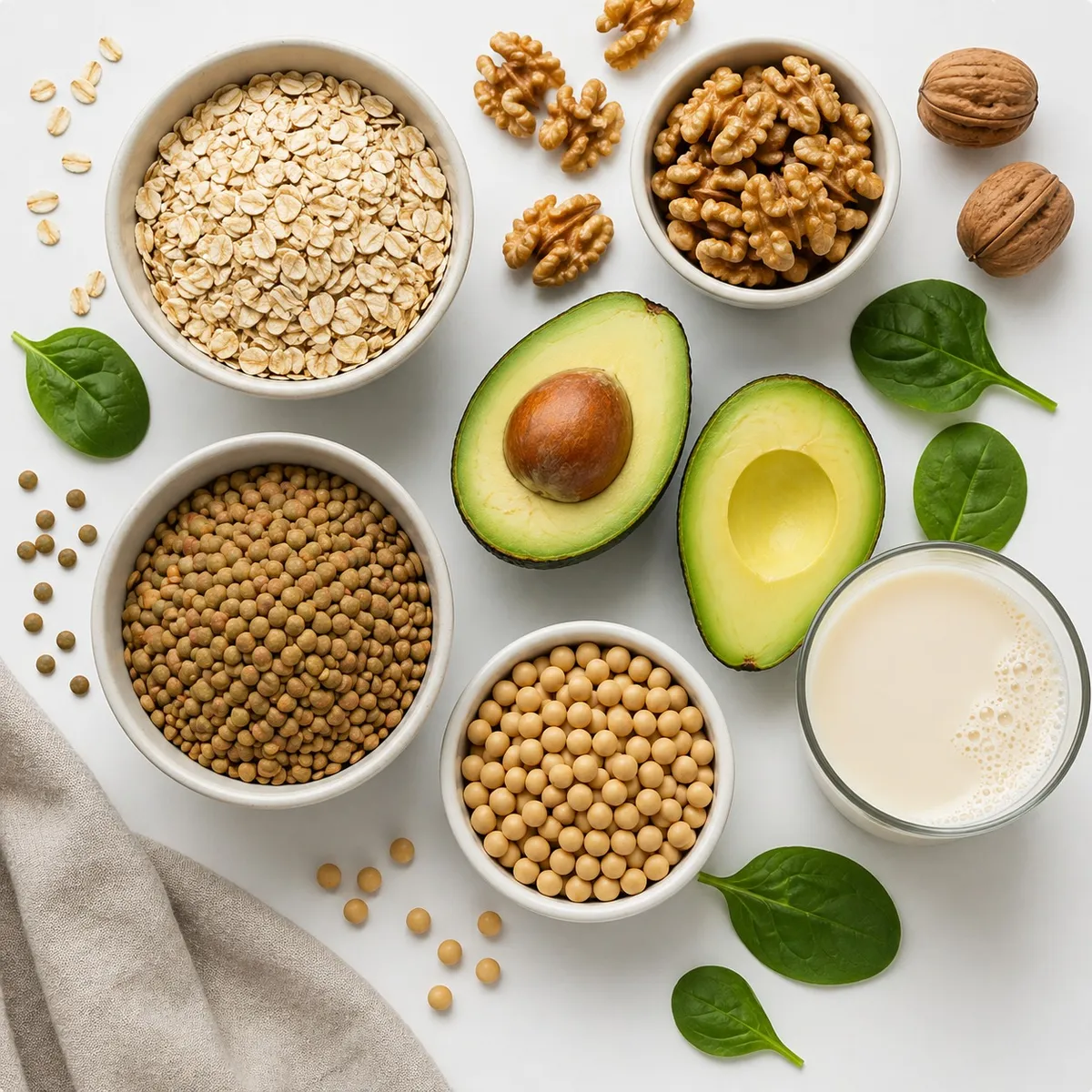
Diet is the foundation of cholesterol management in every major clinical guideline — not because medication doesn’t work, but because dietary changes are often sufficient for mild-to-moderate LDL elevation, are additive with medication for higher-risk patients, and carry no side effect risk.
The challenge is that “heart healthy eating” advice is often vague, contradictory, and driven more by marketing than evidence. This guide focuses on what the clinical research actually supports — specifically the Portfolio Diet, which is the most rigorously studied dietary pattern for LDL reduction.
The Portfolio Diet — what it is and why it works
The Portfolio Diet was developed by Dr. David Jenkins at the University of Toronto and published initially in JAMA in 2003. Unlike most “heart healthy” dietary patterns that focus on what to avoid, the Portfolio Diet is built around four specific food categories that each have independent LDL-lowering evidence — and whose effects are additive when combined.
The name comes from the investment concept: just as a diversified portfolio reduces risk better than any single asset, a portfolio of cholesterol-lowering foods produces better results than any single dietary change.
The four pillars
1. Soluble fiber — 20–30g per day
Soluble fiber binds bile acids in the small intestine, preventing their reabsorption. The liver must synthesize new bile acids from cholesterol, increasing cholesterol demand and pulling more LDL from the bloodstream through LDL receptor upregulation.
The best sources of soluble fiber for LDL reduction:
| Food | Serving | Soluble fiber |
|---|---|---|
| Psyllium husk powder | 1 tablespoon (5g) | ~4g |
| Rolled oats (dry) | 40g (½ cup) | ~2g |
| Cooked lentils | 100g | ~2g |
| Cooked kidney beans | 100g | ~2g |
| Cooked black beans | 100g | ~1.5g |
| Cooked barley | 100g | ~1.5g |
| Apple (with skin) | 1 medium | ~1g |
| Brussels sprouts | 100g | ~2g |
| Avocado | Half | ~2.5g |
Getting 20–30g of soluble fiber daily from food alone is achievable but requires deliberate planning. Psyllium supplementation (5–10g/day) is a practical way to close the gap. A 2020 meta-analysis confirmed the dose-response relationship between soluble fiber intake and LDL reduction.
2. Plant sterols and stanols — 2g per day with meals
Plant sterols block cholesterol absorption in the small intestine by competing for the same absorption sites as dietary cholesterol. They must be taken with food — the mechanism depends on simultaneous presence of dietary cholesterol in the gut.
A 2014 meta-analysis of 124 randomized trials found that 2g/day of plant sterols reduces LDL by approximately 8–10%. The effect plateaus above 2–2.5g/day.
Practical sources:
- Plant sterol-enriched spreads (look for products with 0.8–1g per serving)
- Plant sterol supplements (third-party tested, 400–500mg per capsule)
- Some enriched orange juices and yogurts
Note: natural plant sterol content in ordinary foods (nuts, vegetable oils, whole grains) contributes 200–400mg/day — helpful but insufficient alone to reach 2g.
3. Soy protein — 25g per day
Soy protein appears to lower LDL through multiple mechanisms including modulation of LDL receptor activity and effects on bile acid metabolism. The FDA has an authorized health claim for soy protein and reduced coronary heart disease risk.
Practical sources of soy protein:
| Food | Serving | Protein |
|---|---|---|
| Firm tofu | 150g | ~15g |
| Edamame (shelled) | 100g | ~11g |
| Soy milk (unsweetened) | 250ml | ~7g |
| Tempeh | 100g | ~19g |
| Soy yogurt | 150g | ~5g |
The effect size from soy protein is modest — approximately 3–5% LDL reduction — but it contributes to the additive Portfolio Diet total and offers a high-quality protein source that replaces more atherogenic animal proteins.
4. Nuts — 30g per day
Tree nuts reduce LDL through several mechanisms: they displace saturated fat from the diet, contain plant sterols and unsaturated fats, and fiber content slows cholesterol absorption. A 2015 Cochrane review of 61 trials found that tree nut consumption significantly reduced LDL and total cholesterol.
Best options for LDL reduction:
- Almonds: 30g (~23 almonds). Particularly well-studied for LDL reduction.
- Walnuts: 30g (~14 halves). High in ALA (plant omega-3) and associated with cardiovascular benefit.
- Pistachios: 30g (~49 kernels). Good sterol content.
- Cashews, pecans, macadamias: Also beneficial, slightly less studied for LDL specifically.
30g/day is the target across the research literature. More than this doesn’t necessarily produce more LDL benefit, and calorie density becomes a consideration.
What the Portfolio Diet achieves
The original JAMA trial found LDL reductions of 28–35% with full adherence to all four components — comparable to a low-dose statin. Real-world adherence trials show more modest but still meaningful results of 15–20% LDL reduction.
A 2011 randomized trial comparing the Portfolio Diet to a low-saturated-fat control diet found that Portfolio Diet participants achieved three times greater LDL reduction. A 2014 study found that even partial adherence (2–3 components) produced clinically meaningful LDL reductions compared to no dietary change.
| Intervention | Expected LDL reduction |
|---|---|
| Soluble fiber 20–30g/day | 5–10% |
| Plant sterols 2g/day | 8–10% |
| Soy protein 25g/day | 3–5% |
| Nuts 30g/day | 3–5% |
| Replacing saturated fat with PUFA | 5–8% |
| Full Portfolio Diet (real-world) | 15–25% |
What to reduce — the evidence on saturated fat
Replacing saturated fat with polyunsaturated fat (PUFA) — found in vegetable oils, nuts, and fatty fish — reduces LDL. A 2015 Cochrane meta-analysis found that replacing saturated fat with PUFA reduced cardiovascular events by 17%.
The practical swaps with the most impact:
- Replace butter with olive oil or plant-based spreads for cooking and spreading
- Replace red meat (especially processed meat) with fish, legumes, or poultry several times per week
- Choose lower-fat dairy or plant-based milk alternatives
- Limit pastries, biscuits, and commercially fried foods
- Read labels on packaged foods for saturated fat content
Dietary cholesterol — what the current evidence says
Dietary cholesterol received enormous attention for decades. Current guidance is more nuanced.
For most people, dietary cholesterol from foods like eggs has a smaller effect on blood LDL than saturated fat intake. The American Heart Association no longer sets a specific numerical limit on dietary cholesterol, focusing instead on dietary patterns.
However: some people are “hyper-responders” to dietary cholesterol and show significant LDL increases from egg consumption. If you eat eggs daily and your LDL is elevated, it’s worth testing your response by reducing egg intake for 8 weeks and retesting.
For people with established cardiovascular disease, the more conservative approach of limiting cholesterol-dense foods remains appropriate.
The triglyceride diet — different from the LDL diet
If your triglycerides are elevated alongside LDL, dietary priorities shift somewhat. The biggest drivers of elevated triglycerides are:
- Refined carbohydrates and sugar (white bread, white rice, sugary drinks, pastries)
- Alcohol — even moderate amounts raise triglycerides in susceptible people
- Excess total calories leading to weight gain
For elevated triglycerides, reducing refined carbohydrates and alcohol produces faster and more meaningful reductions than reducing fat. A 2020 meta-analysis found low-carbohydrate diets reduced triglycerides significantly more than low-fat diets.
Practical day structure — how to eat for LDL reduction
Breakfast pattern
Oat-based breakfast provides soluble fiber foundation. Add psyllium if oats alone don’t reach your fiber target. Soy milk or soy yogurt contributes to daily soy protein. Nuts or nut butter add the nut component.
Example: Rolled oats with soy milk, a handful of walnuts, and a tablespoon of psyllium husk stirred in. Add berries for flavour and additional fiber.
Lunch and dinner pattern
Legumes (lentils, chickpeas, kidney beans, black beans) provide simultaneous soluble fiber and plant protein. They displace meat from the diet without sacrificing satiety. Aim for legumes at least once daily.
Tofu or tempeh 2–3 times per week contributes meaningfully to the 25g/day soy protein target. These work in stir-fries, curries, salads, and grain bowls.
Include a generous portion of vegetables with each meal — particularly Brussels sprouts, broccoli, and aubergine, which have among the highest soluble fiber content of common vegetables.
Snack and plant sterol timing
If using plant sterol supplements, take 1g with breakfast and 1g with dinner (or 2g with whichever meal contains the most fat). If using sterol-enriched spreads, incorporate them with meals rather than between meals.
A 30g portion of almonds or mixed nuts makes an ideal mid-morning or afternoon snack — it satisfies hunger and contributes to the daily nut target without displacing meal nutrition.
Mediterranean Diet — the broader evidence context
The Portfolio Diet is specifically designed for LDL reduction. The Mediterranean Diet is a broader dietary pattern with strong cardiovascular outcome data (PREDIMED trial, Lyon Diet Heart Study).
The two patterns are compatible and complementary. A Mediterranean-style diet that also incorporates the four Portfolio Diet components achieves both LDL reduction and broader cardiovascular benefit. In practice, this means:
- Olive oil as the primary fat
- Abundant vegetables, legumes, whole grains
- Moderate fish, poultry; limited red meat
- Nuts daily
- Moderate dairy (preferably fermented — yogurt, cheese)
- Limited processed and ultra-processed foods
- Plus: psyllium supplementation and plant sterols to reach Portfolio Diet targets
What to expect and when
Weeks 1–2: LDL changes are not yet detectable. Focus is on building habits and adjusting to increased fiber.
Weeks 3–4: GI adaptation to higher fiber. Some people notice improvements in digestion and satiety.
Weeks 6–8: Measurable LDL changes begin to appear. This is the earliest useful timepoint for a lipid panel.
Week 12: Stable LDL response from dietary changes. A lipid panel at this point gives a reliable picture of what diet alone is achieving.
If LDL hasn’t moved meaningfully after 12 weeks of consistent Portfolio Diet adherence, this is an important data point for the conversation with your clinician about whether lifestyle-first is sufficient for your risk profile.
Download the free LDL grocery list and 7-day plan
The Portfolio Diet principles are clear. Translating them into a weekly grocery shop and daily meals is where most people get stuck. The free LDL Grocery List and 7-Day Starter Plan gives you:
- A complete weekly grocery list organized by section of the supermarket
- 7 days of breakfast, lunch, and dinner aligned to Portfolio Diet targets
- Soluble fiber, plant sterol, soy protein, and nut content per meal
- A daily tracker to monitor your Portfolio Diet component intake
- Practical swaps for common high-saturated-fat foods
Free resource
Download the LDL Grocery List
7-day Portfolio Diet meal plan, complete grocery list, daily tracker, and saturated fat swap guide. Based on clinical trial data.
No spam · Unsubscribe anytime · May include affiliate links
Sources
- Jenkins DJ, et al. Effects of a dietary portfolio of cholesterol-lowering foods vs lovastatin. JAMA. 2003;290(4):502-510. PMID: 12876093
- Jenkins DJ, et al. Assessment of the longer-term effects of a dietary portfolio. Am J Clin Nutr. 2006;83(3):582-591. PMID: 16522904
- Ras RT, et al. LDL-cholesterol-lowering effect of plant sterols and stanols. Br J Nutr. 2014;112(2):214-219. PMID: 24780090
- Brown L, et al. Cholesterol-lowering effects of dietary fiber: a meta-analysis. Am J Clin Nutr. 1999;69(1):30-42. PMID: 9925120
- Sabaté J, et al. Nut consumption and blood lipid levels: a pooled analysis of 25 intervention trials. Arch Intern Med. 2010;170(9):821-827. PMID: 20458092
- Sacks FM, et al. Dietary Fats and Cardiovascular Disease (AHA Presidential Advisory). Circulation. 2017;136(3):e1-e23. PMID: 28620111
- Estruch R, et al. Primary Prevention of Cardiovascular Disease with a Mediterranean Diet (PREDIMED). NEJM. 2013;368(14):1279-1290. PMID: 23432189