Executive Summary
PCSK9 therapy is one of the clearest examples of modern cardiovascular medicine moving from human genetics to mechanism, imaging, outcomes and finally multiple treatment platforms. Gain-of-function mutations in PCSK9 were identified as a cause of autosomal-dominant hypercholesterolemia; loss-of-function variants were then shown to produce lifelong low LDL cholesterol and striking protection from coronary disease. That genetic experiment in humans validated PCSK9 as a causal therapeutic target before the first outcome trial was completed.[1,2]
Monoclonal antibodies against PCSK9 - evolocumab and alirocumab - generally lower LDL-C by roughly 50% to 60% on top of background therapy. GLAGOV showed that this magnitude of additional lowering could produce measurable coronary plaque regression by intravascular ultrasound. FOURIER and ODYSSEY OUTCOMES then demonstrated reductions in cardiovascular events. VESALIUS-CV, published in 2025 and appearing in the 2026 volume of the New England Journal of Medicine, extended the evidence to high-risk patients without previous myocardial infarction or stroke, reducing first major cardiovascular events over a median 4.6 years.[5-8]
The PCSK9 pathway is now larger than injectable antibodies. Inclisiran reduces hepatic PCSK9 synthesis with twice-yearly maintenance dosing and lowers LDL-C by about 50%, although definitive cardiovascular outcome data remain pending. In July 2026 the FDA approved enlicitide (Lipfendra), the first oral PCSK9 inhibitor, after phase 3 trials showed LDL-C reductions in the range of approximately 57% to 60%. Its dedicated cardiovascular outcome trial is still ongoing, so LDL lowering should not be confused with independently proven event reduction for this specific molecule.[11-15]
At the experimental frontier, VERVE-102 uses in-vivo base editing to inactivate hepatic PCSK9. In a 2026 early-phase study, a single infusion produced dose-dependent LDL-C reductions, reaching a mean 62% at the highest tested dose, with reductions sustained through available follow-up. This is not yet routine therapy and long-term safety, durability and cardiovascular outcomes remain unanswered.[16]
The practical lesson is not that every patient needs a PCSK9-targeted therapy. It is that very large LDL-C and ApoB reductions can be achieved safely in selected high-risk patients, and that the evidence increasingly supports earlier and more intensive reduction of cumulative atherogenic-lipoprotein exposure when baseline risk justifies it. The 2026 ACC/AHA dyslipidemia guideline now gives PCSK9 monoclonal antibodies a prominent role when LDL-C goals cannot be reached with maximally tolerated statin-based therapy, including in selected patients with severe hypercholesterolemia, established ASCVD and substantial subclinical coronary atherosclerosis.[17]
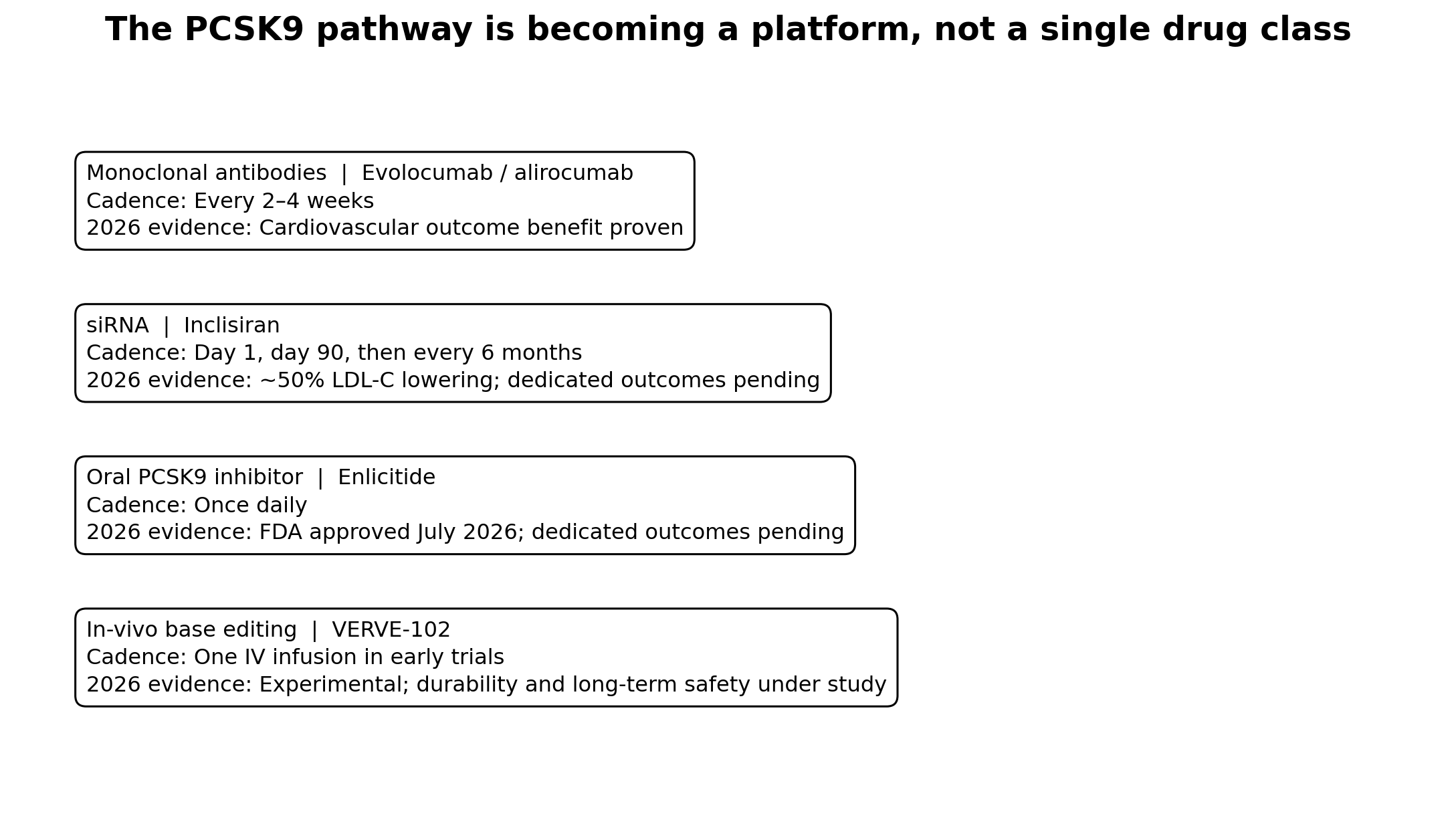
PCSK9 therapy is best understood as an LDL/ApoB-lowering platform. Evolocumab and alirocumab have proven cardiovascular outcome benefit; inclisiran offers infrequent dosing but awaits dedicated outcomes; enlicitide is the first FDA-approved oral PCSK9 inhibitor but also awaits outcomes; gene editing remains experimental.
| Question | Evidence-based answer |
|---|---|
| How much do PCSK9 monoclonal antibodies lower LDL-C? | Typically about 50–60% on top of background therapy. |
| Do they reduce cardiovascular events? | Yes. FOURIER and ODYSSEY OUTCOMES established benefit; VESALIUS-CV extended evolocumab evidence to first major events in high-risk patients without prior MI or stroke. |
| Can they regress plaque? | GLAGOV showed modest but measurable regression of coronary atheroma by IVUS with evolocumab added to statin therapy. |
| Do they lower Lp(a)? | Modestly, commonly around 20–30%; this is not equivalent to dedicated Lp(a)-lowering therapy. |
| Is very low LDL-C dangerous? | Randomized and extension data have not identified a threshold at which very low achieved LDL-C reverses benefit within studied ranges; long-term surveillance remains appropriate. |
| Is inclisiran the same as evolocumab? | No. Inclisiran is siRNA that suppresses hepatic PCSK9 production; evolocumab and alirocumab are antibodies that bind circulating PCSK9. |
| Is there now a PCSK9 pill? | Yes. Enlicitide (Lipfendra) became the first FDA-approved oral PCSK9 inhibitor in July 2026, but its cardiovascular outcomes trial is still ongoing. |
1. Why PCSK9 Matters
The liver clears most circulating LDL particles through the LDL receptor. After an LDL particle binds its receptor and is internalized, the receptor can normally recycle back to the hepatocyte surface and remove another particle. PCSK9 changes that cycle. When circulating PCSK9 binds the LDL receptor, the receptor is more likely to be sent for lysosomal degradation rather than recycled. Fewer receptors return to the cell surface, LDL clearance falls, and circulating LDL-C and ApoB rise.
Blocking PCSK9 therefore does not simply inhibit cholesterol synthesis. It amplifies the liver's own clearance machinery. That is why PCSK9 inhibition remains effective on top of statins: statins increase LDL-receptor expression, while PCSK9 blockade helps preserve those receptors. The mechanisms are complementary, and the combination can produce far larger LDL-C reductions than either approach alone.
The importance of PCSK9 is also a reminder that LDL-C is a concentration of cholesterol cargo, not a direct count of particles. When PCSK9 therapy lowers LDL-C, ApoB usually falls substantially as well. For atherosclerosis biology, that reduction in circulating atherogenic particle number is central: fewer particles means fewer opportunities for arterial-wall retention over time.
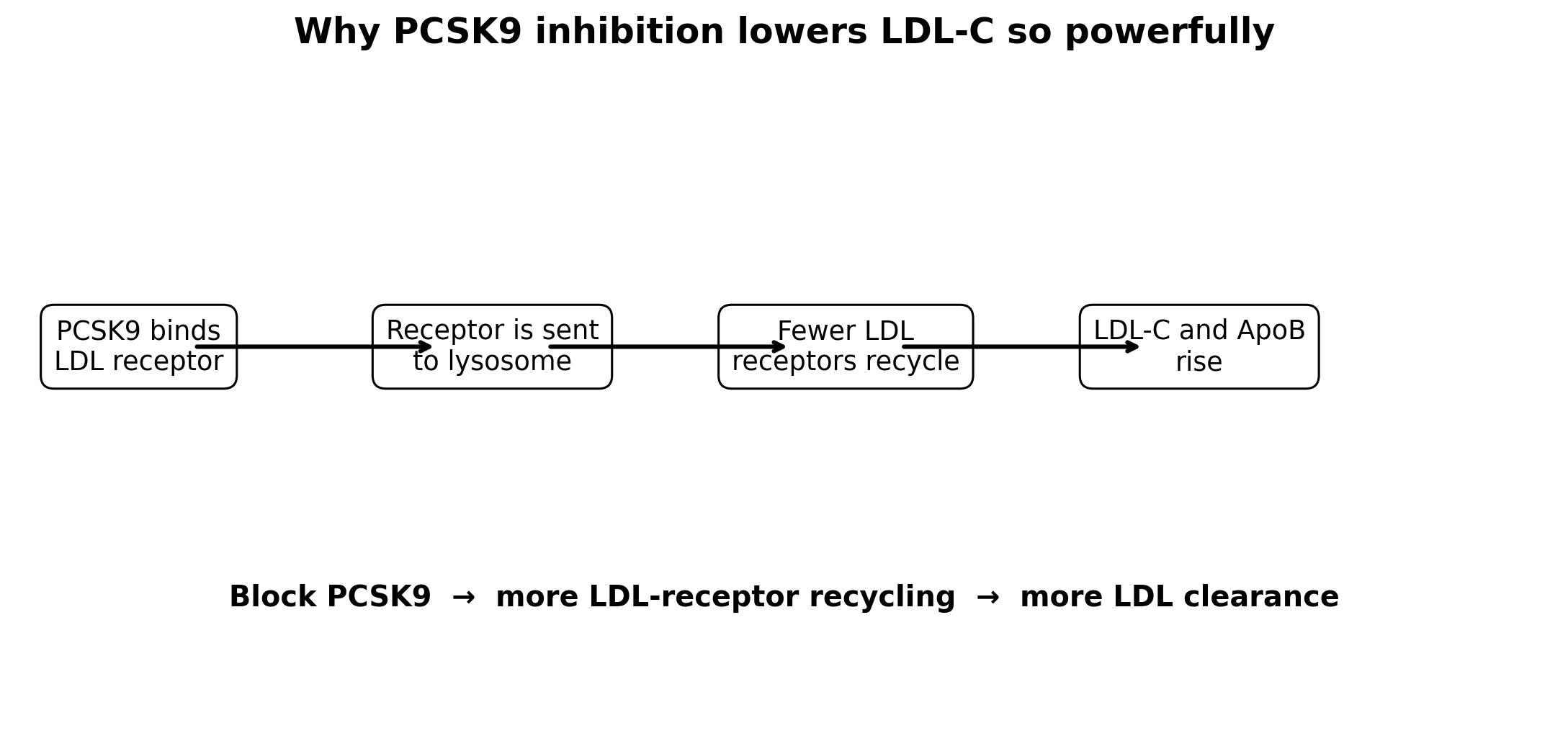
Statins and PCSK9 therapy are mechanistically complementary. A statin drives LDL-receptor expression; PCSK9 inhibition helps keep those receptors available for repeated use.
2. Human Genetics Validated the Target
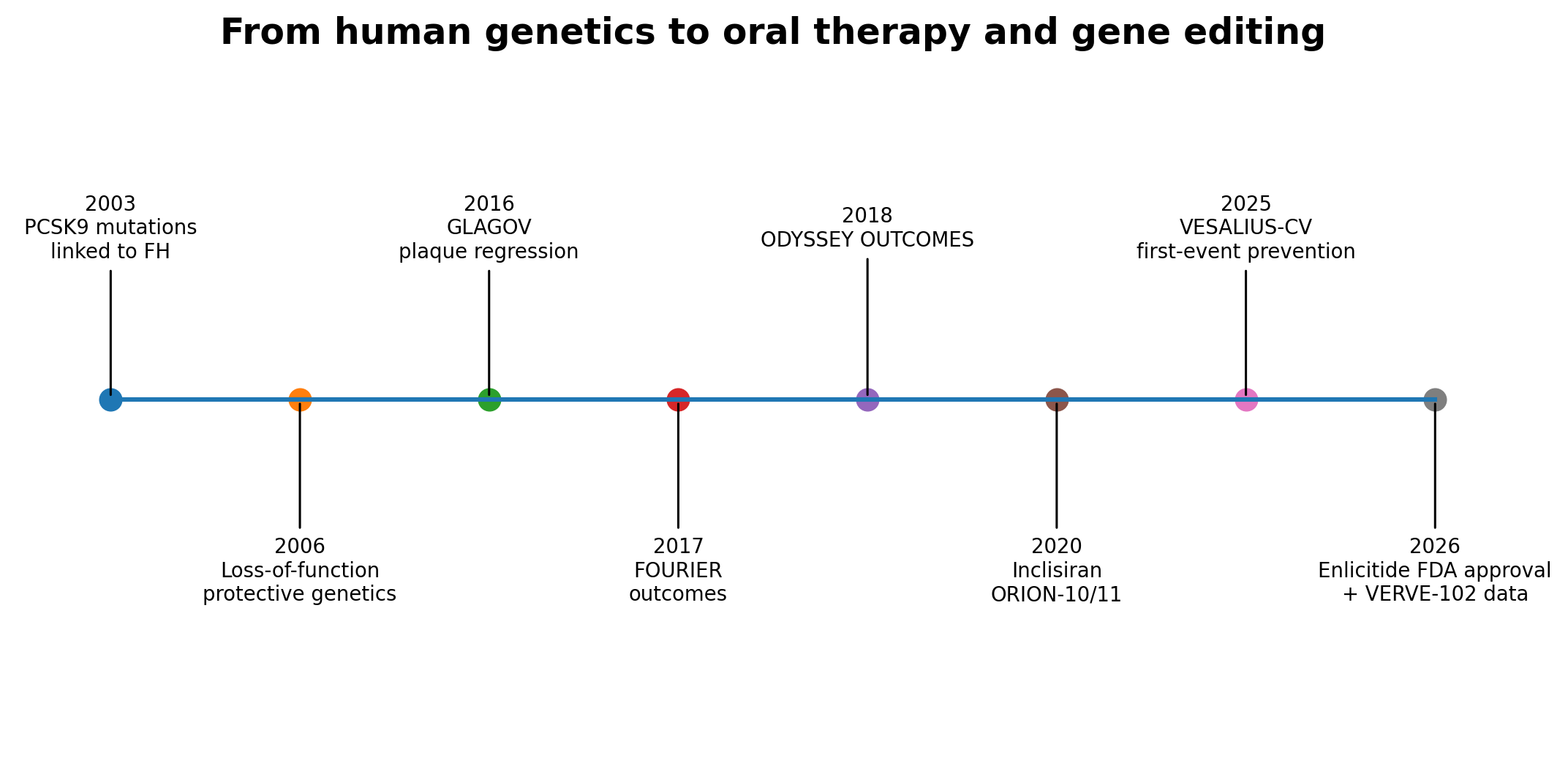
PCSK9 was not discovered because a drug company screened thousands of molecules. The story began with families. In 2003, gain-of-function mutations in PCSK9 were linked to autosomal-dominant hypercholesterolemia, establishing that excess PCSK9 activity can produce very high LDL-C.[1]
The reverse experiment was even more persuasive. Population studies identified loss-of-function PCSK9 variants associated with substantially lower lifelong LDL-C and markedly lower coronary-heart-disease risk. In the classic 2006 analysis by Cohen and colleagues, Black participants carrying nonsense mutations had approximately 28% lower LDL-C but an 88% lower risk of coronary heart disease; White participants with a different sequence variant had a smaller LDL-C reduction and a large reduction in coronary risk.[2] The point is not the exact percentage for an individual patient. The point is cumulative exposure: modest LDL reduction maintained from birth can translate into disproportionate lifetime protection.
This genetic evidence helped resolve two questions before monoclonal-antibody outcome trials were available. First, PCSK9 is causal rather than merely associated with cholesterol levels. Second, lifelong low LDL-C caused by reduced PCSK9 function appeared biologically compatible with health. Those observations strongly de-risked the therapeutic concept.
Human genetics + randomized trials = unusually strong target validation. PCSK9 is one of the best examples in cardiovascular medicine of Mendelian genetics pointing directly to a successful drug mechanism.
3. The Monoclonal-Antibody Era
Evolocumab and alirocumab are monoclonal antibodies that bind circulating PCSK9. They are administered subcutaneously and, depending on product and regimen, are given every two weeks or monthly. In patients already receiving statin therapy, average LDL-C reductions are commonly in the 50% to 60% range, with parallel reductions in non-HDL-C and ApoB.[3,4]
The early phase 3 programs established potency and tolerability. But lipid numbers alone were not enough. To become foundational cardiovascular drugs, PCSK9 antibodies had to answer three harder questions: could they change plaque biology, could they reduce clinical events, and would very low LDL-C remain safe? GLAGOV, FOURIER and ODYSSEY OUTCOMES answered those questions in sequence.
| Therapy | Modality | Typical LDL-C effect | Outcome evidence in 2026 |
|---|---|---|---|
| Evolocumab | PCSK9 monoclonal antibody | ~50–60% reduction | Yes: FOURIER; VESALIUS-CV |
| Alirocumab | PCSK9 monoclonal antibody | ~50–60% reduction | Yes: ODYSSEY OUTCOMES |
| Inclisiran | siRNA suppressing hepatic PCSK9 synthesis | ~50% reduction | Dedicated CV outcomes pending |
| Enlicitide | Oral macrocyclic PCSK9 inhibitor | ~57–60% reduction in phase 3 | FDA approved for LDL lowering; CV outcomes pending |
| VERVE-102 | In-vivo base editing of PCSK9 | Dose-dependent; 62% mean LDL-C reduction at highest dose in early study | Experimental; no outcomes evidence |
4. GLAGOV: Could PCSK9 Inhibition Change the Plaque Itself?
GLAGOV was the imaging bridge between dramatic LDL lowering and clinical outcome trials. The randomized trial enrolled 968 patients with angiographic coronary disease who were already receiving statin therapy. Serial intravascular ultrasound (IVUS) quantified coronary atheroma over 76 weeks.[5]
Background therapy left the placebo group with a time-weighted mean LDL-C of about 93 mg/dL, whereas evolocumab drove the mean to about 36.6 mg/dL. Percent atheroma volume (PAV) increased slightly by 0.05% with placebo but decreased by 0.95% with evolocumab, a between-group difference of 1.0 percentage point. Total atheroma volume also declined more with evolocumab. Using PAV, regression occurred in 64.3% of evolocumab-treated patients versus 47.3% with placebo.[5]
Those numbers require perspective. A 0.95% reduction in PAV is not a disappearing artery plaque. IVUS measures wall plaque burden with high precision, and even small mean shifts across a coronary segment are biologically meaningful. GLAGOV showed that when LDL exposure is pushed substantially lower than with statin therapy alone, average coronary atheroma can move in the direction of regression rather than progression.
GLAGOV also helped popularize a crucial principle: very low achieved LDL-C was not merely a laboratory curiosity. It was associated with a measurable change in the disease substrate itself.
Myth: PCSK9 therapy "cleans out" the arteries. Fact: GLAGOV showed modest average regression in plaque volume by IVUS. The larger clinical objective is fewer plaque-related events, not a visually pristine artery.
5. FOURIER: LDL Around 30 mg/dL and Fewer Events
FOURIER transformed PCSK9 inhibition from a lipid-lowering strategy into an outcomes-proven cardiovascular therapy. The trial randomized 27,564 patients with established atherosclerotic cardiovascular disease who remained above an LDL-C threshold despite statin therapy to evolocumab or placebo. Median follow-up was 2.2 years.[6]
At 48 weeks, evolocumab produced a 59% placebo-corrected reduction in LDL-C, taking the median from 92 mg/dL to 30 mg/dL. The primary composite endpoint - cardiovascular death, myocardial infarction, stroke, hospitalization for unstable angina or coronary revascularization - occurred in 9.8% of the evolocumab group versus 11.3% with placebo (hazard ratio 0.85). The more clinically focused composite of cardiovascular death, myocardial infarction or stroke was reduced by about 20%.[6]
The trial's duration matters. Lipid-lowering therapies generally accumulate benefit over time because they alter future plaque events rather than immediately reverse decades of disease. FOURIER therefore demonstrated benefit quickly, but its absolute risk reduction was limited by relatively short follow-up. Longer-term extension data later showed continuing benefit with sustained exposure.[9]
FOURIER also tested the practical fear that an LDL-C around 30 mg/dL was 'too low.' Within the randomized trial, adverse-event rates were broadly similar between groups apart from a small excess of injection-site reactions. Dedicated cognitive testing in EBBINGHAUS found no significant difference in cognitive function between evolocumab and placebo over the study period.[7]
FOURIER did not prove that every person should target LDL-C 30 mg/dL. It proved that in high-risk patients with established ASCVD, pushing LDL-C much lower than conventional statin-era levels reduced events without a major safety signal over the trial period.
6. ODYSSEY OUTCOMES: After an Acute Coronary Syndrome
ODYSSEY OUTCOMES asked a related but clinically distinct question. It enrolled 18,924 patients after a recent acute coronary syndrome who had residual atherogenic cholesterol despite intensive or maximum tolerated statin therapy. Alirocumab was titrated to target an LDL-C range of approximately 25 to 50 mg/dL.[8]
Over a median 2.8 years, the primary composite endpoint of coronary death, nonfatal myocardial infarction, ischemic stroke or unstable angina requiring hospitalization occurred less often with alirocumab. The treatment effect was broadly consistent with the LDL-lowering principle established by earlier trials. Importantly, patients starting with LDL-C at least 100 mg/dL experienced greater absolute benefit, illustrating a recurring theme: absolute risk and absolute LDL reduction strongly influence how much clinical benefit a patient is likely to gain.[8]
ODYSSEY also generated important secondary insights. Alirocumab modestly lowered Lp(a), and post hoc analyses found that baseline Lp(a) predicted residual event burden and that Lp(a) reduction contributed independently to the observed reduction in total cardiovascular events. This does not make alirocumab a dedicated Lp(a) drug - typical Lp(a) reductions are far smaller than with emerging Lp(a)-specific therapies - but it may be clinically useful in patients who have both high LDL/ApoB burden and elevated Lp(a).[10,11]
7. VESALIUS-CV: Moving Earlier in the Disease Continuum
For years, the strongest PCSK9 outcome data came from patients who had already declared themselves as very high risk: established ASCVD in FOURIER and recent acute coronary syndrome in ODYSSEY OUTCOMES. VESALIUS-CV moved the intervention earlier. Published in November 2025 and appearing in the 2026 volume of NEJM, it randomized 12,257 high-risk patients with atherosclerosis or diabetes but no previous myocardial infarction or stroke to evolocumab or placebo.[12]
Median follow-up was 4.6 years. The 5-year Kaplan-Meier estimate for 3-point MACE - coronary heart disease death, myocardial infarction or ischemic stroke - was 6.2% with evolocumab versus 8.0% with placebo, corresponding to a hazard ratio of 0.75. The broader 4-point MACE endpoint including ischemia-driven revascularization was also reduced (13.4% vs 16.2%; hazard ratio 0.81). No meaningful between-group safety difference emerged.[12]
This is not classic low-risk primary prevention. Many participants already had atherosclerosis or diabetes and were selected for high cardiovascular risk. But VESALIUS-CV weakens the old conceptual boundary that intensive injectable lipid lowering is mainly for people who have already had an MI or stroke. The disease process is continuous, and first events matter as much as recurrent events.
A timing nuance is important. The 2026 ACC/AHA dyslipidemia guideline incorporated evidence through late 2024, so VESALIUS-CV was published after its formal evidence cut-off. Even so, the guideline already recommends PCSK9 monoclonal antibodies in several high-risk settings when LDL-C goals are not reached, including selected severe hypercholesterolemia, established ASCVD, and some patients with substantial subclinical coronary atherosclerosis such as CAC 300 to 999 when additional therapy is needed.[17]
8. How Low Can LDL-C Go?
PCSK9 therapy forced clinicians to confront a question that had previously been mostly theoretical: what happens when LDL-C reaches levels in the 20s, teens or even lower? FOURIER placed a large number of patients into these ranges. Subsequent analyses found a monotonic relationship between lower achieved LDL-C and lower cardiovascular risk across the levels observed, without a clear threshold at which benefit reversed.[6,9]
That statement needs boundaries. Clinical trials cannot prove that any arbitrarily low LDL-C is safe forever in every population. They can show that the very low concentrations achieved pharmacologically in studied high-risk patients did not generate the neurological, hemorrhagic, hormonal or general safety catastrophe that had been feared. EBBINGHAUS specifically addressed cognition and was reassuring.[7] FOURIER open-label extension data provided longer exposure and continued to support the safety of sustained evolocumab treatment.[9]
The practical decision therefore shifts away from asking 'Is 35 mg/dL too low?' and toward 'Does this patient's absolute ASCVD risk justify the intensity, complexity and cost of getting there?' For very-high-risk secondary prevention, the answer is often yes. For a young low-risk person with modest LDL elevation and no familial hypercholesterolemia or subclinical disease, the answer may be very different.
Biological safety and clinical necessity are different questions. A very low LDL-C may be safe within studied ranges, but a therapy should still be justified by the patient’s absolute risk and expected absolute benefit.
9. What Happens to Lp(a)?
PCSK9 monoclonal antibodies are unusual among established LDL-lowering drugs because they also lower Lp(a) modestly, often by roughly 20% to 30% on average.[10,11] The mechanism is not fully captured by a single pathway and appears to involve LDL-receptor-dependent and other clearance effects.
The clinical interpretation requires restraint. A patient with Lp(a) 150 mg/dL is not transformed into a low-Lp(a) phenotype by a 20% reduction. However, in someone who already needs stronger LDL/ApoB lowering, the accompanying Lp(a) reduction is potentially valuable. Secondary analyses from FOURIER and ODYSSEY suggest that patients with higher Lp(a) have higher residual risk and may derive greater absolute benefit from PCSK9 inhibition, with some analyses linking the degree of Lp(a) lowering to event reduction.[10,11]
Dedicated Lp(a)-lowering therapies aim for much larger reductions and are being tested specifically for cardiovascular outcomes. Until those data mature, PCSK9 therapy should primarily be prescribed for established LDL/ApoB indications rather than as a substitute for a true Lp(a)-targeted treatment.
10. Safety: What the Trials Actually Show
| Concern | What the evidence shows |
|---|---|
| Injection-site reactions | Slightly more common with monoclonal antibodies; usually mild and rarely treatment-limiting. |
| Neurocognitive effects | EBBINGHAUS did not show worse cognitive performance with evolocumab over the randomized study period. |
| Very low LDL-C | No major safety signal emerged in FOURIER across very low achieved LDL-C levels; long-term extension data are reassuring. |
| Diabetes / glycaemia | Unlike statins, PCSK9 mAbs have not shown a clinically important diabetes signal in major outcome trials. |
| Liver / muscle toxicity | Not a dominant class toxicity; this is one reason PCSK9 therapy is useful when statin dose is constrained. |
| Immunogenicity | Clinically relevant neutralizing antibodies are uncommon with current fully human mAbs; bococizumab failed partly because of immunogenicity, illustrating why drug design matters. |
Safety should not be oversold. Real-world therapy adds issues that randomized trials cannot fully capture: adherence, storage, injection technique, access delays, cost and rare adverse reactions. Nevertheless, after years of use and large randomized programs, evolocumab and alirocumab have a well-characterized safety profile.
A persistent misconception is that cholesterol is so essential to cell membranes and hormones that lowering LDL-C below a certain arbitrary number must cause deficiency. Plasma LDL-C is not the body's only source of cholesterol; cells synthesize cholesterol locally, and inherited PCSK9 loss-of-function states provided early biological reassurance. The clinical trials then supplied direct randomized evidence.
11. Who Should Receive a PCSK9 Monoclonal Antibody in 2026?
Guidelines do not recommend a PCSK9 antibody simply because a patient wants the lowest possible LDL-C. Therapy is layered according to baseline risk, LDL-C goal, response to statins and ezetimibe, familial hypercholesterolemia, subclinical disease burden, tolerance, access and preference.
The 2026 ACC/AHA multisociety dyslipidemia guideline restores explicit LDL-C and non-HDL-C goals. In very-high-risk clinical ASCVD, it supports adding ezetimibe and/or a PCSK9 monoclonal antibody to maximally tolerated statin therapy to achieve LDL-C below 55 mg/dL and non-HDL-C below 85 mg/dL. In severe hypercholesterolemia, PCSK9 mAbs are also among recommended add-on options when goals are not reached. The guideline further recognizes selected subclinical coronary disease: for CAC 300 to 999, intensifying therapy and adding ezetimibe, a PCSK9 mAb or bempedoic acid when needed to reach LDL-C below 55 mg/dL is considered reasonable.[17]
European recommendations similarly emphasize risk-stratified LDL-C goals and combination therapy when statins alone do not achieve them.[18] The common logic is simple: use a potent PCSK9 therapy when the residual LDL/ApoB burden is clinically important enough that the expected absolute reduction in events justifies escalation.
| Clinical situation | Where PCSK9 mAbs fit |
|---|---|
| Very-high-risk established ASCVD | Strong evidence-based add-on when LDL-C remains above goal despite maximally tolerated statin ± ezetimibe. |
| Recent ACS | Alirocumab has direct ODYSSEY OUTCOMES evidence; evolocumab also has strong ASCVD evidence. |
| HeFH / severe hypercholesterolemia | Useful when very large LDL-C reductions are needed beyond statin/ezetimibe. |
| High-risk atherosclerosis without prior MI/stroke | VESALIUS-CV supports evolocumab for first-event reduction in selected high-risk patients. |
| High CAC / subclinical coronary disease | 2026 ACC/AHA allows escalation including PCSK9 mAb in selected patients with substantial CAC when goals remain unmet. |
| Elevated Lp(a) alone with LDL/ApoB already optimal | Not a dedicated Lp(a) indication; decision should be individualized based on global risk and LDL/ApoB need. |
12. Inclisiran: Same Target, Different Technology
Inclisiran is often grouped with PCSK9 inhibitors, but mechanistically it is different. Evolocumab and alirocumab bind the PCSK9 protein after it has been produced. Inclisiran is a small interfering RNA (siRNA) delivered to hepatocytes, where it reduces translation of PCSK9 messenger RNA. Less PCSK9 protein is made in the first place.
ORION-10 and ORION-11 showed placebo-corrected LDL-C reductions of approximately 50% with injections on day 1, day 90 and then every six months.[13] The appeal is adherence: administration can occur in a healthcare setting only twice per year after the loading phase.
The evidence distinction is crucial. Evolocumab and alirocumab have dedicated randomized cardiovascular outcome trials showing fewer events. Inclisiran has robust LDL-lowering efficacy, but definitive outcomes evidence remains pending in 2026. The 2026 ACC/AHA guideline therefore positions inclisiran particularly for patients unable to tolerate or obtain evolocumab/alirocumab or who strongly prefer less frequent dosing.[17]
A 50% LDL-C reduction is biologically meaningful, but drug-specific outcome evidence still matters. PCSK9 mAbs have outcome trials; inclisiran’s dedicated outcomes program is still maturing.
13. Enlicitide: The First Oral PCSK9 Inhibitor
For years, the practical limitation of PCSK9 therapy was obvious: the most potent drugs were injections. Enlicitide changed that. It is an orally administered macrocyclic peptide engineered to bind PCSK9 despite the longstanding challenge of delivering peptide-like molecules through the gastrointestinal tract.
In the phase 3 CORALreef Lipids trial, enlicitide reduced LDL-C by approximately 57% at 24 weeks compared with placebo and also lowered non-HDL-C, ApoB and Lp(a), with broadly similar overall adverse-event rates.[14] A separate 2026 phase 3 comparison found substantially greater short-term LDL-C lowering with enlicitide than with ezetimibe, bempedoic acid or their combination when added to statin therapy.[15]
On July 17, 2026, the U.S. Food and Drug Administration approved Lipfendra (enlicitide) as the first oral PCSK9 inhibitor for adults with hypercholesterolemia, including heterozygous familial hypercholesterolemia, as an adjunct to diet and exercise.[19] This is a genuine milestone because it removes the injection barrier from a class-level degree of LDL lowering.
But one line must remain bold in any responsible summary: the drug was approved on LDL-C lowering, not on completed cardiovascular-outcome evidence. The CORALreef Outcomes trial is ongoing. It is reasonable to expect that a sustained LDL/ApoB reduction of this magnitude should be beneficial based on the broader LDL causal evidence, but that is an inference until the enlicitide-specific outcome trial reports.
Enlicitide is now FDA approved. The accurate wording is not “an oral PCSK9 drug that has proven it prevents heart attacks,” but “an oral PCSK9 inhibitor that has proven large LDL-C lowering; its dedicated cardiovascular outcome trial is ongoing.”
14. VERVE-102: From Repeated Dosing to One-Time Editing?
The most radical extension of the PCSK9 concept is not another antibody, injection or pill. It is editing the gene itself. VERVE-102 is an in-vivo base-editing therapy designed to introduce a specific change in hepatic PCSK9 and thereby reduce PCSK9 production after a single intravenous infusion.
In an early-phase study published in NEJM in May 2026, 35 participants across six dose cohorts received VERVE-102. Mean PCSK9 reductions ranged from 51% at the 0.3 mg/kg dose to 88% at 1.0 mg/kg; corresponding mean LDL-C reductions ranged from 9% to 62%. Reductions appeared durable through the available follow-up, which was at least one year in 15 participants. No dose-limiting toxic effects were reported, although infusion reactions and transient liver-enzyme elevations occurred.[16]
This is exciting but should not be described as 'one infusion cuts LDL in half forever.' Early durability is not the same as lifetime proof. Gene editing also changes the risk calculus: a permanent or near-permanent intervention demands exceptional confidence in off-target safety, long-term hepatic effects, reproductive implications and the ability to manage unforeseen consequences. Large confirmatory studies and much longer follow-up are required.
If the platform succeeds, however, PCSK9 may become the first common cardiovascular risk factor routinely treated through one-time in-vivo gene editing. That would represent a shift from adherence management to biological reprogramming.
15. The Practical Treatment Ladder
PCSK9 therapy works best when it is placed in a coherent lipid-lowering strategy rather than treated as a prestige drug. Most patients still begin with lifestyle optimization and statin therapy because statins have enormous randomized evidence, low cost and oral convenience. Ezetimibe is a common first add-on when a modest additional reduction is enough. Bempedoic acid is another oral option, particularly when statin tolerance is limited. When the LDL-C gap is large or risk is very high, PCSK9-targeted therapy becomes more attractive because it can remove roughly half or more of the remaining LDL-C.
The sequence should not be dogmatic. A patient with familial hypercholesterolemia, prior MI and LDL-C 150 mg/dL on therapy has a different problem from a low-risk patient with LDL-C 105 mg/dL. A patient who cannot self-inject may prefer inclisiran or oral enlicitide. A patient with recent ACS and a large residual LDL burden may favor a monoclonal antibody because its event-reduction evidence is direct. Cost and insurance can be decisive in real-world care.
| Step | Question | Typical action |
|---|---|---|
| 1 | What is the patient’s absolute ASCVD risk and treatment goal? | Use clinical ASCVD, FH, diabetes, CAC/subclinical disease and contemporary risk assessment. |
| 2 | Is maximally tolerated statin therapy being used? | Optimize statin unless contraindicated or truly intolerant. |
| 3 | How large is the remaining LDL-C/ApoB gap? | Small gap may be closed with ezetimibe; larger gaps favor more potent add-on therapy. |
| 4 | Is outcome-proven PCSK9 therapy needed? | Evolocumab/alirocumab have direct outcome evidence. |
| 5 | Is dosing convenience the dominant issue? | Consider inclisiran for infrequent administration or enlicitide for an oral PCSK9 option, recognizing evidence differences. |
| 6 | Is Lp(a) elevated? | PCSK9 mAbs may modestly lower Lp(a), but treat them primarily for LDL/ApoB indications. |
| 7 | Reassess response and adherence | Check LDL-C/non-HDL-C/ApoB after therapy and monitor tolerability/access. |
16. Clinical Scenarios
A patient with established ASCVD remains above a <55 mg/dL goal despite high-intensity statin and ezetimibe. A PCSK9 monoclonal antibody is strongly evidence-based because both the absolute risk and LDL-C gap are substantial. FOURIER/ODYSSEY-type evidence directly supports event reduction.
HIGH-INTENSITY STATIN\ This is no longer a “normal primary prevention” discussion. The 2026 ACC/AHA guideline recognizes substantial CAC as a reason to intensify LDL lowering; a PCSK9 mAb can be considered if needed to reach the recommended LDL-C goal. VESALIUS-CV further supports the concept of preventing first events in high-risk patients.
CAC 0\ PCSK9 therapy should not be reflexively prescribed solely to lower Lp(a). The expected Lp(a) reduction is modest. Management should focus on overall risk, lifelong LDL/ApoB exposure, family history and shared decision-making while dedicated Lp(a) outcome data mature.
INJECTIONS\ As of July 2026, enlicitide provides an FDA-approved oral PCSK9 option with phase 3 LDL-C lowering comparable in magnitude to injectable therapies. The trade-off is that enlicitide-specific cardiovascular outcome evidence is not yet complete.
17. Myths vs Facts
| Myth | Fact |
|---|---|
| “PCSK9 inhibitors are only for familial hypercholesterolemia.” | They are used across several high-risk settings, especially when LDL-C goals are not reached with standard therapy. |
| “If LDL-C falls below 40 mg/dL, the brain will be starved of cholesterol.” | Randomized cognitive data with evolocumab did not support this claim within studied exposure ranges. |
| “GLAGOV proved plaque disappears.” | GLAGOV showed modest average regression of IVUS-measured atheroma, not elimination of coronary disease. |
| “Inclisiran is just Repatha every six months.” | No. It is siRNA that reduces PCSK9 synthesis and has a different evidence base and dosing model. |
| “The new oral PCSK9 pill has already proven it prevents heart attacks.” | Enlicitide has proven potent LDL-C lowering and is FDA approved, but its dedicated cardiovascular outcome trial is still ongoing. |
| “VERVE-102 permanently cuts LDL in half after one infusion.” | Early dose-dependent reductions are promising; “permanent” lifetime efficacy and long-term safety are not yet established. |
18. Frequently Asked Questions
Are PCSK9 inhibitors stronger than statins?
As a percentage LDL-C reduction, PCSK9 mAbs commonly provide an additional ~50–60% reduction. But statins remain foundational because of cost, convenience and enormous outcomes evidence. The drugs are often complementary rather than competitors.
Which is better: evolocumab or alirocumab?
Both are potent fully human PCSK9 monoclonal antibodies with dedicated cardiovascular outcome evidence. Choice usually depends on indication, formulary, dosing preference, local availability and clinician experience rather than a proven universal superiority of one agent.
Do I still need a statin if I use a PCSK9 inhibitor?
Often yes. Major PCSK9 outcome trials generally studied the drugs on top of statin therapy, and the mechanisms are complementary. True statin intolerance or contraindication can change the strategy.
Can PCSK9 therapy lower ApoB?
Yes. Because it reduces circulating atherogenic particles, ApoB falls substantially along with LDL-C and non-HDL-C.
Can it lower triglycerides?
Only modestly. PCSK9 therapy is primarily an LDL/ApoB strategy, not a treatment for severe hypertriglyceridemia.
Does it lower Lp(a)?
Monoclonal antibodies often lower Lp(a) around 20–30% on average. That may be useful but is far less than the reductions targeted by dedicated Lp(a) therapies.
How quickly does LDL-C fall?
PCSK9 mAbs produce substantial LDL lowering within days to weeks. Exact timing varies by drug and regimen.
What is the main disadvantage?
For mAbs: injections, cost/access and administrative burden. Inclisiran trades self-injection frequency for clinic-based dosing. Enlicitide removes the injection barrier but has not yet completed its outcomes trial.
Is enlicitide available now?
In the United States, the FDA approved Lipfendra (enlicitide) on July 17, 2026. Availability, reimbursement and indications outside the U.S. may differ.
Should someone with high CAC automatically receive a PCSK9 inhibitor?
No. CAC is one part of absolute-risk assessment. The 2026 ACC/AHA guideline allows escalation including a PCSK9 mAb in selected patients with substantial CAC when LDL-C goals are not met, but treatment should be individualized.
What is the biggest unanswered question now?
For established mAbs, the question is increasingly implementation and optimal timing rather than efficacy. For inclisiran and enlicitide, dedicated cardiovascular outcome evidence is the key gap. For gene editing, long-term safety and durability are the central questions.
19. What This Means in 2026
The PCSK9 story has matured beyond a single injectable drug class. Human genetics established causality. GLAGOV showed that deep LDL lowering can move coronary plaque toward regression. FOURIER and ODYSSEY OUTCOMES proved that events fall. VESALIUS-CV pushed the evidence earlier in the disease continuum. Inclisiran changed dosing cadence. Enlicitide made a PCSK9-class degree of LDL lowering possible with a daily tablet. VERVE-102 has now shown that one-time gene editing can produce large, durable biochemical effects in an early clinical study.
The unifying principle is cumulative exposure to ApoB-containing lipoproteins. PCSK9-targeted therapies matter because they can dramatically reduce that exposure when simpler therapy is insufficient. They do not replace risk assessment, lifestyle, statins, blood-pressure control, diabetes management, smoking cessation or clinical judgment. They expand the toolkit.
For the highest-risk patients, the question is increasingly not whether an LDL-C in the 30s is 'unnaturally low,' but whether leaving a modifiable atherogenic burden untreated is acceptable. For lower-risk patients, the threshold for using expensive or intensive therapy should remain higher. Modern preventive cardiology is therefore moving toward a combination of deeper biological control and more precise patient selection.
Evolocumab and alirocumab are outcome-proven PCSK9 therapies. VESALIUS-CV shows that evolocumab can prevent first major events in selected high-risk patients without prior MI/stroke. Inclisiran offers infrequent dosing with outcomes still pending. Enlicitide is the first FDA-approved oral PCSK9 inhibitor as of July 2026, but its outcome trial is ongoing. VERVE-102 is a promising experimental gene-editing strategy, not routine care.
Bibliography verification: journal/PubMed/official-source metadata checked 7 August 2026; independent clinical review remains pending.
References
1. Abifadel M, Varret M, Rabès JP, et al. Mutations in PCSK9 cause autosomal dominant hypercholesterolemia. Nat Genet. 2003;34:154-156.
2. Cohen JC, Boerwinkle E, Mosley TH Jr, Hobbs HH. Sequence variations in PCSK9, low LDL, and protection against coronary heart disease. N Engl J Med. 2006;354:1264-1272.
3. Sabatine MS, Giugliano RP, Wiviott SD, et al. Efficacy and safety of evolocumab in reducing lipids and cardiovascular events. N Engl J Med. 2015;372:1500-1509.
4. Robinson JG, Farnier M, Krempf M, et al. Efficacy and safety of alirocumab in reducing lipids and cardiovascular events. N Engl J Med. 2015;372:1489-1499.
5. Nicholls SJ, Puri R, Anderson T, et al. Effect of evolocumab on progression of coronary disease in statin-treated patients: the GLAGOV randomized clinical trial. JAMA. 2016;316:2373-2384.
6. Sabatine MS, Giugliano RP, Keech AC, et al. Evolocumab and clinical outcomes in patients with cardiovascular disease. N Engl J Med. 2017;376:1713-1722.
7. Giugliano RP, Mach F, Zavitz K, et al. Cognitive function in a randomized trial of evolocumab. N Engl J Med. 2017;377:633-643.
8. Schwartz GG, Steg PG, Szarek M, et al. Alirocumab and cardiovascular outcomes after acute coronary syndrome. N Engl J Med. 2018;379:2097-2107.
9. O'Donoghue ML, Giugliano RP, Wiviott SD, et al. Long-term evolocumab in patients with established atherosclerotic cardiovascular disease. Circulation. 2022;146:1109-1119. doi:10.1161/CIRCULATIONAHA.122.061620.
10. O'Donoghue ML, Fazio S, Giugliano RP, et al. Lipoprotein(a), PCSK9 inhibition, and cardiovascular risk. Circulation. 2019;139:1483-1492.
11. Szarek M, Bittner VA, Aylward P, et al. Lipoprotein(a) lowering by alirocumab reduces the total burden of cardiovascular events independent of LDL cholesterol lowering: ODYSSEY OUTCOMES. Eur Heart J. 2020;41:4245-4255.
12. Bohula EA, Marston NA, Bhatia AK, et al; VESALIUS-CV Investigators. Evolocumab in Patients without a Previous Myocardial Infarction or Stroke. N Engl J Med. 2026;394(2):117-127. doi:10.1056/NEJMoa2514428.
13. Ray KK, Wright RS, Kallend D, et al. Two phase 3 trials of inclisiran in patients with elevated LDL cholesterol. N Engl J Med. 2020;382:1507-1519.
14. Navar AM, Mikhailova E, Catapano AL, et al; CORALreef Lipids Investigators. A Placebo-Controlled Trial of the Oral PCSK9 Inhibitor Enlicitide. N Engl J Med. 2026;394(6):529-539. doi:10.1056/NEJMoa2511002.
15. Catapano AL, Mikhailova E, Navar AM, et al; CORALreef AddOn Investigators. Oral PCSK9 inhibitor enlicitide versus oral nonstatin therapies: a phase 3 randomized clinical trial. J Am Coll Cardiol. 2026. doi:10.1016/j.jacc.2026.03.036.
16. Vafai SB, Täubel J, et al. In vivo base editing of PCSK9 with VERVE-102 for hypercholesterolemia. N Engl J Med. Published online May 25, 2026. doi:10.1056/NEJMoa2601283.
17. Blumenthal RS, Morris PB, Gaudino M, et al. 2026 ACC/AHA/AACVPR/ABC/ACPM/ADA/AGS/APhA/ASPC/NLA/PCNA Guideline on the Management of Dyslipidemia. Circulation. 2026;153(17):e1154-e1276. doi:10.1161/CIR.0000000000001423.
18. Mach F, Koskinas KC, Roeters van Lennep JE, et al. 2025 Focused Update of the 2019 ESC/EAS Guidelines for the management of dyslipidaemias. Eur Heart J. 2025;46(42):4359-4378. doi:10.1093/eurheartj/ehaf190. Correction: Eur Heart J. 2026;47(6):697. doi:10.1093/eurheartj/ehaf1036.
19. U.S. Food and Drug Administration. FDA approves first oral PCSK9 inhibitor to lower LDL cholesterol in adults with high cholesterol. July 17, 2026.
20. Ray KK, Landmesser U, Leiter LA, et al. Inclisiran in patients at high cardiovascular risk with elevated LDL cholesterol. N Engl J Med. 2017;376:1430-1440.
21. Raal FJ, Kallend D, Ray KK, et al. Inclisiran for the treatment of heterozygous familial hypercholesterolemia. N Engl J Med. 2020;382:1520-1530.
22. Lloyd-Jones DM, Morris PB, Ballantyne CM, et al. 2022 ACC Expert Consensus Decision Pathway on the Role of Nonstatin Therapies for LDL-Cholesterol Lowering in the Management of ASCVD Risk. J Am Coll Cardiol. 2022;80(14):1366-1418. doi:10.1016/j.jacc.2022.07.006.
23. Ference BA, Ginsberg HN, Graham I, et al. Low-density lipoproteins cause atherosclerotic cardiovascular disease: evidence from genetic, epidemiologic, and clinical studies. Eur Heart J. 2017;38(32):2459-2472. doi:10.1093/eurheartj/ehx144.
24. Cholesterol Treatment Trialists' Collaboration. Efficacy and safety of more intensive lowering of LDL cholesterol: a meta-analysis of data from 170,000 participants in 26 randomised trials. Lancet. 2010;376(9753):1670-1681. doi:10.1016/S0140-6736(10)61350-5.
25. Giugliano RP, Pedersen TR, Park JG, et al. Clinical efficacy and safety of achieving very low LDL-cholesterol concentrations with evolocumab: a prespecified secondary analysis of FOURIER. Lancet. 2017;390:1962-1971.
26. Sabatine MS, Leiter LA, Wiviott SD, et al. Cardiovascular safety and efficacy of the PCSK9 inhibitor evolocumab in patients with and without diabetes and the effect of evolocumab on glycaemia and risk of new-onset diabetes. Lancet Diabetes Endocrinol. 2017;5:941-950.
27. Raal FJ, Stein EA, Dufour R, et al. PCSK9 inhibition with evolocumab in heterozygous familial hypercholesterolaemia (RUTHERFORD-2). Lancet. 2015;385:331-340.
28. Kastelein JJP, Ginsberg HN, Langslet G, et al. ODYSSEY FH I and FH II: 78-week results with alirocumab treatment in patients with heterozygous familial hypercholesterolaemia. Eur Heart J. 2015;36:2996-3003.
29. Xie X, Yuan G; Fan H, Zhou B; Navar AM, Catapano AL, Ballantyne CM. Trial of the Oral PCSK9 Inhibitor Enlicitide [correspondence and reply]. N Engl J Med. 2026;394(18):1867-1868. doi:10.1056/NEJMc2602975.
30. American Heart Association. 2026 Guideline on the Management of Dyslipidemia: Top Things to Know. Updated March 13, 2026.