Executive Summary
After triglyceride-rich VLDL and chylomicrons are partially lipolyzed, smaller remnant particles remain. These particles can enter and be retained in the arterial wall, where their cholesterol contributes to atherosclerosis.
Remnant cholesterol is commonly estimated from a routine lipid panel: total cholesterol minus HDL-C minus LDL-C. The estimate becomes less reliable when LDL-C itself is poorly estimated, especially with very high triglycerides.
Human genetics strongly supports triglyceride-rich lipoprotein/remnant pathways as causal contributors to ASCVD. A provocative 2024 JACC Mendelian-randomization analysis estimated that TRL/remnant particles may be several-fold more atherogenic per particle than LDL; that exact quantitative claim remains debated and should not be treated as settled clinical doctrine.
High remnant-C often clusters with insulin resistance, obesity, diabetes, metabolic dysfunction and elevated ApoB. ApoB remains useful because it estimates the total number of atherogenic particles.
Current treatment begins with lifestyle, correction of secondary causes and LDL-C/ApoB lowering. Icosapent ethyl has event-reduction evidence in selected statin-treated high-risk patients with elevated triglycerides. New ApoC-III and ANGPTL-pathway therapies can produce much larger triglyceride and remnant reductions, but ASCVD outcomes evidence for common hypertriglyceridemia is still developing.
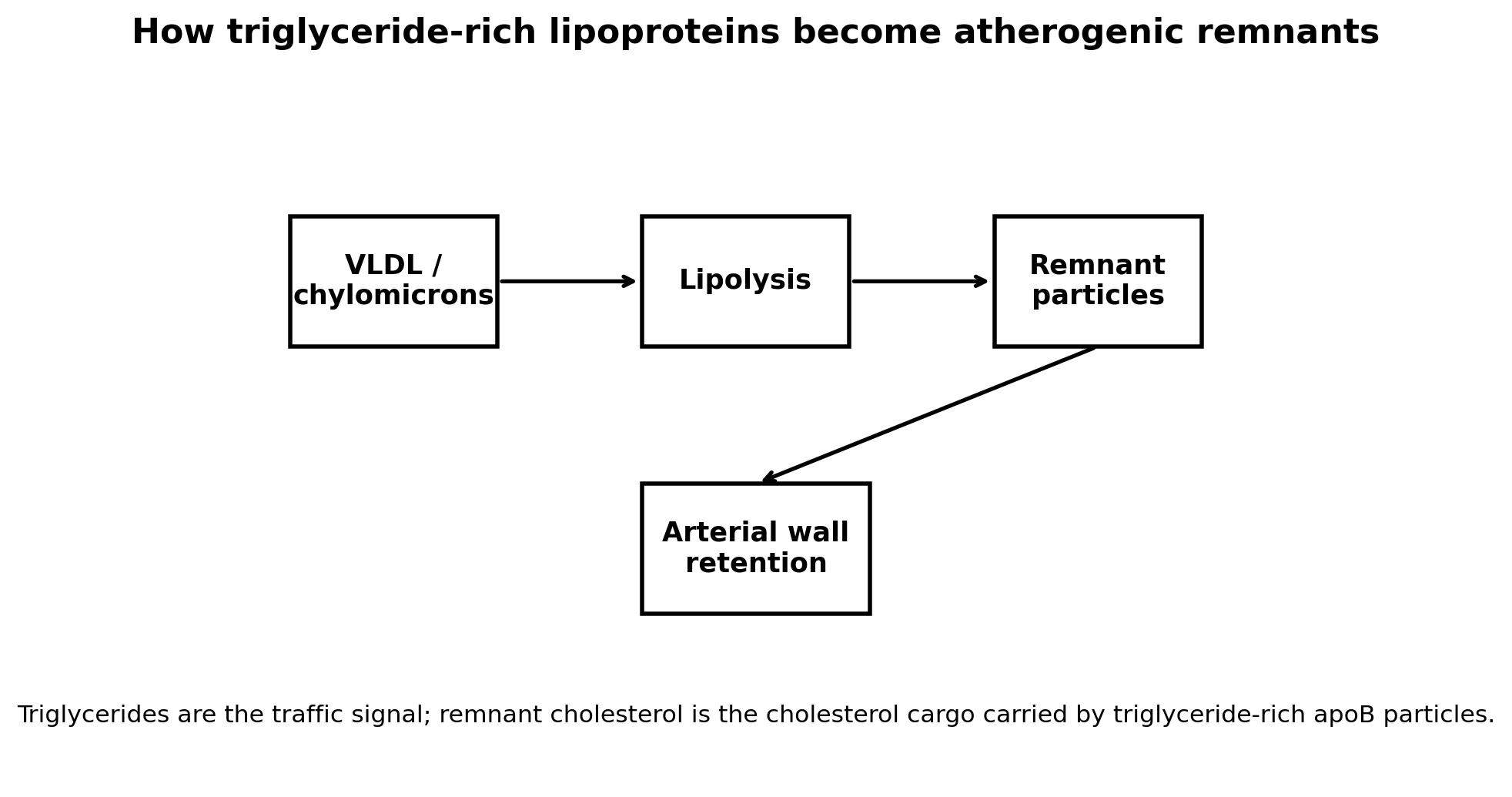
Figure 1. Triglyceride-rich particles become smaller remnant particles that can deliver cholesterol to the arterial wall.
1. Remnant-C vs Triglycerides
Triglycerides reflect how much triglyceride is circulating inside triglyceride-rich particles. Remnant-C reflects the cholesterol carried by those particles after subtracting LDL-C and HDL-C from total cholesterol. The two values correlate, but they are not interchangeable.
2. How to Calculate It
Estimated remnant-C = Total cholesterol − HDL-C − LDL-C. Example: TC 210 − HDL 45 − LDL 125 = remnant-C 40 mg/dL.
Because the calculation inherits any error in LDL-C estimation, modern Martin/Hopkins or Sampson/NIH LDL-C estimates are preferable to Friedewald in many patients, as reflected in the 2026 ACC/AHA guideline.
3. Why Remnants Are Atherogenic
Remnants carry substantial cholesterol per particle and can enter the arterial intima. They can be retained and taken up by macrophages, contributing to foam-cell formation and plaque growth.
Remnant-rich states also track with inflammatory signaling. Whether each remnant particle is intrinsically several-fold more dangerous than each LDL particle remains an active scientific debate, but the causal role of remnant pathways is increasingly strong.
4. Treatment
| Strategy | Effect on remnant-rich risk |
|---|---|
| Weight loss / physical activity | Often lowers triglycerides and VLDL production substantially. |
| Reduce refined carbohydrate / excess alcohol | Can markedly improve remnant-rich phenotypes. |
| Statin | Lowers ApoB particles, LDL-C and part of remnant burden; outcomes proven. |
| Icosapent ethyl | Outcomes benefit in selected high-risk statin-treated patients with elevated TG. |
| Fenofibrate | Lowers TG; broad statin-era outcome benefit inconsistent, with selected subgroup signals. |
| ApoC-III inhibitors | Large TG/remnant reductions; common-ASCVD outcome trials still evolving. |
5. FAQ
What is a normal remnant cholesterol?
There is no universally adopted ACC/AHA treatment target in 2026. Interpret it with TG, ApoB, non-HDL-C and overall risk.
Can remnant-C be high if LDL-C is low?
Yes. This is common in insulin resistance and hypertriglyceridemia.
Is ApoB still needed?
Often yes. Remnant-C tells you cholesterol cargo; ApoB tells you how many atherogenic particles are present.
Does lowering triglycerides always reduce heart attacks?
No. PROMINENT is an important example: triglycerides fell substantially with pemafibrate, but cardiovascular events did not.
References
1. Björnson E, Adiels M, Gummesson A, et al. Quantifying Triglyceride-Rich Lipoprotein Atherogenicity, Associations With Inflammation, and Implications for Risk Assessment Using Non-HDL Cholesterol. J Am Coll Cardiol. 2024;84:1328-1338.
2. Rosenson RS, et al. Triglycerides and Cardiovascular Risk: Getting to the Heart of the Matter. J Am Coll Cardiol. 2024.
3. Nordestgaard AT, Tybjærg-Hansen A, Mansbach H, et al. Target Populations for Novel Triglyceride-Lowering Therapies. J Am Coll Cardiol. 2025.
4. Malick WA, Waksman O, Do R, et al. Clinical trial design for triglyceride-rich lipoprotein-lowering therapies. J Am Coll Cardiol. 2023.
5. Jung HN, Heo JH, et al. Remnant Cholesterol as an Independent Cardiovascular Risk Factor in Young Adults. J Am Coll Cardiol. 2025.
6. Blumenthal RS, Morris PB, Gaudino M, et al. 2026 ACC/AHA Guideline on the Management of Dyslipidemia.