
Executive Summary
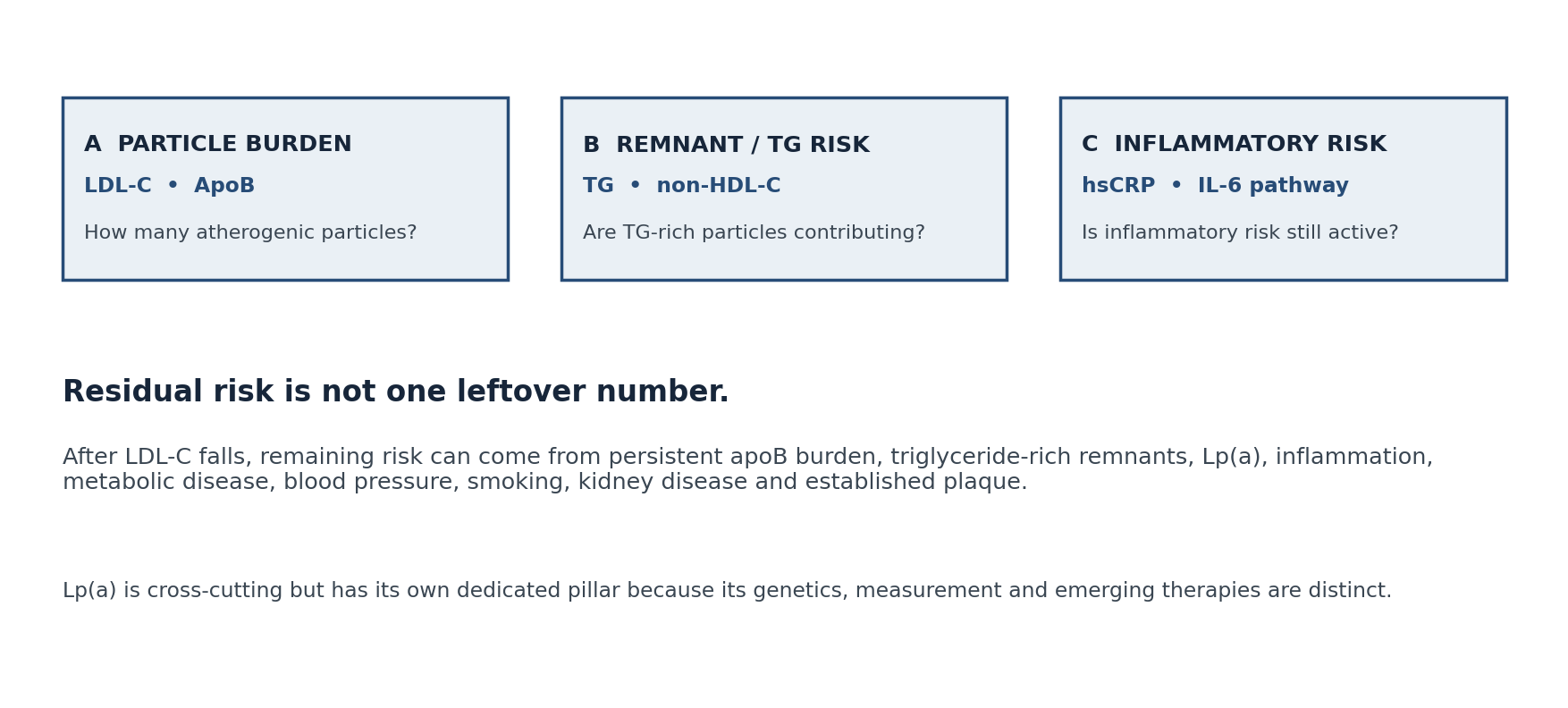
The modern lipid panel is best understood as a set of overlapping windows onto atherogenic particle biology. LDL-C measures the cholesterol mass carried within LDL particles. Non-HDL-C captures cholesterol carried by all apoB-containing particles except HDL. ApoB is closer to a particle count because each major atherogenic particle carries one apoB molecule. These values usually move together, but metabolic disease, elevated triglycerides and very low treated LDL-C can produce clinically meaningful discordance.
The 2026 ACC/AHA dyslipidemia guideline explicitly broadens management beyond LDL-C alone. It restores LDL-C and non-HDL-C treatment goals, recommends at least one lifetime Lp(a) measurement and supports selective ApoB testing to improve risk assessment and guide therapy, particularly when triglycerides exceed 200 mg/dL, diabetes is present or achieved LDL-C is below 70 mg/dL. This does not demote LDL-C. It clarifies when the standard cholesterol concentration may underestimate the number of atherogenic particles that remain.
Remnant risk is a second layer. Triglyceride-rich lipoproteins and their remnants contain apoB and can enter the arterial wall. Elevated triglycerides often travel with insulin resistance, diabetes, visceral adiposity and low HDL-C. Yet triglyceride concentration is not itself a validated universal treatment target for ASCVD events. PROMINENT lowered triglycerides, remnant cholesterol and ApoC-III but did not reduce cardiovascular events. STRENGTH was also neutral. In contrast, REDUCE-IT found substantial event reduction with prescription icosapent ethyl in a selected statin-treated high-risk population. The lesson is not that triglycerides do not matter; it is that mechanism, particle effects, population and therapy matter.
Inflammatory residual risk is distinct again. Atherosclerosis is an inflammatory disease, and persistently elevated hsCRP can identify higher risk even when LDL-C is treated. CANTOS demonstrated that targeting IL-1β could reduce recurrent events without lowering LDL-C, proving the inflammatory hypothesis in humans. Low-dose colchicine reduced events in COLCOT and LoDoCo2, but the more recent CLEAR-SYNERGY trial after myocardial infarction was neutral for its primary cardiovascular outcome. Inflammation is therefore a real pathway, not a reason to prescribe every anti-inflammatory drug.
Lp(a) sits across these categories because it is an apoB-containing, cholesterol-carrying inherited particle with additional pro-inflammatory and pro-calcific properties. It is deliberately not absorbed into this hub. ElevatedCholesterol.com treats Lp(a) as its own pillar so that genetics, measurement, aortic stenosis and emerging Lp(a)-lowering therapies have a single owner page rather than being duplicated across residual-risk articles.
Related guides: how low LDL-C and ApoB should go • triglycerides, remnant cholesterol and ApoC-III • inflammation and atherosclerosis • lipoprotein(a) definitive guide
1. Residual risk is a diagnosis problem before it is a treatment problem
"Residual cardiovascular risk" simply means risk that remains after one or more major risk factors have been treated. It does not identify the cause of that risk. A patient with LDL-C below 55 mg/dL can still have established plaque, hypertension, diabetes, smoking exposure, chronic kidney disease, high Lp(a), elevated ApoB, triglyceride-rich remnant particles or inflammatory activity. Treating the phrase residual risk as if it names one disease leads directly to indiscriminate testing and supplement or drug stacking.
The first task is to ask which pathway is still active and whether measuring it will change management. In a patient with diabetes, triglycerides of 260 mg/dL and LDL-C of 62 mg/dL, ApoB may clarify whether atherogenic particle number remains higher than the LDL-C suggests. In a patient with prior myocardial infarction, LDL-C of 48 mg/dL and hsCRP repeatedly above 2 mg/L, the unresolved issue may be inflammatory rather than cholesterol burden. In another patient, the dominant residual driver may be Lp(a) or simply extensive pre-existing coronary plaque.
Read: What Risk Is Left After LDL-C Is Below 55 mg/dL? That article owns the broad clinical question. This hub owns the map of lipid and inflammatory pathways used to answer it.
2. LDL-C, non-HDL-C and ApoB: three measurements, three slightly different questions
LDL-C remains one of the most useful and best-validated treatment metrics in medicine. Decades of randomized trials, genetics and epidemiology converge on the principle that prolonged exposure to apoB-containing lipoproteins drives atherosclerosis and that lowering LDL-C with therapies that reduce atherogenic particle burden lowers ASCVD events. The clinical benefit depends on absolute risk, the magnitude of LDL reduction and the duration of exposure.
But LDL-C is cholesterol mass, not particle count. Two people can carry the same amount of LDL cholesterol in different numbers of particles. ApoB is useful because one ApoB100 molecule is carried on each LDL, VLDL remnant and IDL particle, while chylomicron remnants carry ApoB48. In routine clinical use, measured ApoB functions as an integrated marker of the number of circulating atherogenic particles. Non-HDL-C sits between LDL-C and ApoB conceptually: it subtracts HDL-C from total cholesterol and therefore captures cholesterol carried by all non-HDL, apoB-containing fractions.
Most people have concordant values, so measuring every marker in every person adds little. Discordance becomes more relevant in insulin resistance, diabetes, obesity, hypertriglyceridemia and after intensive lipid lowering. The 2026 ACC/AHA guideline specifically highlights ApoB as useful after LDL-C and non-HDL-C goals are met in selected patients, especially with triglycerides above 200 mg/dL, diabetes or achieved LDL-C below 70 mg/dL. That is a targeted use case, not a declaration that LDL-C is obsolete.
| Marker | Best mental model | When it adds value | Common mistake |
|---|---|---|---|
| LDL-C | Cholesterol mass carried in LDL | Primary treatment target with vast outcomes evidence | Assuming it directly counts LDL particles |
| Non-HDL-C | Cholesterol in all non-HDL particles | Helpful when TG/remnant cholesterol is relevant | Treating it as identical to ApoB |
| ApoB | Atherogenic particle-number proxy | Discordance, diabetes, high TG, very low treated LDL-C | Ordering it without knowing what decision it will change |
| LDL-P | NMR-derived LDL particle concentration | Selected discordance questions | Assuming it is always superior to ApoB clinically |
How Low Should LDL-C and ApoB Go? (2026) is the cornerstone for treatment targets. ApoB Targets by Risk Category owns ApoB goal tables. LDL Particle Number vs ApoB owns the assay comparison. Discordant LDL-C and ApoB owns bidirectional discordance. High ApoB With Normal LDL-C is the specific deep dive.
3. The \"lower is better\" principle needs the right boundaries
For patients at high and very high cardiovascular risk, the central evidence-based strategy remains aggressive reduction of atherogenic lipoprotein exposure. The 2026 ACC/AHA guideline again uses LDL-C and non-HDL-C treatment goals while preserving percentage LDL-C reduction as a priority. European guidance likewise maintains risk-based LDL-C goals and combination therapy when a maximally tolerated statin alone is insufficient.
The phrase "lower is better" does not mean "every person should have the lowest laboratory number achievable at any cost." The absolute benefit of therapy is larger when baseline risk is larger. Treatment selection also depends on age, prior ASCVD, diabetes, kidney disease, baseline LDL-C, family history, patient preference, adverse effects, cost and the evidence supporting each drug. Very low achieved LDL-C in outcome trials has not produced a consistent signal of major cognitive or hemorrhagic harm that outweighs benefit in appropriately selected high-risk patients, but intensification should still be purposeful rather than competitive number chasing.
The most important distinction is between a treatment target and a mechanistic biomarker. LDL-C is both a causal-pathway marker and a validated treatment metric because multiple LDL-lowering drug classes reduce events in proportion to the reduction in apoB-containing lipoprotein burden. Triglycerides and hsCRP tell a more complicated story because lowering the laboratory value with one mechanism may not reproduce the outcomes achieved by another mechanism.
4. Triglycerides and remnants: risk signal, particle biology and a frequent source of confusion
Triglycerides are carried mainly in chylomicrons and VLDL and fall as these particles are lipolyzed into remnants. The cholesterol carried in triglyceride-rich remnant particles contributes to atherosclerotic risk, while very high triglycerides introduce a separate clinical problem: pancreatitis risk. These are different treatment questions. A person with triglycerides of 180 mg/dL and established coronary disease is not in the same clinical category as someone with triglycerides of 1,000 mg/dL and chylomicronemia.
Remnant cholesterol is commonly estimated as total cholesterol minus LDL-C minus HDL-C, although direct and alternative calculations also exist. It can be a useful conceptual marker of cholesterol carried in triglyceride-rich lipoproteins, but it is not independent of ApoB particle biology. A VLDL remnant still carries ApoB. That is why residual lipoprotein risk is best understood by integrating triglycerides, non-HDL-C and ApoB rather than treating each value as a separate disease.
ApoC-III is an important regulator of triglyceride metabolism and remnant clearance. Newer ApoC-III-directed therapies can produce very large triglyceride reductions in severe hypertriglyceridemic disorders and are transforming management of familial chylomicronemia and related phenotypes. But the existence of potent triglyceride-lowering drugs does not erase the need to prove cardiovascular outcome benefit in the populations where ASCVD prevention is the goal.
Triglycerides, Remnant Cholesterol and ApoC-III is the cornerstone for this branch. Satellites: Remnant Cholesterol Explained, Triglycerides: When Are They Dangerous?, Non-HDL Cholesterol Explained 2026, ApoC-III Inhibitors: Olezarsen and Plozasiran, and Fibrates After PROMINENT.
5. PROMINENT: why lowering triglycerides is not the same as lowering events
PROMINENT is one of the clearest cautionary trials in modern lipidology. It randomized 10,497 patients with type 2 diabetes, triglycerides 200 to 499 mg/dL, low HDL-C and generally well-controlled LDL-C to pemafibrate or placebo. Pemafibrate lowered triglycerides, VLDL cholesterol, remnant cholesterol and ApoC-III by roughly one quarter. Yet the primary cardiovascular outcome was unchanged: hazard ratio 1.03. ApoB actually rose modestly.
That result is mechanistically informative. Moving triglyceride and remnant-cholesterol concentrations without reducing the number of atherogenic ApoB particles may not reduce ASCVD events. It also reminds us not to infer treatment benefit from biomarker improvement alone. Fibrates still have important roles in specific triglyceride disorders, particularly when pancreatitis prevention becomes the priority, but PROMINENT substantially weakened the idea that pharmacologically lowering moderate triglycerides with a fibrate-like mechanism automatically removes residual ASCVD risk.
6. REDUCE-IT versus STRENGTH: why \"fish oil\" is an unusable clinical category
REDUCE-IT enrolled statin-treated patients with established cardiovascular disease or diabetes plus additional risk factors, triglycerides 135 to 499 mg/dL and LDL-C 41 to 100 mg/dL. Prescription icosapent ethyl, 4 g/day of highly purified EPA, reduced the primary composite outcome from 22.0% to 17.2% over a median 4.9 years, corresponding to a hazard ratio of 0.75. Atrial fibrillation or flutter hospitalization was more frequent, and serious bleeding was numerically higher.
STRENGTH tested a different high-dose omega-3 carboxylic acid formulation containing EPA and DHA in more than 13,000 statin-treated high-risk patients with high triglycerides and low HDL-C. The trial was stopped for futility, with a hazard ratio of 0.99 for the primary outcome. These apparently conflicting trials mean that the phrase "omega-3 lowers cardiovascular risk" is too crude. Formulation, comparator, pharmacology and trial population matter. Over-the-counter fish oil should not be presented as equivalent to prescription icosapent ethyl outcome evidence.
The 2025 ESC/EAS focused update therefore keeps statins as first-line therapy in high-risk hypertriglyceridemia and states that high-dose icosapent ethyl can be considered in high- or very-high-risk statin-treated patients with fasting triglycerides 135 to 499 mg/dL. The treatment decision is population-specific; it is not a recommendation to take generic fish-oil supplements whenever triglycerides are above normal.
Read: EPA vs Fish Oil: Why REDUCE-IT and STRENGTH Did Not Say the Same Thing.
7. HDL-C: a risk marker that taught cardiology a hard lesson
Low HDL-C tracks with higher cardiovascular risk, especially in insulin resistance and hypertriglyceridemic phenotypes. That observational association led to decades of attempts to raise HDL-C pharmacologically. The strategy failed to produce the expected reductions in cardiovascular events. HDL biology is about particle function, cholesterol efflux, inflammation and metabolism, not simply the amount of cholesterol measured inside HDL particles.
The lesson is central to residual-risk thinking: predictive biomarkers are not automatically therapeutic targets. A number can identify a higher-risk phenotype without becoming a number that clinicians should chase upward or downward. Modern management therefore focuses on causal apoB-containing lipoproteins, validated risk-factor treatment and the clinical context rather than prescribing therapy simply to raise HDL-C.
Read: HDL Cholesterol: Why Raising It Does Not Work.
8. Inflammatory residual risk: the second major biological axis
Atherosclerosis is not merely lipid storage. Retained apoB particles trigger endothelial activation, monocyte recruitment, inflammasome signaling, cytokine production and plaque remodeling. Lipid and inflammatory pathways interact rather than compete. Intensive LDL lowering reduces part of the inflammatory stimulus, but some patients retain elevated inflammatory activity despite excellent lipid control.
High-sensitivity C-reactive protein is the most practical clinical biomarker for this concept. hsCRP is downstream of IL-6 signaling and is nonspecific: obesity, infection, autoimmune disease, smoking and many other conditions can elevate it. A single elevated value therefore should not be labeled "arterial inflammation." Persistent elevation after excluding obvious transient causes can function as a risk marker and can identify a phenotype in which inflammatory residual risk may be clinically relevant.
The 2025 ESC/EAS update lists persistently elevated hsCRP above 2 mg/L as a risk modifier. That threshold should not be misread as a universal drug-treatment trigger. Risk modifiers help refine global risk. They do not by themselves create an indication for a specific anti-inflammatory medication.
Inflammation and Atherosclerosis: The Other Half of Cardiovascular Risk is the cornerstone. Satellites: hsCRP Explained, Coronary Inflammation (FAI/ORFAN) as a cross-listed Diagnostics owner page, Colchicine and Residual Inflammation, and IL-6 and Emerging Anti-Inflammatory Therapies.
9. CANTOS proved the inflammatory hypothesis, but not a universal drug strategy
CANTOS enrolled more than 10,000 patients with prior myocardial infarction and hsCRP at least 2 mg/L. Canakinumab targets IL-1β and lowered hsCRP without lowering lipids. The 150-mg dose reduced the primary cardiovascular endpoint compared with placebo, providing direct human evidence that suppressing a specific inflammatory pathway can reduce recurrent atherothrombotic events independently of LDL-C lowering.
The trial did not establish canakinumab as routine cardiovascular prevention. Fatal infection increased, the drug is expensive and the balance of benefit, risk and practicality did not support broad adoption for ASCVD. Its historical importance is different: it converted inflammation from an epidemiologic association into a modifiable causal pathway in a randomized outcomes trial.
10. Colchicine: positive trials, a regulatory milestone and a more complicated 2026 picture
COLCOT tested low-dose colchicine after recent myocardial infarction and reduced its primary composite outcome, with a hazard ratio of 0.77. LoDoCo2 studied chronic coronary disease and also reported a substantial reduction in its primary composite endpoint. These results helped establish low-dose colchicine as a serious cardiovascular anti-inflammatory strategy and ultimately supported a U.S. cardiovascular indication for a 0.5-mg colchicine product.
However, evidence is not perfectly uniform. CLEAR-SYNERGY randomized more than 7,000 patients with myocardial infarction undergoing PCI and found no significant reduction in cardiovascular death, recurrent MI, stroke or ischemia-driven revascularization with colchicine over a median three years, despite lowering CRP. That neutral result is a useful warning against converting the earlier trials into a simplistic rule that all post-MI patients should receive colchicine.
Patient selection, timing, background therapy, endpoints, adherence, drug interactions, renal and hepatic function and gastrointestinal tolerance all matter. Colchicine is also a substrate for important CYP3A4 and P-glycoprotein interactions. It belongs in clinician-guided therapy, not in a self-directed "anti-inflammatory stack."
11. IL-6 and next-generation inflammation targets
IL-6 sits downstream of multiple innate immune signals and upstream of hepatic CRP production. Human genetics, observational evidence and mechanistic studies support the IL-6 pathway as relevant to ASCVD. Several programs are exploring IL-6 ligand or receptor inhibition and other nodes such as NLRP3. These therapies are scientifically important because they may allow more precise reduction of vascular inflammation than broad immune suppression.
But this is exactly where an evidence-focused site must resist hype. Lower hsCRP, IL-6 or another inflammatory biomarker is not enough. A cardiovascular prevention therapy needs randomized outcome evidence plus acceptable infection, hematologic, hepatic and metabolic safety. Until those data mature, emerging cytokine therapies belong in a future-therapy discussion, not in routine preventive-care algorithms.
Read: IL-6 and Emerging Anti-Inflammatory Therapies: What Is Ready for Practice and What Is Still Experimental?
12. Lp(a): residual lipoprotein risk, but with its own owner pillar
Lp(a) is a genetically determined apoB-containing particle with an attached apo(a) protein. It contributes atherogenic cholesterol and carries oxidized phospholipids, adding inflammatory and calcific biology beyond conventional LDL. High Lp(a) can therefore help explain substantial lifetime risk even when LDL-C, triglycerides and hsCRP are otherwise reassuring.
The 2026 ACC/AHA guideline recommends measuring Lp(a) at least once in adulthood. ElevatedCholesterol.com deliberately keeps Lp(a) outside the three core branches of this hub because search intent is different and the topic requires dedicated coverage of units, genetics, family screening, aortic stenosis, current management and rapidly evolving RNA-targeted therapies. Here, the correct action is a short orientation plus an up-link to the Lp(a) Definitive Guide.
Lipoprotein(a) Definitive Guide v2.0 is the canonical page for Lp(a). Do not duplicate its measurement thresholds, genetics or drug pipeline here.
13. A practical residual-risk workflow
The purpose of advanced biomarkers is not to produce a longer laboratory report. It is to identify a decision that would otherwise remain uncertain. A practical workflow begins with global risk and established disease, confirms adherence and secondary causes, then asks whether the residual problem is primarily particle burden, triglyceride-rich remnant biology, Lp(a), inflammation or a nonlipid driver.
| Step | Question | Useful information | Typical next move |
|---|---|---|---|
| 1 | How high is baseline clinical risk? | ASCVD history, PREVENT, diabetes, CKD, BP, smoking, imaging | Set treatment intensity before chasing residual markers |
| 2 | Is atherogenic particle burden controlled? | LDL-C + non-HDL-C; ApoB when discordance is plausible | Optimize proven LDL/ApoB-lowering therapy |
| 3 | Are TG/remnants clinically relevant? | Fasting TG, non-HDL-C, ApoB, diabetes/metabolic context | Treat secondary causes; distinguish ASCVD strategy from pancreatitis prevention |
| 4 | Is Lp(a) an inherited modifier? | At least one adult Lp(a) measurement | Intensify modifiable risk; use Lp(a) owner pathway |
| 5 | Is inflammation persistently elevated? | Repeat hsCRP when clinically stable; assess competing causes | Interpret as risk context; consider therapy only when indicated |
| 6 | What risk is nonlipid? | BP, glycemia, kidney disease, smoking, obesity, fitness, plaque burden | Treat the driver rather than adding another lipid supplement |
Do not treat every abnormal biomarker independently. Many markers describe the same underlying particle system, and stacking therapies because each one moves a different number can increase cost and adverse effects without adding proven cardiovascular benefit.
14. What this hub should link to, and what it should not absorb
This page is the parent map, not the final destination for every query. It should summarize each branch in enough detail to orient the reader, then hand off to the owner page for the full analysis. That keeps the site from creating four competing articles for the same question and makes internal linking predictable for both users and search engines.
| Branch | Primary owner / cornerstone | Key satellites | Hub behavior |
|---|---|---|---|
| A. LDL-C & ApoB | How Low Should LDL-C and ApoB Go? (2026) | ApoB Targets; LDL-P vs ApoB; HDL; Discordance; High ApoB/normal LDL-C | Summarize + link, no duplicate target tables |
| B. Remnant / TG risk | Triglycerides, Remnant Cholesterol and ApoC-III | Remnant cholesterol; TG dangerous; non-HDL; ApoC-III drugs; fibrates; EPA vs fish oil | Explain therapy/outcome distinction + link |
| C. Inflammatory risk | Inflammation and Atherosclerosis | hsCRP; FAI/ORFAN; colchicine; IL-6 therapies | Explain pathway + evidence hierarchy + link |
| Cross-cutting Lp(a) | Lp(a) Definitive Guide v2.0 | Lp(a) drugs; aortic stenosis; aspirin/Lp(a)/CAC | One short orientation only |
Frequently Asked Questions
If my LDL-C is below 55 mg/dL, is my cardiovascular risk solved?
No. That is an excellent LDL-C level for many very-high-risk patients, but absolute risk can remain because of pre-existing plaque, Lp(a), ApoB discordance, diabetes, hypertension, smoking, kidney disease, inflammatory activity and other factors. The next step is not automatically more lipid medication; it is to identify the dominant residual driver.
Is ApoB always better than LDL-C?
No. ApoB is especially useful when particle number and cholesterol content may be discordant, such as diabetes, insulin resistance, high triglycerides or very low treated LDL-C. LDL-C remains a core treatment metric with enormous randomized-trial evidence.
Should I treat remnant cholesterol to a specific target?
Remnant cholesterol is useful for understanding triglyceride-rich lipoprotein burden, but current prevention strategies are not built around a universally validated remnant-cholesterol treatment goal. Treat global risk, LDL/non-HDL/ApoB burden, secondary causes of high triglycerides and therapies with proven outcome benefit.
Do high triglycerides mean I should take a fibrate?
Not automatically. The indication depends on the triglyceride level, pancreatitis risk, diabetes, background statin therapy and the therapeutic objective. PROMINENT showed that lowering moderate triglycerides with pemafibrate did not reduce cardiovascular events in its study population.
Is prescription EPA the same as fish oil?
No. REDUCE-IT tested a specific prescription formulation and population. STRENGTH tested a different EPA+DHA formulation and was neutral. Generic fish-oil supplements should not be treated as interchangeable with REDUCE-IT evidence.
Does hsCRP above 2 mg/L mean I have inflamed coronary plaque?
No. hsCRP is systemic and nonspecific. Persistent elevation is a cardiovascular risk modifier in the right context, but infection, obesity, smoking, autoimmune disease and many other conditions can raise it. It is not a direct plaque-imaging test.
Should everyone with coronary disease take colchicine?
No. Positive trials exist, but CLEAR-SYNERGY was neutral and colchicine has contraindications, interactions and tolerability issues. Use is individualized and clinician-guided.
Where does Lp(a) belong in residual risk?
It is a major inherited residual-risk pathway, but it has its own dedicated pillar because measurement, genetics, family screening, valve disease and emerging therapies require deeper coverage than a general residual-risk hub should contain.
Key Takeaways
• LDL-C remains a central causal-pathway treatment target, but LDL-C alone does not describe every atherogenic particle in every metabolic phenotype.
• ApoB is most useful when discordance is plausible, especially with diabetes, elevated triglycerides or very low achieved LDL-C.
• Non-HDL-C captures cholesterol in all atherogenic non-HDL fractions and is especially useful when triglyceride-rich lipoproteins matter.
• High triglycerides can signal remnant risk, but cardiovascular outcome benefit is therapy-specific. PROMINENT and STRENGTH were neutral; REDUCE-IT was positive in a selected population.
• Low HDL-C is a risk marker, not a validated pharmacologic target simply to raise the HDL-C number.
• Inflammatory residual risk is biologically real. CANTOS proved a causal inflammatory pathway; colchicine outcomes are positive in some trials and neutral in others.
• Lp(a) is a major inherited residual-risk pathway but remains a separate owner pillar.
• The right question after LDL treatment is not "what else can I lower?" It is "what is still driving risk, and is there an intervention with outcome evidence for that pathway?"
References
1. Blumenthal RS, Morris PB, Gaudino M, et al. 2026 ACC/AHA/AACVPR/ABC/ACPM/ADA/AGS/APhA/ASPC/NLA/PCNA Guideline on the Management of Dyslipidemia. Circulation. 2026;153(17):e1154-e1276. doi:10.1161/CIR.0000000000001423.
2. Mach F, Koskinas KC, Roeters van Lennep JE, et al. 2025 Focused Update of the 2019 ESC/EAS Guidelines for the management of dyslipidaemias. Eur Heart J. 2025;46(42):4359-4378. doi:10.1093/eurheartj/ehaf190. Correction: Eur Heart J. 2026;47(6):697. doi:10.1093/eurheartj/ehaf1036.
3. Ference BA, Ginsberg HN, Graham I, et al. Low-density lipoproteins cause atherosclerotic cardiovascular disease: evidence from genetic, epidemiologic, and clinical studies. Eur Heart J. 2017;38(32):2459-2472. doi:10.1093/eurheartj/ehx144.
4. Wilkins JT, Li RC, Sniderman A, Chan C, Lloyd-Jones DM. Discordance Between Apolipoprotein B and LDL-Cholesterol in Young Adults Predicts Coronary Artery Calcification: The CARDIA Study. J Am Coll Cardiol. 2016;67:193-201.
5. Pradhan AD, et al. Triglyceride Lowering with Pemafibrate to Reduce Cardiovascular Risk. N Engl J Med. 2022;387:1923-1934. (PROMINENT)
6. Bhatt DL, et al. Cardiovascular Risk Reduction with Icosapent Ethyl for Hypertriglyceridemia. N Engl J Med. 2019;380:11-22. (REDUCE-IT)
7. Nicholls SJ, et al. Effect of High-Dose Omega-3 Fatty Acids vs Corn Oil on Major Adverse Cardiovascular Events. JAMA. 2020;324:2268-2280. (STRENGTH)
8. Ridker PM, et al. Anti-inflammatory Therapy with Canakinumab for Atherosclerotic Disease. N Engl J Med. 2017;377:1119-1131. (CANTOS)
9. Tardif JC, et al. Efficacy and Safety of Low-Dose Colchicine after Myocardial Infarction. N Engl J Med. 2019;381:2497-2505. (COLCOT)
10. Nidorf SM, et al. Colchicine in Patients with Chronic Coronary Disease. N Engl J Med. 2020;383:1838-1847. (LoDoCo2)
11. Jolly SS, d'Entremont MA, Lee SF, et al; CLEAR Investigators. Colchicine in Acute Myocardial Infarction. N Engl J Med. 2025;392(7):633-642. doi:10.1056/NEJMoa2405922.
12. Kronenberg F, Mora S, Stroes ESG, et al. Lipoprotein(a) in atherosclerotic cardiovascular disease and aortic stenosis: a European Atherosclerosis Society consensus statement. Eur Heart J. 2022;43(39):3925-3946. doi:10.1093/eurheartj/ehac361.
13. Koschinsky ML, Bajaj A, Boffa MB, et al. A focused update to the 2019 NLA scientific statement on use of lipoprotein(a) in clinical practice. J Clin Lipidol. 2024;18(3):e308-e319. doi:10.1016/j.jacl.2024.03.001.