Executive Summary
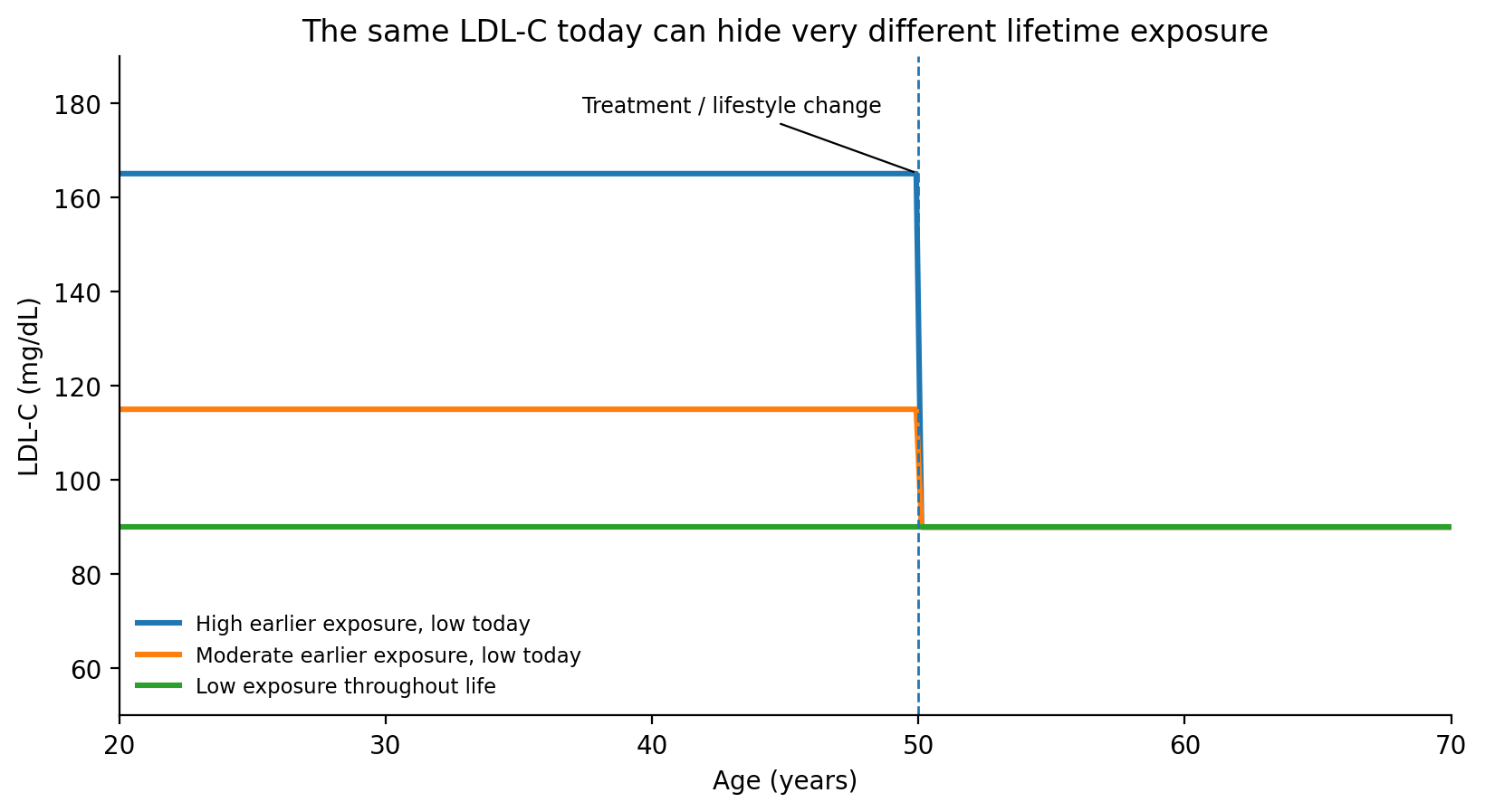
The most useful answer to “how low should LDL-C go?” is not a single number. LDL-C goals are risk-dependent, and the biological effect of atherogenic lipoproteins depends on both concentration and duration of exposure. A person with LDL-C 90 mg/dL today may have very different lifetime risk from another person with the same current value if one spent decades at 170 mg/dL and the other spent decades near 90 mg/dL.
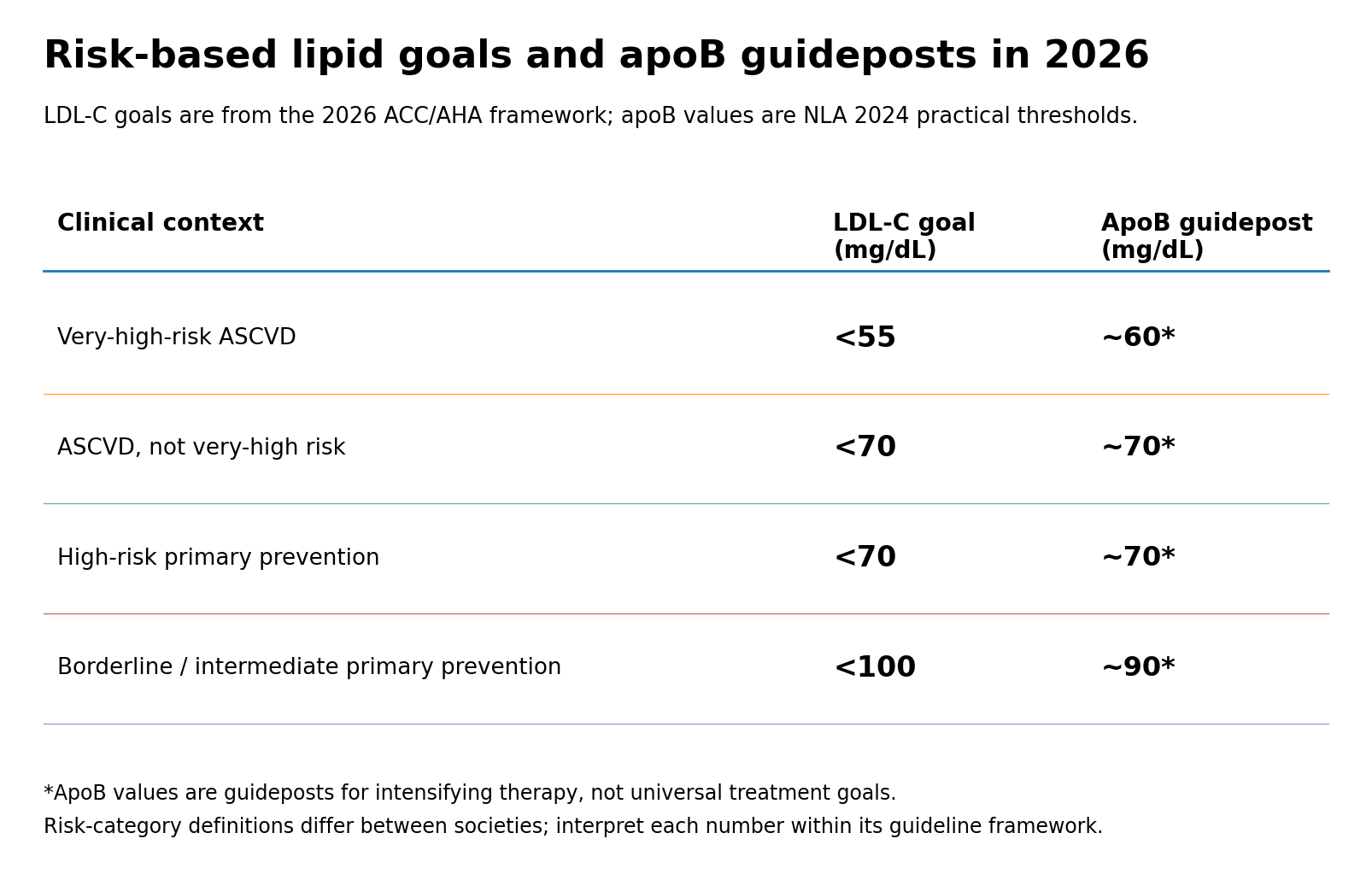
The 2026 ACC/AHA multisociety dyslipidemia guideline restored explicit LDL-C and non-HDL-C goals. For primary prevention, LDL-C goals are generally below 100 mg/dL for borderline or intermediate risk and below 70 mg/dL for high risk. In secondary prevention, the goal is below 55 mg/dL for very-high-risk ASCVD and below 70 mg/dL for ASCVD that is not classified as very high risk. The guideline also emphasizes earlier treatment and the idea that “lower for longer” produces greater lifetime protection.[1]
ApoB answers a different question from LDL-C. LDL-C estimates the cholesterol mass carried inside LDL particles, whereas apoB approximates the number of circulating atherogenic particles because each LDL, VLDL remnant, IDL and Lp(a) particle carries one apoB molecule. When LDL-C and apoB are discordant - particularly with high triglycerides, diabetes, insulin resistance, obesity or very low treated LDL-C - apoB can reveal residual particle burden that LDL-C underestimates.[3]
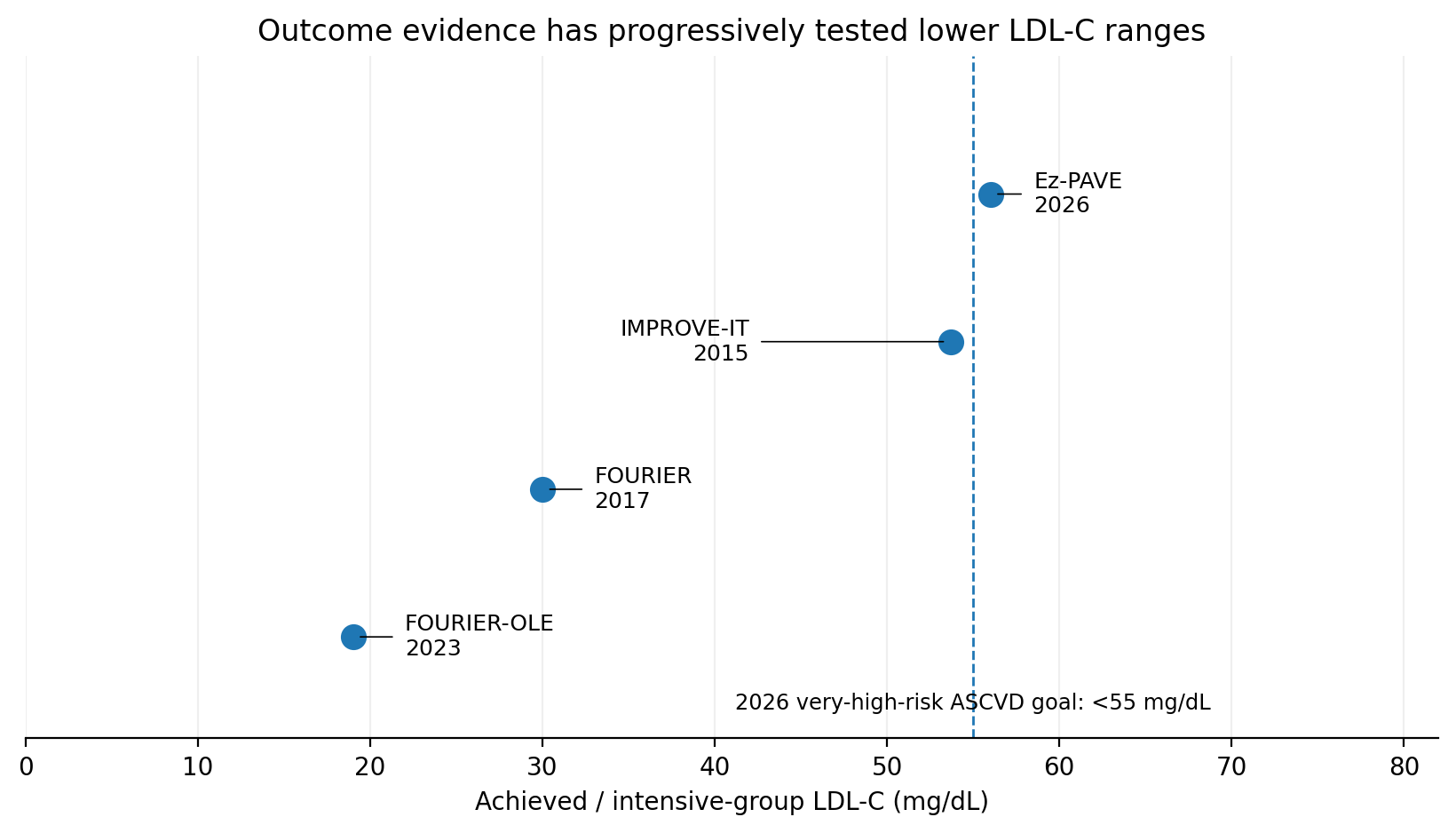
Outcome trials have progressively tested lower achieved LDL-C levels. IMPROVE-IT showed incremental benefit at a mean LDL-C around 54 mg/dL; FOURIER achieved a median around 30 mg/dL; FOURIER-OLE found a monotonic relationship between lower achieved LDL-C, including values below 20 mg/dL, and fewer cardiovascular events without a significant signal for major prespecified safety outcomes over long follow-up. In 2026, Ez-PAVE provided direct randomized evidence that targeting LDL-C below 55 mg/dL reduced cardiovascular events compared with a target below 70 mg/dL in patients with established ASCVD.[8,10,12,15]
“Lower is better” should not be misread as “everyone should take enough medication to reach 20 mg/dL.” Absolute benefit depends strongly on baseline risk. The same 30 mg/dL LDL reduction is worth much more to a person with prior myocardial infarction, multivessel plaque or familial hypercholesterolemia than to a young person with very low absolute risk. The modern approach is therefore lower when risk is higher, earlier when lifetime exposure is likely to be large, and guided by apoB, Lp(a), triglycerides and imaging when they materially change the risk estimate.
There is no universal “optimal LDL.” Current guidelines use risk-based goals, while the underlying biology argues for minimizing cumulative exposure to apoB-containing particles over time. LDL-C remains the primary treatment target; apoB is especially useful when particle number and cholesterol content are likely to be discordant.
Key Takeaways
| Question | Practical answer |
|---|---|
| Is an LDL-C below 100 mg/dL always good enough? | No. It may be appropriate for some lower-risk primary-prevention patients but is above current goals for high-risk and most secondary-prevention patients. |
| Is LDL-C below 55 mg/dL dangerous? | Randomized and extension-trial data in high-risk patients do not show a major safety signal simply because LDL-C is very low. Individual medication risks still matter. |
| Should apoB replace LDL-C? | Usually no. LDL-C remains the primary guideline target, but apoB can identify residual particle risk when LDL-C is misleading. |
| What matters more: current LDL-C or past LDL-C? | Both. Current LDL-C predicts future exposure; cumulative past exposure helps explain how much plaque may already have developed. |
| Does CAC change the target? | It can. The 2026 ACC/AHA guideline uses CAC to reclassify uncertain primary-prevention risk; any CAC supports LDL lowering, with more intensive goals as plaque burden increases. |
| What if Lp(a) is high? | High Lp(a) is a risk enhancer. Because dedicated outcome-proven Lp(a)-lowering therapy is not yet established for routine prevention, aggressive control of LDL-C/ApoB and other risk factors becomes more important. |
1. The Question Is Not "What Is Normal?"
Laboratory reference ranges are descriptive; treatment goals are prescriptive. A lab may flag LDL-C only above a certain population range, but guideline goals are set according to the level at which clinical trials and risk models suggest benefit for a particular risk category. These are fundamentally different concepts.
An LDL-C of 95 mg/dL can therefore be “within range” on a laboratory report yet above goal for a person with known coronary disease. Conversely, a low-risk young adult with LDL-C 95 mg/dL does not automatically need drug therapy. The number has to be interpreted in context: age, blood pressure, smoking, diabetes, kidney disease, family history, Lp(a), apoB, triglycerides, CAC and established ASCVD all change the expected absolute benefit of lowering LDL-C.
This is why the 2026 ACC/AHA guideline deliberately returned to explicit treatment goals while retaining percentage reduction and individualized risk assessment. It is also why the phrase “optimal cholesterol” can be misleading: optimal for whom, at what age, and with what plaque burden?
2. LDL-C and ApoB Measure Different Things
LDL-C is a measurement of cholesterol cargo. ApoB is closer to a particle count. Every atherogenic particle in the apoB family carries one apoB molecule: LDL, intermediate-density lipoprotein, VLDL remnants and Lp(a). The arterial wall is exposed to particles, not simply to a mass of cholesterol floating independently in plasma.
In many people LDL-C and apoB move together, so either marker gives a similar clinical message. Discordance becomes important when the cholesterol content per particle changes. Insulin resistance, hypertriglyceridemia, metabolic syndrome and diabetes often produce more cholesterol-depleted LDL particles. A person can therefore have an LDL-C that looks satisfactory while still circulating a relatively high number of apoB particles.
The reverse can also occur. The practical point is not to turn apoB into a competing ideology. The point is to use it where it adds information. The 2026 ACC/AHA guideline specifically highlights apoB in people with triglycerides above 200 mg/dL, diabetes, cardiovascular-kidney-metabolic risk, established ASCVD, or an achieved LDL-C below 70 mg/dL when residual lipoprotein risk may be underestimated by the standard lipid panel.[1]
Think of LDL-C as the amount of cholesterol cargo and apoB as the number of atherogenic delivery vehicles. When the vehicles carry unusually little or unusually much cholesterol, the two markers can disagree.
| Marker | What it mainly reflects | Strength | Main limitation |
|---|---|---|---|
| LDL-C | Cholesterol carried in LDL particles | Primary treatment target; huge trial evidence base | Can underestimate particle burden when particles are cholesterol-depleted |
| ApoB | Number of apoB-containing atherogenic particles | Useful in discordance; strong risk marker | Not yet used as the primary target in all guidelines |
| Non-HDL-C | Cholesterol in all apoB-containing particles | Simple, calculated, useful with high triglycerides | Still a cholesterol-mass measure rather than a direct particle count |
| Lp(a) | Genetically determined Lp(a) particle burden | Independent causal risk enhancer | Units and assays vary; routine outcome-proven targeted therapy remains limited in 2026 |
3. The Core Concept: Concentration x Time
Atherosclerosis is cumulative. LDL and other apoB-containing particles enter and become retained in the arterial wall over years. The probability that a particle is retained on any one day may be small, but exposure occurs continuously. Over decades, modest differences in particle concentration can translate into large differences in cumulative arterial exposure.
This is the logic behind the LDL cumulative exposure hypothesis: the biological effect of LDL depends on both the magnitude of LDL-C and how long that exposure lasts.[6] Genetic studies support the same principle. People who are born with variants that lower LDL-C experience substantially larger lifetime reductions in coronary risk per unit of LDL lowering than people who begin treatment later in life. The explanation is not that genetic LDL lowering is magically more potent. It begins decades earlier.
Observational data also show that cumulative LDL exposure during young adulthood and middle age predicts later coronary heart disease independently of a single midlife LDL measurement. In pooled U.S. cohorts, higher cumulative and time-weighted LDL exposure were associated with greater CHD risk even after accounting for the most recent LDL-C value.[7]
This has a practical consequence: a treatment decision based only on 10-year risk can systematically understate the importance of high LDL in a 30- or 40-year-old. Short-term event probability is low largely because the person is young, not because decades of future exposure are harmless. The 2026 U.S. guideline responds to this by adding 30-year PREVENT risk and by explicitly encouraging earlier intervention in familial hypercholesterolemia, LDL-C at or above 160 mg/dL in young adulthood, or strong family history.[1]
4. What the 2026 Guidelines Actually Say
The most important change in U.S. lipid guidance in 2026 is simple: absolute goals are back. The ACC/AHA multisociety guideline combines those goals with the PREVENT risk equations, risk enhancers and selective CAC scanning. It also places more emphasis on lifetime exposure and earlier treatment.[1,2]
| Risk context | 2026 ACC/AHA LDL-C goal | 2025 ESC/EAS framework | ApoB context |
|---|---|---|---|
| Borderline / intermediate primary prevention | <100 mg/dL | Risk-based; ESC targets depend on SCORE2/SCORE2-OP category | NLA 2024 suggests apoB 90 mg/dL as an intensification threshold |
| High-risk primary prevention | <70 mg/dL | High risk: <70 mg/dL and usually >=50% reduction from baseline | NLA suggests apoB 70 mg/dL threshold |
| Very-high-risk ASCVD | <55 mg/dL | Very high risk: <55 mg/dL and >=50% reduction from baseline | NLA suggests apoB 60 mg/dL; ESC secondary apoB goal <65 mg/dL |
| ASCVD not very-high risk | <70 mg/dL | Risk classification differs between systems | ApoB can help detect residual burden after LDL-C goal is reached |
These columns should not be treated as interchangeable formulas. U.S. and European risk categories are defined differently, and the NLA apoB values are suggested treatment thresholds rather than a universal set of apoB targets. The useful message is the direction of travel: higher risk justifies lower atherogenic-lipoprotein exposure.
5. How Low Has Randomized Evidence Actually Gone?
5.1 Statin trials established the rule: benefit tracks the absolute LDL reduction
Large statin meta-analyses established a broadly log-linear relationship between absolute LDL-C reduction and major vascular event reduction. Across randomized statin trials, lowering LDL-C by about 1 mmol/L (38.7 mg/dL) has been associated with roughly a one-fifth relative reduction in major vascular events. This is the foundation of the “lower is better” concept, but it is better expressed as “a larger sustained reduction produces a larger proportional benefit,” with absolute benefit determined by baseline risk.[4]
5.2 IMPROVE-IT: benefit below the old 70 mg/dL target
IMPROVE-IT was important because it showed that a nonstatin drug could improve cardiovascular outcomes by lowering LDL-C beyond statin therapy. After acute coronary syndrome, simvastatin plus ezetimibe produced a time-weighted average LDL-C of 53.7 mg/dL versus 69.5 mg/dL with simvastatin alone and modestly but significantly reduced events over long follow-up.[8] It undermined the idea that 70 mg/dL represented a biological floor.
5.3 FOURIER: median LDL-C around 30 mg/dL
FOURIER randomized 27,564 patients with established ASCVD on statin therapy to evolocumab or placebo. Evolocumab lowered median LDL-C from 92 to 30 mg/dL and reduced the primary composite endpoint by 15% and the key cardiovascular death/MI/stroke endpoint by 20% over a median 2.2 years.[10] This provided direct outcomes evidence in a range that had previously seemed extraordinarily low.
5.4 FOURIER-OLE: long-term data below 20 mg/dL
The FOURIER open-label extension allowed longer observation of patients achieving very low LDL-C. In a prespecified analysis, lower achieved LDL-C was associated with progressively lower cardiovascular risk down to levels below 20 mg/dL. Importantly, lower achieved LDL-C was not significantly associated with higher rates of serious adverse events, cancer, cataract-related events, hemorrhagic stroke, new-onset diabetes, neurocognitive events, muscle events or noncardiovascular death during follow-up extending to 8.6 years in the combined program.[12] Because achieved-level analyses are not equivalent to randomization by LDL level, they support but do not prove an unlimited causal gradient.
5.5 Ez-PAVE 2026: <55 vs <70 head-to-head
Ez-PAVE directly tested two LDL-C targets in 3,048 patients with ASCVD. Patients were randomized to a target below 55 mg/dL or below 70 mg/dL. Median on-treatment LDL-C was 56 versus 66 mg/dL. At three years, the primary composite endpoint occurred in 6.6% versus 9.7% (hazard ratio 0.67), with similar prespecified safety outcomes.[15] This trial is especially valuable because it tested a target strategy rather than simply comparing two drugs.
6. Is There a "Too Low" LDL-C?
The best available answer in 2026 is that clinical trials have not identified a clear lower boundary at which LDL-C reduction itself becomes harmful within the ranges studied in appropriately selected high-risk patients. That statement is narrower than saying that every person should be driven to the lowest technically achievable LDL-C.
Neurocognitive safety has been one of the most persistent concerns. In EBBINGHAUS, evolocumab added to statin therapy did not worsen executive function, memory or processing speed compared with placebo, and cognitive changes were not associated with achieved LDL-C.[11] Longer-term FOURIER-OLE data likewise did not show an excess neurocognitive signal at very low LDL-C.[12]
Very-low LDL analyses from IMPROVE-IT also found a similar long-term safety profile among patients who reached LDL-C below 30 mg/dL compared with patients at higher levels.[9] These data are reassuring but should not be generalized beyond the populations studied. Medication-specific adverse effects still matter, pregnancy requires special considerations, and some patients will gain little absolute benefit from extreme treatment intensity.
The relevant clinical question is therefore not “Can an LDL-C of 25 exist safely?” It is “Does the expected reduction in cardiovascular events justify the treatment burden, cost, adverse-effect risk and complexity needed to reach that level in this person?”
A guideline goal is not a toxicity threshold. The fact that guidelines recommend <55 mg/dL for very-high-risk ASCVD does not imply that 54 mg/dL is safe and 56 mg/dL is unsafe, nor that 25 mg/dL is “too low.” Goals are pragmatic treatment anchors.
7. Primary Prevention: How Low Is Reasonable Before Disease Is Known?
Primary prevention is where simplistic “lower is better” messaging can do the most harm. The biology of lower lifetime exposure is strong, but the absolute short-term benefit of medication varies enormously. The 2026 U.S. framework therefore starts with PREVENT 10- and 30-year risk, then personalizes with risk enhancers and can reclassify with CAC when uncertainty remains.[1,2]
For adults with borderline or intermediate 10-year risk, the guideline uses an LDL-C goal below 100 mg/dL when lipid-lowering therapy is chosen. At high 10-year risk, the goal is below 70 mg/dL. Certain diagnoses - including diabetes, stage 3 or 4 chronic kidney disease and HIV in adults 40 to 75 - support pharmacologic LDL lowering regardless of the starting LDL-C.[1]
Young adults deserve special attention because 10-year calculators can be falsely reassuring. LDL-C at or above 160 mg/dL, familial hypercholesterolemia or a strong family history of premature ASCVD can justify earlier pharmacologic consideration. In these settings, the objective is not only to prevent an event in the next decade but to reduce cumulative exposure before a large plaque burden develops.
7.1 Where CAC fits
CAC is most useful when the decision to start or intensify therapy is genuinely uncertain. The 2026 ACC/AHA guideline recommends selective CAC use in men age 40 or older and women age 45 or older with borderline or intermediate risk when the result is likely to change management. Any CAC supports an LDL-C goal below 100 mg/dL, and more extensive calcium supports progressively lower goals.[1,2]
A CAC score of zero can justify deferring statin therapy in some low- or intermediate-risk patients without major comorbidities, but it is not a lifetime warranty and it does not erase genetic risk, very high LDL-C, diabetes, smoking or strong family history. CAC is a risk-reclassification tool, not a replacement for biology.
8. Secondary Prevention and Known Plaque: Why the Goal Moves Lower
Once a person has clinical ASCVD, the calculus changes. Existing plaque demonstrates that cumulative exposure has already crossed an individual disease threshold. The near-term event rate is higher, so the same relative risk reduction produces a larger absolute benefit.
The 2026 ACC/AHA guideline recommends LDL-C below 55 mg/dL and non-HDL-C below 85 mg/dL for very-high-risk ASCVD. Patients with ASCVD who do not meet the very-high-risk definition generally have an LDL-C goal below 70 mg/dL.[1] The 2025 ESC/EAS focused update retained the European <55 mg/dL very-high-risk target and the emphasis on at least 50% reduction from baseline.[2]
Ez-PAVE now adds randomized target-level evidence supporting the <55 mg/dL strategy in established ASCVD.[15] This does not mean treatment should stop at 55 if a well-tolerated regimen naturally produces LDL-C in the 30s. Rather, <55 is a minimum treatment goal for many very-high-risk patients, not an instruction to titrate upward if the patient is lower.
In secondary prevention, “achieved LDL-C below goal” and “overtreatment” are not synonyms. Overtreatment is determined by net clinical benefit and adverse effects, not by crossing a round number on the way down.
9. How Low Should ApoB Go?
ApoB does not yet have the same globally harmonized target structure as LDL-C. That is one reason numbers quoted online often conflict. The NLA 2024 expert consensus explicitly noted that apoB thresholds for starting or intensifying therapy are less well established than LDL-C and non-HDL-C thresholds. It suggested apoB thresholds of 90 mg/dL for borderline-to-intermediate risk, 70 mg/dL for high risk and 60 mg/dL for very-high-risk patients.[3]
The ESC/EAS framework uses apoB as a secondary treatment goal: below 100 mg/dL for moderate risk, below 80 mg/dL for high risk and below 65 mg/dL for very-high-risk patients. In very-high-risk patients with recurrent events, older ESC/EAS guidance allowed consideration of apoB below 55 mg/dL.[2,5]
These values should not be presented as if one society has discovered the “true” safe apoB. They are pragmatic cut points derived from observational relationships, trial distributions and equivalence to LDL/non-HDL targets. The strongest clinical use case is discordance: LDL-C is at goal, but apoB remains unexpectedly high. That pattern implies more atherogenic particles than the LDL-C value alone suggests.
| Situation | Why LDL-C can mislead | Why apoB helps |
|---|---|---|
| Triglycerides >200 mg/dL | More cholesterol is carried in VLDL/remnant particles; LDL particles can be cholesterol-depleted | ApoB counts LDL plus remnant particles |
| Type 2 diabetes / insulin resistance | Small, cholesterol-depleted LDL particles are common | ApoB better reflects particle number |
| LDL-C already <70 mg/dL on therapy | Small absolute LDL-C differences can hide persistent particle burden | ApoB can reveal residual atherogenic exposure |
| Elevated Lp(a) | Lp(a)-cholesterol contributes to measured LDL-C | ApoB includes the Lp(a) particle, but a separate Lp(a) measurement is still needed |
10. Lp(a), Triglycerides and Imaging Can Change How Aggressive the Goal Should Be
A single LDL-C number is not the entire atherogenic story. Elevated Lp(a) is a genetically determined risk enhancer; the 2026 ACC/AHA guideline recommends at least one lifetime measurement and notes that levels at or above 125 nmol/L (about 50 mg/dL) are associated with materially higher ASCVD risk.[1] Because lifestyle has little effect on Lp(a), the practical response in 2026 is usually to intensify control of modifiable risk factors, especially LDL-C and apoB burden.
High triglycerides shift attention toward remnant lipoproteins and apoB. If LDL-C is 65 mg/dL but triglycerides are 280 mg/dL and apoB is 95 mg/dL, calling the lipid problem “solved” because LDL-C is below 70 misses the residual particle burden.
Imaging changes the prior probability. CAC or CCTA showing definite plaque indicates that the cumulative process is no longer hypothetical. In primary prevention, that often strengthens the case for more intensive lipid lowering. Conversely, CAC zero in an otherwise low-risk middle-aged adult can support a less aggressive pharmacologic strategy when no major risk enhancer is present.
11. A Practical Treatment Ladder
Targets are only useful if they lead to a rational treatment plan. The most efficient strategy is usually to estimate the LDL-C reduction required, choose therapies with enough potency to reach the goal, then verify both response and tolerance.
| Therapy | Typical LDL-C effect | Where it fits | Important 2026 nuance |
|---|---|---|---|
| High-intensity statin | ~50% or more | Foundation for high-risk and secondary prevention | Large outcomes evidence base; also stabilizes plaque |
| Ezetimibe | ~15-25% additional | Simple oral add-on | Outcome benefit shown in IMPROVE-IT |
| Bempedoic acid | ~15-25% | Useful especially when statin use is limited | Outcome benefit shown in statin-intolerant high-risk patients |
| PCSK9 monoclonal antibody | ~50-60% additional | Very large reduction when goals remain unmet | FOURIER and ODYSSEY provide outcomes evidence |
| Inclisiran | ~50% | Twice-yearly maintenance dosing after initial regimen | Powerful LDL lowering; cardiovascular outcomes evidence is still maturing |
| Enlicitide (Lipfendra) | ~56-59% vs placebo in phase 3 LDL trials | Oral PCSK9 option approved by FDA July 2026 | Approved for LDL lowering; dedicated cardiovascular outcomes data are not yet complete |
Combination therapy is increasingly used early when the required reduction is too large for one drug. A patient beginning at LDL-C 160 mg/dL with a goal below 55 mg/dL needs roughly a two-thirds reduction. Waiting sequentially for months between small adjustments can unnecessarily prolong high exposure, particularly after an acute coronary syndrome.
12. Four Clinical Scenarios
Scenario 1 - Age 35, LDL-C 165 mg/dL, no symptoms
Ten-year risk will usually be low because of age. The more relevant issue is cumulative exposure. Confirm secondary causes, family history and possible familial hypercholesterolemia; assess Lp(a); optimize lifestyle; and discuss early pharmacotherapy rather than waiting for the 10-year risk to rise.
Scenario 2 - Age 52, LDL-C 92 mg/dL, Lp(a) 180 nmol/L, CAC 220
LDL-C 92 is not reassuring in the presence of substantial subclinical coronary plaque and elevated Lp(a). The imaging and genetic risk enhancer both shift the discussion toward substantially lower LDL-C/ApoB exposure, with the exact goal individualized to the clinical context.
Scenario 3 - Age 66, prior MI, LDL-C 62 mg/dL on statin
The patient has established ASCVD and is likely very high risk. Under 2026 ACC/AHA guidance, LDL-C 62 mg/dL is above the <55 mg/dL goal. Adding ezetimibe, a PCSK9-directed therapy or another evidence-based option may be appropriate depending on current regimen, cost and tolerance.
Scenario 4 - Age 59, diabetes, LDL-C 68 mg/dL, TG 260 mg/dL, apoB 94 mg/dL
LDL-C looks excellent, but apoB suggests persistent atherogenic particle burden. This is classic discordance. Management should focus on overall risk, statin intensity/adherence, remnant-rich dyslipidemia, lifestyle and whether additional lipid-lowering therapy is warranted.
13. Myths That Create Confusion
Fact: It was once a common high-risk threshold, but current guidelines use <55 mg/dL for many very-high-risk secondary-prevention patients, and trials have shown benefit at still lower achieved levels.
Fact: ApoB and LDL-C answer related but different questions. LDL-C remains the primary treatment target in major guidelines; apoB is an important secondary measure, especially in discordance.
Fact: The brain synthesizes its own cholesterol. Randomized EBBINGHAUS data did not show cognitive harm from evolocumab or from very low achieved LDL-C over the trial period.
Fact: CAC is a risk marker. It can justify more or less intensive treatment, but it is not itself a lipid goal.
Fact: Lowering future exposure reduces future risk, but it does not erase plaque already accumulated. This is why earlier treatment can yield greater lifetime benefit.
14. Frequently Asked Questions
If my LDL-C is 50 mg/dL, should I try to get to 30?
Not automatically. If you have very-high-risk ASCVD and tolerate the current regimen, an LDL in the 30s may be entirely acceptable. Whether adding treatment solely to move from 50 to 30 is worthwhile depends on residual risk, apoB, Lp(a), recurrent events, plaque burden, cost and treatment burden.
Is apoB 60 mg/dL "optimal"?
It is a useful very-high-risk guidepost in the 2024 NLA consensus, but not a universal target for every adult. For lower-risk people, the absolute benefit of forcing apoB to 60 may be small.
Should everyone measure apoB?
It is increasingly useful and relatively inexpensive, but its highest-yield use is in diabetes, high triglycerides, metabolic syndrome, known ASCVD, unexpectedly low LDL-C, or other situations where discordance is likely.
Can lifestyle alone get LDL-C below 55 mg/dL?
Sometimes, particularly when baseline LDL-C is already modest, but many high-risk patients require medication. Lifestyle remains essential because it also affects blood pressure, glycemia, weight, fitness, smoking and inflammation.
What if my LDL-C is low because of medication - is that less protective than naturally low LDL?
No. Randomized trials show that pharmacologically lowering LDL-C reduces events. Lifelong genetically low LDL generally produces larger lifetime benefit per unit because the exposure is lower for much longer.
Does high HDL compensate for high LDL or apoB?
No. HDL-C is a risk marker, not an antidote to apoB-containing particles. High HDL does not neutralize the causal effect of prolonged high LDL/apoB exposure.
How often should lipids be checked after treatment changes?
Clinical practice commonly rechecks after enough time for the medication effect and adherence to stabilize, then less often once goals are consistently met. The exact interval depends on the drug, clinical setting and guideline pathway.
Should I chase a specific LDL-C if I have no plaque on CCTA?
Not based on imaging alone. Absence of visible plaque is reassuring, but age, lifetime exposure, familial hypercholesterolemia, Lp(a), diabetes and other risk enhancers still matter. Treatment is a risk decision, not an image-only decision.
15. A Practical 2026 Checklist
Know your untreated or best-estimated baseline LDL-C when possible; percentage reduction still matters.
Use current LDL-C goals according to risk rather than a laboratory “normal range.”
Measure Lp(a) at least once in adulthood.
Add apoB when triglycerides are high, diabetes/metabolic syndrome is present, LDL-C is already very low, or residual risk seems discordant with the standard lipid panel.
Use PREVENT 10- and 30-year risk in U.S. primary prevention, then personalize with risk enhancers.
Use CAC selectively when it is likely to change a primary-prevention decision.
In established ASCVD, assume the treatment conversation is about aggressive risk reduction, not whether LDL lowering is needed at all.
Estimate the percentage LDL reduction required before choosing a regimen; use combination therapy when one drug is unlikely to reach the goal.
Do not reduce therapy merely because the achieved LDL-C is below the guideline goal if the regimen is well tolerated and the patient remains high risk.
Reassess adherence, secondary causes, blood pressure, diabetes, smoking, kidney disease, fitness and diet - LDL is central, but prevention is multi-factorial.
For lower-risk primary prevention, current U.S. goals are commonly <100 mg/dL; for high-risk primary prevention and many ASCVD patients, <70 mg/dL; for very-high-risk ASCVD, <55 mg/dL. ApoB becomes especially useful when LDL-C may underestimate particle number. The deeper principle is to keep apoB-containing particle exposure as low as reasonably achievable for as long as possible, in proportion to a person’s absolute risk.
Bibliography verification: journal/PubMed/official-source metadata checked 7 August 2026; independent clinical review remains pending.
References
1. Blumenthal RS, Morris PB, Gaudino M, et al. 2026 ACC/AHA/AACVPR/ABC/ACPM/ADA/AGS/APhA/ASPC/NLA/PCNA Guideline on the Management of Dyslipidemia. Circulation. 2026;153(17):e1154-e1276. doi:10.1161/CIR.0000000000001423.
2. Mach F, Koskinas KC, Roeters van Lennep JE, et al. 2025 Focused Update of the 2019 ESC/EAS Guidelines for the management of dyslipidaemias. Eur Heart J. 2025;46(42):4359-4378. doi:10.1093/eurheartj/ehaf190. Correction: Eur Heart J. 2026;47(6):697. doi:10.1093/eurheartj/ehaf1036.
3. Soffer DE, Marston NA, Maki KC, et al. Role of apolipoprotein B in the clinical management of cardiovascular risk in adults: An Expert Clinical Consensus from the National Lipid Association. J Clin Lipidol. 2024;18(5):e647-e663. doi:10.1016/j.jacl.2024.08.013.
4. Cholesterol Treatment Trialists' Collaboration. Efficacy and safety of more intensive lowering of LDL cholesterol: a meta-analysis of data from 170,000 participants in 26 randomised trials. Lancet. 2010;376(9753):1670-1681. doi:10.1016/S0140-6736(10)61350-5.
5. Mach F, Baigent C, Catapano AL, et al. 2019 ESC/EAS Guidelines for the management of dyslipidaemias: lipid modification to reduce cardiovascular risk. Eur Heart J. 2020;41(1):111-188. doi:10.1093/eurheartj/ehz455.
6. Ference BA, Braunwald E, Catapano AL. The LDL cumulative exposure hypothesis: evidence and practical applications. Nat Rev Cardiol. 2024;21:701-716. doi:10.1038/s41569-024-01039-5.
7. Zhang Y, Pletcher MJ, Vittinghoff E, et al. Association Between Cumulative Low-Density Lipoprotein Cholesterol Exposure During Young Adulthood and Middle Age and Risk of Cardiovascular Events. JAMA Cardiol. 2021;6:1406-1413. doi:10.1001/jamacardio.2021.3508.
8. Cannon CP, Blazing MA, Giugliano RP, et al. Ezetimibe Added to Statin Therapy after Acute Coronary Syndromes. N Engl J Med. 2015;372:2387-2397. doi:10.1056/NEJMoa1410489.
9. Giugliano RP, Wiviott SD, Blazing MA, et al. Long-term Safety and Efficacy of Achieving Very Low Levels of Low-Density Lipoprotein Cholesterol: A Prespecified Analysis of the IMPROVE-IT Trial. JAMA Cardiol. 2017;2:547-555. doi:10.1001/jamacardio.2017.0083.
10. Sabatine MS, Giugliano RP, Keech AC, et al. Evolocumab and Clinical Outcomes in Patients with Cardiovascular Disease. N Engl J Med. 2017;376:1713-1722. doi:10.1056/NEJMoa1615664.
11. Giugliano RP, Mach F, Zavitz K, et al. Cognitive Function in a Randomized Trial of Evolocumab. N Engl J Med. 2017;377:633-643. doi:10.1056/NEJMoa1701131.
12. Gaba P, O’Donoghue ML, Park JG, et al. Association Between Achieved Low-Density Lipoprotein Cholesterol Levels and Long-Term Cardiovascular and Safety Outcomes: An Analysis of FOURIER-OLE. Circulation. 2023;147:1192-1203. doi:10.1161/CIRCULATIONAHA.122.063399.
13. Schwartz GG, Steg PG, Szarek M, et al. Alirocumab and Cardiovascular Outcomes after Acute Coronary Syndrome. N Engl J Med. 2018;379:2097-2107. doi:10.1056/NEJMoa1801174.
14. Ference BA, Ginsberg HN, Graham I, et al. Low-density lipoproteins cause atherosclerotic cardiovascular disease: evidence from genetic, epidemiologic, and clinical studies. Eur Heart J. 2017;38(32):2459-2472. doi:10.1093/eurheartj/ehx144.
15. Lee YJ, Lee SJ, Kim JW, et al; Ez-PAVE Investigators. Intensive LDL Cholesterol Targeting in Atherosclerotic Cardiovascular Disease. N Engl J Med. 2026;394(14):1365-1375. doi:10.1056/NEJMoa2600283.