Executive Summary
Repeating every cardiovascular biomarker at every visit feels thorough, but it often produces cost and noise without changing treatment. Monitoring should answer a specific clinical question: Did therapy work? Is adherence adequate? Is the risk estimate incomplete? Did a biologically stable marker actually need to be repeated?
For LDL-C and the standard lipid profile, the 2026 guideline gives a clear treatment-response interval: 4–12 weeks after lipid-lowering therapy is started or the dose is adjusted, then every 6–12 months thereafter to assess efficacy and adherence.
Once treatment and lipid levels are stable with no clinical change, an annual lipid profile is appropriate for many patients. Shorter intervals make sense when a target is far away, therapy is being intensified, adherence is uncertain or a medication has not reached a stable response.
ApoB is not mandated on every follow-up panel. The 2026 guideline says ApoB can improve risk assessment and guide therapy after LDL-C and non-HDL-C goals are met, especially with triglycerides above 200 mg/dL, diabetes or achieved LDL-C below 70 mg/dL.
When ApoB is being used as an actual treatment marker, it is rational to repeat it after a treatment change on a similar timescale to the lipid panel. But repeating it monthly in a stable patient rarely adds useful information.
Lp(a) is different. The guideline recommends at least one measurement to identify genetically elevated risk. Because lifestyle changes minimally affect Lp(a), repeat testing is generally not needed in routine care unless a clinical circumstance could materially alter the result or a specific Lp(a)-targeted therapy eventually makes serial measurement actionable.
The most useful monitoring plan is therefore asymmetric: LDL-C frequently enough to steer therapy, ApoB when discordance or residual particle risk matters, and Lp(a) primarily as a once-in-adulthood risk modifier rather than a lifestyle scorecard.
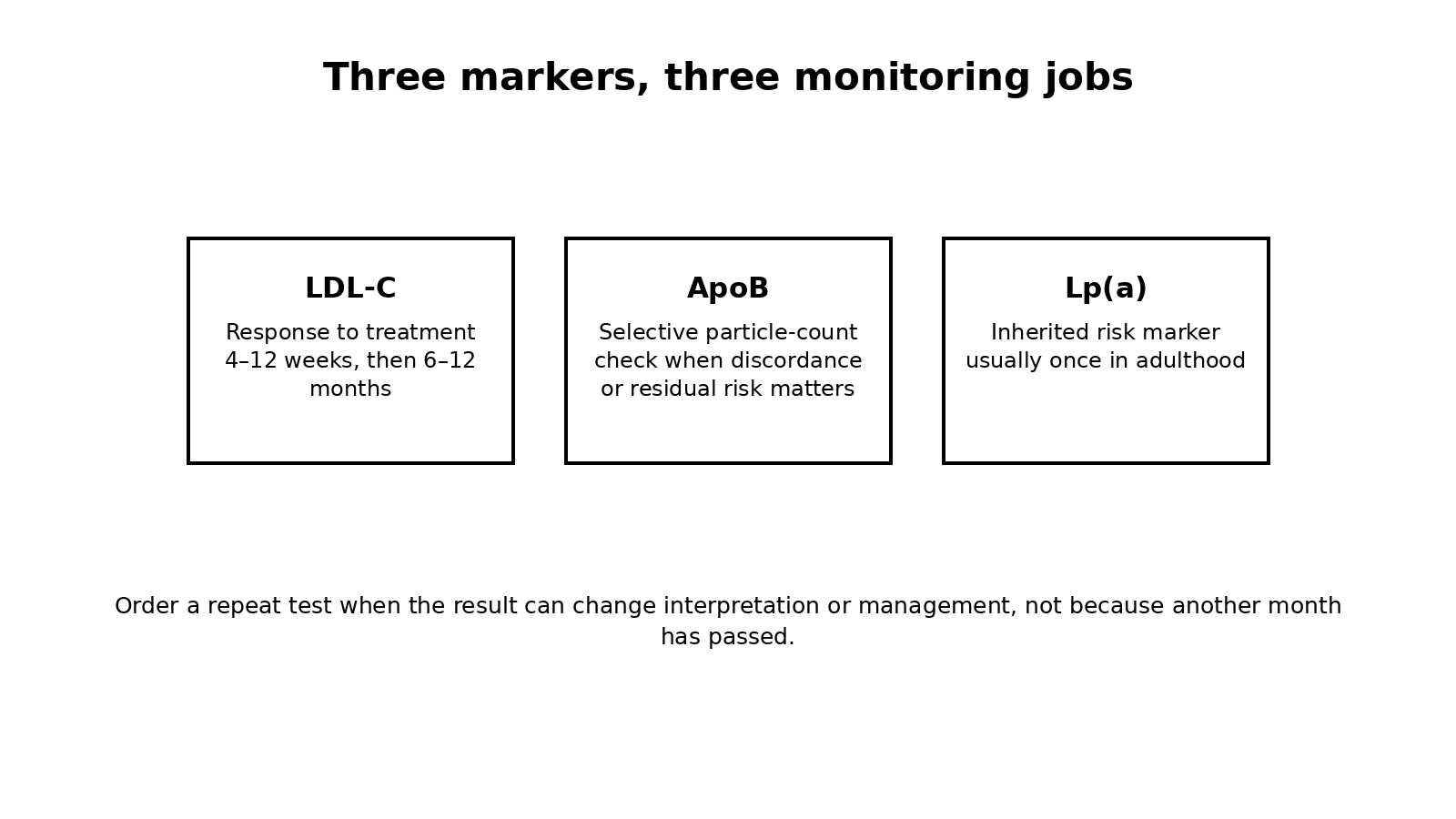
Figure 1. Different biomarkers answer different questions, so they should not be ordered on identical schedules.
1. LDL-C: the main treatment-response marker
The standard lipid profile remains the routine way to verify whether a statin, ezetimibe, bempedoic acid, PCSK9-directed therapy or combination regimen is producing the expected response. The 2026 guideline recommends measurement 4–12 weeks after starting or changing lipid-lowering therapy.
That interval is long enough for most therapies to approach a stable effect and short enough to detect under-response, poor adherence or the need for intensification. The result should be judged against both percentage LDL-C reduction and the absolute LDL-C / non-HDL-C goal for the person’s risk category.
2. Once stable, stop over-testing
The 2026 recommendation is a lipid profile every 6–12 months after the early response check. Frequency should be individualized to ASCVD risk, the reduction still needed, medication pharmacology, adherence and stability.
If no treatment is changing and results have been stable, every 12 months is usually enough. Testing every few weeks can magnify ordinary biological and laboratory variation and tempt people to react to noise rather than trend.
3. ApoB: repeat it when it is solving a problem
ApoB counts atherogenic particles more directly than LDL-C. The 2026 guideline emphasizes its selective value after LDL-C and non-HDL-C goals are reached, particularly with diabetes, triglycerides above 200 mg/dL or achieved LDL-C below 70 mg/dL, where cholesterol content and particle number can diverge.
If ApoB changes a treatment decision, repeat it after therapy intensification on a sensible follow-up interval, often alongside the lipid profile. If LDL-C, non-HDL-C and ApoB have remained concordant and stable, repeated ApoB adds less incremental value.
4. Lp(a): usually measure once, not every season
Lp(a) is largely determined by the LPA gene and is relatively stable across life. The 2026 guideline recommends measuring it at least once in adulthood because high levels identify a risk-enhancing phenotype and can justify more aggressive management of modifiable risk factors.
Lifestyle does not reliably lower Lp(a), so repeating the test after losing weight, changing diet or starting exercise is usually the wrong way to judge whether those interventions are “working.” Repeat measurement may be reasonable when a major biological state or disease could alter Lp(a), when the original assay is questionable, or when Lp(a)-specific therapy makes change clinically relevant.
5. Build a monitoring plan around decisions
A useful schedule begins with the decision you are trying to make. After a medication change: check response. With unexplained LDL/ApoB discordance: measure particle burden. With unknown inherited Lp(a) risk: obtain the once-in-adulthood test.
More data are not automatically better. A stable patient with controlled risk factors benefits more from adherence, blood-pressure control, exercise and smoking avoidance than from monthly lipid panels that never change management.
| Marker / situation | Practical 2026 interval |
|---|---|
| Baseline adult lipid screening | From age 19; at least every 5 years if untreated and otherwise appropriate |
| After starting or changing lipid-lowering therapy | Lipid profile in 4–12 weeks |
| Stable lipid-lowering therapy | Every 6–12 months; annual is appropriate when stable |
| ApoB | Selective; repeat when it is being used to guide therapy or resolve discordance |
| Lp(a) | At least once in adulthood; routine repeat testing generally not needed |
| Earlier retesting | When treatment, adherence, clinical status or a relevant secondary cause changes |
Look at your last three lipid panels and mark which one actually followed a treatment change. If you recently started or adjusted therapy and no test is planned within 4–12 weeks, ask about scheduling one. If you have never measured Lp(a), ask about a once-in-adulthood test. If you are repeating Lp(a) every few months without a specific reason, ask what decision the repeat result is supposed to change.
6. FAQ
How soon after starting a statin should I recheck cholesterol?
The 2026 guideline recommends a lipid profile 4–12 weeks after starting or adjusting lipid-lowering therapy.
Once my LDL is stable, how often should I test?
Every 6–12 months is the 2026 recommendation after the initial response check, with annual testing appropriate for many stable patients.
Should ApoB be checked every time LDL-C is checked?
Not necessarily. ApoB is most useful when it adds information, such as with high triglycerides, diabetes, very low achieved LDL-C or suspected LDL-C/ApoB discordance.
If I improve my diet, should I repeat Lp(a) to see if it fell?
Usually no. Lp(a) is largely genetic and lifestyle changes have minimal effect on its level. The cardiovascular benefits of diet and exercise still matter even when the Lp(a) number does not move.
References
1. Blumenthal RS, Morris PB, Gaudino M, et al. 2026 ACC/AHA Multisociety Guideline on the Management of Dyslipidemia. Circulation. 2026;153:e1154-e1276.
2. American College of Cardiology. ACC/AHA Release New Clinical Guideline for Managing Dyslipidemia. March 13, 2026.
3. Kronenberg F, Mora S, Stroes ESG, et al. Lipoprotein(a) in ASCVD and aortic stenosis: a European Atherosclerosis Society consensus statement. Eur Heart J. 2022;43:3925-3946.
4. Koschinsky ML, Bajaj A, Boffa MB, et al. A focused update to the 2019 NLA scientific statement on use of lipoprotein(a) in clinical practice. J Clin Lipidol. 2024;18:e308-e319.