Executive summary
LDL-C, ApoB, non-HDL-C and Lp(a) are not competing versions of the same test. They quantify different aspects of atherogenic lipoprotein biology. LDL-C estimates the cholesterol mass inside LDL particles. ApoB counts atherogenic particles because each LDL, VLDL remnant, IDL and Lp(a) particle carries one ApoB molecule. non-HDL-C measures the cholesterol mass carried by all lipoproteins outside HDL. Lp(a) quantifies a distinct inherited LDL-like particle with an additional apo(a) protein and pro-atherogenic, pro-inflammatory biology. [1–5]
When these markers are concordant, they usually tell a similar risk story. The clinically important cases are the discordant ones. A person can have an apparently acceptable LDL-C while carrying many cholesterol-depleted ApoB particles, particularly with elevated triglycerides, insulin resistance, obesity, type 2 diabetes, metabolic syndrome or after intensive lipid-lowering therapy. In those settings, ApoB can expose residual particle burden that LDL-C understates. [6–11]
The 2026 ACC/AHA multisociety dyslipidemia guideline restores explicit LDL-C and non-HDL-C goals and keeps LDL-C as the principal treatment target. It also states that ApoB measurement is reasonable, particularly in people receiving lipid-lowering therapy who have ASCVD, cardiovascular-kidney-metabolic syndrome, type 2 diabetes and/or elevated triglycerides, once LDL-C and/or non-HDL-C goals have been achieved. [1,2]
Lp(a) should not be treated as an “advanced LDL test.” The 2026 US guideline recommends measuring it at least once in adulthood. A value around 125 nmol/L or 50 mg/dL is considered elevated in the US framework and is associated with higher long-term ASCVD risk; very high concentrations carry progressively greater risk. Because Lp(a) is genetically determined and only minimally affected by lifestyle, it answers a different clinical question from LDL-C or ApoB. [1–5]
The most useful 2026 strategy is layered rather than ideological: use LDL-C and non-HDL-C to guide evidence-based treatment goals; add ApoB when particle number may be underestimated or residual risk remains; measure Lp(a) at least once to detect inherited risk; and interpret every lipid marker in the context of overall risk, existing atherosclerosis, blood pressure, smoking, diabetes, kidney disease, inflammation and family history.
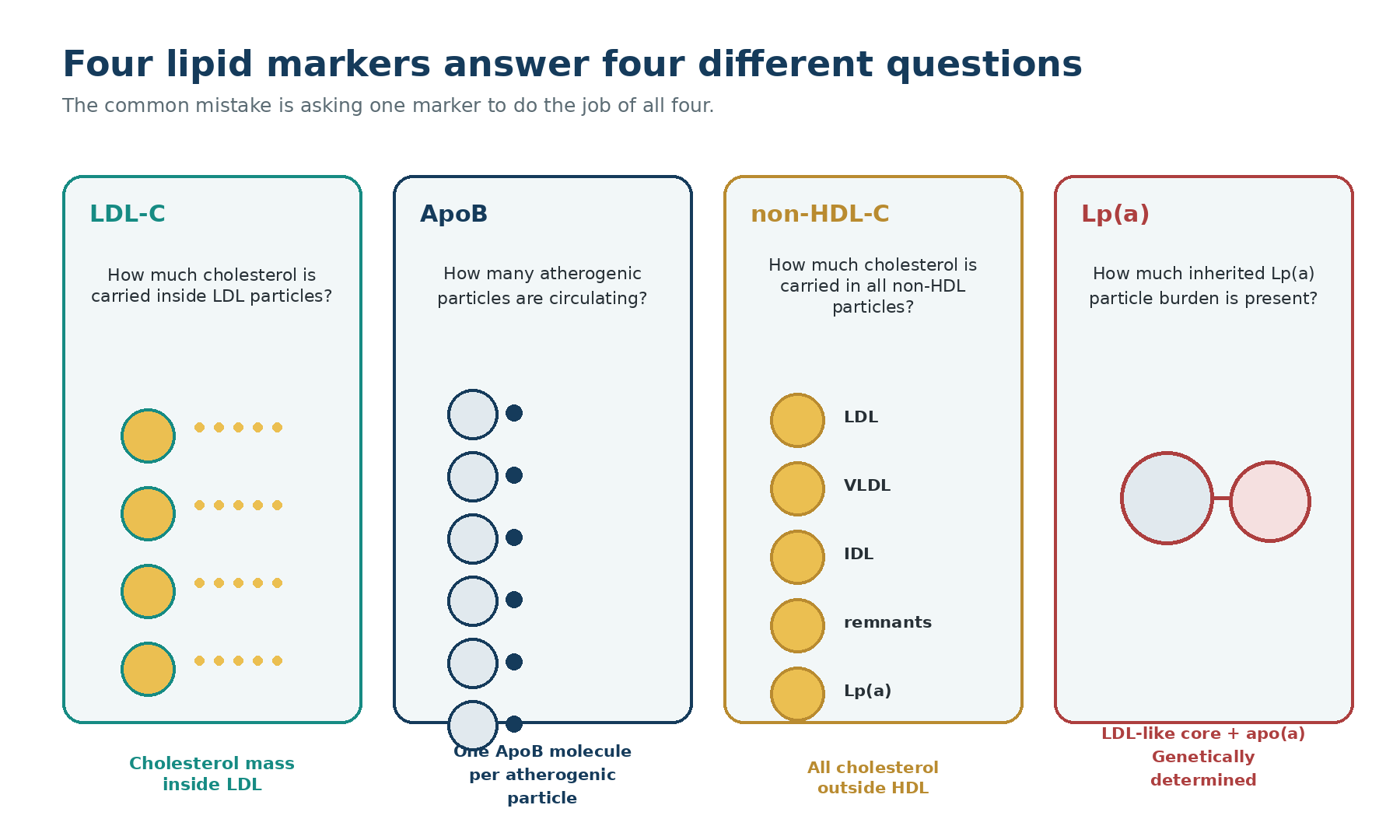
Figure 1. LDL-C, ApoB, non-HDL-C and Lp(a) answer different clinical questions. Original ElevatedCholesterol.com illustration.
At a glance
| Marker | What it measures | Best use | Main limitation |
|---|---|---|---|
| LDL-C | Cholesterol mass inside LDL particles | Primary treatment target; strongest outcomes and guideline framework | Can underestimate particle burden when particles are cholesterol-poor |
| ApoB | Number of circulating atherogenic ApoB particles | Residual risk; discordance; high TG, diabetes, obesity/CKM, low achieved LDL-C | Treatment thresholds less universally standardized than LDL-C goals |
| non-HDL-C | Cholesterol in all non-HDL lipoproteins | Simple secondary target; useful with elevated TG/remnants | Still measures cholesterol mass, not particle number |
| Lp(a) | Concentration of inherited Lp(a) particles / mass, assay dependent | Lifetime inherited risk; family screening; risk refinement | Units are not directly interchangeable; currently limited direct treatment options |
1. The most important distinction: cholesterol mass is not particle number
Imagine a highway carrying cholesterol cargo toward the arterial wall. LDL-C tells you how much cholesterol cargo is inside the LDL vehicles. ApoB tells you how many atherogenic vehicles are on the road. Those two quantities are strongly correlated across populations, but they are not identical within every individual.
Every atherogenic particle that can enter and become retained in the arterial wall carries one molecule of ApoB. That includes LDL, intermediate-density lipoprotein (IDL), very-low-density lipoprotein (VLDL) remnants and Lp(a). Because atherosclerosis is initiated by retention of these particles, the number of circulating particles is biologically important. [12,13]
Particle cholesterol content varies. If each particle is cholesterol-rich, a given LDL-C can be carried by relatively few particles. If particles are smaller or cholesterol-depleted, the same LDL-C can be distributed across many more particles. The latter pattern is common in insulin resistance and hypertriglyceridemia. This is the basis of “discordance.” [6–10]
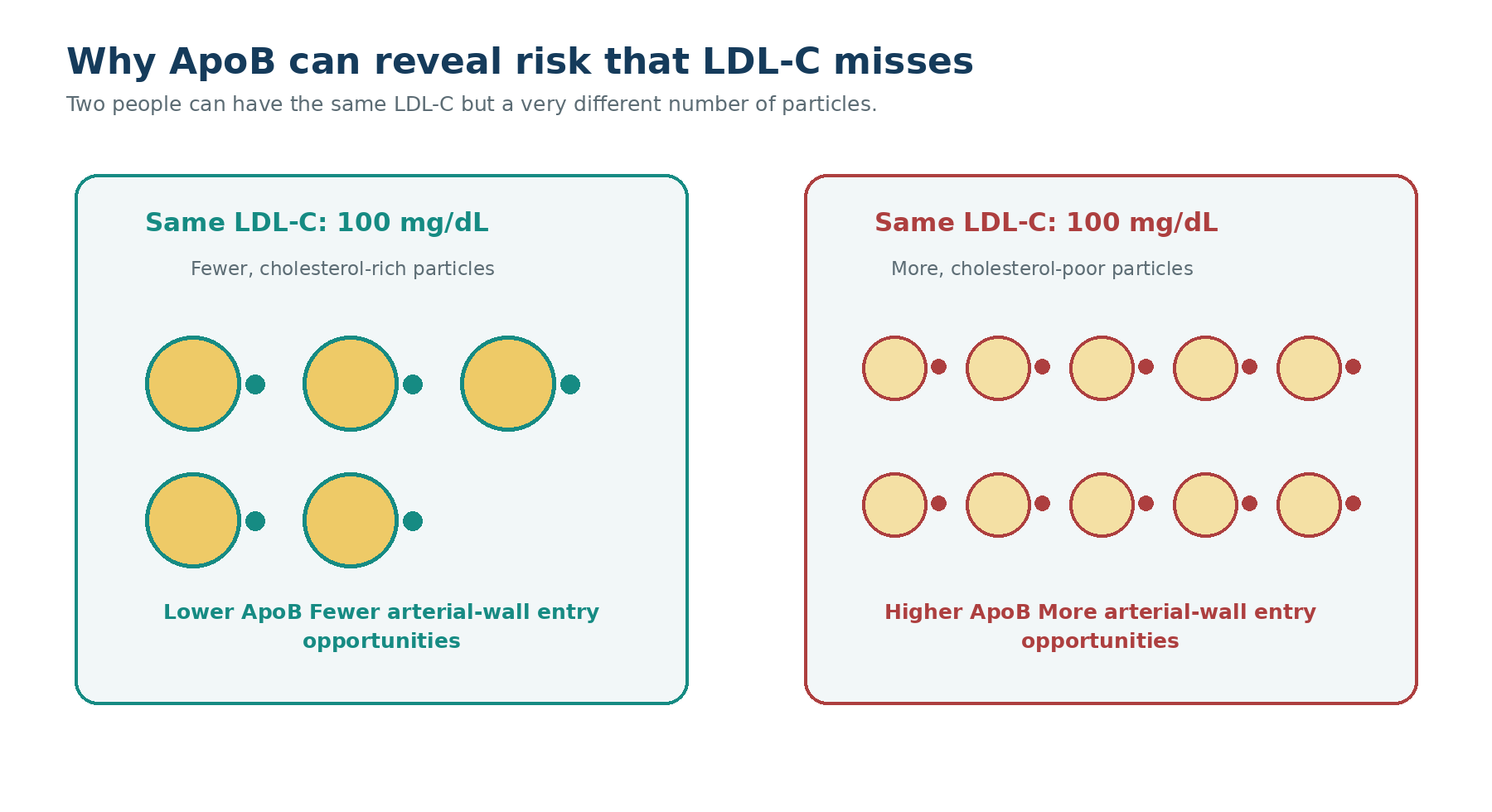
Figure 2. Two people can have the same LDL-C but a different ApoB particle count. When LDL-C and ApoB are discordant, multiple cohorts show risk tends to track more closely with ApoB. Original ElevatedCholesterol.com illustration.
The question is not “Is ApoB better than LDL-C?” in the abstract. The useful question is: “In this patient, are cholesterol mass and atherogenic particle number telling the same story?”
2. LDL-C: why it is still the primary treatment target
LDL-C is not obsolete. It remains the central therapeutic biomarker in clinical prevention because decades of randomized trials show that lowering LDL-C with multiple mechanistically distinct treatments reduces atherosclerotic cardiovascular events. Genetic, epidemiologic and interventional evidence supports a causal relationship between cumulative exposure to LDL and other ApoB-containing lipoproteins and ASCVD. [12–15]
The 2026 ACC/AHA multisociety guideline explicitly reinstates absolute LDL-C goals alongside percentage reduction. For primary prevention, the guideline uses goals of LDL-C below 100 mg/dL for borderline/intermediate risk and below 70 mg/dL for high risk. In very-high-risk ASCVD, the goal is below 55 mg/dL. non-HDL-C goals accompany these LDL-C targets. [1,2]
This matters because “ApoB is a better risk marker in discordant patients” is not the same statement as “LDL-C should no longer guide therapy.” Most cardiovascular outcome trials were designed around LDL-C lowering, the major drug classes are dosed and escalated using LDL-C thresholds/goals, and contemporary guidelines remain structured around LDL-C. ApoB complements this framework rather than invalidating it.
LDL-C measurement itself has also improved. The 2026 guideline prefers the Martin/Hopkins or Sampson/NIH equations over the Friedewald formula for estimated LDL-C after a standard lipid profile, improving accuracy especially at lower LDL-C and/or higher triglycerides. [1]
Myth: “If ApoB is more accurate, LDL-C no longer matters.” Fact: LDL-C remains the primary treatment target with the deepest randomized outcomes evidence. ApoB is especially valuable when particle number may be higher than LDL-C suggests.
3. ApoB: the particle-number marker
ApoB is conceptually simple. One ApoB100 molecule is present on each LDL, IDL, VLDL/remnant and Lp(a) particle. Measuring ApoB therefore approximates the total number of circulating atherogenic particles, regardless of how much cholesterol each particle contains.
This becomes most valuable when LDL-C and ApoB are discordant. In the CARDIA study, ApoB measured in young adulthood predicted coronary artery calcium in midlife even when LDL-C or non-HDL-C were lower. In INTERHEART, when ApoB and non-HDL-C were discordant, myocardial infarction risk tracked more closely with ApoB. [6,7]
A large 2024 UK Biobank analysis of nearly 294,000 adults reinforced the same principle. ApoB was highly correlated with LDL-C and non-HDL-C overall, but there was substantial individual variability. At a given LDL-C or non-HDL-C, people with higher ApoB had meaningfully higher 10-year ASCVD event rates; residual ApoB remained predictive after accounting for the cholesterol measures. [8]
No single observational analysis settles every methodological debate. A 2025 review of discordance methods emphasized that results depend on how discordance is defined and whether people are treated or untreated. Still, the clinically consistent theme is that in treated individuals and in metabolic states where particle composition varies, elevated ApoB can identify residual risk after LDL-C appears satisfactory. [9,10]
Who benefits most from ApoB testing?
People with triglycerides at or above roughly 150 mg/dL, because triglyceride-rich lipoproteins and cholesterol-depleted LDL can make LDL-C a weaker proxy for particle number.
People with type 2 diabetes, obesity, metabolic syndrome or cardiovascular-kidney-metabolic (CKM) syndrome, where atherogenic dyslipidemia and particle discordance are more common.
People with established ASCVD or high risk who have already reached LDL-C and non-HDL-C goals but in whom residual atherogenic risk remains a concern.
People with very low achieved LDL-C on intensive therapy, where the amount of cholesterol per ApoB particle can vary and ApoB may help judge whether the particle burden is truly suppressed.
The 2026 ACC/AHA guideline gives ApoB a Class 2a role in adults on lipid-lowering therapy, particularly those with ASCVD, CKM syndrome, type 2 diabetes and/or elevated triglycerides, to guide further intensification once LDL-C and/or non-HDL-C goals are achieved. [1]
4. non-HDL-C: the underappreciated workhorse
non-HDL-C is calculated simply: total cholesterol minus HDL-C. It therefore captures cholesterol carried in LDL plus VLDL, IDL, remnants and Lp(a) — essentially the cholesterol mass contained in all non-HDL, ApoB-containing lipoproteins.
Its practical advantages are substantial. It is automatically available from a standard lipid panel, costs nothing extra, is less sensitive than calculated LDL-C to triglyceride-related estimation problems, and better reflects remnant cholesterol burden when triglycerides are elevated.
It is not identical to ApoB. non-HDL-C still measures cholesterol mass. When each ApoB particle contains an unusual amount of cholesterol, particle number and non-HDL cholesterol can diverge. Older statin-trial meta-analysis data found non-HDL-C was at least as strongly associated with residual events as LDL-C or ApoB, while newer discordance studies often favor ApoB when the measures disagree. Both observations can be true because they answer different questions in different populations. [8–11,16]
The 2026 ACC/AHA guideline makes non-HDL-C a formal co-target with LDL-C. That elevates it from an optional “advanced” calculation to a core therapeutic metric.
5. Lp(a): a different particle and a different kind of risk
Lp(a) is structurally an LDL-like particle containing ApoB100, covalently linked to apolipoprotein(a). Its concentration is determined largely by genetics and remains relatively stable through adult life. In addition to cholesterol delivery, Lp(a) carries oxidized phospholipids and is causally associated with ASCVD and calcific aortic valve stenosis. [3–5,17]
This is why a normal LDL-C or ApoB cannot rule out Lp(a)-related risk. ApoB technically includes the ApoB molecule carried on each Lp(a) particle, but ApoB does not tell you how many of those particles are Lp(a), nor does it capture the full apo(a)/oxidized-phospholipid biology. Lp(a) must be measured directly.
The 2026 ACC/AHA guideline recommends Lp(a) testing at least once in adulthood. In the US framework, 125 nmol/L or 50 mg/dL and above is considered elevated; around 250 nmol/L is associated with at least a doubling of long-term ASCVD risk. The 2025 ESC/EAS focused update also uses elevated Lp(a) as a risk modifier. [1–5]
Units require care. mg/dL measures mass; nmol/L measures particle concentration. Because apo(a) isoform size varies greatly between individuals, no single conversion factor is accurate enough for clinical use. Results should be interpreted in the units reported by the laboratory rather than converted with a fixed multiplier. [3–5]
Lp(a) is not “the fourth cholesterol number.” It is a genetically determined risk modifier with its own biology, units, family implications and emerging targeted therapies.
6. When all four markers agree
In many people, LDL-C, non-HDL-C and ApoB rise and fall together. If LDL-C is high, non-HDL-C is high, ApoB is high and Lp(a) is low, interpretation is straightforward: atherogenic particle exposure is excessive and treatment should focus on lowering that exposure according to overall risk. In this setting, ordering increasingly sophisticated tests may add little to the decision.
Concordance is why LDL-C has worked so well for decades at the population level. Strong correlation makes it an excellent proxy most of the time. Precision becomes important in the minority — but clinically important minority — in whom the proxy and the underlying particle burden diverge.
7. When the markers disagree: the situations that matter most
| Pattern | What it may mean | Why it matters |
|---|---|---|
| LDL-C “normal,” ApoB high | Many cholesterol-poor ApoB particles | Risk may be underestimated by LDL-C alone; common with high TG/insulin resistance |
| LDL-C high, ApoB relatively lower | Fewer cholesterol-rich particles | Particle burden may be lower than LDL-C mass suggests, but high LDL-C exposure can still warrant treatment based on risk |
| non-HDL-C high, LDL-C modest | More cholesterol in VLDL/remnants | Often signals triglyceride-rich remnant burden |
| LDL-C/ApoB controlled, Lp(a) high | Inherited residual risk remains | Intensify management of modifiable risk; direct Lp(a) therapies are emerging |
| All “good,” CAC/CCTA abnormal | Past cumulative exposure or non-lipid risk already produced disease | Imaging can reclassify risk; current labs are a snapshot, plaque is a lifetime record |
Metabolic syndrome, diabetes and elevated triglycerides
Insulin resistance increases hepatic VLDL production and promotes remodeling of LDL into smaller, cholesterol-depleted particles. A standard LDL-C can therefore look less impressive than the total number of ApoB particles. This is one of the strongest clinical arguments for ApoB in modern practice, especially as obesity and type 2 diabetes become more prevalent. [9,18]
Very low LDL-C on treatment
When intensive statins, ezetimibe, PCSK9 inhibition or combination therapy drives LDL-C to very low levels, the relationship between cholesterol mass and particle number may shift. The 2026 guideline explicitly highlights ApoB as a useful next measurement once LDL-C/non-HDL-C goals are reached in higher-risk patients. [1,2]
High Lp(a)
High Lp(a) can add risk that is not obvious from LDL-C alone. Because Lp(a) itself contains cholesterol, a portion of laboratory LDL-C can reside within Lp(a), but fixed “Lp(a)-cholesterol corrections” are imprecise and are not recommended as a routine way to strip Lp(a) cholesterol out of LDL-C. The clinically safer approach is to measure and report Lp(a) separately. [3–5]
8. What the 2026 guidelines actually ask clinicians to target
| Clinical setting | LDL-C goal | non-HDL-C goal | ApoB role |
|---|---|---|---|
| Borderline / intermediate primary prevention | <100 mg/dL | <130 mg/dL | Selective; useful if discordance/residual risk suspected |
| High-risk primary prevention | <70 mg/dL | <100 mg/dL | Useful when TG, diabetes/CKM or residual risk remain |
| Clinical ASCVD, not very high risk | <70 mg/dL | <100 mg/dL | Reasonable after LDL/non-HDL goals to judge residual particle burden |
| Very-high-risk ASCVD | <55 mg/dL | <85 mg/dL | Particularly useful if residual risk persists despite aggressive therapy |
These are simplified headline goals from the 2026 ACC/AHA framework; individual recommendations also depend on age, PREVENT-estimated risk, severe hypercholesterolemia, familial hypercholesterolemia, diabetes, kidney disease, CAC and established ASCVD. [1,2]
What about ApoB targets?
Unlike LDL-C and non-HDL-C, ApoB treatment thresholds are less standardized across guidelines. The 2024 National Lipid Association expert consensus suggested ApoB thresholds of approximately 90 mg/dL for borderline-to-intermediate risk, 70 mg/dL for high risk and 60 mg/dL for very high risk, aligned conceptually with LDL-C/non-HDL-C intensification thresholds. These are useful clinical reference points, but they should not be presented as the formal 2026 ACC/AHA LDL-C goals. [19]
| Risk category (NLA 2024 consensus) | Suggested ApoB threshold for intensification |
|---|---|
| Borderline to intermediate risk | 90 mg/dL |
| High risk | 70 mg/dL |
| Very high risk | 60 mg/dL |
9. A practical testing strategy
Get a standard lipid panel: total cholesterol, HDL-C, triglycerides and a contemporary LDL-C estimate. non-HDL-C is automatically available as total cholesterol minus HDL-C.
Measure Lp(a) at least once in adulthood, earlier when there is premature ASCVD, familial hypercholesterolemia or a strong family history.
Add ApoB when triglycerides are elevated, diabetes/CKM syndrome or obesity is present, LDL-C is already low on therapy, established ASCVD remains high risk, or the lipid panel and clinical picture do not match.
Use imaging and global risk where appropriate. A biomarker profile cannot erase established plaque on CAC/CCTA, and a high CAC score may justify more aggressive LDL-C/non-HDL-C lowering even when current lipids appear respectable.
Reassess after treatment based on the marker that actually guides the therapeutic decision. LDL-C/non-HDL-C remain the standard goals; ApoB can confirm whether atherogenic particle burden is adequately suppressed.
For most people: LDL-C + non-HDL-C guide treatment; Lp(a) is measured once for inherited risk; ApoB is added when precision matters. This is more useful than declaring one biomarker universally superior.
10. Three clinical scenarios
Scenario A: LDL-C 95, ApoB 75, triglycerides 80, Lp(a) low
These markers are broadly concordant. Whether LDL-C 95 mg/dL is acceptable depends on the person’s overall risk. ApoB does not reveal a hidden high-particle phenotype, and Lp(a) does not add inherited residual risk. The next decision is risk-based, not biomarker-shopping.
Scenario B: LDL-C 95, ApoB 115, triglycerides 240, type 2 diabetes
This is classic discordance. The LDL-C value alone can create false reassurance because many cholesterol-depleted ApoB particles are present. ApoB and non-HDL-C are particularly informative, and the 2026 guideline specifically supports ApoB use in this phenotype. Treatment should address overall ASCVD risk and atherogenic particle burden rather than chase triglycerides in isolation.
Scenario C: LDL-C 55, ApoB 62, Lp(a) 220 nmol/L, established coronary plaque
LDL-C and ApoB are already aggressively controlled, but inherited Lp(a)-related risk and existing disease remain. The current approach is to optimize every modifiable risk factor and evidence-based therapy while recognizing that Lp(a)-specific outcome therapies are still emerging. A low LDL-C does not make the Lp(a) result irrelevant; conversely, high Lp(a) does not make further ApoB/LDL lowering pointless.
11. Myths that create confusion
| Myth | Fact |
|---|---|
| “ApoB is just another name for LDL.” | No. ApoB reflects the number of all major atherogenic particles, not cholesterol mass in LDL alone. |
| “non-HDL-C and ApoB are identical.” | No. non-HDL-C measures cholesterol mass; ApoB measures particle number. They often agree, but not always. |
| “If LDL-C is low, Lp(a) no longer matters.” | False. Lp(a) is an independent inherited risk factor and can remain important at low LDL-C. |
| “A high ApoB means I need a specific ApoB drug.” | No. Most therapies that lower LDL-C also lower ApoB particle burden. The marker helps guide intensity; it does not dictate a unique drug class. |
| “Lp(a) can be calculated from ApoB.” | No. Lp(a) must be measured directly. |
| “ApoB should replace the standard lipid panel for everyone.” | Current 2026 guidelines do not say this. ApoB is an important precision tool, especially after standard goals are reached or discordance is likely. |
12. Frequently asked questions
Do I need ApoB if my LDL-C is high?
Not necessarily to know that treatment is needed. ApoB is most useful when it could change risk interpretation or confirm residual particle burden.
Is ApoB fasting?
ApoB itself does not require fasting. The broader lipid panel may be repeated fasting in selected situations, especially severe hypertriglyceridemia or when a clinician needs clarification.
What is non-HDL-C?
Total cholesterol minus HDL-C. It captures cholesterol in LDL, remnants, IDL, VLDL and Lp(a).
Is ApoB better than LDL particle number (LDL-P)?
Both attempt to quantify particle burden, but ApoB is standardized, widely available and counts all ApoB-containing atherogenic particles rather than LDL alone.
Can Lp(a) make ApoB high?
Yes, because every Lp(a) particle carries one ApoB molecule. In most people LDL and remnants dominate ApoB, but very high Lp(a) contributes to the total ApoB count.
Can I convert Lp(a) mg/dL to nmol/L?
Not reliably with a fixed factor. Apo(a) isoform size varies, so conversion can be substantially wrong for an individual.
If ApoB is low, can I ignore CAC?
No. ApoB is a current blood measurement; CAC records established calcified coronary plaque accumulated over years. Disease burden and current exposure answer different questions.
Which number should I follow after starting therapy?
Usually LDL-C and non-HDL-C because guideline goals are defined that way. In higher-risk or discordant patients, ApoB can provide an additional treatment-quality check.
Does HDL-C subtract risk from ApoB?
A high HDL-C does not cancel a high ApoB burden. non-HDL-C mathematically subtracts HDL cholesterol from total cholesterol, but risk assessment remains multifactorial.
What if LDL-C and ApoB disagree only slightly?
Minor differences may not be clinically meaningful. Discordance matters most when the difference changes risk category, treatment intensity or the interpretation of residual risk.
13. Key take-home messages
LDL-C measures cholesterol mass inside LDL; ApoB measures atherogenic particle number; non-HDL-C measures cholesterol mass in all non-HDL particles; Lp(a) measures a distinct inherited particle burden.
LDL-C remains the primary treatment target in 2026 because guideline goals and the randomized outcomes evidence are built around LDL lowering.
ApoB is especially valuable when LDL-C may underestimate particle burden — elevated triglycerides, diabetes/CKM, obesity/metabolic syndrome, established ASCVD and very low treated LDL-C.
non-HDL-C is a free, robust co-target that captures remnant cholesterol as well as LDL cholesterol.
Lp(a) should be measured at least once in adulthood and interpreted separately; a normal LDL-C or ApoB does not rule out Lp(a)-related risk.
When LDL-C and ApoB are discordant, multiple studies show risk often tracks more closely with ApoB, but methods and populations matter.
Current US guidelines do not replace LDL-C with ApoB. They use ApoB as a precision marker after standard LDL-C/non-HDL-C goals or when discordance is likely.
The best marker is the one that answers the clinical question you are actually asking.
References
1. Blumenthal RS, Morris PB, Gaudino M, et al. 2026 ACC/AHA/AACVPR/ABC/ACPM/ADA/AGS/APhA/ASPC/NLA/PCNA Guideline on the Management of Dyslipidemia. J Am Coll Cardiol. 2026;87(19):2624–2757. doi:10.1016/j.jacc.2025.11.016.
2. Blumenthal RS, Morris PB. Dyslipidemia Guideline Development: Building on a Robust Foundation. J Am Coll Cardiol. 2026;87(19):2552–2554. doi:10.1016/j.jacc.2026.03.059.
3. Kronenberg F, Mora S, Stroes ESG, et al. Lipoprotein(a) in atherosclerotic cardiovascular disease and aortic stenosis: a European Atherosclerosis Society consensus statement. Eur Heart J. 2022;43:3925–3946. doi:10.1093/eurheartj/ehac361.
4. 2025 Focused Update of the 2019 ESC/EAS Guidelines for the management of dyslipidaemias. Eur Heart J. 2025;46:4359–4378. doi:10.1093/eurheartj/ehaf190.
5. Koschinsky ML, Bajaj A, Boffa MB, et al. A focused update to the 2019 NLA scientific statement on use of lipoprotein(a) in clinical practice. J Clin Lipidol. 2024;18(3):e308–e319. doi:10.1016/j.jacl.2024.03.001.
6. Wilkins JT, Li RC, Sniderman A, Chan C, Lloyd-Jones DM. Discordance Between Apolipoprotein B and LDL-Cholesterol in Young Adults Predicts Coronary Artery Calcification: The CARDIA Study. J Am Coll Cardiol. 2016;67:193–201. doi:10.1016/j.jacc.2015.10.055.
7. Sniderman AD, Islam S, Yusuf S, McQueen MJ. Discordance analysis of apolipoprotein B and non-high density lipoprotein cholesterol as markers of cardiovascular risk in the INTERHEART study. Atherosclerosis. 2012;225:444–449. doi:10.1016/j.atherosclerosis.2012.08.039.
8. Sniderman AD, Dufresne L, Pencina KM, et al. Discordance among apoB, non-high-density lipoprotein cholesterol, and triglycerides: implications for cardiovascular prevention. Eur Heart J. 2024;45:2410–2418. doi:10.1093/eurheartj/ehae258.
9. Johannesen CDL, Mortensen MB, Nordestgaard BG, Langsted A. Discordance analyses comparing LDL cholesterol, non-HDL cholesterol, and apolipoprotein B for cardiovascular risk estimation. Atherosclerosis. 2025;403:119139. doi:10.1016/j.atherosclerosis.2025.119139.
10. ApoB, LDL-C, and non-HDL-C as markers of cardiovascular risk. Review of discordance studies. Atherosclerosis. 2025.
11. Boekholdt SM, Arsenault BJ, Mora S, et al. Association of LDL Cholesterol, Non-HDL Cholesterol, and Apolipoprotein B Levels With Risk of Cardiovascular Events Among Patients Treated With Statins: A Meta-analysis. JAMA. 2012;307:1302–1309. doi:10.1001/jama.2012.366.
12. Ference BA, Ginsberg HN, Graham I, et al. Low-density lipoproteins cause atherosclerotic cardiovascular disease. 1. Evidence from genetic, epidemiologic, and clinical studies. Eur Heart J. 2017;38:2459–2472. doi:10.1093/eurheartj/ehx144.
13. Borén J, Chapman MJ, Krauss RM, et al. Low-density lipoproteins cause atherosclerotic cardiovascular disease: pathophysiological, genetic, and therapeutic insights. Eur Heart J. 2020;41:2313–2330.
14. Cholesterol Treatment Trialists’ Collaboration. Efficacy and safety of more intensive lowering of LDL cholesterol: meta-analysis of data from 170,000 participants in 26 randomized trials. Lancet. 2010;376:1670–1681.
15. Sabatine MS, Giugliano RP, Keech AC, et al. Evolocumab and Clinical Outcomes in Patients with Cardiovascular Disease. N Engl J Med. 2017;376:1713–1722.
16. Pencina MJ, D’Agostino RB, Zdrojewski T, et al. Apolipoprotein B improves risk assessment of coronary heart disease in the Framingham Heart Study beyond LDL-C and non-HDL-C. Eur J Prev Cardiol. 2015.
17. Rosenson RS, Hegele RA, Gotto AM. Integrated Measure for Atherogenic Lipoproteins in the Modern Era: Risk Assessment Based on Apolipoprotein B. J Am Coll Cardiol. 2016;67:202–204.
18. Ganda OP, Jumes CG, Abrahamson MJ, Molla M. Quantification of concordance and discordance between apolipoprotein B and non-HDL cholesterol goals in patients with diabetes and hypertriglyceridemia. Diabetes Res Clin Pract. 2012;97:51–56.
19. Soffer DE, Marston NA, Maki KC, et al. Role of apolipoprotein B in the clinical management of cardiovascular risk in adults: An Expert Clinical Consensus from the National Lipid Association. J Clin Lipidol. 2024;18:e647–e663. doi:10.1016/j.jacl.2024.08.013.
20. Mora S, Buring JE, Ridker PM. Discordance of low-density lipoprotein cholesterol with alternative LDL-related measures and future coronary events. Circulation. 2014;129:553–561.
21. Langsted A, Kamstrup PR, Nordestgaard BG. High lipoprotein(a) and high risk of mortality. Eur Heart J. 2019.
22. Tsimikas S. A Test in Context: Lipoprotein(a): Diagnosis, Prognosis, Controversies, and Emerging Therapies. J Am Coll Cardiol. 2017;69:692–711.
23. Nordestgaard BG, Langsted A, Mora S, et al. Fasting is not routinely required for determination of a lipid profile: joint consensus statement. Eur Heart J. 2016;37:1944–1958.
24. Martin SS, Blaha MJ, Elshazly MB, et al. Comparison of a novel method vs the Friedewald equation for estimating LDL-C. JAMA. 2013;310:2061–2068.
25. Sampson M, Ling C, Sun Q, et al. A new equation for calculation of low-density lipoprotein cholesterol in patients with normolipidemia and/or hypertriglyceridemia. JAMA Cardiol. 2020;5:540–548.
Medical disclaimer. This publication is for education only and is not medical advice. Testing and treatment decisions should be individualized with a qualified clinician according to overall cardiovascular risk, existing disease, comorbidities, medications, local guidance and patient preferences.