Executive Summary
Triglycerides below 150 mg/dL are generally considered desirable. Persistent values from about 150-499 mg/dL often reflect insulin resistance, obesity, diabetes, alcohol, medications or genetic predisposition and identify residual ASCVD risk.
At ≥500 mg/dL, pancreatitis prevention becomes increasingly relevant. At ≥1000 mg/dL, chylomicronemia is common and the 2026 ACC/AHA guideline specifically notes the need for triglyceride-lowering therapy to prevent pancreatitis in addition to lifestyle intervention.
Statins remain the pharmacologic foundation for ASCVD prevention in persistent hypertriglyceridemia because the causal burden is still apoB-containing particles.
Icosapent ethyl has randomized event-reduction evidence in selected statin-treated high-risk patients with triglycerides roughly 135-499 mg/dL. Generic fish-oil products should not inherit that claim.
Fibrates are effective triglyceride-lowering drugs and are often used when pancreatitis prevention is the priority. Broad statin-era ASCVD benefit has been inconsistent.
Secondary causes matter enormously: uncontrolled diabetes, heavy alcohol use, hypothyroidism, kidney disease, pregnancy and several medications can push triglycerides into dangerous ranges.
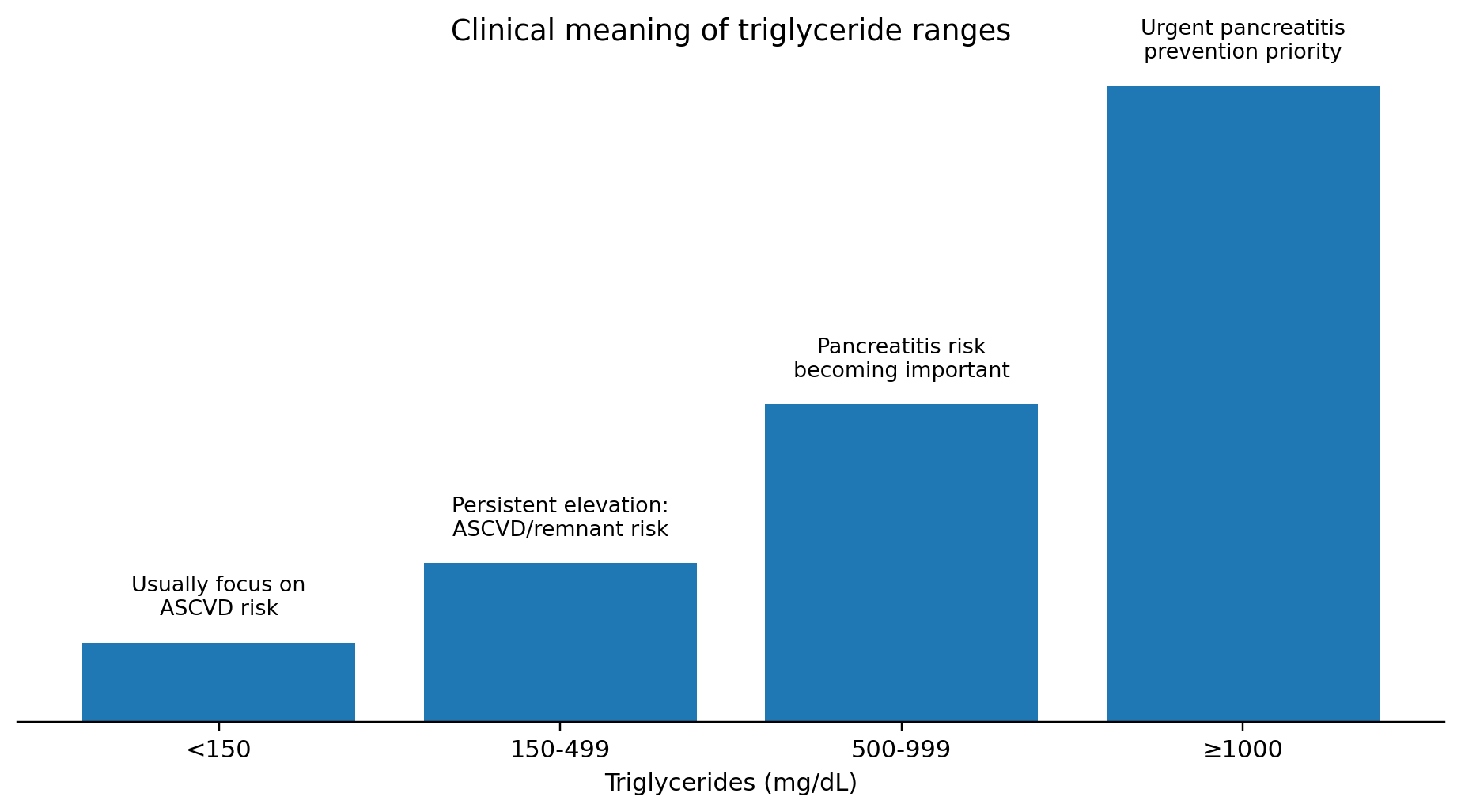
Figure 1. Triglyceride thresholds shift the clinical priority from ASCVD risk toward pancreatitis prevention.
1. Moderate hypertriglyceridemia: a remnant problem
Triglycerides themselves are not deposited as plaque. They indicate the presence of triglyceride-rich apoB particles whose remnant cholesterol can enter the artery wall.
This is why ApoB and non-HDL-C are especially useful when triglycerides are high.
2. Severe hypertriglyceridemia: a pancreatitis problem
Above 500 mg/dL, and especially above 1000 mg/dL, large chylomicron particles accumulate. Pancreatitis risk rises sharply as levels become extreme.
New abdominal pain plus triglycerides above 1000 mg/dL warrants urgent clinical assessment.
3. What to do first
Stop alcohol, correct uncontrolled diabetes, review medications and sharply reduce dietary fat when chylomicronemia is present.
Drug therapy may include fibrates and prescription omega-3 preparations, depending on the immediate goal and kidney/drug-interaction context.
4. Fasting vs nonfasting
Nonfasting triglycerides are useful for routine cardiovascular assessment. Fasting measurement becomes more important when triglycerides are markedly elevated or pancreatitis risk is being assessed.
If triglycerides are above 400 mg/dL, the Friedewald LDL-C calculation is invalid; direct LDL-C, non-HDL-C or ApoB becomes more useful.
| Triglycerides | Main concern | Typical next step |
|---|---|---|
| <150 mg/dL | Baseline risk context | Maintain healthy lifestyle |
| 150-499 mg/dL | Remnant / metabolic ASCVD risk | Lifestyle, secondary causes, statin-based risk reduction |
| 500-999 mg/dL | Pancreatitis risk rising | Aggressive secondary-cause treatment + TG-lowering strategy |
| ≥1000 mg/dL | Chylomicronemia / pancreatitis priority | Very-low-fat diet, alcohol cessation, urgent evaluation if symptoms, pharmacotherapy |
5. FAQ
Do triglycerides need to be zero?
No. They are an energy-transport molecule. The goal is a healthy metabolic range and lower remnant/ApoB risk.
Can one meal raise triglycerides?
Yes. That is why very high or unexpected results are often confirmed fasting.
Is fish oil enough at TG 1000?
Not by itself. Severe hypertriglyceridemia requires urgent dietary and secondary-cause management, often plus prescription therapy.
Does lowering triglycerides always reduce heart attacks?
No. PROMINENT proved that biomarker lowering alone is not enough.
References
1. Blumenthal RS, Morris PB, Gaudino M, et al. 2026 ACC/AHA Dyslipidemia Guideline.
2. American College of Cardiology. Severe Hypertriglyceridemia: Acute Risk Stratification and Immediate Management. June 2026.
3. Bhatt DL, Steg PG, Miller M, et al. REDUCE-IT. N Engl J Med. 2019.
4. Das Pradhan A, et al. PROMINENT. N Engl J Med. 2022.