Executive Summary
Insulin resistance increases hepatic free-fatty-acid flux and VLDL production. More triglyceride-rich apoB particles enter the circulation, exchange lipids with LDL and HDL, and are remodeled into smaller cholesterol-depleted LDL particles and remnant particles.
The result is atherogenic dyslipidemia: elevated triglycerides, low HDL-C, increased remnant cholesterol, higher ApoB and often small dense LDL. LDL-C may underestimate risk because each LDL particle can carry less cholesterol.
The 2026 ACC/AHA dyslipidemia guideline explicitly highlights ApoB as especially useful in cardiovascular-kidney-metabolic (CKM) syndrome, type 2 diabetes and hypertriglyceridemia after LDL-C/non-HDL-C goals are reached.
Treating the phenotype is not the same as simply lowering triglycerides. PROMINENT lowered triglycerides, VLDL cholesterol, remnant cholesterol and apoC-III by roughly 26-28% with pemafibrate, yet did not reduce cardiovascular events; ApoB actually rose modestly.
By contrast, REDUCE-IT reduced ischemic events with prescription icosapent ethyl in selected statin-treated high-risk patients with triglycerides 135-499 mg/dL. That result should not be generalized to generic fish-oil supplements.
Weight loss, physical activity, dietary quality, diabetes treatment, LDL-C/ApoB lowering and correction of secondary causes remain the foundation. The goal is fewer atherogenic particles and lower total cardiometabolic risk.
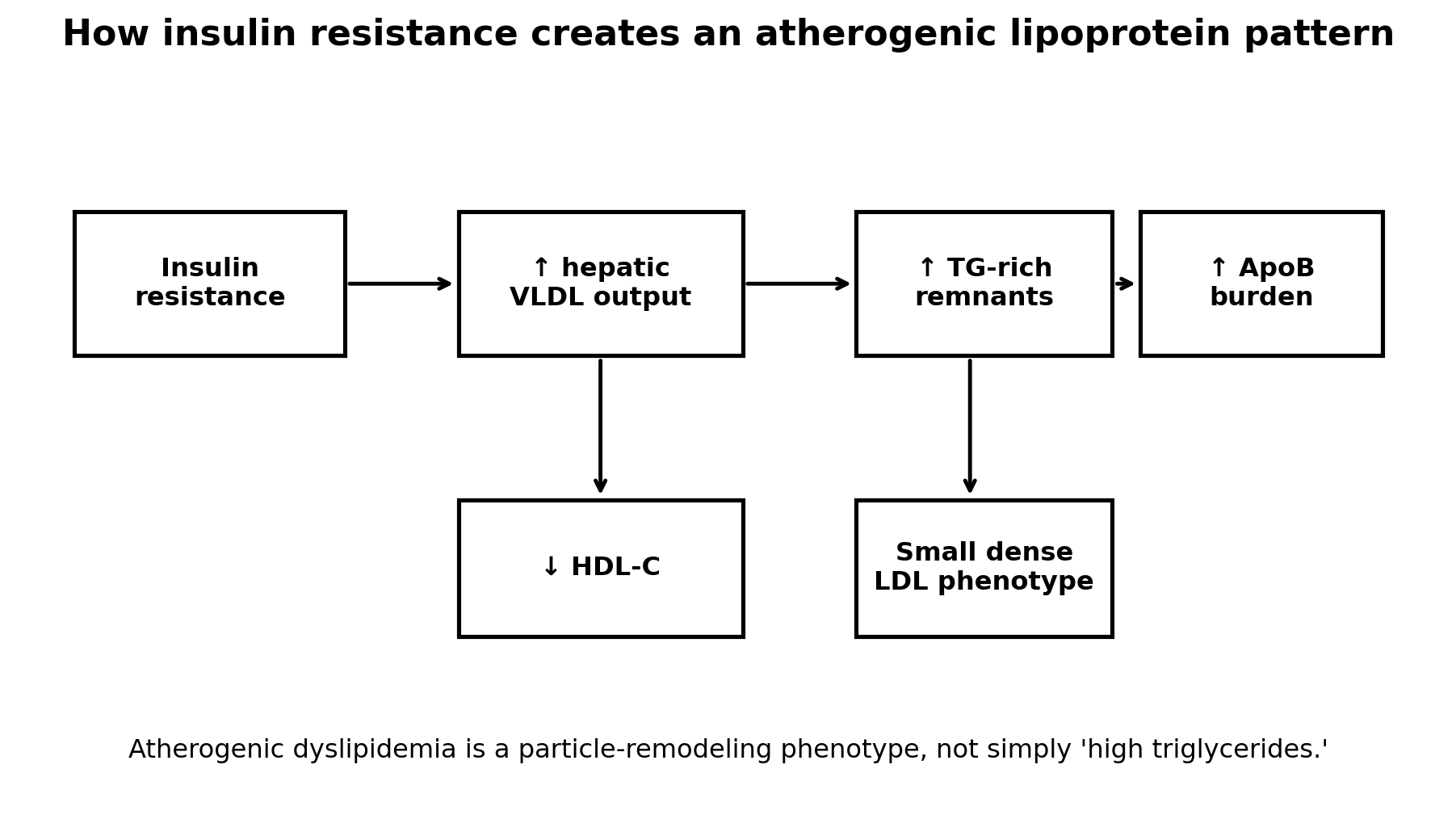
Figure 1. Insulin resistance changes lipoprotein production and remodeling, producing a particle-rich, remnant-rich phenotype.
1. What \'atherogenic dyslipidemia\' means
It is a pattern rather than a single laboratory abnormality. Typical findings include triglycerides above normal, low HDL-C, increased VLDL/remnant cholesterol, elevated ApoB and a shift toward smaller LDL particles.
Small dense LDL is not a separate toxin that needs its own supplement. It is usually a marker that particle number and triglyceride-rich lipoprotein traffic are high.
2. Why LDL-C can underestimate risk
LDL-C measures cholesterol mass. ApoB estimates the number of atherogenic particles. In insulin resistance, the average particle can carry less cholesterol, so many particles may be present even when LDL-C is only moderately elevated.
This is one of the most clinically useful settings for ApoB measurement.
3. The diabetes connection
Type 2 diabetes and CKM syndrome frequently combine insulin resistance, visceral adiposity, high triglycerides, albuminuria, hypertension and fatty liver. These pathways compound one another rather than acting independently.
The 2026 CKM guideline emphasizes staging, PREVENT risk assessment, lifestyle-driven weight loss and aggressive control of glucose, blood pressure, kidney risk and atherogenic lipoproteins.
4. Why lowering triglycerides alone can fail
PROMINENT is the key cautionary trial. Pemafibrate substantially lowered triglycerides and remnant-related biomarkers but did not lower cardiovascular events. ApoB increased by about 4.8%, reinforcing the idea that particle number matters.
This does not make triglycerides irrelevant. It means the intervention must reduce the causal burden that matters, not merely improve a laboratory marker.
5. What to target in practice
First lower LDL-C/non-HDL-C to guideline goals and use ApoB when discordance is likely. Address obesity, inactivity, refined carbohydrate excess, alcohol excess and uncontrolled diabetes.
Prescription icosapent ethyl can be considered in appropriately selected high-risk patients with persistent hypertriglyceridemia on statin therapy; OTC omega-3 products are not equivalent.
| Marker | What it tells you | Insulin-resistant pattern |
|---|---|---|
| Triglycerides | Triglyceride traffic | Often elevated |
| Non-HDL-C | Atherogenic cholesterol mass | Often elevated |
| ApoB | Atherogenic particle number | Often disproportionately high |
| LDL-C | LDL cholesterol mass | Can appear deceptively modest |
| HDL-C | HDL cholesterol mass | Often low |
| Remnant-C | Cholesterol in TG-rich particles | Often elevated |
6. FAQ
Can I have insulin resistance with normal glucose?
Yes. Insulin resistance can precede abnormal fasting glucose or HbA1c by years.
Is low HDL-C a treatment target?
Not directly. Drugs that raise HDL-C have not reliably reduced events. Focus on ApoB-containing particles and the metabolic drivers.
Should I order small dense LDL testing?
Usually not if ApoB, triglycerides, non-HDL-C and clinical context are available.
Can weight loss improve ApoB?
Often yes, especially when excess visceral fat and hypertriglyceridemia are present, but the magnitude varies and lipid-lowering medication may still be required.
References
1. Blumenthal RS, Morris PB, Gaudino M, et al. 2026 ACC/AHA Multisociety Guideline on the Management of Dyslipidemia.
2. American Heart Association. 2026 Guideline for the Prevention, Detection, Evaluation, and Management of CKM Syndrome.
3. Das Pradhan A, Glynn RJ, Fruchart JC, et al. Triglyceride Lowering with Pemafibrate to Reduce Cardiovascular Risk. N Engl J Med. 2022;387:1923-1934.
4. Bhatt DL, Steg PG, Miller M, et al. Cardiovascular Risk Reduction with Icosapent Ethyl for Hypertriglyceridemia. N Engl J Med. 2019;380:11-22.
5. National Lipid Association. Role of apolipoprotein B in the clinical management of cardiovascular risk in adults. J Clin Lipidol. 2024.
6. Rosenson RS, et al. Triglyceride-rich lipoproteins and residual cardiovascular risk. Major contemporary review literature.