Executive Summary
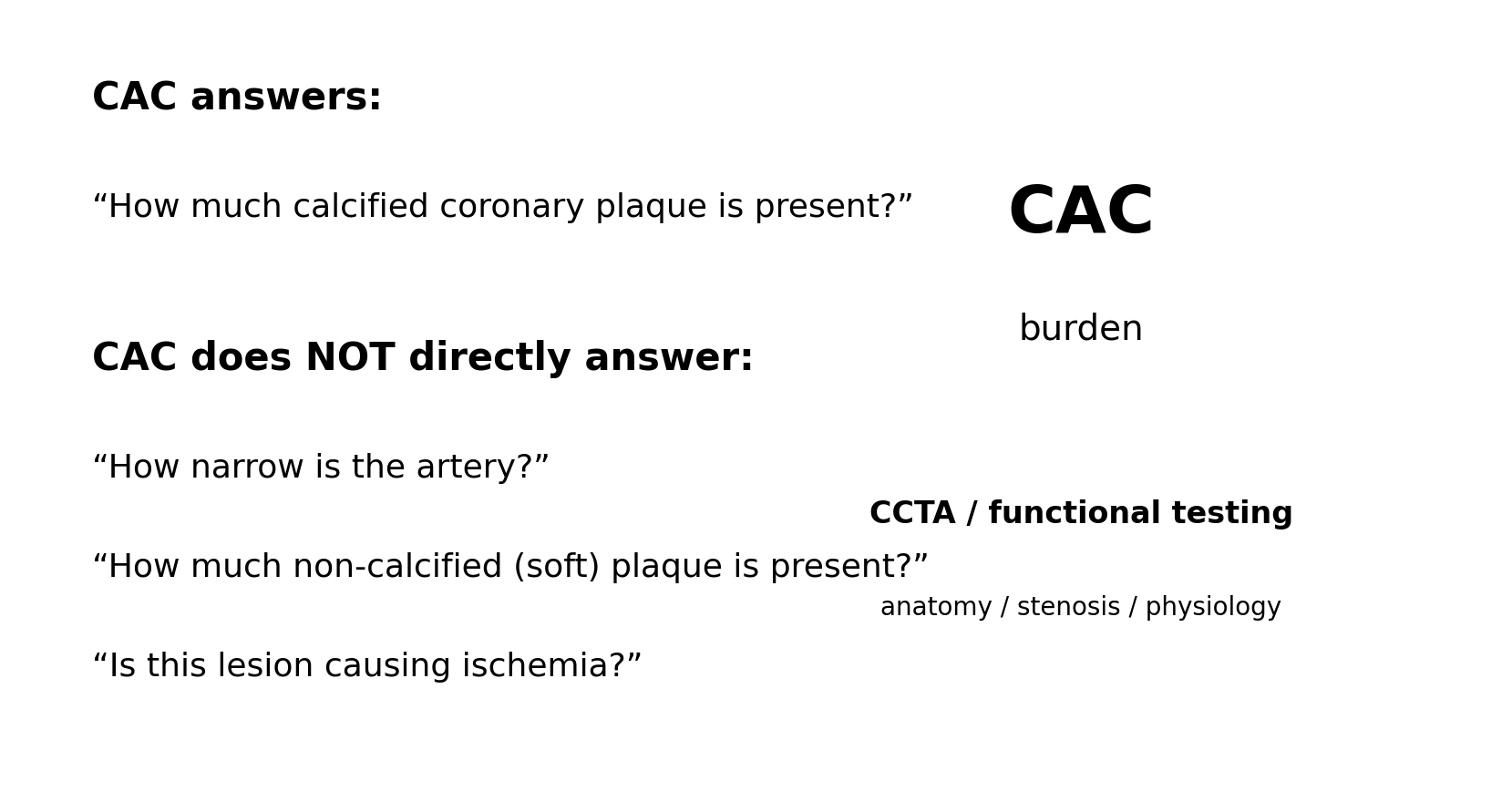
A coronary artery calcium (CAC) score is a CT-based measure of calcified atherosclerotic plaque in the coronary arteries. It does not directly measure arterial narrowing, blood flow, or total soft-plaque burden. Its greatest strength is prognostic: CAC provides a direct snapshot of accumulated coronary atherosclerosis and strongly reclassifies future cardiovascular risk beyond conventional risk factors.
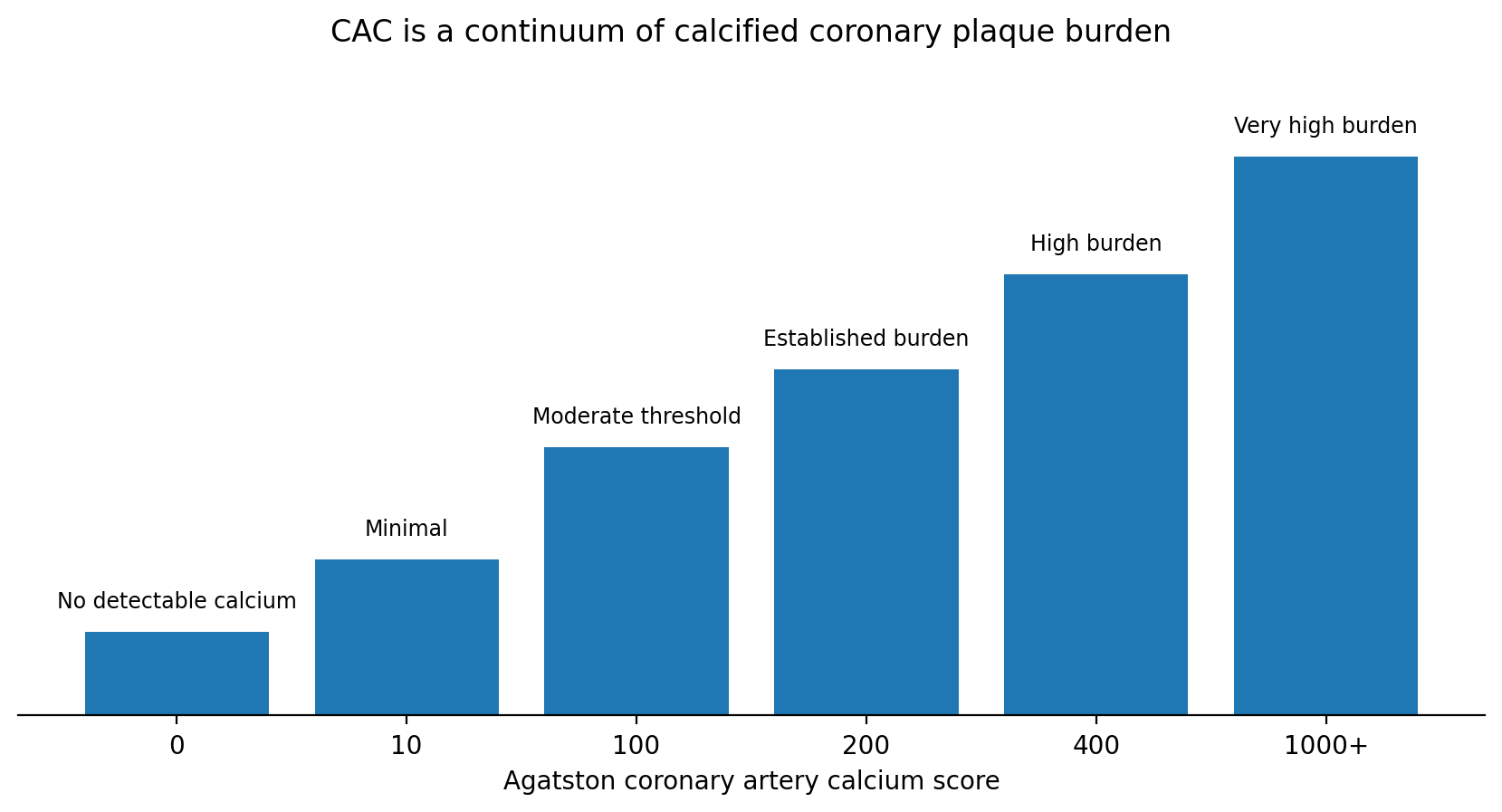
The score is continuous, so there is no biological cliff between 99 and 100 or between 399 and 400. Nevertheless, clinically useful categories have emerged. CAC 0 indicates no detectable calcified plaque and usually confers a low near-term event rate. CAC 1-99 confirms coronary atherosclerosis. CAC 100 or more generally identifies a clearly higher-risk group. CAC above 300-400 represents a high plaque burden, and CAC 1000 or more defines a distinct very-high-risk phenotype whose event rates can approach those seen in secondary-prevention populations.
A score must also be interpreted relative to age and sex. CAC 10 in a 45-year-old can be far more abnormal for age than CAC 10 in an 80-year-old. The 2026 ACC/AHA dyslipidemia guideline emphasizes both the absolute CAC score and the age/sex/race percentile, and supports selective CAC testing in men age 40 or older and women age 45 or older when treatment decisions remain uncertain.
CAC is especially useful when the question is whether risk is higher or lower than predicted by calculators. It is less useful when the answer is already obvious, such as established ASCVD or a clearly high-risk condition that already warrants treatment. It should not be used as a routine serial treatment-response test, because statins can stabilize plaque while increasing its calcium density.
The practical question is not “How do I make my calcium score go down?” It is “What does this score tell me about my total risk, and how aggressively should I reduce the drivers of future events?”
1. What a CAC Score Actually Measures
CAC scanning is performed with a low-dose, non-contrast, ECG-gated CT. The classic Agatston method identifies calcified lesions above a defined CT density threshold and combines the area of calcium with its peak density to produce a score. The result is a unitless estimate of calcified coronary plaque burden.
Calcium in the coronary wall is evidence that atherosclerosis has occurred. In an asymptomatic person without known coronary disease, the finding therefore changes the question from “Could atherosclerosis be present?” to “How much detectable calcified atherosclerosis is already present?” This is why CAC is such a powerful risk modifier.
But the scan has important limits. CAC does not visualize the coronary lumen in the way coronary CT angiography (CCTA) does. It cannot reliably tell whether a lesion is 20% or 80% stenosed, and it does not directly quantify non-calcified plaque. A young person can have early soft plaque before calcium appears. Conversely, an older patient can have a high calcium burden with only modest luminal narrowing because the artery has remodeled outward.
2. The Score Is Continuous --- Categories Are a Clinical Shortcut
| CAC score | Common interpretation | What it usually means clinically |
|---|---|---|
| 0 | No detectable coronary calcium | Low near-term risk in many asymptomatic adults; does not exclude non-calcified plaque. |
| 1-9 | Minimal calcified plaque | Atherosclerosis is present, even though absolute burden is small. Particularly meaningful at a young age. |
| 10-99 | Mild plaque burden | Risk is clearly higher than CAC 0; age percentile can materially change interpretation. |
| 100-299 | Moderate plaque burden | A robust risk-reclassification threshold; long-term event risk is meaningfully elevated. |
| 300-399 | High plaque burden | Risk can approach secondary-prevention populations in some cohorts. |
| 400-999 | Very high plaque burden | Substantial total atherosclerotic burden; preventive intensity generally rises. |
| ≥1000 | Extreme plaque burden | Distinct very-high-risk phenotype; event rates comparable to high-risk treated coronary disease populations in observational cohorts. |
3. CAC = 0: Powerful Reassurance, Not "No Atherosclerosis"
A score of zero is one of the strongest negative risk markers available in primary prevention. In MESA and the CAC Consortium, people with CAC 0 generally experienced low rates of coronary events and cardiovascular mortality over the following decade. This “power of zero” can move an uncertain patient from a treatment threshold toward a more conservative plan, provided there is no overriding high-risk condition.
Zero, however, means “no calcified plaque detected,” not “no plaque of any kind.” Non-calcified plaque may be present, especially in younger adults, smokers, people with strong family histories, inflammatory disease or very high Lp(a). Symptoms also change the question: CAC is a prevention tool, not a substitute for appropriate evaluation of chest pain.
The 2026 ACC/AHA guideline uses CAC selectively rather than as a universal screening test. A zero score can be most valuable when the estimated risk and the decision about pharmacotherapy are genuinely uncertain. It should not be used to talk a patient out of therapy when the clinical indication is already strong.
CAC = 0 is a risk modifier, not a lifetime warranty and not permission to ignore blood pressure, smoking, diabetes, LDL-C, ApoB or Lp(a).
4. CAC 10: Small Number, Real Disease
A score around 10 is often dismissed because it looks numerically small. Biologically, however, the difference between CAC 0 and CAC 10 is important: calcified coronary atherosclerosis is now established.
Age is crucial. CAC 10 in a 45-year-old may place the patient at a high percentile for age and sex, whereas the same score in an elderly patient may be relatively common. Percentile therefore answers a different question from the absolute score: “How unusual is this plaque burden compared with peers?” The absolute score remains the stronger measure of total calcified burden, but percentile is especially useful in younger adults with premature plaque.
The appropriate response is generally not panic or invasive testing. It is to identify why plaque appeared, quantify global risk, optimize LDL-C/ApoB, blood pressure, smoking status, glycemia, exercise and diet, and decide whether drug therapy is warranted.
5. CAC 100: A Major Risk-Classification Threshold
CAC 100 has become one of the most reproducible clinical thresholds in preventive cardiology. In the 10-year MESA analysis, participants with CAC above 100 consistently crossed a 7.5% 10-year ASCVD event-risk level across demographic subgroups. This is one reason CAC ≥100 has historically supported statin initiation when uncertainty existed.
The 2026 guideline framework goes further: any CAC supports active LDL lowering, with lower LDL-C goals as CAC burden rises. The exact medication sequence still depends on baseline LDL-C, risk factors, treatment tolerance and patient preference.
CAC 100 is also relevant to discussions about aspirin, but it is not a prescription. Observational MESA modeling suggested that CAC ≥100 identifies some primary-prevention groups in whom the expected cardiovascular benefit of aspirin may exceed bleeding harm. Modern aspirin decisions remain individualized because age, gastrointestinal bleeding, anticoagulants, kidney disease and other factors can reverse that balance.
6. CAC 200: Clearly Abnormal, but Not a Special Biological Cut Point
A score around 200 is best thought of as established moderate coronary plaque burden. It is not a universally recognized stand-alone guideline threshold in the way CAC 0, 100, 300/400 and 1000 are often used, but it clearly places a patient far beyond the “minimal plaque” range.
For a middle-aged adult, CAC 200 often has substantial implications for lifetime risk. The practical response is typically more aggressive prevention: tighter LDL-C and ApoB control, serious attention to blood pressure and metabolic risk, smoking cessation where relevant, regular physical activity and management of triglycerides, diabetes and Lp(a). Whether CCTA adds value depends on symptoms, age, distribution of calcium and the clinical question—not on the number 200 alone.
A person with CAC 200 and no symptoms does not automatically need stress testing, coronary angiography or stenting. CAC is a risk marker; it is not proof of flow-limiting stenosis.
7. CAC 300-400: High Plaque Burden and the "Risk Equivalent" Debate
At CAC above roughly 300, several cohorts show event rates that overlap with populations who already have clinical ASCVD. In the multinational CONFIRM registry, individuals without prior ASCVD but CAC >300 had major cardiovascular event rates not statistically different from patients with established ASCVD over follow-up.
This does not mean that every person with CAC 350 literally has the same biology or prognosis as a myocardial-infarction survivor. Secondary prevention includes a heterogeneous range of risk, and observational comparisons are not randomized trials. The practical message is narrower: once plaque burden is this high, a “primary prevention” label can underestimate the seriousness of the disease.
A 2024 JACC: Advances proposal suggested a CAC-based staging framework in which CAC 300 or more warrants prevention intensity similar to very-high-risk states, including consideration of LDL-C below 55 mg/dL. This is an expert proposal, not itself a randomized-outcome guideline mandate, but it reflects the direction of contemporary preventive cardiology.
Myth: “A CAC of 400 means a 40% blockage.” Fact: The Agatston score is not a percentage stenosis. A high CAC score reflects high calcified plaque burden, not a specific degree of narrowing.
8. CAC ≥1000: A Distinct Very-High-Risk Phenotype
CAC 1000 is not simply “a little worse than 400.” Large observational datasets suggest a qualitatively different risk category. In the CAC Consortium, individuals with CAC ≥1000 had approximately twice the cardiovascular and coronary mortality rates of those with CAC 400-999, with no clear plateau at the upper end.
In MESA, CAC ≥1000 corresponded to an annualized three-point major adverse cardiovascular event rate of about 3.4 per 100 person-years—similar to the overall FOURIER secondary-prevention trial population. That comparison does not convert CAC into a clinical event, but it illustrates the magnitude of risk associated with extreme subclinical plaque burden.
Patients in this range commonly have calcium across multiple coronary vessels and often have extracoronary calcification as well. Prevention should therefore be treated as a high priority. The exact lipid target and medication regimen should be individualized, but clinicians generally have a much lower threshold to intensify LDL-C/ApoB lowering and address every modifiable risk factor.
9. Why Age and Percentile Matter
A single absolute CAC value does not mean exactly the same thing at every age. Calcium accumulates with time, so a small score in a young adult can represent premature disease. The age/sex/race percentile compares a person with peers and can uncover this mismatch.
The 2026 ACC/AHA guideline specifically notes that both the absolute amount of CAC and the standardized percentile carry prognostic information. In practice, the absolute score is particularly useful for estimating burden and near-term risk, while percentile is especially useful for identifying unexpectedly early atherosclerosis.
An important consequence follows: “Only 20” is not necessarily reassuring in a 42-year-old. Conversely, a modest score in an older adult should still be acknowledged as disease, but its percentile may be less extreme.
| Example | Absolute burden | Age-context interpretation |
|---|---|---|
| Age 43, CAC 20 | Mild absolute plaque | Potentially very premature; percentile may be high. |
| Age 62, CAC 20 | Mild absolute plaque | Still definite atherosclerosis, but often less unusual for age. |
| Age 62, CAC 220 | Moderate burden | Clearly abnormal absolute burden and likely important risk reclassification. |
| Age 72, CAC 1000 | Extreme burden | Very-high-risk phenotype despite older age; absolute burden dominates interpretation. |
10. Lp(a) and CAC: Two Different Pieces of the Risk Puzzle
Lp(a) and CAC should not be treated as competing tests. Lp(a) is a largely inherited causal risk factor; CAC is an imaging marker of accumulated calcified coronary disease. They answer different questions.
Earlier MESA/Dallas Heart Study analyses showed that elevated Lp(a) and CAC independently predicted risk, with the highest risk when both Lp(a) and CAC were high. A 2026 multicohort JACC study extended this observation over approximately 15 years: elevated Lp(a) increased relative risk across CAC strata, but absolute risk remained low when CAC was zero. The combination of CAC ≥300 and Lp(a) >50 mg/dL identified the highest-risk subgroup.
This is clinically useful because high Lp(a) can create anxiety even when the current plaque burden is unknown. CAC can help distinguish a genetically high-risk patient who has not yet developed detectable calcified disease from one who already has substantial coronary atherosclerosis. It does not erase the lifelong risk associated with Lp(a), and it does not exclude soft plaque.
11. Should You Repeat a CAC Scan?
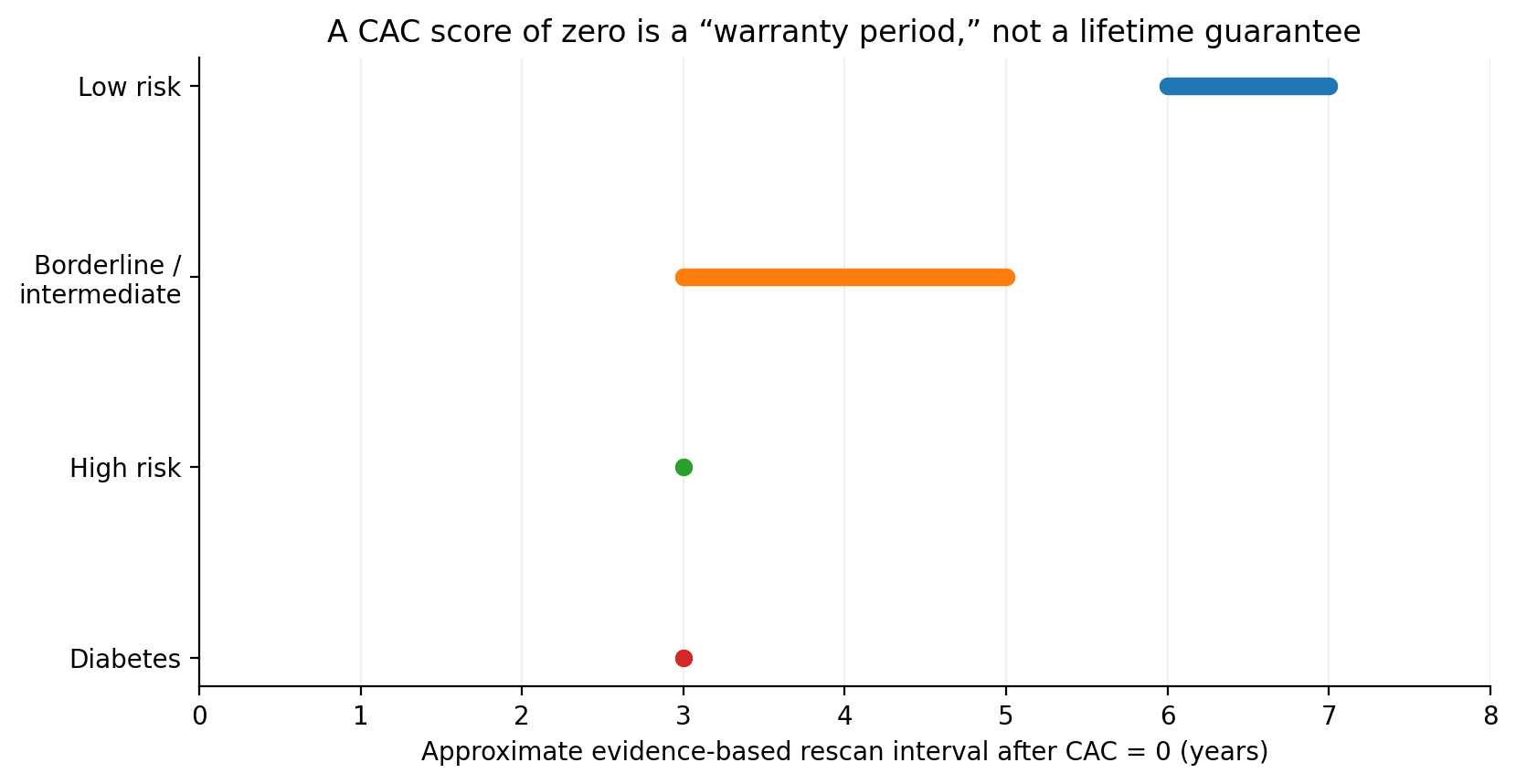
Serial CAC scanning is often misunderstood. A repeat scan can be useful after CAC 0 if treatment was deferred and a future change in calcium status would alter management. MESA warranty-period data suggest approximate rescan intervals of 6-7 years for low-risk adults, 3-5 years for borderline/intermediate risk, and around 3 years for high-risk adults or people with diabetes.
The logic is different once CAC is already positive and treatment has begun. Statins can reduce lipid-rich plaque and increase plaque calcification and density as part of stabilization. A rising Agatston score under therapy therefore does not necessarily mean the treatment is failing. For that reason, many experts do not recommend routine serial CAC as a “report card” for statin efficacy.
If the clinical question is whether plaque composition or stenosis has changed, CCTA may provide more information in selected patients, but routine serial CCTA is also not recommended simply to chase plaque numbers. Imaging should answer a clinical question that could change management.
12. When CAC Is the Wrong Test
Established ASCVD: treatment intensity is already driven by the known disease.
Acute or concerning chest pain: symptom evaluation may require CCTA, functional testing or emergency assessment rather than a screening CAC score.
Very young adults with suspected early soft plaque: calcium can be absent even when non-calcified atherosclerosis is present.
Need to know stenosis severity or plaque composition: CCTA is the anatomical test that answers those questions.
Need to know whether a stenosis is ischemia-producing: functional testing or physiology-based assessment may be needed.
13. What Should Change After a High CAC Score?
The purpose of finding coronary calcium is not to trigger a cascade of procedures; it is to improve prevention. The higher the score, the stronger the case for treating modifiable risk factors aggressively.
The 2026 ACC/AHA dyslipidemia guideline states that any CAC supports an LDL-C goal below 100 mg/dL, with lower targets as CAC burden increases. European guidance similarly treats increased CAC or subclinical coronary atherosclerosis as a risk modifier. Expert staging proposals go further and suggest LDL-C below 70 mg/dL for CAC 100-299 and below 55 mg/dL for CAC ≥300. Those proposed thresholds are useful frameworks, but they should be distinguished from formal guideline mandates.
The rest of prevention matters just as much: blood pressure, tobacco exposure, diabetes, physical activity, weight, sleep, triglycerides, ApoB, Lp(a), kidney disease and adherence. A calcium scan can reclassify risk, but it cannot compensate for untreated risk factors.
| CAC finding | Reasonable next conversation |
|---|---|
| 0 | Do I have any high-risk condition that overrides the low CAC? Can treatment be deferred? When, if ever, should CAC be repeated? |
| 1-99 | Why is plaque already present? What is my percentile? Is LDL-C/ApoB lowering indicated? |
| 100-299 | How aggressively should LDL-C/ApoB be lowered? Are blood pressure, diabetes, smoking and Lp(a) fully addressed? |
| 300-999 | Should prevention intensity approach secondary-prevention targets? Is CCTA indicated because of symptoms or another specific question? |
| ≥1000 | Is every modifiable risk factor being treated as a very-high-priority issue? Is referral to preventive cardiology/lipidology appropriate? |
14. Frequently Asked Questions
Can a CAC score go down?
Usually not in a clinically reliable way. Calcified plaque often persists, and treatment can increase calcium density while making plaque more stable. The goal is lower event risk, not necessarily a lower Agatston number.
Is CAC 200 "50% as bad" as CAC 400?
No. The score is not a linear percentage of disease and is not a stenosis measurement. Risk rises continuously and depends on age, sex and other factors.
Does CAC 0 mean I do not need a statin?
Not always. CAC 0 can support deferring treatment in selected borderline/intermediate-risk adults, but diabetes, very high LDL-C, established ASCVD and other high-risk conditions may still justify therapy.
Can CAC detect soft plaque?
No. A non-contrast calcium scan detects calcified plaque. CCTA is better for visualizing non-calcified plaque and coronary stenosis.
What is worse: high Lp(a) or high CAC?
They represent different things. Lp(a) is an inherited risk factor; CAC reflects accumulated calcified plaque. Risk is particularly high when both are elevated.
Should I take aspirin if CAC is high?
Not automatically. Observational analyses suggest that CAC ≥100 may identify some primary-prevention patients with favorable benefit-risk, but bleeding risk must be assessed individually.
Do I need a stress test after CAC 400?
Not solely because the score is 400. Symptoms, ECG findings, exercise capacity and the clinical question determine whether functional testing or CCTA is appropriate.
Is CAC 1000 an emergency?
Not by itself in an asymptomatic person, but it is a very-high-risk finding that deserves prompt, serious preventive management. New or concerning symptoms require separate evaluation.
15. Practical Interpretation: The One-Page Version
| Score | Plain-English meaning | Main message |
|---|---|---|
| 0 | No detectable calcified plaque | Strong negative risk marker, but not zero lifetime risk or zero soft plaque. |
| 10 | Small but real calcified plaque burden | Atherosclerosis is present; age percentile may be especially important. |
| 100 | Definite moderate plaque burden | Major risk-reclassification threshold; prevention should usually intensify. |
| 200 | Established moderate disease burden | Clearly abnormal; manage the patient, not the number. |
| 400 | High/very high plaque burden | Risk is substantially elevated; some cohorts approach secondary-prevention event rates. |
| 1000 | Extreme calcified plaque burden | Distinct very-high-risk phenotype; aggressive comprehensive prevention is usually warranted. |
CAC is one of the best tools for converting an abstract probability into evidence of actual coronary atherosclerosis. The clinically useful question is not whether 199 is “safe” and 200 is “dangerous.” Risk rises on a continuum. The higher the score—and the younger the patient—the stronger the case for intensive, long-term prevention.
References
1. Agatston AS, Janowitz WR, Hildner FJ, et al. Quantification of coronary artery calcium using ultrafast computed tomography. J Am Coll Cardiol. 1990;15:827-832. doi:10.1016/0735-1097(90)90282-T.
2. Budoff MJ, Young R, Burke G, et al. Ten-year association of coronary artery calcium with atherosclerotic cardiovascular disease events: the Multi-Ethnic Study of Atherosclerosis (MESA). Eur Heart J. 2018;39:2401-2408. doi:10.1093/eurheartj/ehy217.
3. Orringer CE, Blaha MJ, Blankstein R, et al. The National Lipid Association scientific statement on coronary artery calcium scoring to guide preventive strategies for ASCVD risk reduction. J Clin Lipidol. 2021;15:33-60. doi:10.1016/j.jacl.2020.12.005.
4. Hecht HS, Blaha MJ, Kazerooni EA, et al. CAC-DRS: Coronary Artery Calcium Data and Reporting System. J Cardiovasc Comput Tomogr. 2018;12:185-191. doi:10.1016/j.jcct.2018.03.008.
5. Blaha MJ, Cainzos-Achirica M, Greenland P, et al. Role of Coronary Artery Calcium Score of Zero and Other Negative Risk Markers for Cardiovascular Disease: MESA. Circulation. 2016;133(9):849-858. doi:10.1161/CIRCULATIONAHA.115.018524.
6. Dzaye O, Dardari ZA, Cainzos-Achirica M, et al. Warranty period of a calcium score of zero: comprehensive analysis from MESA. JACC Cardiovasc Imaging. 2021;14:990-1002. doi:10.1016/j.jcmg.2020.06.048.
7. Blaha MJ, et al. All-cause and cause-specific mortality in individuals with zero and minimal coronary artery calcium: the CAC Consortium. Atherosclerosis. 2020;294:72-79. doi:10.1016/j.atherosclerosis.2019.11.008.
8. Grandhi GR, Mirbolouk M, Dardari ZA, et al. Interplay of Coronary Artery Calcium and Risk Factors for Predicting CVD and CHD Mortality: The CAC Consortium. JACC Cardiovasc Imaging. 2020;13(5):1175-1186. doi:10.1016/j.jcmg.2019.08.024.
9. Peng AW, Mirbolouk M, Orimoloye OA, et al. Long-Term All-Cause and Cause-Specific Mortality in Asymptomatic Patients With CAC >=1000: Results From the CAC Consortium. JACC Cardiovasc Imaging. 2020;13(1 Pt 1):83-93. doi:10.1016/j.jcmg.2019.02.005.
10. Peng AW, Dardari ZA, Blumenthal RS, et al. Very High Coronary Artery Calcium (>=1000) and Association With Cardiovascular Disease Events, Non-CVD Outcomes, and Mortality: Results From MESA. Circulation. 2021;143(16):1571-1583. doi:10.1161/CIRCULATIONAHA.120.050545.
11. Maron DJ, Budoff MJ, Sky JC, et al. Coronary Artery Calcium Staging to Guide Preventive Interventions: A Proposal and Call to Action. JACC Adv. 2024;3:101287. doi:10.1016/j.jacadv.2024.101287.
12. Budoff MJ, Kinninger A, Gransar H, et al; CONFIRM Investigators. When Does a Calcium Score Equate to Secondary Prevention? Insights From the Multinational CONFIRM Registry. JACC Cardiovasc Imaging. 2023;16(9):1181-1189. doi:10.1016/j.jcmg.2023.03.008.
13. Blumenthal RS, Morris PB, Gaudino M, et al. 2026 ACC/AHA/AACVPR/ABC/ACPM/ADA/AGS/APhA/ASPC/NLA/PCNA Guideline on the Management of Dyslipidemia. Circulation. 2026;153(17):e1154-e1276. doi:10.1161/CIR.0000000000001423.
14. Mach F, Koskinas KC, Roeters van Lennep JE, et al. 2025 Focused Update of the 2019 ESC/EAS Guidelines for the management of dyslipidaemias. Eur Heart J. 2025;46(42):4359-4378. doi:10.1093/eurheartj/ehaf190. Correction: Eur Heart J. 2026;47(6):697. doi:10.1093/eurheartj/ehaf1036.
15. Mehta A, Vasquez N, Ayers CR, et al. Independent Association of Lipoprotein(a) and Coronary Artery Calcification With Atherosclerotic Cardiovascular Risk. J Am Coll Cardiol. 2022;79(8):757-768. doi:10.1016/j.jacc.2021.11.058.
16. Bhatia HS, Fan Y, Dharmavaram G, et al. Use of Coronary Artery Calcium Scoring in Individuals With Elevated Lipoprotein(a): A Multicohort Study. J Am Coll Cardiol. 2026;87(20):2864-2872. doi:10.1016/j.jacc.2026.02.5067.
17. Cainzos-Achirica M, Miedema MD, McEvoy JW, et al. Coronary artery calcium for personalized allocation of aspirin in primary prevention of cardiovascular disease in 2019: the MESA Study. Circulation. 2020;141:1541-1553. doi:10.1161/CIRCULATIONAHA.119.045010.
18. Pletcher MJ, Tice JA, Pignone M, Browner WS. Using the coronary artery calcium score to predict coronary heart disease events: a systematic review and meta-analysis. Arch Intern Med. 2004;164:1285-1292. doi:10.1001/archinte.164.12.1285.
19. Pontone G, Rossi A, Guglielmo M, et al. Clinical applications of cardiac computed tomography: a consensus paper of the European Association of Cardiovascular Imaging - part I. Eur Heart J Cardiovasc Imaging. 2022;23(3):299-314. doi:10.1093/ehjci/jeab293.
20. Puri R, Nicholls SJ, Shao M, et al. Impact of Statins on Serial Coronary Calcification During Atheroma Progression and Regression. J Am Coll Cardiol. 2015;65(13):1273-1282. doi:10.1016/j.jacc.2015.01.036.
21. Lee SE, Chang HJ, Sung JM, et al. Effects of Statins on Coronary Atherosclerotic Plaques: The PARADIGM Study. JACC Cardiovasc Imaging. 2018;11(10):1475-1484. doi:10.1016/j.jcmg.2018.04.015.
22. Hussain B, Mahmood A, Flynn MG, Alexander T. Coronary Artery Calcium Scoring in Asymptomatic Patients. HCA Healthc J Med. 2023;4(5):341-352. doi:10.36518/2689-0216.1565.
23. Arnett DK, Blumenthal RS, Albert MA, et al. 2019 ACC/AHA Guideline on the Primary Prevention of Cardiovascular Disease. Circulation. 2019;140(11):e596-e646. doi:10.1161/CIR.0000000000000678.
24. Grundy SM, Stone NJ, Bailey AL, et al. 2018 AHA/ACC Multisociety Guideline on the Management of Blood Cholesterol. Circulation. 2019;139(25):e1082-e1143. doi:10.1161/CIR.0000000000000625.
25. Whelton SP, Al Rifai M, Handy Marshall C, et al. Coronary Artery Calcium and the Age-Specific Competing Risk of Cardiovascular Versus Cancer Mortality: The Coronary Artery Calcium Consortium. Am J Med. 2020;133(10):e575-e583. doi:10.1016/j.amjmed.2020.02.034.