Executive Summary
Vitamin K has a biologically plausible connection to vascular calcification because it is required for the activation of matrix Gla protein (MGP), one of the body’s endogenous inhibitors of mineral deposition in the arterial wall.
On June 10, 2026, JAMA Cardiology published VitaK-CAC, a randomized placebo-controlled trial of daily MK-7 360 µg for two years in adults with symptomatic coronary artery disease and baseline CAC scores of 50-400 Agatston units. CAC increased in both groups, but the increase was statistically smaller with MK-7.
The median CAC score rose from 145 to 214 in the placebo group and from 135 to 184 in the MK-7 group. The between-group difference in CAC progression was statistically significant (P=.02), and a similar signal was seen for calcium mass.
That is stronger evidence than observational associations or mechanistic studies. It is not, however, cardiovascular outcomes evidence. The study was small, had attrition, was conducted at two Dutch centers, and was not powered to determine whether MK-7 prevents myocardial infarction, stroke, revascularization or cardiovascular death.
There is an additional conceptual complication: coronary calcification is not purely “bad mineral.” Statins can increase plaque calcification while simultaneously reducing lipid-rich plaque and cardiovascular events. Therefore, slowing the Agatston score cannot automatically be assumed to improve plaque stability or clinical outcomes.
Our current evidence-based position: VitaK-CAC moves MK-7 from “interesting hypothesis” toward “promising intervention that warrants a definitive outcomes trial.” It does not yet make vitamin K2 standard therapy for coronary atherosclerosis.
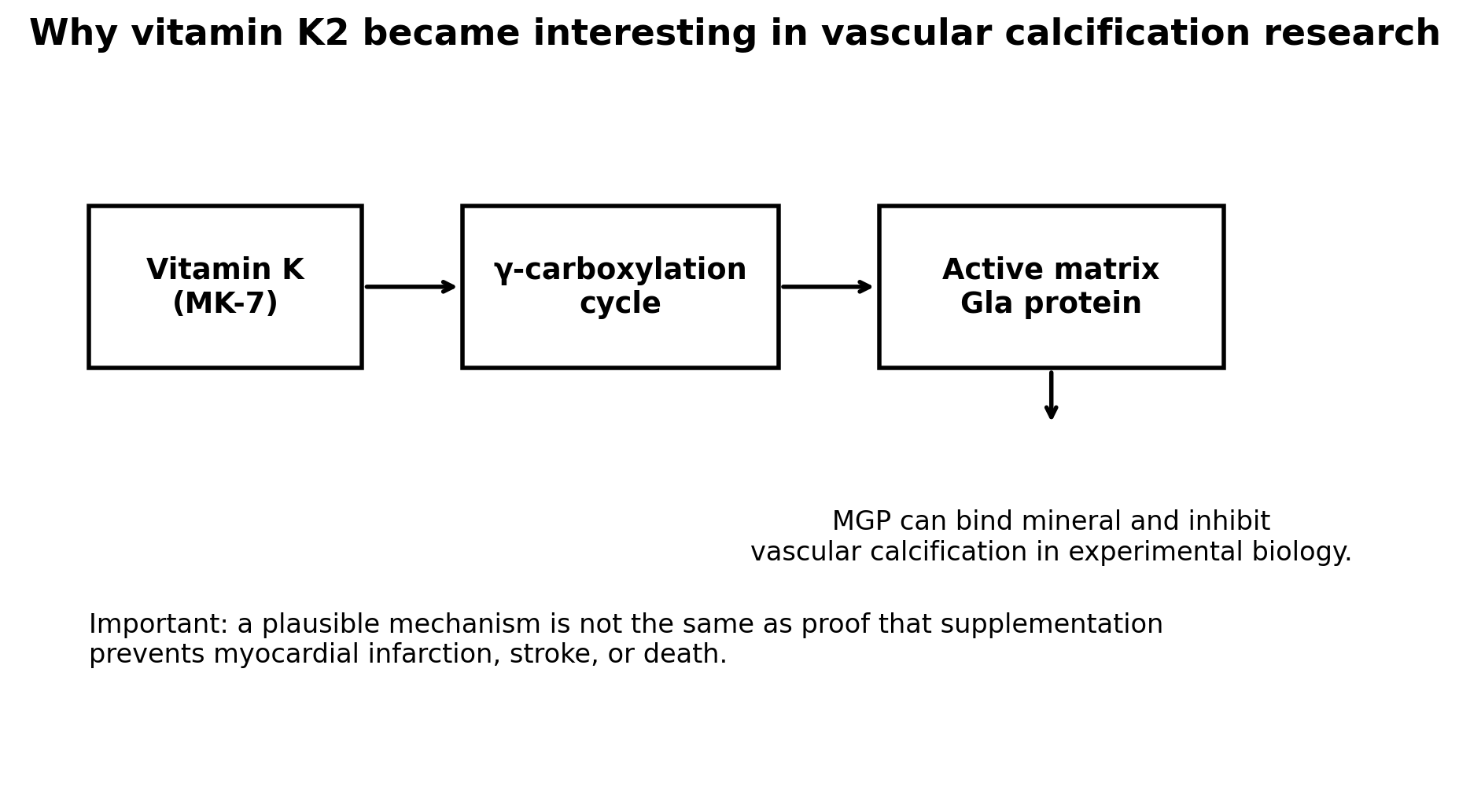
Figure 1. The mechanistic rationale. Vitamin K is required for carboxylation of matrix Gla protein (MGP), but a plausible pathway is not proof of clinical benefit.
1. Why Vitamin K2 Was Proposed for Arterial Calcification
Vitamin K is best known for its role in coagulation, but several extrahepatic proteins are also vitamin K dependent. Matrix Gla protein is particularly relevant to cardiovascular biology. When properly carboxylated, MGP binds calcium and hydroxyapatite and acts as an inhibitor of vascular mineralization.
The circulating biomarker dephosphorylated-uncarboxylated MGP (dp-ucMGP) is often interpreted as a marker of poor vitamin K status in vascular tissue. Vitamin K supplementation reliably lowers dp-ucMGP in trials. The harder question has always been whether improving that biomarker meaningfully changes vascular disease.
Vitamin K exists as phylloquinone (K1) and multiple menaquinones (K2). MK-7 has attracted research interest because of its relatively long half-life and bioavailability. Fermented foods such as natto can be rich in menaquinones, but the clinical-trial question is about standardized dosing, not dietary folklore.
2. What VitaK-CAC Actually Tested
| Feature | VitaK-CAC |
|---|---|
| Design | Randomized, placebo-controlled clinical trial |
| Setting | One university hospital and one community hospital in the Netherlands |
| Randomized | 180 adults; 90 assigned to each group |
| Analyzed treatment groups | 85 MK-7 and 82 placebo in the published analysis |
| Clinical population | Symptomatic patients with coronary artery disease; baseline CAC 50-400 AU |
| Intervention | Menaquinone-7 (MK-7) 360 µg orally once daily |
| Comparator | Matching placebo |
| Duration | 2 years |
| Primary imaging outcomes | Change in Agatston CAC score and calcium mass at 1 and 2 years |
| Additional imaging | Coronary CT angiography; new calcifications assessed as a secondary outcome |
| Key exclusions | eGFR <60 mL/min/1.73 m², vitamin K antagonists, recent MI/stroke, planned revascularization |
The study population matters. This was not a trial in healthy people with CAC 0, nor a trial in people who simply bought vitamin K2 because they had an elevated calcium score. Participants were symptomatic, had established coronary plaque, and had a moderate range of baseline calcium.
Approximately 78% were taking statins according to the American College of Cardiology summary. The trial therefore tested MK-7 largely on top of contemporary lipid-lowering therapy rather than as a substitute for it.
3. The Main Result: CAC Progressed More Slowly With MK-7
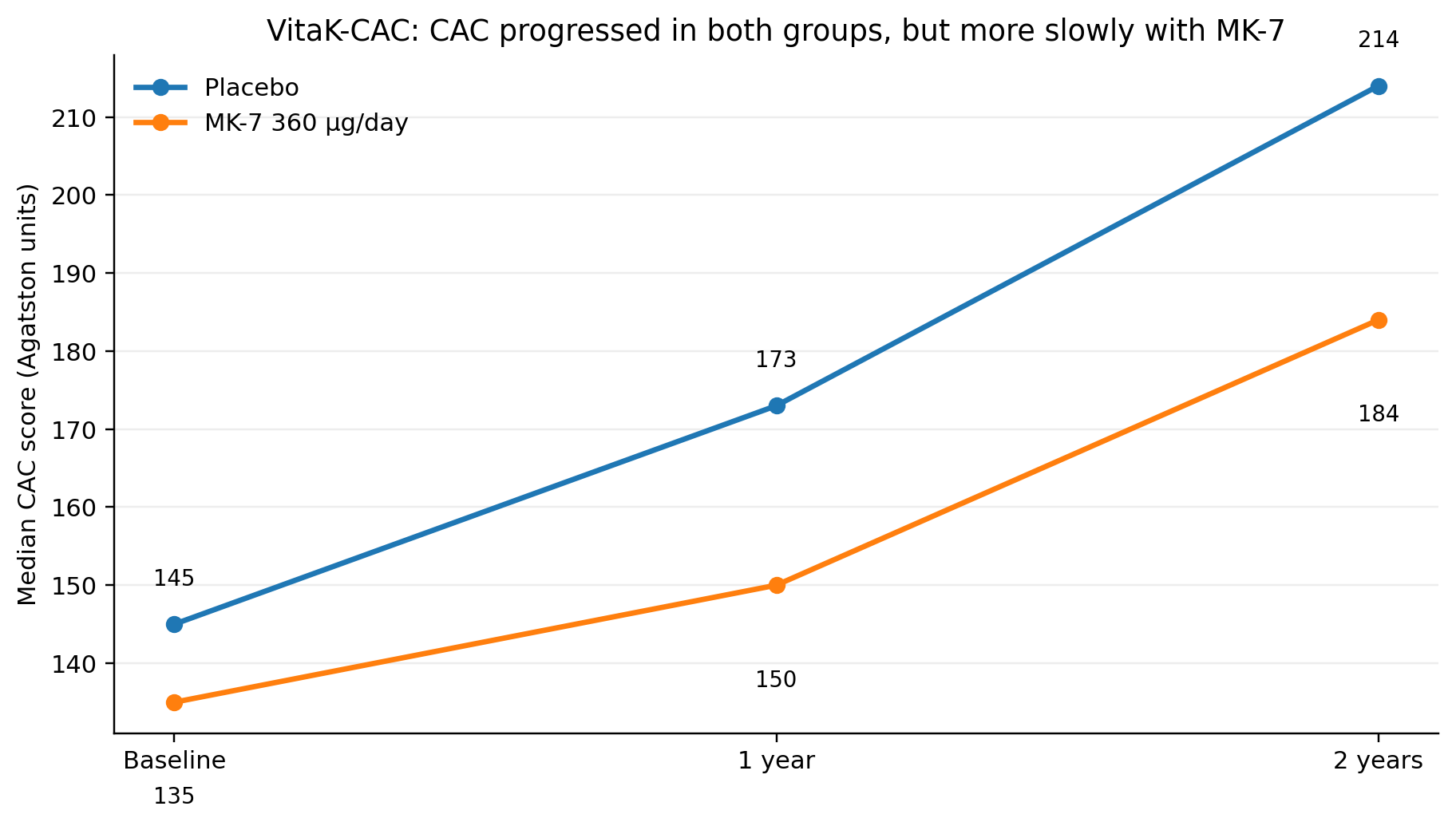
Figure 2. Median Agatston CAC scores reported in VitaK-CAC. CAC progressed in both groups; the trajectory was statistically lower with MK-7 (P=.02).
In the placebo group, median CAC increased from 145 AU at baseline to 173 at one year and 214 at two years. In the MK-7 group, the corresponding values were 135, 150 and 184 AU. The between-group difference was statistically significant, including after covariate adjustment.
Calcium mass showed a similar pattern. Plasma MK-7 concentrations increased markedly in the active-treatment group, providing biochemical evidence that participants were exposed to the intervention.
The study also reported that CAC progression correlated with the number of noncalcified plaques that became partially calcified. That observation is scientifically intriguing, but it complicates the simplistic narrative that “less calcium is always better.”
“MK-7 slowed CAC progression in a small randomized 2-year trial.” Not: “Vitamin K2 reverses coronary plaque,” “K2 removes calcium from arteries,” or “K2 prevents heart attacks.”
4. Why the Result Is More Important Than Earlier Vitamin K Data
Before VitaK-CAC, the human evidence was inconsistent. Observational studies such as the Rotterdam Study linked higher dietary menaquinone intake with less aortic calcification and lower coronary heart disease risk, but observational nutrition data cannot establish causality.
A 2009 randomized trial of vitamin K1 in older adults did not show a significant treatment effect in the full intention-to-treat cohort, although a prespecified subgroup of participants who were at least 85% adherent had less CAC progression. That signal was hypothesis-generating rather than definitive.
A 2019 randomized trial in people with type 2 diabetes and cardiovascular disease found that six months of MK-7 lowered dp-ucMGP but did not reduce CT calcification; active calcification measured by 18F-NaF PET actually tended to increase, although the difference was not statistically significant.
In 2022, a larger randomized trial of MK-7 720 µg plus vitamin D in older men with substantial aortic valve calcification found no significant effect on aortic valve calcium progression, coronary calcium progression or cardiovascular events over two years.
Trials in hemodialysis have also produced mixed or negative results. A 2023 meta-analysis of 14 randomized trials suggested a modest aggregate slowing of CAC progression, but the studies were heterogeneous in vitamin formulation, population, dose and imaging endpoint. VitaK-CAC therefore adds an unusually direct, coronary-specific randomized result to an otherwise mixed field.
| Study | Population / intervention | Main calcification result | Interpretation |
|---|---|---|---|
| Shea et al., 2009 | 388 older adults; vitamin K1 500 µg/day for 3 years | No clear overall intention-to-treat CAC benefit; signal in adherent participants | Early randomized signal, not definitive |
| Zwakenberg et al., 2019 | T2D + CVD; MK-7 360 µg/day for 6 months | No reduction in CT calcification; 18F-NaF signal not favorable | Mechanistic biomarker improved, imaging did not |
| Diederichsen et al., 2022 | 365 men with AVC; MK-7 720 µg + vitamin D for 2 years | No significant effect on valve or coronary calcification | Important negative RCT |
| Trevasc-HDK, 2023 | Hemodialysis; MK-7 360 µg 3×/week for 18 months | No significant CAC difference | CKD result not supportive |
| VitaK-CAC, 2026 | Symptomatic CAD; MK-7 360 µg/day for 2 years | Significantly slower CAC progression | Most relevant positive coronary RCT to date |
5. The Biggest Caveat: Is Less CAC Progression Necessarily Better?
This is the central scientific issue. CAC is a powerful risk marker when measured at a single point in time: people with more coronary calcium generally have more atherosclerotic burden and higher future event risk. But change in CAC over time is not a validated surrogate endpoint for treatment benefit.
Statins illustrate the problem. High-intensity statin therapy reduces myocardial infarction and can regress coronary atheroma, yet IVUS studies show that statins also promote greater plaque calcification and calcium density. This is widely interpreted as part of plaque stabilization: lipid-rich, potentially vulnerable plaque can become more densely calcified and less rupture-prone.
That means an intervention that slows calcification could theoretically be beneficial, neutral, or even alter plaque maturation in a way whose consequences are uncertain. The VitaK-CAC authors were appropriately cautious, and an accompanying JAMA Cardiology editorial specifically questioned the use of CAC progression as a clinical-trial outcome.
The correct endpoint for deciding whether MK-7 should become standard cardiovascular therapy is not the Agatston score. It is major clinical events: myocardial infarction, stroke, cardiovascular death and possibly revascularization.
Baseline CAC is a validated risk marker. Serial change in CAC is not an established surrogate for cardiovascular benefit. These are not the same evidentiary question.
6. Did Vitamin K2 "Remove Calcium" From the Arteries?
No. CAC increased in both groups. The MK-7 group had slower progression, not regression. The median score increased from 135 to 184 over two years.
This distinction is important because supplement marketing often uses phrases such as “directs calcium out of arteries,” “decalcifies plaque,” or “reverses CAC.” VitaK-CAC does not support those claims.
Even if future trials confirm a true anti-calcification effect, atherosclerotic plaque is a complex lesion containing lipids, inflammatory cells, collagen, necrotic material and variable patterns of micro- and macrocalcification. Coronary disease cannot be reduced to a calcium-transport problem.
7. Does the Trial Prove K2 Prevents Heart Attacks?
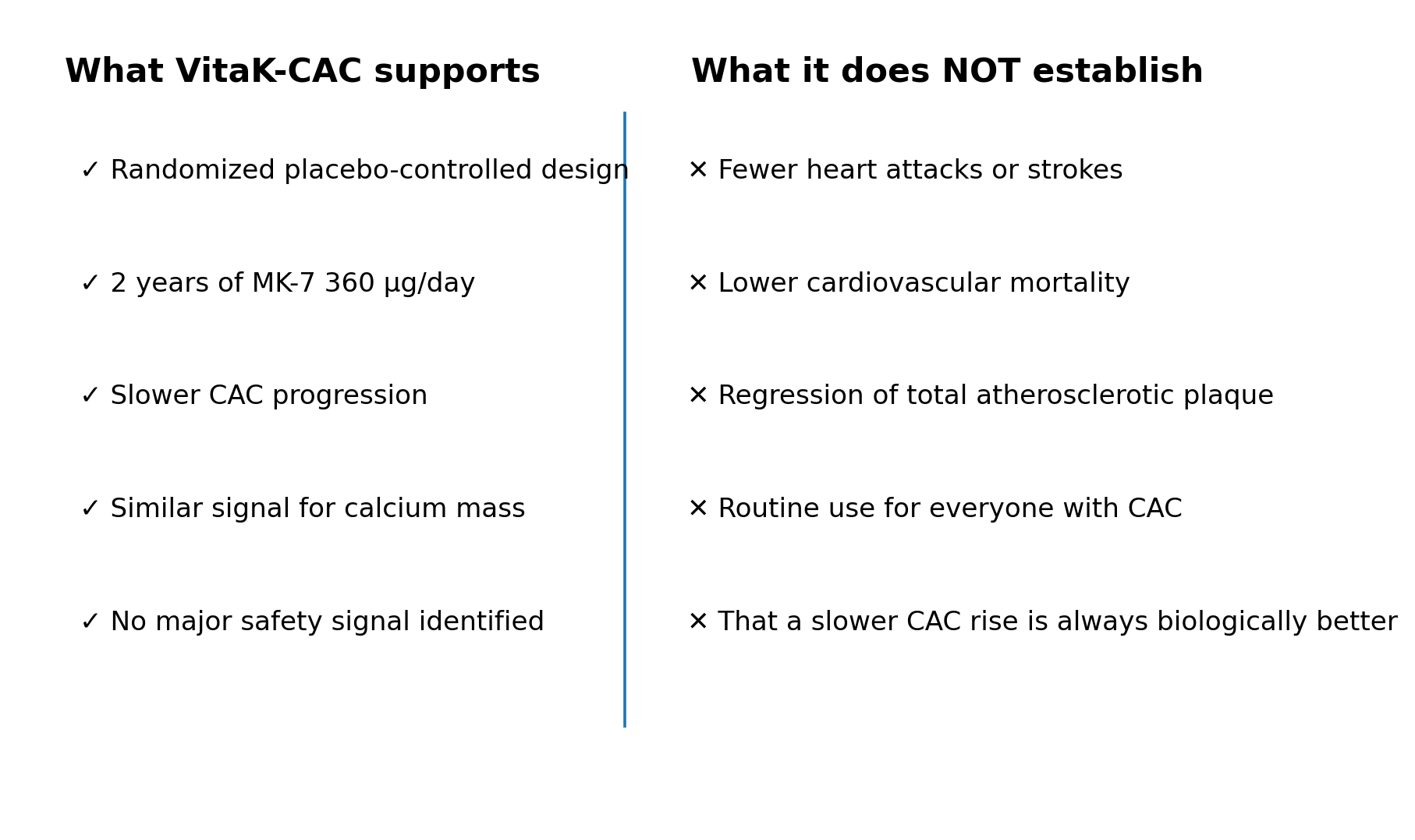
Figure 3. The evidence boundary. VitaK-CAC answers an imaging question, not a cardiovascular-outcomes question.
No cardiovascular outcome benefit has yet been demonstrated. The trial was far too small to reliably detect differences in myocardial infarction, stroke or death.
This matters because cardiology has many examples in which improving a biomarker or imaging endpoint failed to improve outcomes. Conversely, statins can make the CAC number look “worse” while clearly improving outcomes. Surrogate endpoints must therefore be interpreted carefully.
A convincing next step would be a larger multicenter randomized trial in a well-defined coronary-disease population with hard cardiovascular outcomes, prespecified imaging substudies and adequate follow-up. Until then, the evidence remains promising but incomplete.
8. Who Should Not Self-Start MK-7 Based on This Trial?
People taking warfarin or another vitamin K antagonist. Changing vitamin K intake can materially change anticoagulant effect and INR control.
Patients who were never similar to the trial population, such as young healthy adults with CAC 0 who assume K2 will prevent all future calcification.
Anyone substituting K2 for proven therapies such as LDL-C/ApoB lowering, blood-pressure control, smoking cessation or diabetes management.
Patients with symptoms suggestive of coronary ischemia who use supplements instead of obtaining appropriate diagnostic evaluation.
People escalating to very high doses on the assumption that more is better. VitaK-CAC tested 360 µg/day of MK-7, not megadoses.
Direct oral anticoagulants such as apixaban, rivaroxaban, edoxaban and dabigatran do not work through the vitamin K pathway in the same way warfarin does. However, medication and supplement interactions should still be reviewed with a clinician or pharmacist.
9. What About Taking Vitamin D3 Together With K2?
The popular D3-plus-K2 combination is often marketed as if cardiovascular synergy were established. It is not. Vitamin D influences calcium absorption and bone metabolism, while vitamin K activates several calcium-binding proteins, but clinical cardiovascular benefit from the combination has not been proven.
The 2022 aortic-valve trial specifically tested MK-7 together with vitamin D and found no significant slowing of valve or coronary calcification. That does not prove the combination is harmful; it does show that mechanistic “synergy” should not be confused with demonstrated clinical efficacy.
Vitamin D should generally be used for established indications such as deficiency or bone-health management, not because a supplement label claims that K2 “keeps D3 calcium out of the arteries.”
10. How Should an Evidence-Based Reader Interpret VitaK-CAC Today?
| Question | Evidence-based answer in 2026 |
|---|---|
| Does MK-7 affect vitamin K biology? | Yes. It reliably raises MK-7 exposure and lowers inactive dp-ucMGP. |
| Can MK-7 slow CAC progression? | Possibly. VitaK-CAC provides randomized evidence in symptomatic CAD with CAC 50-400. |
| Does MK-7 reverse existing CAC? | No evidence from VitaK-CAC; CAC increased in both groups. |
| Does MK-7 reduce soft-plaque volume? | Not established. |
| Does MK-7 reduce MI, stroke or death? | Not established. |
| Should everyone with positive CAC take K2? | No guideline-supported universal recommendation. |
| Can K2 replace statins/PCSK9/ezetimibe? | No. |
| Is the result worth further research? | Absolutely. It is one of the most clinically relevant positive RCT signals in this field. |
11. Where This Fits Beside Proven Coronary Prevention
For a patient with coronary calcium, the interventions with the strongest evidence remain the interventions that reduce clinical events: lowering atherogenic lipoprotein exposure, controlling blood pressure, treating diabetes, eliminating tobacco exposure, maintaining regular physical activity, and using antithrombotic therapy only when appropriately indicated.
Vitamin K2, if future outcomes trials are positive, could eventually become an adjunct to those strategies. The VitaK-CAC trial does not justify moving it ahead of therapies that have already demonstrated reductions in myocardial infarction, stroke and cardiovascular mortality.
The most useful way to think about MK-7 in August 2026 is therefore “promising adjunct under active scientific evaluation,” not “established plaque therapy.”
12. Frequently Asked Questions
What dose was used in VitaK-CAC?
MK-7 360 µg once daily for two years.
Did the calcium score fall?
No. CAC rose in both groups; it rose more slowly with MK-7.
Was the difference statistically significant?
Yes. The reported between-group difference in CAC progression was significant at P=.02.
Were patients on statins?
Most were; the ACC summary reports approximately 78% statin use.
Was this a primary-prevention trial?
No. Participants were symptomatic and had coronary plaque with CAC 50-400.
Can I use MK-4 instead?
The trial tested MK-7. It cannot be assumed that MK-4 has the same effect.
Does 100 or 200 µg/day have the same effect?
Unknown. The trial tested 360 µg/day.
Should I repeat my CAC scan after starting K2?
Routine serial CAC solely to monitor supplement response is not established practice. Treatment decisions should be based on overall risk and therapies with proven benefit.
Is K2 safe with warfarin?
Vitamin K can counteract vitamin K antagonists and destabilize INR. Do not change intake or start supplementation without the prescribing clinician.
Does K2 lower Lp(a) or ApoB?
It is not an established therapy for either.
13. Editorial Verdict
VitaK-CAC is a well-worth-reading randomized trial and materially strengthens the case that vitamin K biology may influence coronary calcification. It is not yet a reason to advertise K2 as a plaque-reversal treatment. The next decisive evidence needs to show that MK-7 improves patient-important cardiovascular outcomes — not merely that the calcium score rises more slowly.
References
1. Vossen LM, de Leeuw PW, Schurgers LJ, et al. Two Years of Menaquinone-7 Supplementation and Coronary Artery Calcification: A Randomized Clinical Trial. JAMA Cardiol. Published online June 10, 2026. doi:10.1001/jamacardio.2026.1279.
2. Blaha MJ, Choi S. Coronary Artery Calcium Progression—A Useful Outcome in Clinical Trials? JAMA Cardiol. Published online June 10, 2026. doi:10.1001/jamacardio.2026.1267.
3. American College of Cardiology. VitaK-CAC: Menaquinone-7 Attenuates CAC in CAD. Journal Scan. June 16, 2026.
4. ClinicalTrials.gov. NCT01002157. The Effects of Vitamin K2 Supplementation on the Progression of Coronary Artery Calcification.
5. Geleijnse JM, Vermeer C, Grobbee DE, et al. Dietary intake of menaquinone is associated with a reduced risk of coronary heart disease: the Rotterdam Study. J Nutr. 2004;134:3100-3105. doi:10.1093/jn/134.11.3100.
6. Shea MK, O’Donnell CJ, Hoffmann U, et al. Vitamin K supplementation and progression of coronary artery calcium in older men and women. Am J Clin Nutr. 2009;89:1799-1807. doi:10.3945/ajcn.2008.27338.
7. Zwakenberg SR, de Jong PA, Bartstra JW, et al. The effect of menaquinone-7 supplementation on vascular calcification in patients with diabetes: a randomized, double-blind, placebo-controlled trial. Am J Clin Nutr. 2019;110:883-890.
8. Diederichsen ACP, Lindholt JS, Möller S, et al. Vitamin K2 and D in Patients With Aortic Valve Calcification: A Randomized Double-Blinded Clinical Trial. Circulation. 2022;145:1387-1397. doi:10.1161/CIRCULATIONAHA.121.057008.
9. Randomized Controlled Clinical Trial of the Effect of Treatment with Vitamin K2 on Vascular Calcification in Hemodialysis Patients (Trevasc-HDK). Kidney Int Rep. 2023.
10. Li T, Wang Y, Tu W. Vitamin K supplementation and vascular calcification: a systematic review and meta-analysis of randomized controlled trials. Front Nutr. 2023;10:1115069. doi:10.3389/fnut.2023.1115069.
11. Schurgers LJ, Uitto J, Reutelingsperger CP. Vitamin K-dependent carboxylation of matrix Gla-protein: a crucial switch to control ectopic mineralization. Trends Mol Med. 2013.
12. Luo G, Ducy P, McKee MD, et al. Spontaneous calcification of arteries and cartilage in mice lacking matrix GLA protein. Nature. 1997;386:78-81.
13. Puri R, Nicholls SJ, Shao M, et al. Impact of Statins on Serial Coronary Calcification During Atheroma Progression and Regression. J Am Coll Cardiol. 2015;65:1273-1282. doi:10.1016/j.jacc.2015.01.036.
14. Henein MY, Vancheri S, Longo G, Vancheri F. The role of inflammation in cardiovascular disease. Int J Mol Sci. 2022.
15. Greenland P, Blaha MJ, Budoff MJ, Erbel R, Watson KE. Coronary Calcium Score and Cardiovascular Risk. J Am Coll Cardiol. 2018;72:434-447.
16. Budoff MJ, Young R, Burke G, et al. Ten-year association of coronary artery calcium with ASCVD events: MESA. Eur Heart J. 2018;39:2401-2408.
17. Blumenthal RS, Morris PB, Gaudino M, et al. 2026 ACC/AHA Multisociety Guideline on the Management of Dyslipidemia. Circulation. 2026.
18. 2025 Focused Update of the 2019 ESC/EAS Guidelines for the management of dyslipidaemias. Eur Heart J. 2025;46:4359-4387.
19. Vermeer C, Knapen MHJ. Vitamin K and vascular calcification. Hamostaseologie. 2013.
20. Chatrou MLL, Winckers K, Hackeng TM, Reutelingsperger CP, Schurgers LJ. Vascular calcification: the price to pay for anticoagulation therapy with vitamin K antagonists. Blood Rev. 2012.
21. Cracowski JL, et al. Vitamin K antagonists and vascular calcification: mechanistic and clinical considerations. Thromb Haemost. Review.
22. Booth SL. Roles for vitamin K beyond coagulation. Annu Rev Nutr. 2009;29:89-110.
23. Ferland G. The discovery of vitamin K and its clinical applications. Ann Nutr Metab. Review.
ElevatedCholesterol.com Editorial Team • Evidence-based cardiovascular prevention