Executive Summary
Thyroid hormone influences LDL-receptor expression, hepatic cholesterol metabolism and triglyceride handling. Overt hypothyroidism commonly raises total cholesterol and LDL-C.
The Endocrine Society recommends ruling out hypothyroidism as a cause of hyperlipidemia and re-evaluating the lipid panel when thyroid hormone levels are normal.
In a meta-analysis summarized by the American Thyroid Association, treating overt hypothyroidism with levothyroxine lowered total cholesterol by about 58 mg/dL and LDL-C by about 41 mg/dL on average. Effects are smaller in subclinical hypothyroidism.
Hyperthyroidism generally lowers LDL-C and total cholesterol; after treatment, these values can rise substantially even though the patient is becoming healthier.
Because hypothyroidism can also increase susceptibility to muscle symptoms, checking TSH is reasonable when a patient develops unexplained statin-associated muscle complaints or unexpectedly severe dyslipidemia.
Subclinical hypothyroidism is more nuanced. Lipid improvement with levothyroxine is modest on average, and treatment decisions depend on TSH level, age, symptoms, antibodies, pregnancy context and cardiovascular status.
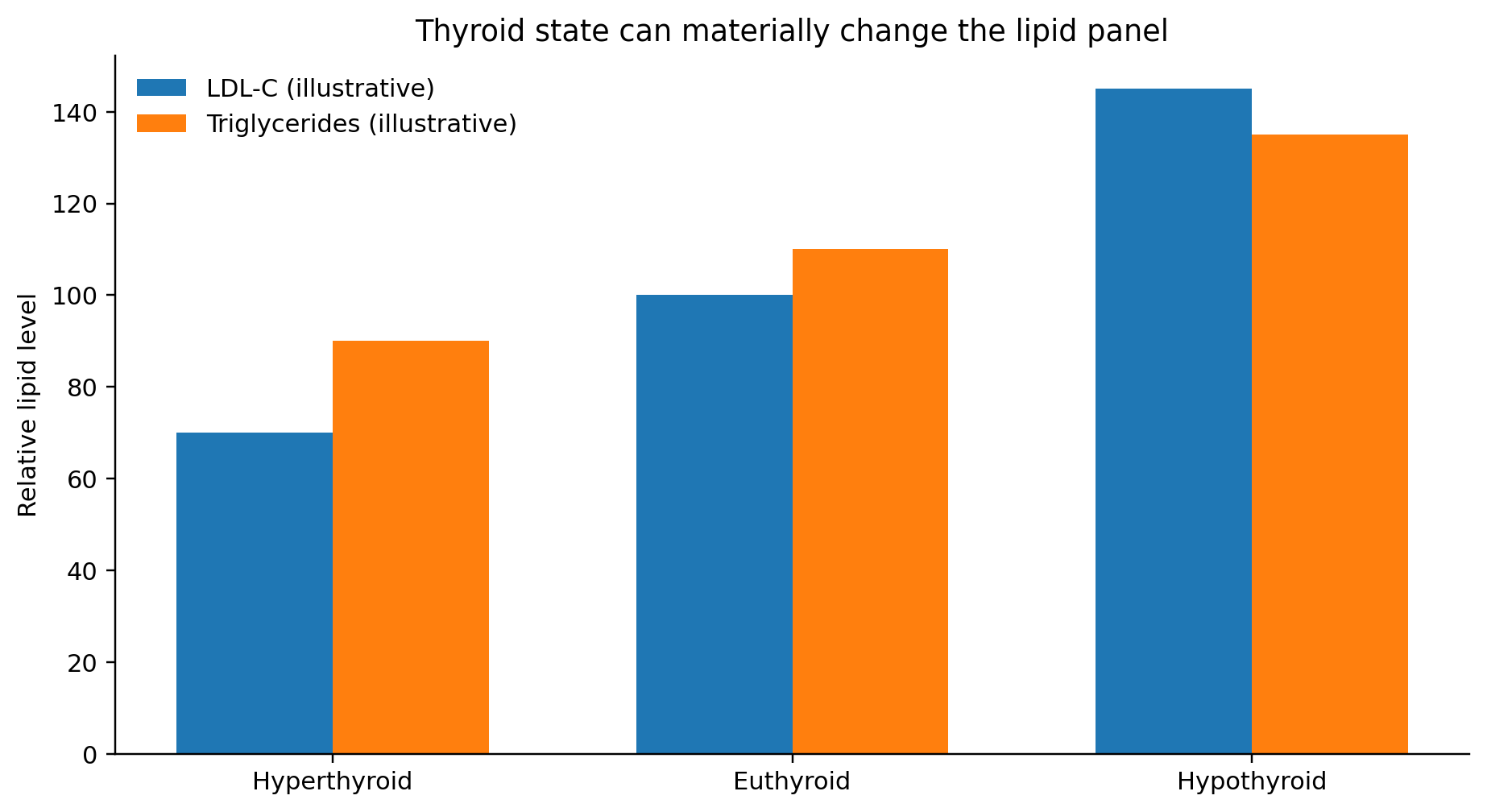
Figure 1. Illustration of the direction in which thyroid dysfunction can move LDL-C and triglycerides. Exact changes vary by patient.
1. Why hypothyroidism raises LDL
Lower thyroid signaling reduces hepatic LDL-receptor activity and slows clearance of circulating LDL particles.
Some patients also develop higher triglycerides because lipoprotein-lipase and hepatic lipid handling are altered.
2. Treat the thyroid, then reassess
In overt hypothyroidism, treating the thyroid disorder can materially lower LDL-C. The Endocrine Society therefore recommends re-evaluating lipids after euthyroidism before labeling residual dyslipidemia as primary.
That does not mean lipid-lowering treatment is never needed during thyroid treatment; urgency depends on absolute ASCVD risk and LDL severity.
3. Hyperthyroidism can hide dyslipidemia
An LDL-C of 80 mg/dL during active hyperthyroidism may rise after successful treatment. This can reveal the patient’s underlying baseline lipid phenotype.
The change should not be interpreted as an adverse effect of restoring normal thyroid function.
4. Thyroid disease and statin symptoms
Untreated hypothyroidism can itself cause muscle aches and CK elevation. It can also increase vulnerability to statin-associated myopathy.
TSH is therefore one of the secondary causes to consider when new muscle symptoms appear on statin therapy.
| Thyroid state | Typical lipid effect | Clinical move |
|---|---|---|
| Overt hypothyroidism | LDL-C often substantially higher; TG can rise | Treat thyroid and recheck lipids |
| Subclinical hypothyroidism | Smaller average LDL rise | Individualize thyroid treatment; reassess lipids |
| Hyperthyroidism | LDL-C often lower | Recheck after euthyroid because LDL may rise |
| Euthyroid | Lipid result reflects non-thyroid drivers | Manage by standard ASCVD framework |
5. FAQ
Can hypothyroidism cause LDL above 190?
Yes, sometimes, though very high LDL should still prompt evaluation for familial and other secondary causes.
Should I wait to start a statin until TSH is normal?
Often the lipid panel is reassessed after treating overt hypothyroidism, but very high-risk patients may still need parallel lipid treatment.
Can hyperthyroidism lower cholesterol too much?
It can lower cholesterol concentrations substantially. The priority is treating thyroid disease, not preserving the low LDL number.
Does levothyroxine lower Lp(a)?
Average reductions are small compared with its effect on LDL-C and it is not an Lp(a)-lowering therapy.
References
1. Endocrine Society. Lipid Management in Patients with Endocrine Disorders: Clinical Practice Guideline. J Clin Endocrinol Metab. 2020.
2. American Thyroid Association. Treating thyroid disease changes cholesterol levels. Clinical Thyroidology for the Public. 2021.
3. Blumenthal RS, Morris PB, Gaudino M, et al. 2026 ACC/AHA Dyslipidemia Guideline.