Executive Summary
Statin-associated muscle symptoms (SAMS) usually present as bilateral aching, soreness, heaviness or cramps in large proximal muscle groups, often without creatine kinase elevation.
The clinical diagnosis is difficult because muscle symptoms are common even without statins. Randomized blinded trials consistently show a substantial nocebo component, although a subset of patients has reproducible pharmacologic intolerance.
The ACC statin-intolerance pathway recommends evaluating nonstatin causes, stopping the statin if symptoms are significant, allowing symptoms to resolve, then rechallenging with the same or a different statin at a low dose and titrating as tolerated.
Common contributors include hypothyroidism, drug interactions, intense exercise, renal/hepatic dysfunction and underlying musculoskeletal disease. Vitamin D deficiency can coexist, but routine vitamin D solely to prevent SAMS is not proven.
The 2026 dyslipidemia guideline notes that CoQ10 evidence is inconsistent and does not support routine use for SAMS.
If a maximally tolerated statin regimen remains insufficient, evidence-based nonstatin options include ezetimibe, bempedoic acid and PCSK9-targeting therapies according to risk and LDL-C goals.
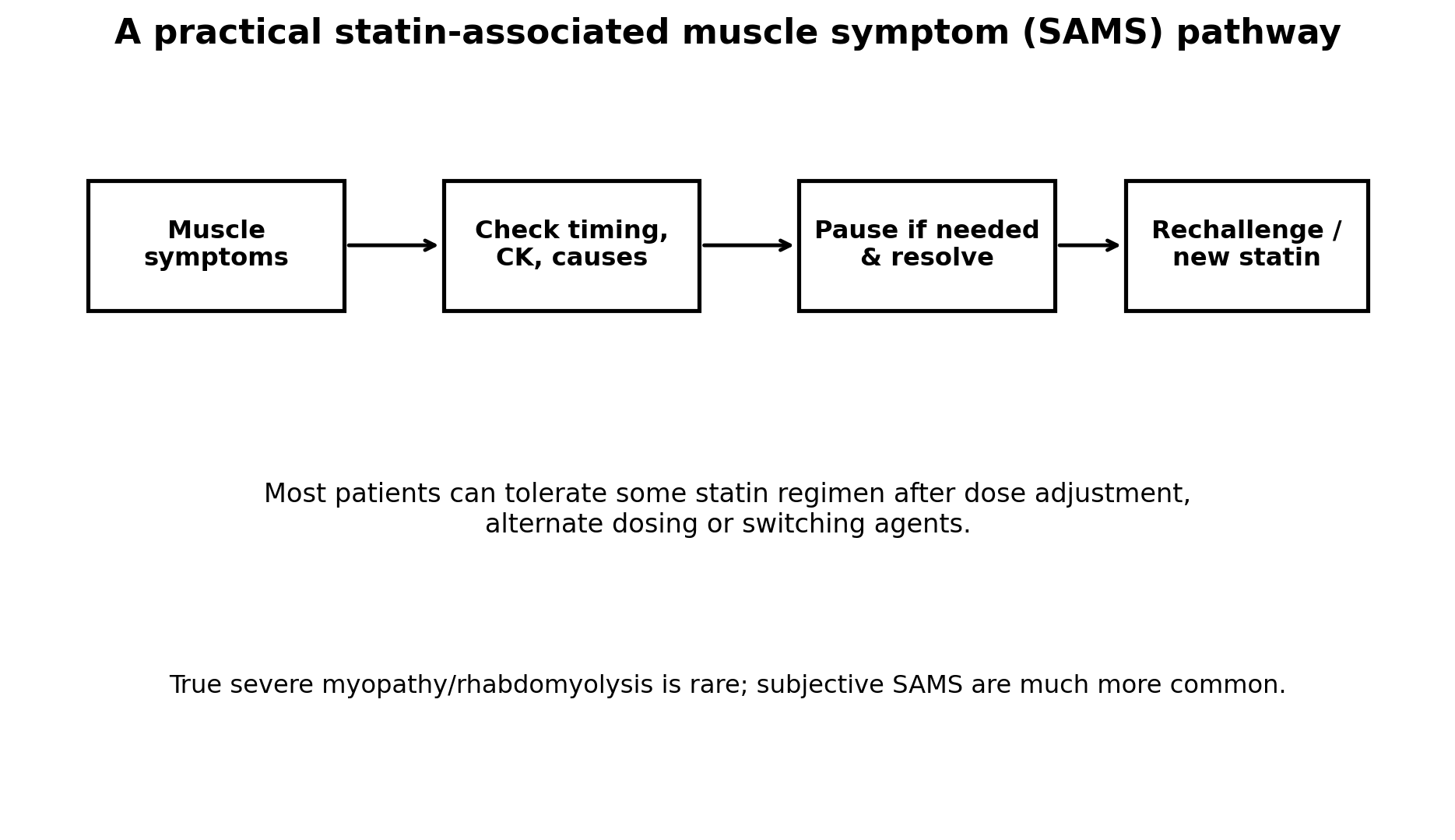
Figure 1. A practical SAMS evaluation pathway. The goal is to preserve proven LDL-lowering therapy while taking symptoms seriously.
1. What SAMS usually feels like
Classic symptoms are symmetric aches or weakness in the thighs, hips, shoulders or upper arms. Focal joint pain or long-standing unilateral pain is less typical.
Symptom timing matters: onset after starting or increasing a statin and improvement after withdrawal make causality more plausible.
2. When CK matters
Most SAMS occurs with normal CK. Markedly elevated CK changes the urgency because myopathy and rhabdomyolysis, while rare, can cause kidney injury.
Severe weakness, dark urine or systemic illness warrants prompt medical assessment.
3. Rechallenge is diagnostic and therapeutic
After symptoms resolve, many patients can tolerate a lower dose, a different statin or less frequent dosing. Rosuvastatin and pravastatin are commonly used in rechallenge strategies because of their pharmacokinetic characteristics.
The goal is the highest tolerated statin exposure, not an all-or-none test of whether someone is a “statin person.”
4. CoQ10 and supplements
Some small analyses suggest symptom improvement with CoQ10, but the 2026 guideline states that the preponderance of evidence does not support routine CoQ10 for SAMS.
Likewise, red yeast rice is not a truly statin-free alternative when it contains monacolin K, which is chemically lovastatin.
| Situation | Reasonable next step |
|---|---|
| Mild new myalgia, normal function | Review timing, interactions, exercise and secondary causes; consider monitored continuation or brief pause. |
| Symptoms resolve off statin | Rechallenge with lower dose or different statin. |
| Symptoms recur on ≥2 statins | Use maximally tolerated exposure + evidence-based nonstatin therapy. |
| CK very high / dark urine / weakness | Urgent evaluation for myopathy/rhabdomyolysis. |
5. FAQ
Does statin pain mean muscle damage?
Usually not. Most SAMS occurs without CK elevation or structural muscle injury.
Can I take a statin every other day?
In selected patients, long-half-life statins can be used intermittently under clinician guidance.
Is rosuvastatin less likely to cause symptoms?
Some patients tolerate it better, but no statin is symptom-proof.
Should I stop a statin suddenly if I have mild aches?
Not automatically. Risk, symptom severity and alternative causes should be reviewed. Severe symptoms require faster action.
References
1. American College of Cardiology. Statin Intolerance Tool / Lipid Manager. Current online resource, accessed 2026.
2. Blumenthal RS, Morris PB, Gaudino M, et al. 2026 ACC/AHA Multisociety Guideline on the Management of Dyslipidemia.
3. Nissen SE, Stroes E, Dent-Acosta RE, et al. Efficacy and Tolerability of Evolocumab in Patients With Muscle-Related Statin Intolerance: GAUSS-3. JAMA. 2016.
4. Wood FA, Howard JP, Finegold JA, et al. N-of-1 Trial of a Statin, Placebo, or No Treatment to Assess Side Effects (SAMSON). N Engl J Med. 2020.
5. Chiampas K, Jacobsen AP, Martin SS, et al. I Am an Athlete: Will This Statin Affect My Performance? ACC Expert Analysis. 2024.