Executive Summary
Cigarette smoking accelerates coronary atherosclerosis, increases plaque burden and increases the probability that plaque disruption will become a clinically important thrombotic event.
Smoking acts through multiple mechanisms: endothelial dysfunction, oxidative stress, inflammation, platelet activation, carbon monoxide exposure, sympathetic activation and adverse effects on lipoproteins.
Coronary CT studies show a dose-response relationship between smoking exposure and plaque, including non-calcified plaque and higher CAC. A 2026 ARIC analysis in older adults again found current and former smoking associated with high CAC, with a strong pack-year dose-response.
E-cigarettes remove combustion but introduce other exposures. The AHA scientific statement concludes that vaping can affect cardiopulmonary physiology and vascular function; long-term hard-outcome data remain less mature than for cigarettes.
Nicotine itself raises heart rate and blood pressure and causes vasoconstriction. Nicotine pouches and other noncombustible nicotine products may reduce exposure to combustion toxins compared with cigarettes, but they should not be marketed as heart-healthy.
Quitting smoking lowers cardiovascular risk quickly and progressively. Switching completely away from cigarettes may reduce toxic exposure, but dual use can preserve substantial risk.
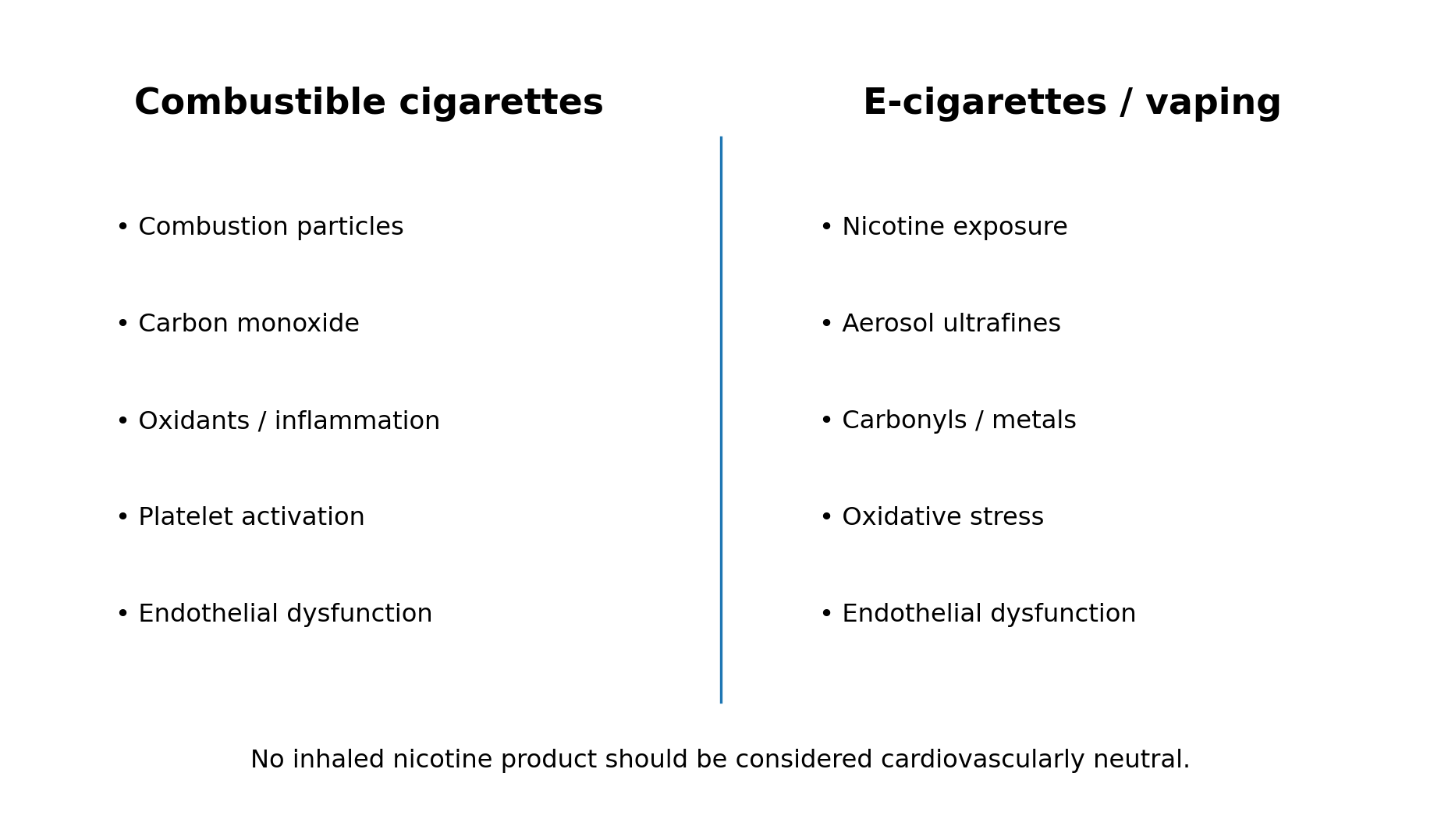
Figure 1. Combustible smoking and vaping share several cardiovascular pathways, although cigarettes carry the much larger evidence base for clinical harm.
1. Why cigarettes are uniquely harmful
Combustion generates thousands of chemicals, including oxidants, fine particulates and carbon monoxide. These exposures impair endothelial nitric oxide, increase platelet reactivity and create a prothrombotic environment.
Smoking also makes atherosclerosis more clinically dangerous by increasing the chance that plaque disruption will form an occlusive thrombus.
2. What CCTA and CAC show
Current smokers have more coronary plaque, more non-calcified plaque and more significant stenosis than never-smokers in CCTA cohorts, with risk rising with pack-years and duration.
The new 2026 ARIC analysis similarly found strong associations between smoking and high coronary and extracoronary calcification in older adults.
3. Vaping: less combustion does not mean no vascular harm
E-cigarette aerosols can contain nicotine, ultrafine particles, aldehydes and metals. Human and experimental studies show acute impairment in endothelial function and adverse vascular signaling.
The main uncertainty is long-term magnitude of cardiovascular harm compared with cigarette smoking, because vaping is newer and product formulations change rapidly.
4. Nicotine without smoke
Nicotine increases sympathetic activity, heart rate and blood pressure and can impair vascular function. Oral nicotine pouches avoid inhaled combustion products but long-term cardiovascular-outcome data remain limited.
FDA-authorized nicotine replacement therapies for smoking cessation are different from recreational long-term nicotine use because the therapeutic goal is eventual abstinence.
5. What happens after quitting
Cardiovascular risk begins falling soon after smoking cessation and continues declining over years. The benefit applies even to people who have smoked for decades.
Stopping completely is better than merely reducing the number of cigarettes. Dual cigarette/vape use should not be assumed to meaningfully reduce cardiovascular risk.
6. FAQ
Is vaping safer than smoking?
It likely reduces exposure to combustion toxins if a smoker switches completely, but it is not cardiovascularly harmless and long-term event data remain incomplete.
Does nicotine itself cause atherosclerosis?
Nicotine contributes to sympathetic activation and vascular dysfunction, but combustion-related toxicants explain much of the extreme risk of cigarettes.
Can CAC improve after quitting?
The Agatston score may not fall. The goal is lower future plaque progression and fewer thrombotic events, not a lower calcium number.
Is occasional smoking safe?
No. Cardiovascular risk rises even at low cigarette exposure; risk is not linear and one cigarette per day is not '5% of the risk' of a pack.
References
1. Rose JJ, Krishnan-Sarin S, Exil V, et al. Cardiopulmonary Impact of Electronic Cigarettes and Vaping Products: A Scientific Statement From the American Heart Association. Circulation. 2023;148:703-728.
2. Dennison Himmelfarb CR, Benowitz NL, Blank MD, et al. Impact of Smokeless Oral Nicotine Products on Cardiovascular Disease. Circulation. 2025;151:e1-e21.
3. Relationship between amount of cigarette smoking and coronary atherosclerosis on coronary CTA in asymptomatic individuals. CCTA cohort literature.
4. Associations of cigarette smoking with coronary artery and extra-coronary calcification in older adults: ARIC. 2026.
5. American Heart Association. Life's Essential 8: nicotine exposure and cardiovascular health.