Executive Summary
The AHA added sleep to Life's Essential 8 in 2022, recommending an average of 7-9 hours per night for most adults.
Short sleep is associated with higher rates of hypertension, obesity, diabetes and cardiovascular events. Very long sleep is also associated with higher risk in observational cohorts, although long sleep may sometimes be a marker of underlying illness rather than a cause.
Sleep regularity matters independently of average duration. In MESA, participants with day-to-day sleep-duration variability above 120 minutes had about twice the cardiovascular-event risk of those with variability of 60 minutes or less after multivariable adjustment.
Obstructive sleep apnea repeatedly exposes the cardiovascular system to intermittent hypoxia, sympathetic surges and blood-pressure spikes. It is strongly linked to hypertension, atrial fibrillation and cardiometabolic disease.
Treating sleep apnea clearly improves sleepiness and blood-pressure control in many patients. Randomized trials have been less definitive for preventing recurrent cardiovascular events, partly because adherence to CPAP is variable.
Consumer wearables can be useful for trends in sleep timing and duration, but they do not diagnose sleep apnea or precisely measure sleep stages as well as polysomnography.
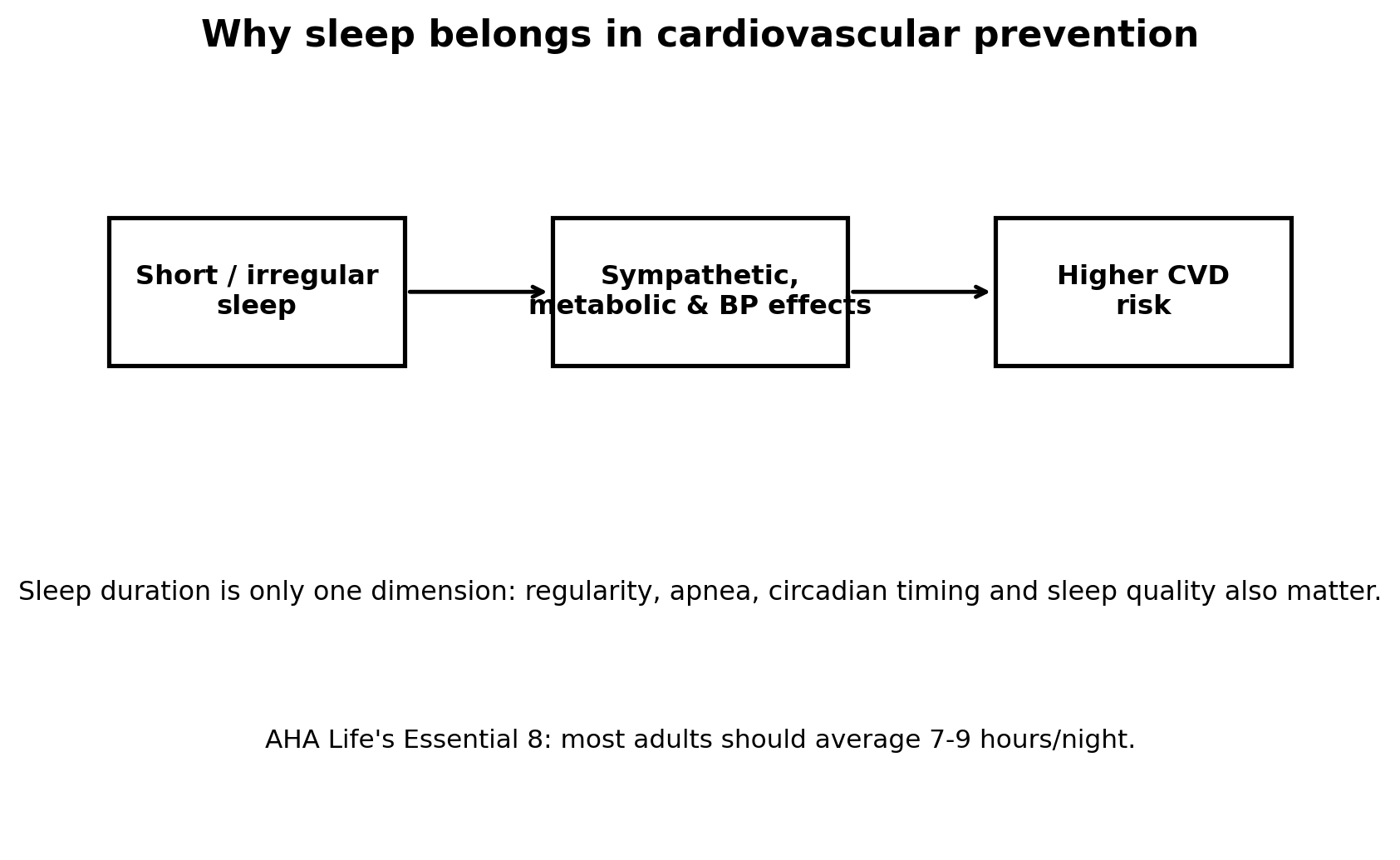
Figure 1. Sleep duration, regularity and breathing disorders interact with major cardiovascular pathways.
1. Why sleep changes cardiovascular biology
Insufficient sleep increases sympathetic activity, impairs glucose regulation, alters appetite signaling and can raise blood pressure. Repeated sleep loss also affects inflammatory and endothelial pathways.
These mechanisms overlap with obesity, insulin resistance and hypertension, making sleep part of CKM risk rather than a separate lifestyle luxury.
2. Seven to nine hours: useful target, not a magic number
The AHA's 7-9 hour target is an average population guideline. Individual sleep need varies, and quality matters.
Persistent long sleep accompanied by fatigue can be a clue to sleep apnea, depression, systemic illness or fragmented sleep rather than 'too much healthy sleep.'
3. Regularity and circadian timing
MESA actigraphy data show that large day-to-day shifts in sleep timing and duration track with substantially higher cardiovascular risk.
A consistent sleep/wake schedule is therefore a reasonable prevention target alongside sufficient duration.
4. Obstructive sleep apnea
OSA causes recurrent airway collapse, intermittent hypoxia and large sympathetic surges. Risk is especially high when obesity, resistant hypertension or atrial fibrillation coexists.
Loud snoring, witnessed apneas, morning headaches and excessive daytime sleepiness are common clues, but absence of sleepiness does not exclude OSA.
5. What wearables are good for
Wearables can reveal regularity, approximate duration and changes in overnight heart rate. They can support behavior change.
They should not be used to diagnose apnea, determine whether oxygen desaturation is clinically significant or replace formal sleep testing when suspicion is high.
| Sleep domain | Practical target |
|---|---|
| Duration | Most adults: average 7-9 h/night. |
| Regularity | Keep sleep and wake times reasonably consistent across the week. |
| Apnea risk | Evaluate snoring, witnessed apneas, resistant hypertension, AF, obesity or unexplained sleepiness. |
| Environment | Dark, quiet, cool room; minimize late-night stimulation and alcohol. |
| Tracking | Use wearables for trends, not definitive diagnosis. |
6. FAQ
Can I catch up on sleep at weekends?
Extra sleep can reduce acute sleepiness, but large recurring swings do not fully erase chronic sleep debt and may worsen regularity.
Does poor sleep cause high cholesterol?
It can worsen metabolic health, but sleep is not a substitute for direct LDL-C/ApoB management.
Should everyone get a sleep study?
No. Testing is most useful when symptoms or clinical risk suggest sleep apnea or another sleep disorder.
Is eight hours always ideal?
No single number is ideal for everyone. The evidence-based adult range is generally 7-9 hours.
References
1. Lloyd-Jones DM, Allen NB, Anderson CAM, et al. Life's Essential 8: Updating and Enhancing the American Heart Association's Cardiovascular Health Construct. Circulation. 2022.
2. Huang T, Mariani S, Redline S. Sleep Irregularity and Risk of Cardiovascular Events: MESA. J Am Coll Cardiol. 2020;75:991-999.
3. American Heart Association. Life's Essential 8 - Healthy Sleep. Current guidance.
4. American Heart Association scientific statement and guideline literature on obstructive sleep apnea and cardiovascular disease.
5. Ai S, Ye S, Li G, et al. Association of Disrupted Delta Wave Activity During Sleep With Long-Term Cardiovascular Disease and Mortality. J Am Coll Cardiol. 2024.