Executive Summary
DAPA-HF showed that dapagliflozin reduced worsening heart failure or cardiovascular death in HFrEF (HR 0.74) regardless of diabetes status.
EMPEROR-Preserved and DELIVER extended benefit into heart failure with preserved or mildly reduced ejection fraction. Empagliflozin reduced CV death or HF hospitalization by 21% in EMPEROR-Preserved; dapagliflozin reduced worsening HF or CV death by 18% in DELIVER.
DAPA-CKD reduced kidney failure/progression or renal/CV death by 39%, while EMPA-KIDNEY reduced kidney progression or CV death by 28%. Both trials included patients without diabetes.
ADA 2026 recommends an SGLT2 inhibitor with demonstrated benefit in type 2 diabetes with ASCVD, multiple ASCVD risk factors, CKD or heart failure.
SGLT2 inhibitors produce only modest glucose lowering when eGFR is low, yet cardiorenal benefit persists—strong evidence that the mechanism is not simply improved glycemia.
Important risks include genital mycotic infection, volume depletion and rare euglycemic ketoacidosis. Perioperative and acute-illness sick-day management matters.
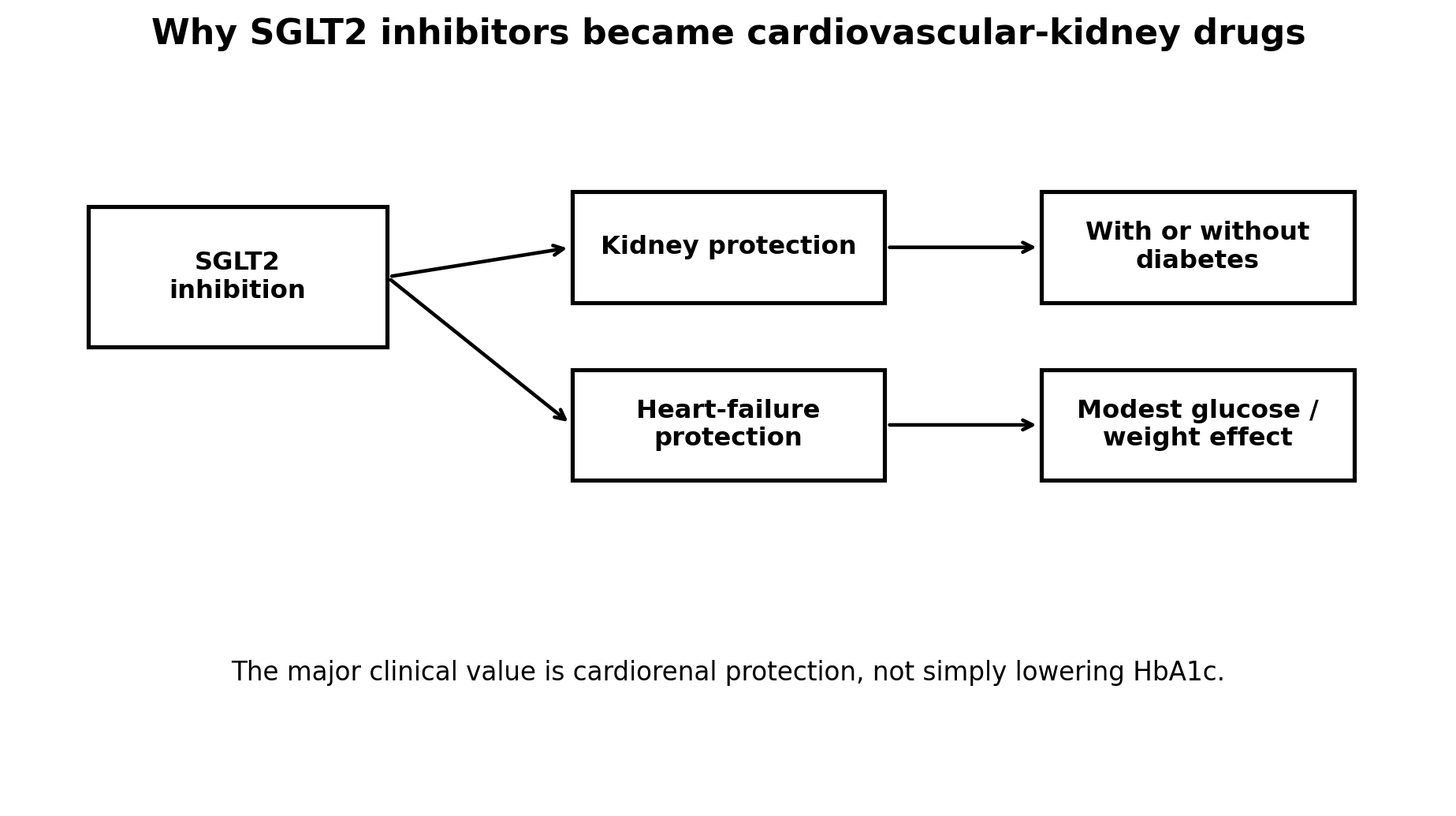
Figure 1. SGLT2 inhibitors are now cardiorenal drugs whose clinical value extends far beyond glucose lowering.
1. Heart failure across the EF spectrum
DAPA-HF and EMPEROR-Reduced established benefit in HFrEF. EMPEROR-Preserved and DELIVER then demonstrated that SGLT2 inhibition also reduces heart-failure events when ejection fraction is above 40%.
This class effect became one of the few therapies with consistent HF benefit across a very broad EF range.
2. CKD without diabetes
The kidney trials were especially important because they included non-diabetic CKD. That directly demonstrated disease-modifying kidney benefit independent of diabetes treatment.
The initial small eGFR dip after starting therapy is expected in many patients and is not the same as progressive kidney injury.
3. Why they work
Proposed mechanisms include restoration of tubuloglomerular feedback, reduced intraglomerular pressure, natriuresis, improved renal energetics, altered myocardial substrate use and reduced congestion.
No single mechanism fully explains all benefits.
4. Safety
Euglycemic ketoacidosis is rare but clinically important, especially during fasting, severe illness or perioperative periods. Genital infections are more common, and volume status should be reviewed in patients taking diuretics.
These drugs should be prescribed with clear sick-day and perioperative instructions.
| Trial | Population | Primary result |
|---|---|---|
| DAPA-HF | HFrEF | HR 0.74 for worsening HF or CV death |
| EMPEROR-Preserved | HF EF >40% | HR 0.79 for CV death or HF hospitalization |
| DELIVER | HF EF >40% | HR 0.82 for worsening HF or CV death |
| DAPA-CKD | CKD +/- diabetes | HR 0.61 for kidney/CV composite |
| EMPA-KIDNEY | CKD +/- diabetes | HR 0.72 for kidney progression or CV death |
5. FAQ
Why give a diabetes drug to someone without diabetes?
Because the heart-failure and kidney benefits are independent of glucose lowering.
Do SGLT2 inhibitors prevent heart attacks as strongly as statins?
Their strongest effects are on heart failure and kidney outcomes. They complement, not replace, LDL-directed therapy.
Can they be used at low eGFR?
Yes in many CKD indications down to eGFR ranges where glucose lowering is minimal; exact product labeling and guideline thresholds should be checked.
Should they be stopped before surgery?
Often yes, several days beforehand, to reduce ketoacidosis risk. Follow the prescribing clinician’s perioperative plan.
References
1. McMurray JJV, Solomon SD, Inzucchi SE, et al. Dapagliflozin in Patients with Heart Failure and Reduced Ejection Fraction. N Engl J Med. 2019;381:1995-2008.
2. Anker SD, Butler J, Filippatos G, et al. Empagliflozin in Heart Failure with a Preserved Ejection Fraction. N Engl J Med. 2021;385:1451-1461.
3. Solomon SD, McMurray JJV, Claggett B, et al. Dapagliflozin in Heart Failure with Mildly Reduced or Preserved Ejection Fraction. N Engl J Med. 2022;387:1089-1098.
4. Heerspink HJL, et al. Dapagliflozin in Patients with Chronic Kidney Disease. N Engl J Med. 2020.
5. The EMPA-KIDNEY Collaborative Group. Empagliflozin in Patients with Chronic Kidney Disease. N Engl J Med. 2023.
6. American Diabetes Association. Standards of Care in Diabetes—2026.