Publication metadata
| SEO title | High Lipoprotein(a): What to Do Next — Practical 2026 Guide |
|---|---|
| Suggested slug | /high-lipoprotein-a-what-to-do/ |
| Meta description | A high Lp(a) result can be confusing. Learn what the number means, which risk factors matter most, when CAC may help, what treatments can do today, and what Lp(a)-specific therapies are still being tested. |
| Primary search intent | “My Lp(a) is high — what should I do?” |
| Audience | Patients, primary-care clinicians, preventive cardiology readers |
| Medical review | Independent clinical review recommended before publication |
Medical disclaimer. This publication is educational and does not replace individualized medical care. Lp(a) should be interpreted in the context of overall cardiovascular risk, medications, comorbidities, imaging, bleeding risk, and local clinical guidelines.
Executive summary
A high lipoprotein(a), or Lp(a), result is different from a high LDL cholesterol result. Lp(a) is largely inherited, is relatively stable across life, and usually cannot be meaningfully lowered with diet or exercise. That can make the result feel frustrating. But the most important clinical point is the opposite: a high Lp(a) level is not a reason to give up. It is a reason to manage the parts of cardiovascular risk that are modifiable earlier and more deliberately.
The 2026 ACC/AHA dyslipidemia guideline recommends measuring Lp(a) at least once in every adult. It identifies approximately 125 nmol/L (or 50 mg/dL) as a meaningful risk-enhancing level and notes that risk rises further as Lp(a) rises; around 250 nmol/L is associated with at least a doubling of long-term ASCVD risk. The 2025 ESC/EAS focused update likewise treats elevated Lp(a) as a cardiovascular risk modifier. Because assays and apo(a) isoform size differ, mg/dL and nmol/L should not be converted using a single universal conversion factor.
There is currently no reason to wait for a future Lp(a)-specific drug before acting. Today’s practical strategy is to quantify global risk; identify whether atherosclerosis is already present; lower LDL-C and other apoB-containing particles to an intensity appropriate for that risk; control blood pressure, smoking, diabetes, body weight and physical inactivity; and consider selective imaging such as coronary artery calcium (CAC) when it will genuinely change a treatment decision. PCSK9-directed therapies can lower Lp(a) modestly while substantially lowering LDL-C, but the dedicated RNA therapies designed to reduce Lp(a) by much larger amounts are still being tested in cardiovascular-outcome trials as of August 2026.
A high Lp(a) level should also trigger a family conversation. Because Lp(a) is strongly inherited, first-degree relatives may benefit from testing, especially when there is premature ASCVD, familial hypercholesterolemia, or very high Lp(a) in the family.
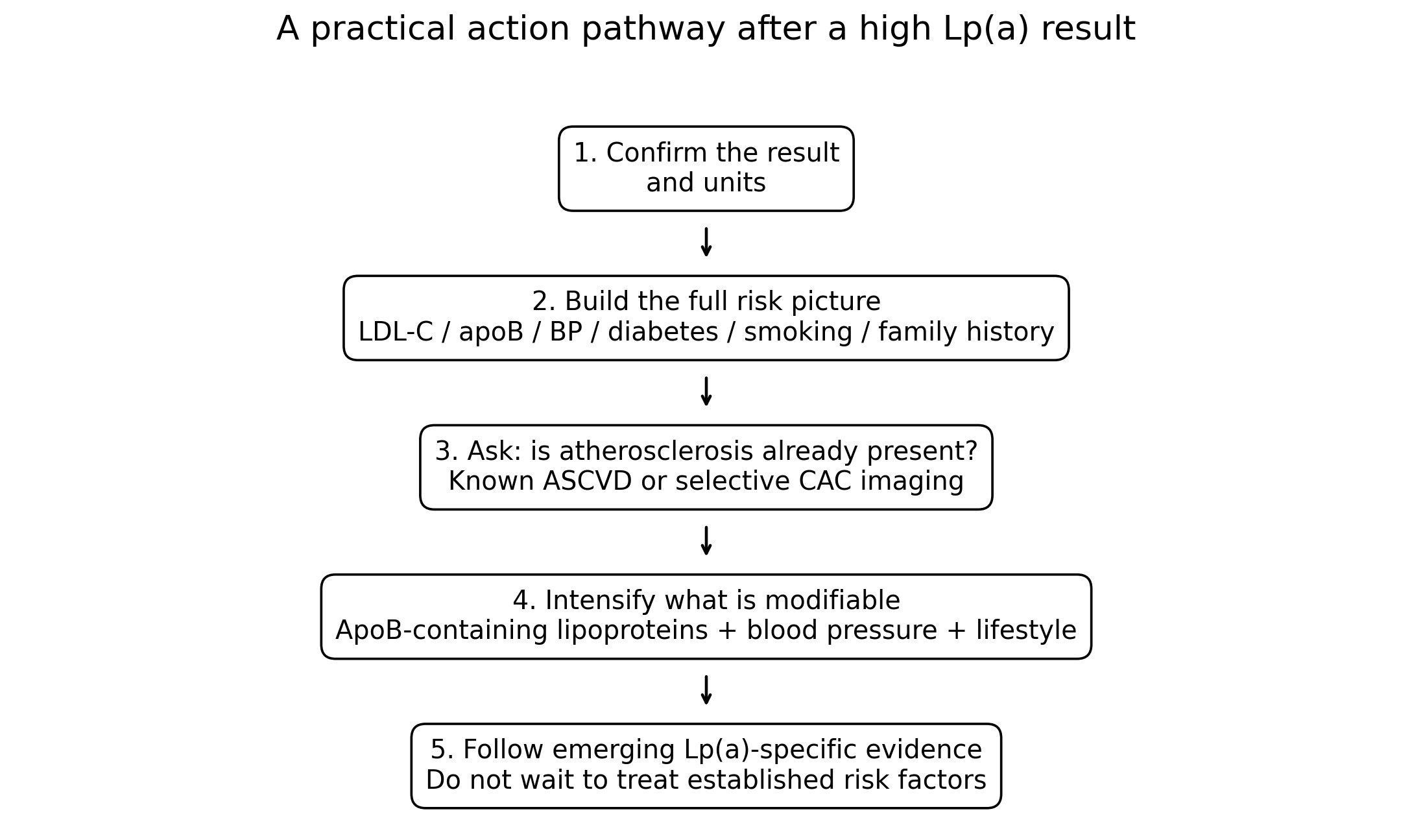
Figure 1. A practical action pathway after a high Lp(a) result.
1. First, understand what the result actually means
Lp(a) is an LDL-like particle that contains one apolipoprotein B-100 molecule linked to a distinctive apolipoprotein(a) protein. Most of the variation in circulating Lp(a) is determined by the LPA gene. Unlike LDL-C, which can change substantially with diet, weight, medications and metabolic health, Lp(a) is mostly a lifelong inherited exposure.
That is why modern guidelines have moved toward one-time adult screening. A single reliable measurement usually answers the basic genetic-risk question. Repeat testing can be reasonable when a result is unexpected, when the assay or units are unclear, or when the first measurement was obtained during a clinical circumstance likely to distort the result. But serial monthly testing usually adds little.
Do not use a fixed mg/dL ↔︎ nmol/L conversion
This matters more than it sounds. Lp(a) particles vary in apo(a) isoform size, so mass concentration (mg/dL) and particle concentration (nmol/L) are not linked by one exact conversion factor. A laboratory result should be interpreted in the units in which it was measured. Guideline thresholds are therefore best treated as approximate clinical anchors rather than as a conversion exercise.
Useful clinical anchors
| Lp(a) level | NLA 2024 framing | 2026 ACC/AHA framing | Practical interpretation |
|---|---|---|---|
| <30 mg/dL or <75 nmol/L | Lower risk | Below main risk-enhancer threshold | Does not eliminate conventional risk |
| 30–50 mg/dL or 75–125 nmol/L | Intermediate / grey zone | Risk is continuous | Interpret with the rest of the risk profile |
| ≥50 mg/dL or ≥125 nmol/L | High risk | Meaningful risk-enhancing level | Usually justifies more deliberate risk-factor control |
| ≈250 nmol/L or higher | Very high phenotype | ≥2-fold long-term ASCVD risk cited in 2026 guideline summary | Magnitude of inherited risk is substantial; absolute risk still depends on the whole patient |
Clinical pearl
Lp(a) is a continuous risk factor. A threshold is useful for decisions, but biology does not suddenly change at 49 versus 50 mg/dL.
2. High Lp(a) is a risk amplifier, not a complete risk diagnosis
Two people can have the same Lp(a) level and very different near-term risk. Age, cumulative LDL/apoB exposure, smoking, blood pressure, diabetes, kidney disease, family history and whether coronary plaque is already present all modify the absolute risk. That distinction is crucial: Lp(a) tells you about inherited susceptibility, while the rest of the evaluation tells you how urgently that susceptibility needs to be acted on.
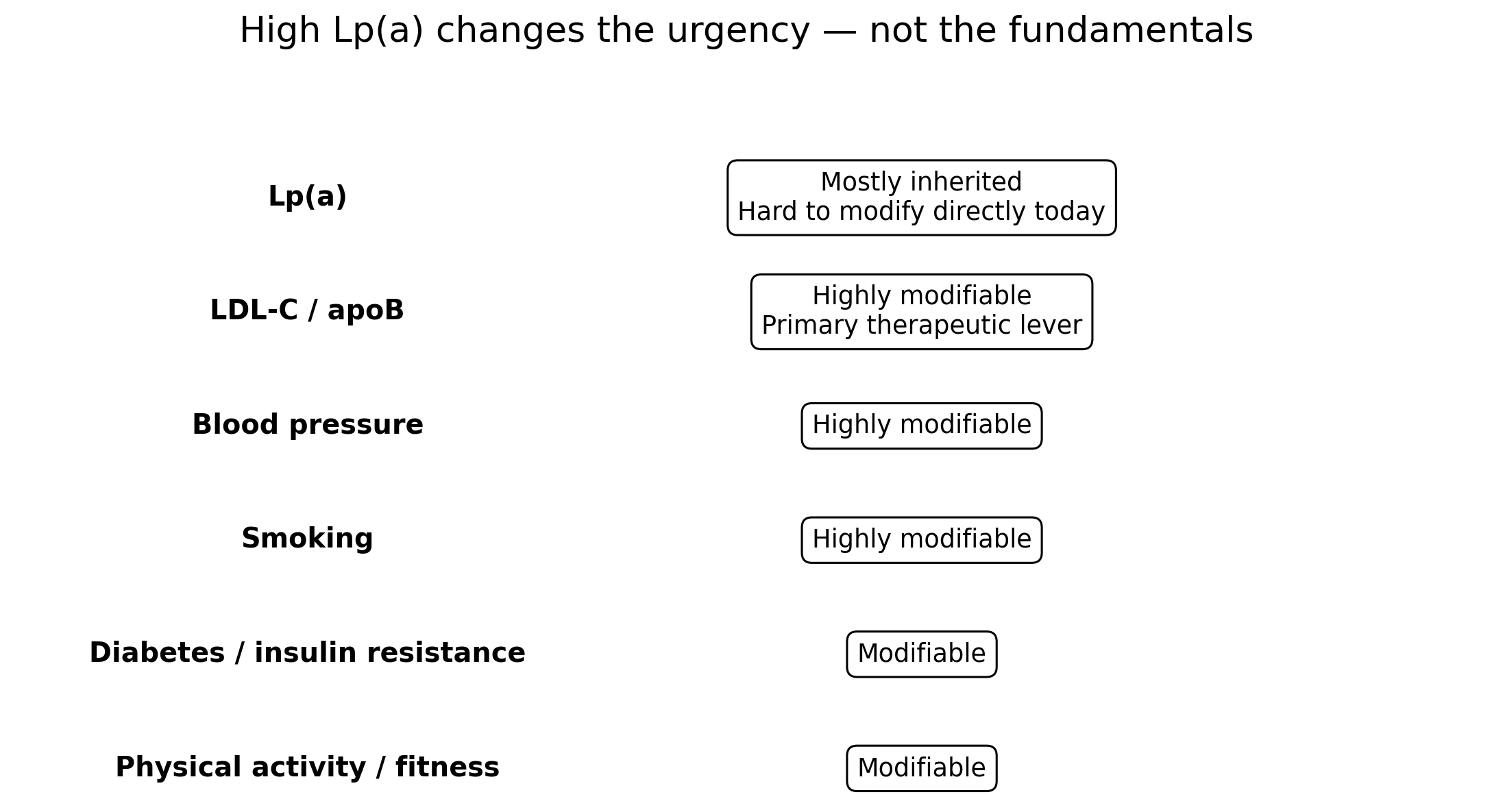
Figure 2. High Lp(a) changes the urgency — not the fundamentals of prevention.
The minimum risk inventory after a high Lp(a) result
LDL-C and non-HDL-C
Apolipoprotein B (especially when triglycerides, diabetes or metabolic disease create LDL-C/particle discordance)
Blood pressure
Smoking or nicotine exposure
Diabetes / HbA1c and metabolic risk
Kidney disease
Family history of premature ASCVD
Known coronary, carotid or peripheral atherosclerosis
hs-CRP when inflammatory risk would alter the clinical discussion
3. The most powerful thing you can usually do today: reduce apoB exposure
Because dedicated Lp(a)-lowering outcome therapy is not yet established in routine practice, the strongest current response to high Lp(a) is aggressive management of established causal risk factors — especially LDL-C and the broader burden of apoB-containing particles. This is not a workaround; it is the central evidence-based strategy recommended by major consensus documents.
The 2026 ACC/AHA dyslipidemia guideline reintroduced absolute LDL-C goals. In primary prevention, the guideline summary describes LDL-C goals below 100 mg/dL for borderline/intermediate risk and below 70 mg/dL for high risk; for very-high-risk secondary prevention, the goal is below 55 mg/dL. These are not automatic personal targets for every person with high Lp(a), but they show the governing principle: the higher the absolute risk, the lower the LDL-C target.
What current therapies actually do
| Therapy | Main role | Effect on Lp(a) | Key point in high Lp(a) |
|---|---|---|---|
| Statins | First-line LDL-C / apoB lowering | Neutral to modest increase reported across studies | Do not stop an indicated statin because Lp(a) fails to fall; outcome benefit from LDL reduction remains strong. |
| Ezetimibe | Additional LDL-C lowering | Little consistent effect | Useful when LDL-C / apoB target is not reached with statin alone. |
| PCSK9 monoclonal antibodies | Large LDL-C reduction | Typically modest reduction, often ~20–30% | Especially useful when absolute risk is high and LDL-C remains above goal; post-hoc analyses suggest Lp(a) reduction may contribute to benefit. |
| Inclisiran | PCSK9 gene silencing; ~50% LDL-C reduction | Modest reduction in trials | Convenient twice-yearly maintenance dosing; cardiovascular outcome evidence is distinct from LDL-lowering efficacy and should be interpreted accordingly. |
| Bempedoic acid | LDL-C lowering, especially if statins not tolerated | Minimal direct effect | Evidence-based LDL lowering; not an Lp(a)-specific treatment. |
| Enlicitide (Lipfendra) | Oral PCSK9 inhibitor approved by FDA July 2026 for LDL-C lowering | Not an Lp(a)-specific indication | New LDL-lowering option; should not be confused with a dedicated Lp(a) therapy. |
Myth vs fact
Myth: “Statins can raise Lp(a), so they are bad for people with high
Lp(a).”
Fact: Studies disagree on the magnitude and consistency of
statin-related Lp(a) change, but an indicated statin should not be
abandoned because it does not lower Lp(a). Its reduction of LDL/apoB
exposure and cardiovascular events remains highly relevant.
4. Should you get a CAC scan?
Sometimes — not automatically. CAC is most useful when the answer could change a prevention decision. The 2026 ACC/AHA guideline supports selective CAC use in adults with borderline or intermediate estimated risk when there is genuine uncertainty about starting or intensifying lipid-lowering therapy.
Lp(a) and CAC provide different information. Lp(a) is an inherited exposure; CAC is evidence that coronary atherosclerosis has already produced calcified plaque. In MESA and the Dallas Heart Study, elevated Lp(a) and CAC were independently associated with ASCVD risk. Participants with both elevated Lp(a) and CAC ≥100 had the highest risk (hazard ratio 4.71 versus the reference group with nonelevated Lp(a) and CAC 0). By contrast, in that cohort elevated Lp(a) with CAC 0 was not associated with a statistically significant increase in 10–13-year ASCVD risk compared with the reference group. That is reassuring for near-term risk, but it does not erase lifetime inherited risk or exclude non-calcified plaque.
When CAC may be especially useful
You are in primary prevention and uncertain whether medication is warranted.
Your LDL-C is not dramatically high, but Lp(a), family history or other risk enhancers make the conventional estimate feel incomplete.
You and your clinician are deciding how aggressively to lower LDL-C and want evidence of subclinical coronary atherosclerosis.
When CAC is usually not the main question
Known coronary, carotid or peripheral ASCVD: the patient already has established disease.
Symptoms suggesting ischemia: diagnostic evaluation is a different problem from screening.
A result would not change treatment.
5. Do you need CCTA because Lp(a) is high?
Not simply because Lp(a) is high. CCTA can visualize calcified and non-calcified coronary plaque and stenosis, while CAC is a simpler non-contrast burden marker. But routine CCTA screening of every asymptomatic person with high Lp(a) is not an established guideline strategy. CCTA becomes more relevant when symptoms, an abnormal test, or a specific clinical question warrants anatomical coronary imaging.
The temptation to image repeatedly is understandable, especially when a person knows they carry a genetically elevated risk marker. But prevention should not become a contest to collect scans. Imaging is most valuable when it answers a decision that cannot be answered more simply.
6. Lifestyle still matters --- even if it barely changes Lp(a)
The statement “diet cannot lower Lp(a)” is often misheard as “lifestyle does not matter.” Those are completely different claims. The 2026 ACC/AHA guideline explicitly keeps lifestyle at the foundation of dyslipidemia management. Physical activity, a heart-healthy dietary pattern, weight control, tobacco avoidance, sleep and blood-pressure control reduce overall cardiovascular risk even when the genetically determined Lp(a) number barely moves.
Do not smoke.
Build regular aerobic and resistance activity into the week; daily walking is a useful floor, not the ceiling.
Favor a Mediterranean-style dietary pattern rich in vegetables, legumes, whole grains, nuts, fish and unsaturated fats.
Treat hypertension rather than relying on “borderline” readings for years.
Address diabetes, insulin resistance and excess visceral adiposity.
Prioritize sleep and adherence to prescribed therapies.
Evidence box
Lifestyle has little direct effect on Lp(a), but it strongly affects the competing pathways that determine whether inherited Lp(a) risk becomes a clinical event.
7. What about aspirin?
A high Lp(a) result is not, by itself, a reason to start aspirin. Primary-prevention aspirin is a trade-off between fewer thrombotic events and more bleeding. Genetic subgroup analyses from the Women’s Health Study and ASPREE have raised the possibility that some people with LPA genotypes associated with high Lp(a) may derive more cardiovascular benefit from aspirin. These findings are intriguing, but they do not establish routine aspirin therapy for everyone with elevated measured Lp(a).
The practical rule is therefore conservative: aspirin decisions should be individualized according to established ASCVD, age, gastrointestinal and intracranial bleeding risk, concomitant anticoagulants/NSAIDs, and the overall cardiovascular-risk profile. This is a clinician decision, not a biomarker hack.
8. Tell your family --- Lp(a) is one of the few lab results that can be a family diagnosis
Because Lp(a) is highly heritable, a markedly elevated result should prompt consideration of cascade testing in relatives. The 2026 ACC/AHA guideline newly emphasizes universal once-in-adulthood measurement and genetic cascade screening; the EAS consensus also supports family testing in the setting of very high Lp(a), familial hypercholesterolemia, or premature ASCVD.
Parents, siblings and adult children are the obvious first group to discuss testing with.
If there is premature ASCVD or familial hypercholesterolemia in the family, pediatric timing should be discussed with the child’s clinician rather than waiting until middle age.
Relatives do not need genetic sequencing to estimate Lp(a)-related risk; a properly measured Lp(a) concentration is generally sufficient for clinical risk assessment.
9. Remember the aortic valve
Lp(a) is not only an ASCVD marker. Epidemiologic and genetic evidence links high Lp(a) to calcific aortic valve disease and aortic stenosis. That does not mean every person with high Lp(a) needs routine echocardiography. But a murmur, exertional breathlessness, chest discomfort, unexplained syncope or known valve calcification deserves appropriate clinical assessment rather than assuming Lp(a) is purely a coronary issue.
10. What is coming next?
The reason Lp(a) has moved rapidly into mainstream prevention is that highly potent Lp(a)-specific therapies now exist experimentally. The remaining question is the one that matters most: does specifically lowering Lp(a) reduce cardiovascular events enough to justify long-term treatment?
| Agent | Approach | Status as of Aug 2026 | Why it matters |
|---|---|---|---|
| Pelacarsen | Antisense oligonucleotide targeting apo(a) production | Phase 3 / long-term extension programs ongoing | Dedicated Lp(a) lowering; cardiovascular outcome evidence remains the key question. |
| Olpasiran | siRNA targeting LPA | OCEAN(a)-Outcomes active, not recruiting; additional primary-prevention and CCTA programs underway | Very large Lp(a) reductions in earlier trials; outcome confirmation pending. |
| Lepodisiran | Long-duration siRNA | Late-stage development | Potential for very infrequent dosing. |
| Muvalaplin | Oral inhibitor of Lp(a) assembly | Clinical development | Would offer a non-injectable Lp(a)-specific strategy if efficacy and outcomes are confirmed. |
Clinical pearl
Do not “wait for the Lp(a) drug” while leaving LDL-C, blood pressure, smoking or diabetes undertreated. Future Lp(a)-specific treatment would be additive to — not a replacement for — conventional prevention.
11. Three practical scenarios
Scenario A: High Lp(a), otherwise low-risk, CAC = 0
This profile can be reassuring for near-term coronary event risk, particularly when blood pressure, glucose, smoking status and apoB are favorable. The wrong conclusion is “Lp(a) does not matter.” The better conclusion is “there is currently little calcified coronary disease, so this is an opportunity to preserve that low burden over decades.” Treatment intensity depends on age, family history, LDL-C/apoB and preferences.
Scenario B: High Lp(a) plus CAC ≥100
Now there is both inherited risk and objective coronary atherosclerosis. In MESA, this combination identified a markedly higher-risk group. This is the profile in which passive reassurance becomes difficult to justify; LDL-C/apoB lowering and control of every major modifiable risk factor generally become much more urgent.
Scenario C: High Lp(a) with known myocardial infarction, stroke or peripheral disease
This is secondary prevention. The debate is no longer whether atherosclerosis exists. The job is to minimize recurrent-event risk using evidence-based lipid lowering, blood-pressure control, antithrombotic therapy when indicated, diabetes management and lifestyle. Dedicated Lp(a) outcome therapies may eventually add another layer, but established secondary-prevention treatments remain foundational.
12. What not to do after discovering high Lp(a)
Do not spend months trying to force the Lp(a) number down with unproven supplement stacks.
Do not stop an indicated statin simply because Lp(a) did not fall.
Do not convert mg/dL to nmol/L with a single internet multiplier and treat the converted number as exact.
Do not order serial CAC scans to prove that treatment is working; statins can increase plaque calcification/density while making plaque more stable.
Do not assume CAC = 0 means zero lifetime risk.
Do not start aspirin solely because Lp(a) is high without assessing bleeding risk.
Do not forget family members.
The 10-step action checklist
1. Confirm the Lp(a) value and its units.
2. Place it in context: <30 mg/dL is generally lower risk; ≥50 mg/dL (or roughly ≥125 nmol/L in U.S. guidance) is a meaningful risk-enhancing level; very high values confer progressively more risk.
3. Check LDL-C, non-HDL-C and — when useful — apoB.
4. Calculate overall 10- and 30-year risk using the locally recommended tool; in the U.S., 2026 guidance centers on PREVENT.
5. Inventory family history, blood pressure, smoking, diabetes, kidney disease and inflammatory risk.
6. Decide whether CAC would genuinely change a primary-prevention treatment decision.
7. Lower LDL-C/apoB to an intensity appropriate for absolute risk; use combination therapy when necessary.
8. Do not neglect lifestyle simply because Lp(a) itself is genetically fixed.
9. Discuss testing with first-degree relatives.
10. Follow the Lp(a)-specific outcome-trial landscape, but treat today’s modifiable risk today.
Frequently asked questions
Can diet lower Lp(a)?
Usually not by a clinically meaningful amount. Diet still matters because it affects LDL-C, blood pressure, weight, diabetes and overall event risk.
Should I repeat Lp(a) every year?
Usually no. Lp(a) is largely genetically determined and stable. Repeat testing is most useful when the original result or assay context is questionable.
Is 50 mg/dL dangerous?
It is a commonly used risk-enhancing threshold, not a cliff edge. Risk rises continuously and depends heavily on the rest of the cardiovascular profile.
If my LDL-C is excellent, does Lp(a) stop mattering?
No. Lp(a)-associated risk persists even at low LDL-C, but reducing LDL/apoB exposure is one of the best currently available ways to reduce absolute risk.
Does CAC = 0 cancel high Lp(a)?
No. It is reassuring for near-term risk in many asymptomatic adults, but it does not erase lifetime inherited risk or rule out all non-calcified plaque.
Should I take a PCSK9 inhibitor just to lower Lp(a)?
PCSK9 inhibitors are approved primarily for LDL-C lowering in appropriate patients. Their modest Lp(a) lowering can be a useful secondary effect, but treatment should be based on the full indication and absolute risk.
Is there an approved drug that lowers Lp(a) by 80--90% and prevents events?
Potent Lp(a)-specific agents are in late-stage development, but cardiovascular-outcome confirmation is still ongoing as of August 2026.
Should my children be tested?
Because Lp(a) is inherited, family testing can be valuable. Timing in children depends on the family history and should be discussed with a pediatric clinician, particularly when premature ASCVD or familial hypercholesterolemia is present.
Key take-home messages
High Lp(a) is common, causal, inherited and usually stable across life.
The 2026 ACC/AHA guideline recommends measuring Lp(a) at least once in every adult.
Lp(a) is a risk amplifier, not a stand-alone treatment algorithm.
The most actionable current response is earlier and more intensive control of apoB-containing lipoproteins and other modifiable risk factors.
CAC can refine risk in selected primary-prevention patients when the result would change treatment.
PCSK9-directed drugs can modestly lower Lp(a), but they are primarily LDL-lowering therapies.
Aspirin is not routinely indicated solely because Lp(a) is high.
Family screening matters.
Dedicated Lp(a)-lowering therapies are one of the most important emerging areas in preventive cardiology, but outcome data remain decisive.
Selected references
1. Blumenthal RS, Morris PB, Gaudino M, et al. 2026 ACC/AHA/AACVPR/ABC/ACPM/ADA/AGS/APhA/ASPC/NLA/PCNA Guideline on the Management of Dyslipidemia. J Am Coll Cardiol. 2026. doi:10.1016/j.jacc.2025.11.016.
2. American College of Cardiology. Prioritizing Health | Lower Sooner: How the 2026 Dyslipidemia Guideline Changes Practice. July 1, 2026.
3. European Society of Cardiology / European Atherosclerosis Society. 2025 Focused Update of the 2019 ESC/EAS Guidelines for the management of dyslipidaemias. Eur Heart J. 2025.
4. Koschinsky ML, Bajaj A, Boffa MB, et al. A focused update to the 2019 NLA scientific statement on use of lipoprotein(a) in clinical practice. J Clin Lipidol. 2024.
5. Kronenberg F, Mora S, Stroes ESG, et al. Lipoprotein(a) in atherosclerotic cardiovascular disease and aortic stenosis: a European Atherosclerosis Society consensus statement. Eur Heart J. 2022;43:3925-3946.
6. Mehta A, Vasquez N, Ayers CR, et al. Independent Association of Lipoprotein(a) and Coronary Artery Calcification With Atherosclerotic Cardiovascular Risk. J Am Coll Cardiol. 2022;79:757-768. doi:10.1016/j.jacc.2021.11.058.
7. Tsimikas S. Lipoprotein(a) and Coronary Calcium: Clinical Management and Potential Design of Primary Prevention Trials. J Am Coll Cardiol. 2022;79:769-771.
8. Tsimikas S, Gordts PLSM, Nora C, Yeang C, Witztum JL. Statin therapy increases lipoprotein(a) levels. Eur Heart J. 2020;41:2275-2284.
9. De Boer LM, Oorthuys AOJ, Wiegman A, et al. Statin therapy and lipoprotein(a) levels: a systematic review and meta-analysis. Eur J Prev Cardiol. 2022;29:779-792.
10. Ray KK, Wright RS, Kallend D, et al. Two Phase 3 Trials of Inclisiran in Patients with Elevated LDL Cholesterol. N Engl J Med. 2020;382:1507-1519.
11. Schwartz GG, Steg PG, Szarek M, et al. Alirocumab and Cardiovascular Outcomes after Acute Coronary Syndrome. N Engl J Med. 2018;379:2097-2107.
12. Steg PG, Szarek M, Bhatt DL, et al. Lipoprotein(a) lowering by alirocumab reduces the total burden of cardiovascular events independent of LDL cholesterol lowering: ODYSSEY OUTCOMES. Eur Heart J. 2020;41:4245-4255.
13. Sabatine MS, Giugliano RP, Keech AC, et al. Evolocumab and Clinical Outcomes in Patients with Cardiovascular Disease. N Engl J Med. 2017;376:1713-1722.
14. Lacaze P, Bakshi A, Riaz M, et al. Aspirin for Primary Prevention of Cardiovascular Events in Relation to Lipoprotein(a) Genotypes. J Am Coll Cardiol. 2022;80:1287-1298.
15. FDA. Premarket approval supplement for LIPOSORBER LA-15 System: expanded indication including elevated Lp(a). Decision date April 21, 2020; page updated July 13, 2026.
16. FDA. FDA Approves First Oral PCSK9 Inhibitor to Lower LDL Cholesterol in Adults with High Cholesterol (Lipfendra/enlicitide). July 17, 2026.
17. ClinicalTrials.gov. OCEAN(a)-Outcomes (NCT05581303). Record updated Feb 27, 2026; active, not recruiting; no results posted as of Aug 2026.
18. Amgen. First Quarter 2026 Financial Results: olpasiran OCEAN(a)-Outcomes ongoing; OCEAN(a)-PreEvent and OCEAN(a)-CCTA programs described. 2026.
19. Novartis. Pelacarsen long-term extension study NCT07517263. Updated July 8, 2026.
20. Novartis. Pelacarsen with background inclisiran study NCT06813911. Updated July 14, 2026.