Executive Summary
The updated 2018 PREDIMED analysis included 7,447 high-risk adults without known cardiovascular disease. A Mediterranean diet supplemented with extra-virgin olive oil or nuts was associated with approximately 28-31% lower major cardiovascular-event risk than the control diet.
PREDIMED must be described carefully because randomization irregularities in the original publication led to withdrawal and republication. The reanalysis that accounted for those deviations produced broadly similar effect estimates.
CORDIOPREV randomized 1,002 patients with established coronary disease to a Mediterranean or low-fat diet for seven years. The Mediterranean group had fewer major cardiovascular events; adjusted hazard ratios were approximately 0.72-0.75.
The 2026 AHA dietary scientific statement emphasizes whole dietary patterns: vegetables and fruit, whole grains, healthy protein sources, unsaturated fats replacing saturated fats, fewer ultraprocessed foods, less added sugar and sodium, and no reason to start alcohol for health.
The evidence is strongest for a food pattern rich in legumes, nuts, vegetables, fruit, whole grains, fish and olive oil. It does not support compensating for a diet high in processed meat, refined starches and saturated fat by adding a spoonful of olive oil.
Mediterranean eating can improve LDL-C, blood pressure, glycemia, weight trajectory and inflammation, but its clinical value is larger than any one biomarker change.
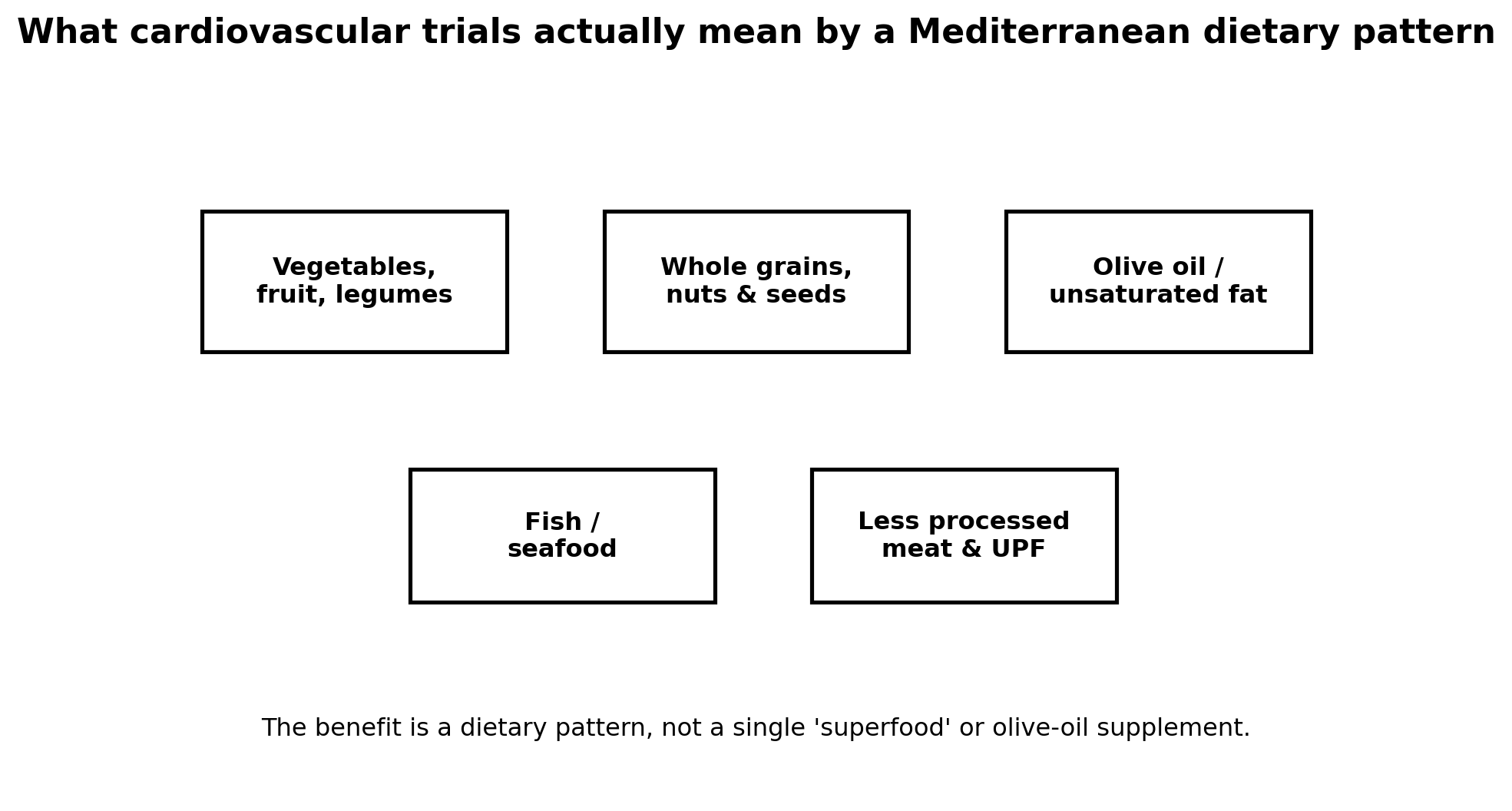
Figure 1. The cardiovascular benefit is attached to a coherent dietary pattern, not to a single ingredient.
1. PREDIMED: primary prevention
PREDIMED enrolled older adults at high cardiovascular risk but without established CVD. Participants received intensive dietary counseling and either extra-virgin olive oil, mixed nuts or control low-fat advice.
After protocol irregularities were identified, the original report was withdrawn and republished. Adjusted results remained consistent with a substantial reduction in major cardiovascular events in the Mediterranean groups.
2. CORDIOPREV: secondary prevention
CORDIOPREV is particularly important because it enrolled patients who already had coronary heart disease. Over seven years, the Mediterranean diet was superior to the low-fat diet for the composite cardiovascular endpoint.
The study was single-center and mostly male, so the exact effect size should not be treated as universal, but the direction is clinically compelling.
3. What the 2026 AHA says to eat
The 2026 AHA statement emphasizes vegetables and fruits, mostly whole grains, healthy protein sources, regular fish/seafood, legumes and nuts, low-fat or fat-free dairy in place of full-fat dairy, and unsaturated fats in place of saturated fat.
It also strengthens the message to minimize ultraprocessed foods, added sugars and sodium. If alcohol is not consumed, do not start for cardiovascular benefit.
4. Olive oil, nuts and saturated fat
Extra-virgin olive oil is useful primarily as a replacement for butter, lard and other saturated-fat-rich foods. Nuts provide unsaturated fats, plant protein and fiber.
The cardiovascular question is substitution: what food replaces what? Adding calories without replacing less healthy foods can undermine the intended pattern.
5. Does the diet regress plaque?
Some mechanistic and imaging studies suggest improved endothelial function, inflammatory biology and slower atherosclerosis progression, but the strongest reason to recommend the Mediterranean pattern is fewer clinical cardiovascular events.
Plaque-imaging claims should remain secondary to the randomized outcomes evidence.
| Evidence | Population | Main result |
|---|---|---|
| PREDIMED | High-risk primary prevention | Mediterranean + EVOO/nuts associated with ~28-31% lower major CV-event risk vs control. |
| CORDIOPREV | Established coronary disease | Mediterranean diet superior to low-fat diet over 7 years; adjusted HR ~0.72-0.75. |
| AHA 2026 guidance | General cardiovascular prevention | Pattern-based diet emphasizing plants, whole grains, healthy protein and unsaturated fats. |
6. FAQ
Is olive oil unlimited?
No. It is energy dense. Its main advantage is replacing saturated fats within an overall healthy pattern.
Is wine required?
No. The 2026 AHA guidance says not to start alcohol for health; if alcohol is consumed, limit it.
Is the Mediterranean diet low carb?
Not necessarily. It prioritizes whole grains, legumes, vegetables and fruit rather than refined carbohydrate.
Can it replace statins?
No. Dietary and pharmacologic risk reduction are complementary when medication is indicated.
References
1. Estruch R, Ros E, Salas-Salvadó J, et al. Primary Prevention of Cardiovascular Disease with a Mediterranean Diet Supplemented with Extra-Virgin Olive Oil or Nuts. N Engl J Med. 2018;378:e34.
2. Delgado-Lista J, Alcala-Diaz JF, Torres-Peña JD, et al. Long-term secondary prevention of cardiovascular disease with a Mediterranean diet and a low-fat diet (CORDIOPREV). Lancet. 2022;399:1876-1885.
3. Lichtenstein AH, Khera A, Anderson CAM, et al. 2026 Dietary Guidance to Improve Cardiovascular Health: A Scientific Statement From the American Heart Association. Circulation. 2026.
4. American Heart Association. What Is the Mediterranean Diet? Updated 2024.