Executive summary
Elevated lipoprotein(a), or Lp(a), is largely genetically determined and is causally linked to atherosclerotic cardiovascular disease (ASCVD) and calcific aortic valve stenosis.
Conventional lipid-lowering therapies can reduce overall cardiovascular risk, but most do not substantially lower Lp(a). PCSK9 monoclonal antibodies generally lower Lp(a) only modestly compared with the new targeted agents.
Pelacarsen is an antisense oligonucleotide (ASO) that suppresses hepatic apo(a) production. Its Phase 2 program produced dose-dependent Lp(a) reductions up to about 80%. The pivotal Lp(a)HORIZON Phase 3 trial completed its estimated primary follow-up in June 2026; public outcome results were not identified in the sources checked for this update.
Olpasiran is an siRNA therapy. In OCEAN(a)-DOSE, higher-dose regimens lowered Lp(a) by more than 95%. Phase 3 secondary-prevention, primary-prevention and CCTA plaque trials are ongoing.
Lepodisiran is a long-duration siRNA. In ALPACA, the 400-mg strategy produced a 93.9% placebo-adjusted time-averaged reduction from days 60 to 180, with durable lowering through one year. The 17,300-participant ACCLAIM-Lp(a) outcomes trial is ongoing.
Zerlasiran is another siRNA. Phase 2 data showed greater than 80% time-averaged reductions during 36 weeks, with persistent effects through 60 weeks. As of early 2026, the program was described by its sponsor as Phase 3-ready rather than as an active Phase 3 outcomes program.
Muvalaplin is fundamentally different: it is an oral small molecule that blocks the apo(a)-apoB interaction required to assemble Lp(a). In KRAKEN it lowered Lp(a) by up to 85.8% with an intact-particle assay and up to 70.0% with an apo(a)-based assay. A large Phase 3 outcomes study, MOVE-Lp(a), is enrolling.
The central unanswered question is no longer whether Lp(a) can be lowered. It is whether large, sustained Lp(a) reduction reduces cardiovascular events enough to justify long-term treatment in specific patient groups.
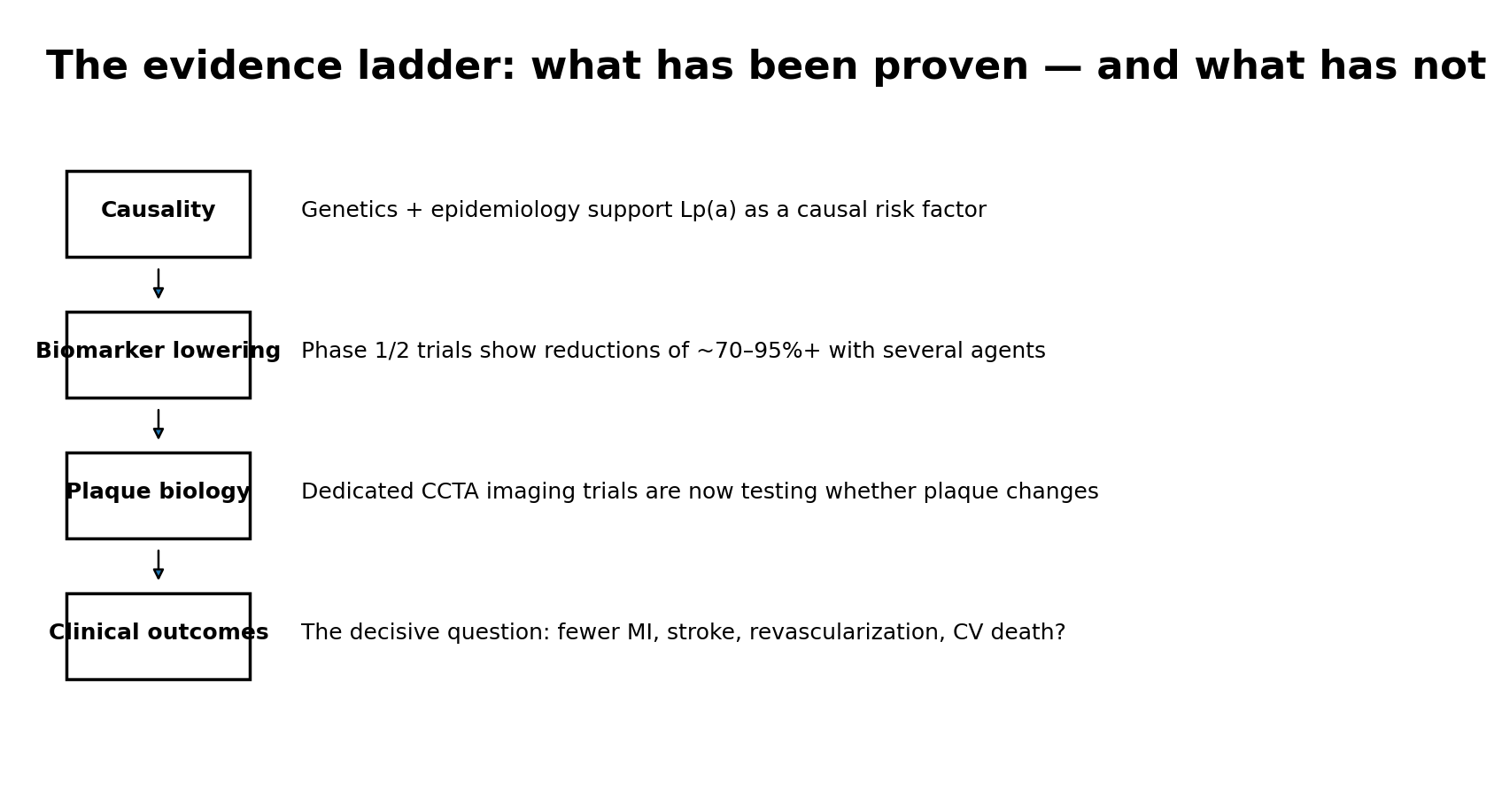
Figure 1. The decisive transition in Lp(a) medicine: from causal evidence and biomarker lowering to randomized cardiovascular outcomes.
1. Why targeted Lp(a) therapy is different
Lp(a) resembles an LDL particle, but it carries an additional apolipoprotein(a), or apo(a), covalently attached to apoB-100. The concentration is strongly influenced by the LPA gene, reaches a relatively stable level early in life, and is only modestly affected by lifestyle. This is why dietary quality, exercise, weight control and smoking cessation remain essential for total cardiovascular risk yet usually do not normalize markedly elevated Lp(a).
The new drug class therefore targets the biology of apo(a) itself. The most advanced injectable agents suppress hepatic production of apo(a) by interfering with LPA messenger RNA. Muvalaplin takes a different route: rather than silencing apo(a) synthesis, it blocks the physical interaction between apo(a) and apoB that is needed to assemble the Lp(a) particle.
This distinction matters. It explains why the new agents can produce reductions far larger than the roughly 20% to 30% lowering often seen with PCSK9 monoclonal antibodies. It also creates different questions about dosing interval, off-target biology, assay interpretation and long-term safety.
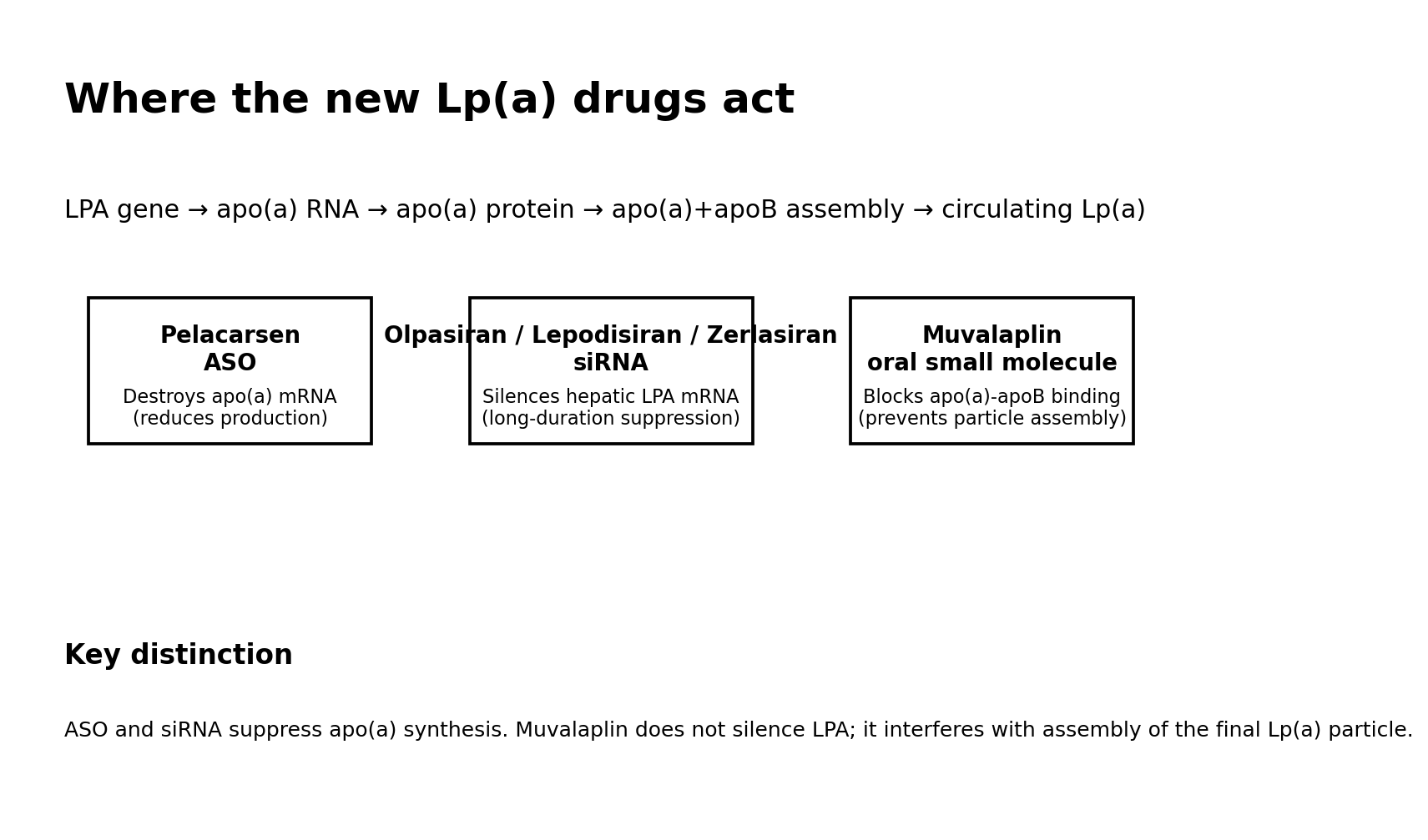
Figure 2. The leading Lp(a)-targeted therapies attack either apo(a) synthesis or final particle assembly.
2. The therapeutic landscape at a glance
| Agent | Modality | Route | Phase 1/2 Lp(a) effect | 2026 development status |
|---|---|---|---|---|
| Pelacarsen | Antisense oligonucleotide | Subcutaneous | Up to ~80% in dose-ranging Phase 2 | Lp(a)HORIZON Phase 3 follow-up completed; results awaited |
| Olpasiran | siRNA | Subcutaneous | >95% at higher doses in OCEAN(a)-DOSE | Multiple Phase 3 programs ongoing |
| Lepodisiran | Long-duration siRNA | Subcutaneous | ~94% time-averaged reduction at 400 mg in ALPACA | ACCLAIM-Lp(a) Phase 3 ongoing; ACCLAIM-CTA enrolling |
| Zerlasiran | siRNA | Subcutaneous | >80% time-averaged reduction in Phase 2 | Phase 3-ready program; no active pivotal outcomes trial identified in sponsor update |
| Muvalaplin | Small-molecule assembly inhibitor | Oral daily | Up to 85.8% intact assay; 70% apo(a)-assay | MOVE-Lp(a) Phase 3 outcomes trial enrolling |
Do not compare percentages across trials as if they were head-to-head data. Assays, baseline Lp(a), dose schedules, time windows and estimands differ. The apparent “winner” on a percentage-lowering table may not be the therapy that ultimately shows the best clinical benefit-risk profile.
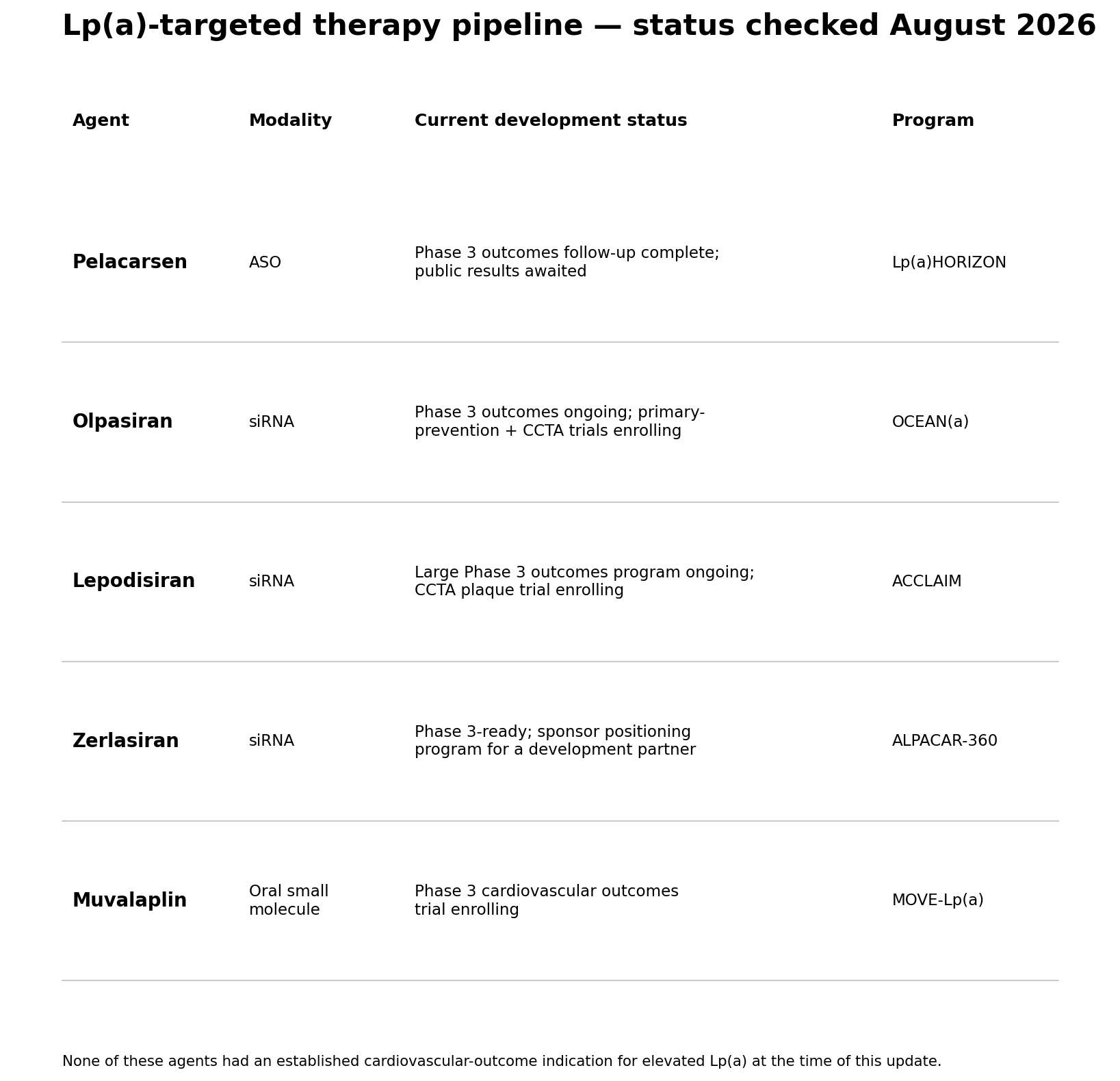
Figure 3. Development status checked against sponsor and trial-registry sources in August 2026.
3. Pelacarsen: the first major outcomes test of the Lp(a) hypothesis
How it works
Pelacarsen is a hepatocyte-directed antisense oligonucleotide. It binds apo(a) messenger RNA and promotes its degradation, reducing hepatic production of apo(a) and therefore the assembly of new Lp(a) particles.
What Phase 2 showed
In the pivotal dose-ranging trial in 286 patients with established cardiovascular disease and screening Lp(a) of at least 60 mg/dL (150 nmol/L), the predecessor formulation APO(a)-L-Rx produced dose-dependent mean reductions of 35%, 56%, 58%, 72% and 80% across increasingly intensive regimens, compared with 6% with placebo. Injection-site reactions were the most common adverse events, while major laboratory safety signals were not evident in that study.
Why Lp(a)HORIZON matters
Lp(a)HORIZON is the pivotal randomized Phase 3 cardiovascular outcomes trial of pelacarsen in patients with established cardiovascular disease and elevated Lp(a). ClinicalTrials.gov lists 8,323 participants and an estimated primary completion date of 30 June 2026. A large open-label extension began in 2026, providing post-trial access and longer-term safety follow-up. As of this article update, public cardiovascular-outcome results from the parent trial were not identified in the sources reviewed, so the study should be treated as completed/awaiting results rather than assumed positive.
Pelacarsen is not merely testing whether Lp(a) falls. It is testing whether selectively lowering Lp(a) on top of contemporary secondary-prevention therapy reduces major cardiovascular events. A positive result would provide the first direct randomized proof that Lp(a) is not only causal genetically but also therapeutically modifiable in a way that improves outcomes.
4. Olpasiran: very large reductions and a broad Phase 3 program
Olpasiran is a GalNAc-conjugated siRNA designed to silence LPA expression in hepatocytes. By loading the RNA-induced silencing complex, siRNA can repeatedly degrade target messenger RNA, which helps explain the long duration of effect after intermittent injections.
OCEAN(a)-DOSE
In OCEAN(a)-DOSE, 281 patients with established ASCVD and Lp(a) above 150 nmol/L were randomized to several olpasiran doses or placebo. At week 36, placebo-adjusted mean changes were approximately -70.5% with 10 mg every 12 weeks and about -97% to -101% with the higher-dose regimens. The greater-than-100% placebo-adjusted figures reflect the statistical comparison with a placebo group whose Lp(a) rose slightly; they do not mean a biologically negative Lp(a) concentration.
The Phase 3 program
OCEAN(a)-Outcomes: approximately 7,297 participants with established ASCVD and elevated Lp(a); Phase 3 outcomes trial ongoing, with estimated primary completion in 2028.
OCEAN(a)-PreEvent: approximately 11,000 participants at high risk for a first major cardiovascular event; Phase 3 primary-prevention outcomes trial started in 2025 and is recruiting.
OCEAN(a)-CCTA: a Phase 3 plaque-imaging study initiated to test whether olpasiran changes coronary plaque characteristics on CCTA in patients with ASCVD and elevated Lp(a).
This program is strategically important because it extends the question beyond recurrent events. If Lp(a) lowering ultimately prevents first events in carefully selected high-risk people, the treatment population could expand substantially beyond secondary prevention.
5. Lepodisiran: the long-duration siRNA approach
Lepodisiran is another siRNA targeting hepatic apo(a) synthesis, engineered for prolonged activity. The early development program is notable not simply for the depth of Lp(a) lowering but for its durability after a single injection.
From Phase 1 to ALPACA
In the first-in-human dose-ascending study, the highest 608-mg dose produced a maximal median reduction of 97%, with a 94% median reduction still present at day 337. The larger ALPACA Phase 2 trial then randomized 320 participants and used a time-averaged primary endpoint. From days 60 to 180, the placebo-adjusted time-averaged reductions were 40.8 percentage points at 16 mg, 75.2 at 96 mg and 93.9 at 400 mg. In participants receiving 400 mg at baseline and again at day 180, the placebo-adjusted time-averaged reduction from day 30 to 360 reached 94.8 percentage points.
Serious adverse events occurred but were not judged related to treatment or placebo by investigators. Injection-site reactions were generally mild and dose-dependent, reaching up to 12% in the highest-dose group.
ACCLAIM-Lp(a) and ACCLAIM-CTA
The Phase 3 ACCLAIM-Lp(a) outcomes trial is one of the largest in the field, with an estimated enrollment of 17,300 people with Lp(a) at least 175 nmol/L who either have established ASCVD or are at high risk for a first event. Estimated primary completion is March 2029. In 2026 Lilly also opened ACCLAIM-CTA, a smaller Phase 3 imaging study designed to test whether lepodisiran can reduce coronary plaque features on CCTA.
If infrequent dosing can maintain profound Lp(a) suppression for many months, adherence could become a major competitive advantage. But convenience does not replace the need for hard outcome evidence.
6. Zerlasiran: strong Phase 2 efficacy, but a different development position
Zerlasiran, formerly SLN360, is an siRNA targeting hepatic apo(a) synthesis. Its Phase 2 trial randomized 178 patients with stable ASCVD and Lp(a) at least 125 nmol/L to infrequent dosing regimens or placebo.
The placebo-adjusted time-averaged reductions through 36 weeks were 85.6% with 450 mg every 24 weeks, 82.8% with 300 mg every 16 weeks, and 81.3% with 300 mg every 24 weeks. Maximum median reductions approached 96% to 97%. Substantial suppression persisted through 60 weeks, although the effect gradually waned between doses.
The most common adverse events were mild injection-site reactions, and no serious drug-related safety signal emerged in the Phase 2 study. Importantly, sponsor communications in 2026 described zerlasiran as Phase 3-ready, with core readiness work completed and the program positioned for a potential third-party partner. That is different from saying a pivotal Phase 3 outcomes trial is already underway.
7. Muvalaplin: the first major oral Lp(a)-specific strategy
Muvalaplin is mechanistically and practically different from the RNA therapies. It is an oral small molecule that blocks the initial interaction between apo(a) and apoB, preventing assembly of the mature Lp(a) particle.
KRAKEN Phase 2
In the KRAKEN trial, 233 participants with Lp(a) at least 175 nmol/L and established cardiovascular disease, diabetes or familial hypercholesterolemia received daily muvalaplin 10, 60 or 240 mg, or placebo, for 12 weeks. Using an intact-Lp(a) assay, placebo-adjusted reductions were 47.6%, 81.7% and 85.8%, respectively. Using an apo(a)-based assay, the corresponding reductions were 40.4%, 70.0% and 68.9%.
The assay discrepancy is not a footnote: an assembly inhibitor can create partially assembled species that different assays detect differently. This is one reason future Lp(a) drug development will need careful assay standardization rather than simple cross-trial percentage comparisons.
KRAKEN also showed modest dose-dependent reductions in apoB, while hsCRP did not materially change. No major safety or tolerability concern emerged over the 12-week trial.
MOVE-Lp(a)
Lilly has advanced muvalaplin into the Phase 3 MOVE-Lp(a) cardiovascular outcomes trial. The study is enrolling about 10,450 adults with elevated Lp(a) who have ASCVD or are at high risk for cardiovascular events, with estimated completion in 2031. If successful, muvalaplin could become the first oral therapy specifically designed to target Lp(a), potentially changing both patient preference and health-system logistics.
8. Which drug looks "best"? That question is premature
| Question | Pelacarsen | Olpasiran | Lepodisiran | Zerlasiran | Muvalaplin |
|---|---|---|---|---|---|
| Mechanism | ASO | siRNA | siRNA | siRNA | Assembly inhibitor |
| Route | Injection | Injection | Injection | Injection | Oral |
| Depth of published Phase 1/2 lowering | Up to ~80% | >95% at higher doses | ~94% time-averaged at 400 mg | >80% time-averaged; ~96–97% max | Up to 85.8% intact assay |
| Main advantage | First major outcomes readout | Very deep lowering + broad program | Long durability | Infrequent dosing signal | Oral route |
| Key uncertainty | Outcome result | Outcome benefit + optimal interval | Outcome benefit + long-term dosing | Phase 3 execution | Assay interpretation + outcomes |
Several factors will ultimately matter more than the headline Lp(a) reduction: absolute event reduction, adverse effects, injection frequency or pill burden, long-term adherence, ease of manufacturing, cost, reimbursement criteria, renal/hepatic safety, interaction with existing lipid therapy, and which risk groups derive the greatest absolute benefit.
9. The outcomes gap: lowering Lp(a) is not yet the same as treating disease
The causal case for Lp(a) is unusually strong. Large observational cohorts and human genetics consistently link higher lifelong Lp(a) exposure to higher risk of coronary disease, ischemic stroke, peripheral arterial disease and calcific aortic stenosis. Mendelian-randomization analyses support causality rather than simple association.
But genetic exposure is lifelong, while drug trials intervene later in life. This means the relationship between a given percentage reduction in Lp(a) and a given reduction in cardiovascular events cannot be read directly from genetic studies. Estimates of the absolute amount of lowering required for clinically meaningful benefit have varied with assay and methodology. One influential analysis estimated that approximately 65.7 mg/dL of genetically predicted Lp(a) lowering might yield a coronary risk effect comparable with lowering LDL-C by 38.67 mg/dL, while an earlier analysis estimated closer to 100 mg/dL. These are modeling estimates, not treatment targets.
A 90% fall in Lp(a) is a spectacular biomarker result. It is not yet proof of a 90%, 50% or even 20% fall in cardiovascular events. Only randomized outcome trials can tell us the clinical effect size.
10. What should patients do while waiting for dedicated Lp(a) outcome data?
Until a dedicated Lp(a)-lowering therapy is shown to improve outcomes and receives an indication, elevated Lp(a) should be treated primarily as a risk amplifier that justifies more rigorous control of modifiable risk. Major consensus statements emphasize aggressive management of LDL-C/apoB, blood pressure, smoking, diabetes, adiposity, physical activity and other conventional risk factors.
| Intervention | Direct effect on Lp(a) | Why it may still matter |
|---|---|---|
| Lifestyle | Usually small | Reduces global risk through blood pressure, insulin sensitivity, weight, fitness and smoking avoidance |
| Statins | May slightly increase Lp(a) in some patients | Strong event reduction through LDL/apoB lowering; benefit outweighs small Lp(a) change |
| Ezetimibe | Little/no consistent effect | Useful LDL-C/apoB reduction |
| PCSK9 monoclonal antibodies | Modest ~20–30% average reduction | Major LDL-C lowering and proven cardiovascular event reduction |
| Inclisiran | Modest Lp(a) reduction in trials | Powerful LDL-C lowering; cardiovascular outcome program for LDL indication continues |
| Niacin | Can lower Lp(a) modestly | Not recommended specifically for Lp(a) because outcome trials did not show net cardiovascular benefit |
| Lipoprotein apheresis | Large acute reduction | Used selectively in certain countries for progressive disease/high Lp(a); invasive and resource intensive |
11. Safety: what we know and what longer follow-up must answer
Across the published Phase 1 and Phase 2 programs, the most consistent treatment-related issue for the injectable RNA therapies has been mild injection-site reactions. No dominant hepatotoxic, renal, thrombocytopenic or inflammatory safety signal has emerged across the leading programs at the doses studied, but the sample sizes and follow-up durations remain much smaller than will be available after Phase 3.
For muvalaplin, the short-term oral Phase 2 program did not identify major tolerability concerns, but long-term daily exposure creates a different safety question from intermittent RNA therapy. Phase 3 outcome trials are therefore doing double duty: they are testing cardiovascular efficacy and generating the long-duration safety database required for broad preventive use.
12. Who is most likely to receive the first approved Lp(a) drugs?
If the first outcome trial is positive, initial regulatory indications are likely to track the population in which benefit was proven rather than everyone with an elevated laboratory value. In practical terms, the earliest candidates may be people with established ASCVD, markedly elevated Lp(a), and residual risk despite excellent LDL-C/apoB management.
People with prior myocardial infarction, ischemic stroke, peripheral arterial disease or coronary revascularization plus high Lp(a).
Patients with recurrent events despite intensive LDL-C/apoB lowering.
Potentially, in later indications, selected high-risk primary-prevention patients with very high Lp(a), strong family history, familial hypercholesterolemia or imaging evidence of atherosclerosis.
Patients with calcific aortic stenosis may become a separate therapeutic population if valve-specific trials demonstrate slower disease progression.
The exact threshold, required background therapy, treatment age and payer criteria will depend on trial results and regulatory labeling. A laboratory threshold alone should not be assumed to predict future eligibility.
13. Frequently asked questions
Is there an approved drug that specifically treats high Lp(a) in August 2026?
The dedicated agents discussed here remain investigational in the sources reviewed for this update. Several are in large Phase 3 programs, but approval requires positive efficacy and safety data plus regulatory review.
Which drug lowers Lp(a) the most?
Higher-dose olpasiran, lepodisiran and zerlasiran regimens have all produced very large reductions in published early- and mid-stage trials. Cross-trial ranking is unreliable because the studies use different assays, dosing schedules and endpoints.
Will lowering Lp(a) reverse plaque?
That is not yet established. New CCTA trials with olpasiran and lepodisiran are specifically testing plaque effects, but cardiovascular outcomes remain the more clinically important endpoint.
Could a person take an Lp(a) drug instead of a statin or PCSK9 inhibitor?
That would be the wrong conceptual model. Lp(a) is one risk pathway. LDL/apoB remains causal and treatable. Future Lp(a) therapy is likely to be added to, not automatically substituted for, evidence-based LDL/apoB management.
Why does muvalaplin show different percentage reductions depending on the assay?
Because it blocks particle assembly. An intact-particle assay and an apo(a)-based assay can count different molecular species, so the measured reduction depends partly on what the assay recognizes.
Should someone delay LDL lowering until these new drugs arrive?
No. The new agents are designed to address residual Lp(a)-mediated risk. Established risk factors should be treated now according to current guidelines and the individual clinical context.
14. Bottom line
The Lp(a) field has moved from “Can we lower it?” to “Does lowering it improve outcomes?” Pelacarsen, olpasiran, lepodisiran, zerlasiran and muvalaplin have demonstrated that very large reductions are technically possible through several different biological strategies. The next step is much more important: proving fewer heart attacks, strokes and other clinically meaningful events, with acceptable long-term safety and practical access.
Pelacarsen is closest to answering that question because its pivotal outcomes trial has completed estimated follow-up. Olpasiran and lepodisiran are building broad Phase 3 programs that span secondary prevention, primary prevention and plaque imaging. Muvalaplin introduces the possibility of a daily oral therapy. Zerlasiran has compelling Phase 2 efficacy but remains at a different development stage. The coming years should determine whether elevated Lp(a) moves from a largely untreatable inherited risk factor to a routinely modifiable target of preventive cardiology.
References
1. Kronenberg F, Mora S, Stroes ESG, et al. Lipoprotein(a) in atherosclerotic cardiovascular disease and aortic stenosis: a European Atherosclerosis Society consensus statement. Eur Heart J. 2022;43:3925-3946.
2. Wilson DP, Jacobson TA, Jones PH, et al. A focused update to the 2019 NLA scientific statement on use of lipoprotein(a) in clinical practice. J Clin Lipidol. 2024;18:e308-e319.
3. Tsimikas S, Karwatowska-Prokopczuk E, Gouni-Berthold I, et al. Lipoprotein(a) Reduction in Persons with Cardiovascular Disease. N Engl J Med. 2020;382:244-255. doi:10.1056/NEJMoa1905239.
4. O’Donoghue ML, Rosenson RS, Gencer B, et al. Small Interfering RNA to Reduce Lipoprotein(a) in Cardiovascular Disease. N Engl J Med. 2022;387:1855-1864. doi:10.1056/NEJMoa2211023.
5. Nissen SE, Wolski K, Balog C, et al. Lepodisiran, an Extended-Duration Short Interfering RNA Targeting Lipoprotein(a): A Randomized Dose-Ascending Clinical Trial. JAMA. 2023;330:2075-2083.
6. Nissen SE, Ni W, Shen X, et al. Lepodisiran — A Long-Duration Small Interfering RNA Targeting Lipoprotein(a). N Engl J Med. 2025;392:1673-1683. doi:10.1056/NEJMoa2415818.
7. Nissen SE, Wang X, Nicholls SJ, et al. Zerlasiran—A Small-Interfering RNA Targeting Lipoprotein(a): A Phase 2 Randomized Clinical Trial. JAMA. 2024;332:1992-2002. doi:10.1001/jama.2024.21957.
8. Nicholls SJ, et al. Oral Muvalaplin for Lowering of Lipoprotein(a): A Randomized Clinical Trial. JAMA. 2025;333:222-231. doi:10.1001/jama.2024.24017.
9. ClinicalTrials.gov. NCT04023552. Lp(a)HORIZON: Assessing the Impact of Lipoprotein(a) Lowering With Pelacarsen on Major Cardiovascular Events. Updated 2026.
10. Novartis. NCT07517263. Open-label extension following Lp(a)HORIZON to evaluate long-term safety and tolerability of pelacarsen. Updated July 2026.
11. ClinicalTrials.gov. NCT05581303. OCEAN(a)-Outcomes: Olpasiran and major cardiovascular events in ASCVD. Updated 2026.
12. ClinicalTrials.gov. NCT07136012. OCEAN(a)-PreEvent: Olpasiran to prevent first major cardiovascular events. Updated 2026.
13. Amgen. First-quarter 2026 financial results: OCEAN(a)-Outcomes, OCEAN(a)-PreEvent and OCEAN(a)-CCTA development status. 2026.
14. ClinicalTrials.gov. NCT06292013. ACCLAIM-Lp(a): Lepodisiran and major adverse cardiovascular events. Updated 2026.
15. Eli Lilly. NCT07613294. ACCLAIM-CTA: Lepodisiran and coronary plaque imaging. Updated 2026.
16. Silence Therapeutics. Full-year 2025 results and zerlasiran Phase 3 readiness update. 2026.
17. Eli Lilly. NCT07157774. MOVE-Lp(a): Muvalaplin and major cardiovascular events. Updated 2026.
18. Burgess S, Ference BA, Staley JR, et al. Association of LPA Variants With Risk of Coronary Disease and the Implications for Lipoprotein(a)-Lowering Therapies. JAMA Cardiol. 2018;3:619-627.
19. Lamina C, Kronenberg F. Estimation of the Required Lipoprotein(a)-Lowering Therapeutic Effect Size for Reduction in Coronary Heart Disease Outcomes: A Mendelian Randomization Analysis. JAMA Cardiol. 2019;4:575-579.
20. O’Donoghue ML, Fazio S, Giugliano RP, et al. Lipoprotein(a), PCSK9 Inhibition, and Cardiovascular Risk. Circulation. 2019;139:1483-1492.
21. Bittner VA, Szarek M, Aylward PE, et al. Effect of Alirocumab on Lipoprotein(a) and Cardiovascular Risk After Acute Coronary Syndrome. J Am Coll Cardiol. 2020;75:133-144.
22. Ray KK, Wright RS, Kallend D, et al. Two Phase 3 Trials of Inclisiran in Patients with Elevated LDL Cholesterol. N Engl J Med. 2020;382:1507-1519.
23. Landray MJ, Haynes R, Hopewell JC, et al. Effects of Extended-Release Niacin with Laropiprant in High-Risk Patients. N Engl J Med. 2014;371:203-212.
24. Boden WE, Probstfield JL, Anderson T, et al. Niacin in Patients with Low HDL Cholesterol Levels Receiving Intensive Statin Therapy. N Engl J Med. 2011;365:2255-2267.
25. Jaeger BR, Richter Y, Nagel D, et al. Longitudinal cohort study on lipoprotein apheresis and cardiovascular events in patients with high Lp(a). Eur J Clin Invest. 2009;39:620-628.
26. Kamstrup PR, Tybjærg-Hansen A, Nordestgaard BG. Elevated Lipoprotein(a) and Risk of Aortic Valve Stenosis in the General Population. J Am Coll Cardiol. 2014;63:470-477.