Executive Summary
Lipoprotein apheresis circulates blood or plasma through a device that selectively removes ApoB-containing lipoproteins, then returns the treated blood to the patient.
The AHA’s 2024 scientific statement describes lipoprotein apheresis as an FDA-approved adjunct for refractory LDL-C and Lp(a) in qualifying FH patients and notes that only a small fraction of eligible patients receive it.
The 2026 ACC/AHA dyslipidemia guideline lists U.S. device criteria that include HoFH with LDL-C >500 mg/dL, HeFH with LDL-C ≥300 mg/dL, and defined HeFH/ASCVD categories at lower LDL thresholds. For elevated Lp(a), the guideline notes FDA-approved use in HeFH with documented CAD or PAD and Lp(a) ≥60 mg/dL (130 nmol/L) under device criteria.
Apheresis can acutely lower LDL-C by about 75-85%. Lp(a) is also substantially reduced during each treatment, but both rebound between sessions.
Treatment is therefore repeated, commonly weekly or every two weeks depending on the disorder, device protocol and lipid rebound.
Observational registries report large reductions in cardiovascular-event rates after apheresis initiation, but randomized outcomes trials are lacking. The magnitude of benefit is therefore less certain than the acute lipid effect.
Modern medicines—PCSK9 inhibitors, evinacumab, lomitapide and emerging targeted therapies—can reduce or delay apheresis need in some patients, but apheresis remains indispensable for selected refractory disease.
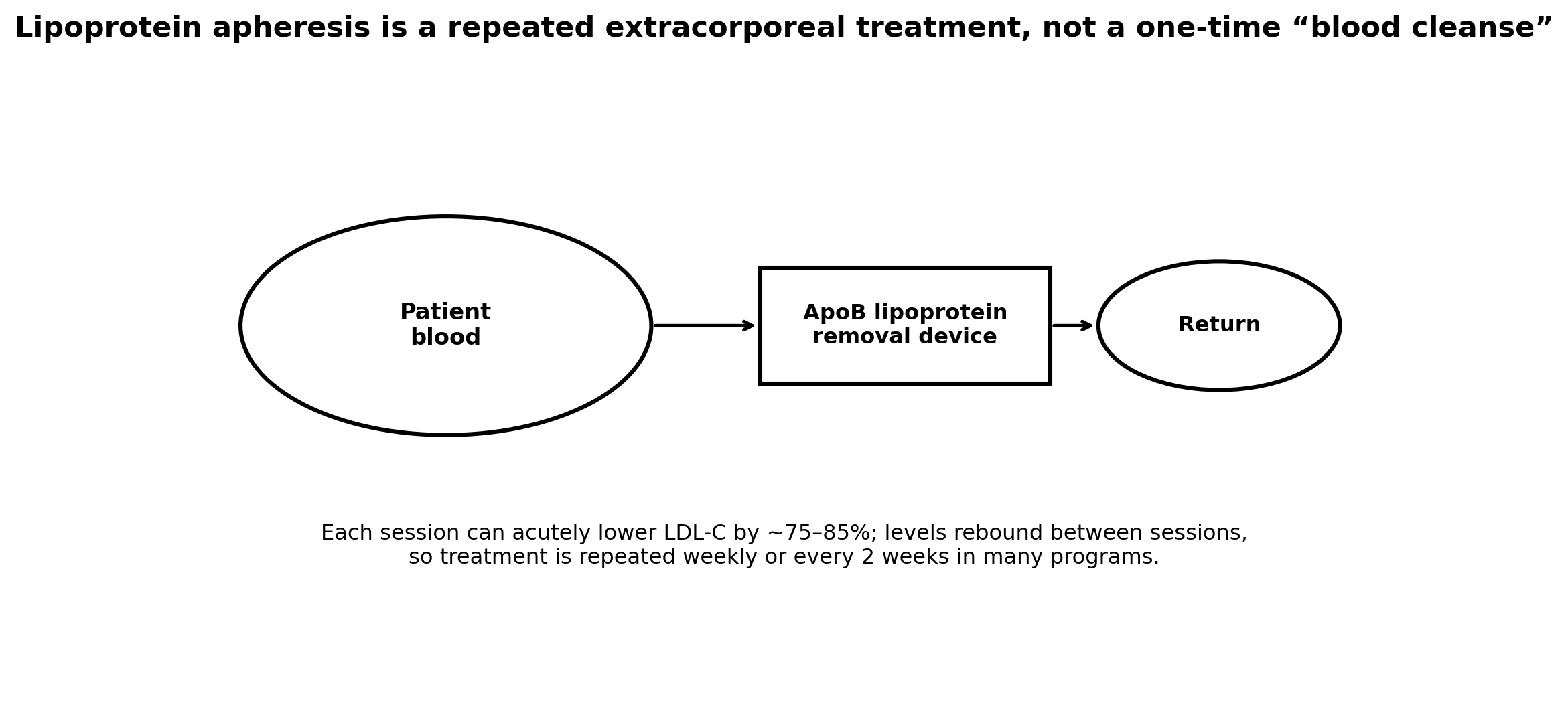
Figure 1. Lipoprotein apheresis repeatedly removes circulating ApoB-containing lipoproteins; it is not a one-time detox procedure.
1. What actually happens during treatment
Blood is withdrawn through vascular access, passed through a separation/adsorption system and returned. Several technologies exist, but the common objective is removal of atherogenic particles.
Sessions typically take hours and require reliable venous access, anticoagulation and specialized staff.
2. Why the effect is dramatic but temporary
Apheresis physically removes particles already in circulation, so the immediate LDL-C drop can be striking.
The liver continues producing lipoproteins after treatment; therefore the clinically relevant exposure is the time-averaged LDL-C/Lp(a) between sessions, not the post-procedure number alone.
3. The U.S. Lp(a) indication is narrow
Apheresis is sometimes described online as a general treatment for isolated high Lp(a). That is misleading in the United States.
The 2026 guideline describes FDA device use for elevated Lp(a) in a specific FH + established CAD/PAD context rather than routine use for an otherwise healthy person with genetically high Lp(a).
4. Different countries use different rules
Germany and some other European systems have historically used apheresis more broadly for progressive ASCVD with very high Lp(a) despite optimal control of other risk factors.
Eligibility is jurisdiction-specific, so U.S. thresholds should not be presented as universal.
| Question | Practical answer |
|---|---|
| How much LDL-C falls per session? | Often ~75-85% acutely. |
| Is the effect permanent? | No. LDL-C and Lp(a) rebound; repeat treatment is required. |
| Is it routine for high Lp(a)? | No. U.S. FDA/device criteria are narrow and usually require FH plus documented vascular disease. |
| Are outcomes randomized? | No large definitive randomized MACE trial; evidence is mainly observational plus strong biochemical rationale. |
| Can drugs replace it? | Sometimes they reduce frequency or need, but not in every severe HoFH/refractory patient. |
5. FAQ
Is apheresis the same as plasmapheresis?
No. Lipoprotein apheresis uses specialized systems designed to remove atherogenic lipoproteins.
Does it remove plaque from arteries?
No. It removes circulating lipoproteins; any plaque stabilization/regression is an indirect consequence of lower exposure over time.
Does it lower Lp(a)?
Yes, substantially during each session, but levels rebound between treatments.
Why not use it for everyone with high LDL?
It is invasive, time-consuming and costly, while most patients can reach targets with medications.
References
1. Gianos E, Duell PB, Toth PP, et al. Lipoprotein Apheresis: Utility, Outcomes, and Implementation in Clinical Practice: A Scientific Statement From the American Heart Association. Arterioscler Thromb Vasc Biol. 2024.
2. Blumenthal RS, Morris PB, Gaudino M, et al. 2026 ACC/AHA Multisociety Guideline on the Management of Dyslipidemia. Table 16 and Lp(a) supportive text.
3. American Heart Association. Lp(a): A Toolkit for Health Care Professionals. 2025.
4. Current U.S. FDA-approved lipoprotein-apheresis device labeling; eligibility depends on device indication and jurisdiction.