Executive Summary
Inclisiran is a small interfering RNA (siRNA) therapy that directs hepatocytes to degrade PCSK9 messenger RNA, reducing production of the PCSK9 protein and increasing LDL-receptor recycling.
ORION-10 and ORION-11 showed roughly 50% placebo-corrected LDL-C reduction with dosing on day 1, day 90 and then every six months.
Injection-site reactions are the most consistent adverse effect and are usually mild. Systemic adverse-event rates were broadly similar to placebo in pivotal lipid trials.
The practical advantage is adherence: treatment is administered by a healthcare professional only twice yearly during maintenance.
The unanswered question is outcomes. ORION-4 enrolled 16,124 people with ASCVD and remained active but not recruiting in 2026, with estimated primary completion in October 2026 and no results posted as of the May 2026 registry update.
VICTORION-2P is another large Phase 3 outcomes trial in established ASCVD, also active but not recruiting in June 2026 with no results posted.
Therefore, inclisiran should be described as an LDL-lowering therapy with expected risk reduction based on LDL causality, not as a therapy with proven dedicated MACE reduction yet.
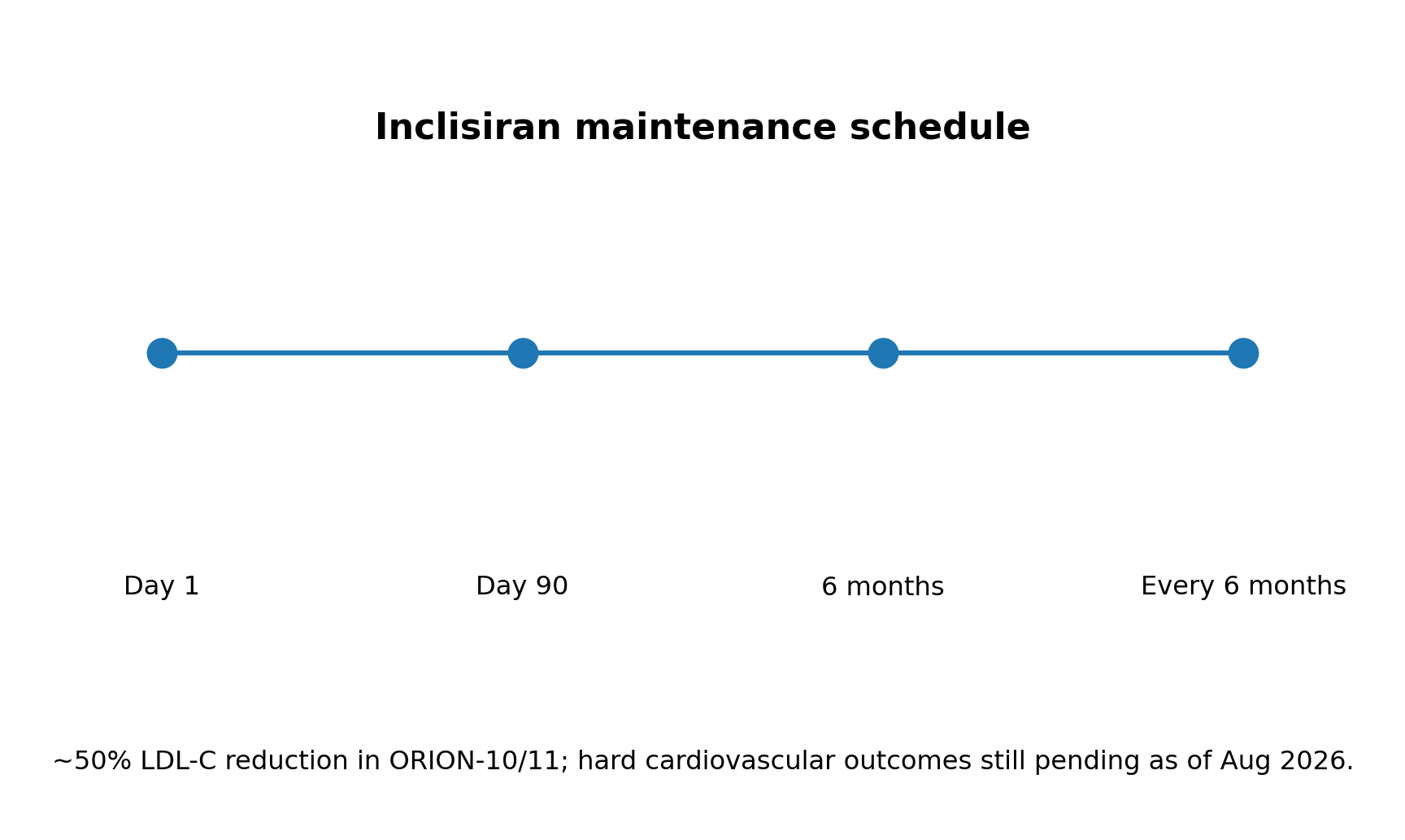
Figure 1. Inclisiran uses an infrequent administration schedule, one of its main practical advantages.
1. How siRNA differs from a monoclonal antibody
PCSK9 monoclonal antibodies bind circulating PCSK9 protein. Inclisiran acts upstream by reducing hepatic production of PCSK9 through RNA interference.
Both approaches ultimately increase LDL-receptor recycling.
2. What ORION-10 and ORION-11 proved
The pivotal trials demonstrated durable LDL reduction around 50% with a twice-yearly maintenance schedule.
They were lipid-efficacy trials, not definitive event trials.
3. Outcomes trials in 2026
ORION-4 is an Oxford/TIMI outcomes trial in established ASCVD. ClinicalTrials.gov listed it active, not recruiting, with no results posted as of May 2026.
VICTORION-2P is a separate Phase 3 MACE trial sponsored by Novartis and was also active, not recruiting as of June 2026.
4. Where inclisiran fits clinically
It can be useful when a large LDL reduction is needed and adherence to frequent self-injection is challenging.
For patients in whom proven outcomes evidence for the specific PCSK9 modality is the priority, evolocumab and alirocumab currently have the stronger direct event-trial record.
| Therapy | Mechanism | Dosing | Dedicated outcomes evidence by Aug 2026 |
|---|---|---|---|
| Evolocumab / alirocumab | PCSK9 monoclonal antibody | Every 2-4 weeks | Yes |
| Inclisiran | PCSK9 siRNA | Day 1, day 90, then q6 months | No final ORION-4/VICTORION-2P result yet |
| Enlicitide | Oral PCSK9 inhibitor | Daily oral | LDL efficacy strong; dedicated outcomes pending |
5. FAQ
Does inclisiran lower LDL more than statins?
It can lower LDL by about 50% on top of background therapy, but potency depends on the full regimen.
Does it lower Lp(a)?
It usually lowers Lp(a) modestly, but it is not a dedicated Lp(a) therapy.
Is it a vaccine?
No. It is an siRNA drug; its effect is reversible and requires repeat dosing.
Has it been proven to prevent heart attacks?
Dedicated outcome trials are still pending as of August 2026.
References
1. Ray KK, Wright RS, Kallend D, et al. Two Phase 3 Trials of Inclisiran in Patients with Elevated LDL Cholesterol. N Engl J Med. 2020;382:1507-1519.
2. ClinicalTrials.gov NCT03705234. ORION-4. Updated May 1, 2026; active, not recruiting; no results posted.
3. ClinicalTrials.gov NCT05030428. VICTORION-2P. Updated June 11, 2026; active, not recruiting.
4. Blumenthal RS, Morris PB, Gaudino M, et al. 2026 ACC/AHA Dyslipidemia Guideline.