Executive Summary
Homocysteine is a sulfur-containing amino acid formed during methionine metabolism. Folate, vitamin B12 and vitamin B6 participate in pathways that metabolize it.
Levels rise with folate or B12 deficiency, reduced kidney function, hypothyroidism, some medications, smoking, genetics and age. Very high levels can occur in rare inborn errors such as homocystinuria.
Observational studies consistently associate higher homocysteine with vascular risk. The crucial question is whether the association is causal and modifiable.
HOPE-2 lowered homocysteine with folic acid, B6 and B12 but did not reduce the primary composite of cardiovascular death, MI and stroke. Large meta-analyses similarly found no meaningful reduction in major vascular or coronary events despite about 25% homocysteine reduction.
Some analyses suggest a modest stroke benefit in certain settings, particularly where folate fortification is absent. That signal is not equivalent to proving coronary plaque regression or routine benefit in already folate-replete populations.
MTHFR common variants are frequently overinterpreted online. When homocysteine is normal, identifying a common MTHFR polymorphism rarely creates a cardiovascular treatment indication by itself.
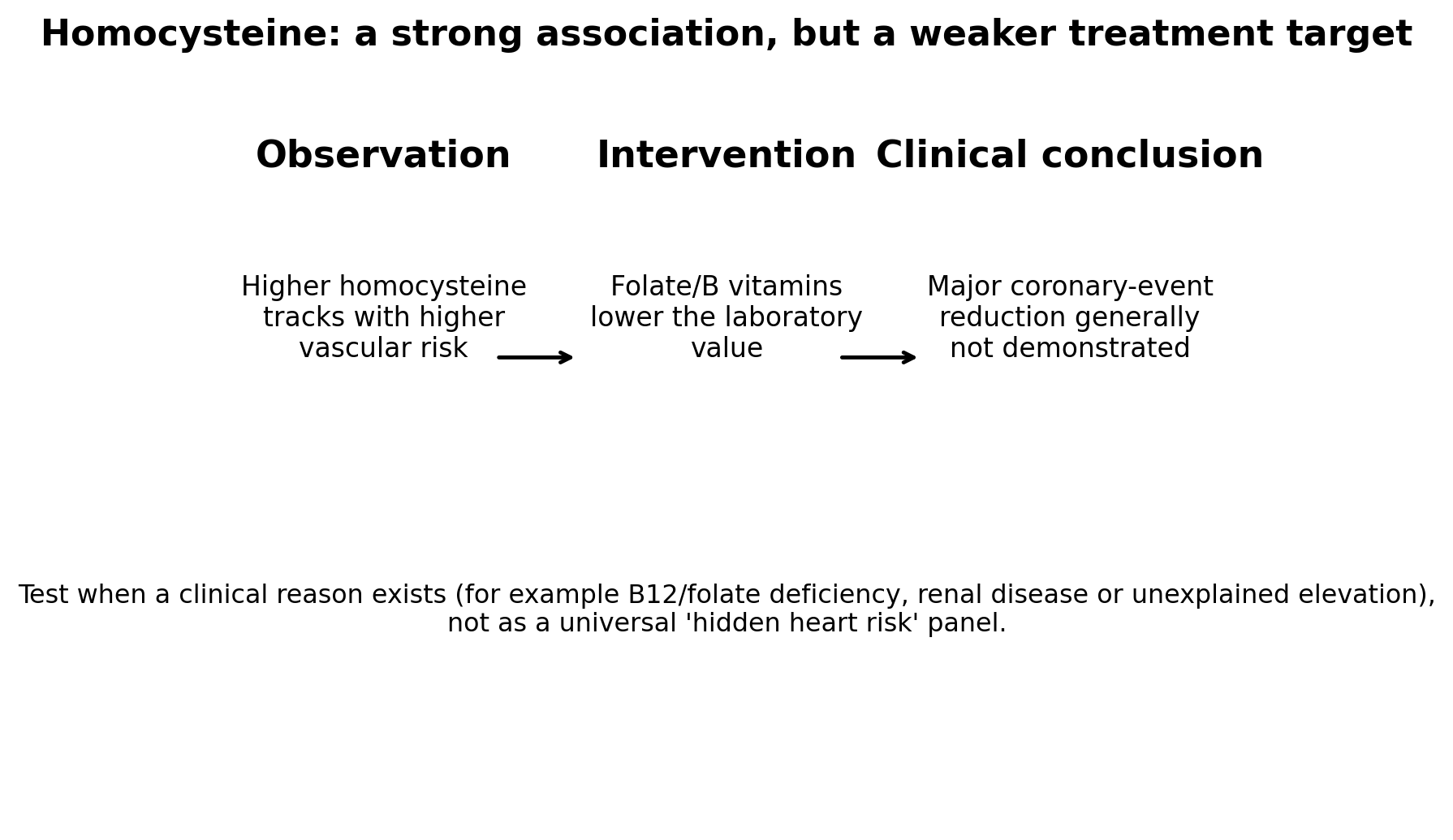
Figure 1. Homocysteine illustrates the difference between an epidemiologic risk marker and a proven treatment target.
1. What raises homocysteine?
Common reversible causes include folate deficiency, vitamin B12 deficiency, renal impairment, hypothyroidism, smoking and medications that alter folate/B-vitamin metabolism.
A clearly elevated value should therefore trigger context-driven evaluation rather than immediate high-dose methylated supplements.
2. Why the observational story was compelling
Homocysteine can impair endothelial function, increase oxidative stress and influence thrombosis in experimental systems. Epidemiologically, higher levels predict vascular events.
These findings generated the straightforward hypothesis that lowering homocysteine should lower events.
3. What randomized trials showed
HOPE-2 enrolled more than 5,500 people with vascular disease or diabetes. B vitamins lowered homocysteine but did not reduce the primary composite cardiovascular endpoint.
A meta-analysis of eight trials and more than 37,000 people found about 25% homocysteine reduction with folic acid but no significant reduction in major vascular events, major coronary events or mortality.
4. Stroke is more nuanced
Some trials and meta-analyses suggest a small reduction in stroke, with effect modification by background folate status, renal function and vitamin formulation.
This is a much narrower claim than saying B vitamins prevent atherosclerosis broadly.
5. MTHFR: what matters clinically
Common C677T or A1298C variants can influence folate metabolism but are not, by themselves, a diagnosis of thrombophilia or coronary disease.
Clinical evaluation should focus on the actual homocysteine value, nutritional status, kidney function and relevant symptoms.
| Scenario | Practical interpretation |
|---|---|
| Normal homocysteine, incidental MTHFR variant | Usually no cardiovascular treatment implication by itself. |
| Elevated homocysteine + low B12/folate | Correct deficiency and identify cause. |
| Elevated homocysteine + CKD | Often reflects impaired renal metabolism; manage CKD/global CVD risk. |
| Mild isolated elevation | Repeat/confirm and investigate; routine high-dose B vitamins have not proven coronary-event benefit. |
| Very high level / early thrombosis | Consider specialist assessment for rare metabolic causes. |
6. FAQ
What is a normal homocysteine level?
Laboratory reference ranges vary. Interpretation should use the local assay and clinical context rather than an internet 'optimal' cutoff.
Should everyone test homocysteine?
No major cardiovascular guideline treats it as a universal screening test.
Does methylfolate work better than folic acid for heart prevention?
There is no convincing outcomes evidence that routine methylfolate supplementation prevents coronary events.
Can B12 deficiency raise homocysteine?
Yes. That is a clinically important and treatable reason to measure B12 when homocysteine is elevated.
References
1. HOPE-2 Investigators. Homocysteine Lowering with Folic Acid and B Vitamins in Vascular Disease. N Engl J Med. 2006;354:1567-1577.
2. Clarke R, Halsey J, Lewington S, et al. Effects of lowering homocysteine levels with B vitamins on cardiovascular disease, cancer, and cause-specific mortality: meta-analysis of 8 randomized trials involving 37,485 individuals. Arch Intern Med. 2010.
3. Albert CM, Cook NR, Gaziano JM, et al. Effect of folic acid and B vitamins on risk of cardiovascular events among women at high risk. JAMA. 2008.
4. Major randomized and meta-analytic literature on B vitamins and stroke prevention.