Executive Summary
HDL participates in reverse cholesterol transport, lipid exchange, endothelial signaling and anti-inflammatory biology. But the cholesterol concentration inside HDL particles—HDL-C—is only a crude proxy for these functions.
Low HDL-C is strongly associated with cardiovascular risk, especially when it accompanies high triglycerides, insulin resistance, obesity or smoking.
AIM-HIGH added niacin to intensive statin therapy in patients with low HDL and high triglycerides and found no reduction in cardiovascular events despite higher HDL-C.
HPS2-THRIVE enrolled more than 25,000 high-risk patients and likewise found no significant reduction in major vascular events with niacin/laropiprant, while serious adverse events increased.
Early CETP inhibitors demonstrated that dramatic HDL-C increases do not guarantee benefit. Newer CETP programs are being developed largely for ApoB/LDL lowering rather than as pure HDL-raising therapy.
Very high HDL-C is not always protective. Observational studies show U-shaped relationships at extreme levels, which may reflect genetics, alcohol, inflammation or altered HDL function.
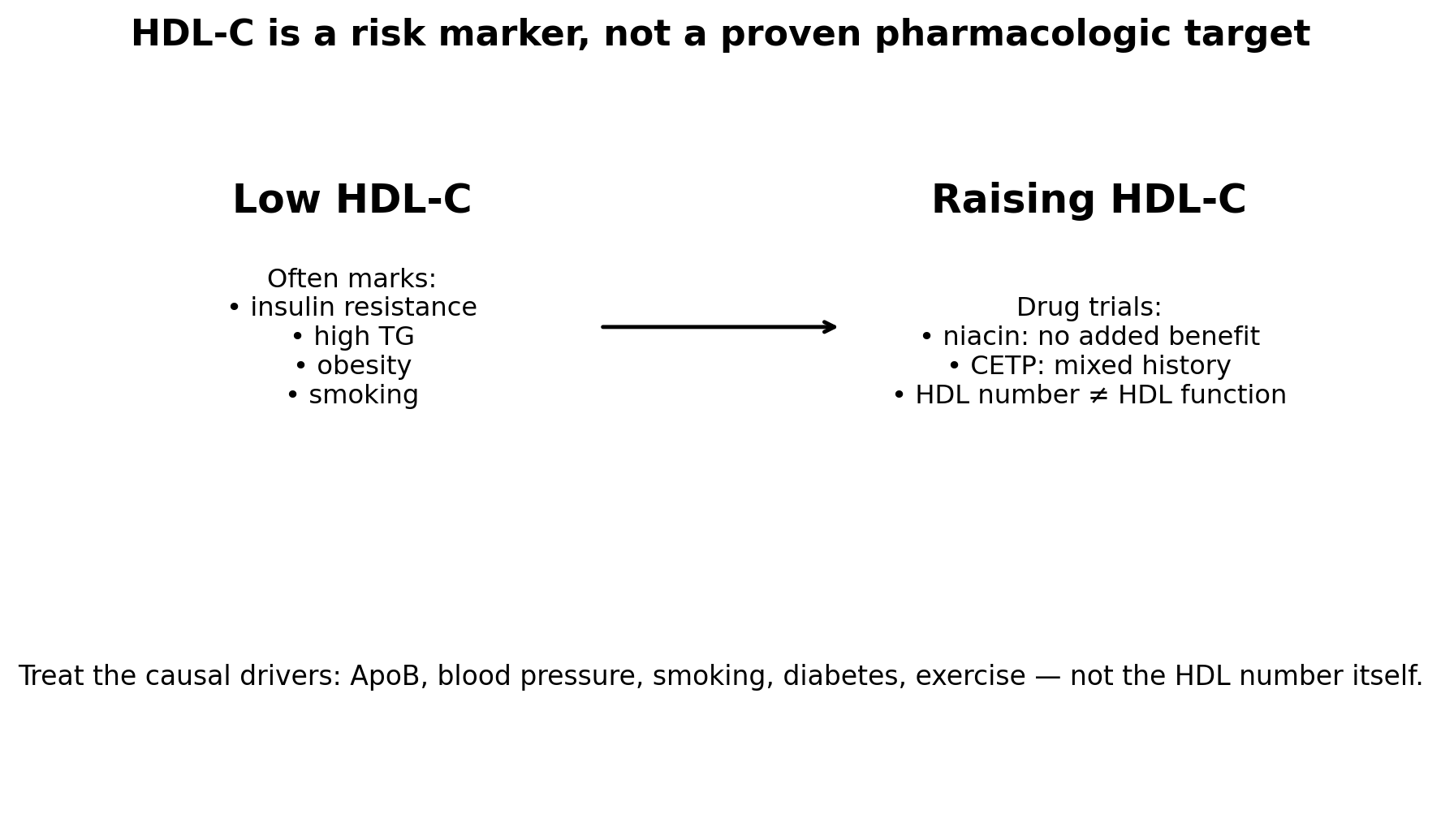
Figure 1. HDL-C is strongly associated with risk, but pharmacologically raising the number has not proved to be an effective prevention strategy.
1. What HDL actually does
HDL particles shuttle cholesterol and participate in reverse cholesterol transport, but they also carry proteins and lipids involved in inflammation, oxidation and endothelial biology.
Two people with the same HDL-C can have HDL particles with different composition and function.
2. Why niacin failed as an HDL strategy
Niacin can raise HDL-C and lower triglycerides, LDL-C and Lp(a). Yet in the statin era, AIM-HIGH and HPS2-THRIVE did not show the expected event benefit when niacin was added to well-treated high-risk patients.
HPS2-THRIVE also showed more diabetes complications, infection, bleeding and other adverse events.
3. What to do with low HDL-C
Do not treat the HDL number directly. Treat the drivers: smoking, inactivity, obesity, insulin resistance, high triglycerides and excess ApoB particles.
Exercise, weight loss and smoking cessation can raise HDL modestly, but their cardiovascular value is much larger than the HDL change itself.
4. Very high HDL
Extremely high HDL-C should not be assumed to provide immunity from atherosclerosis. Overall risk assessment still depends on ApoB/LDL, blood pressure, diabetes, smoking, Lp(a), CAC and other factors.
| Approach | Effect on HDL-C | Cardiovascular lesson |
|---|---|---|
| Exercise / weight loss | Often modest increase | Beneficial for many reasons beyond HDL |
| Niacin | Large increase | No added event benefit in modern statin trials |
| CETP inhibition | Often very large increase | HDL rise itself not sufficient; drug-specific ApoB effects matter |
| Smoking cessation | May increase HDL modestly | Large risk reduction independent of HDL |
5. FAQ
Is HDL 35 dangerous by itself?
It is a risk marker, not a diagnosis. The accompanying ApoB, triglycerides, diabetes and lifestyle context matter more.
Should I take niacin to raise HDL?
Not routinely for ASCVD prevention. Modern outcome trials did not show added benefit and adverse effects are significant.
Can HDL be too high?
Extremely high HDL-C is not reliably protective and can occur in several genetic or acquired states.
What should I target instead?
ApoB/LDL-C, non-HDL-C, blood pressure, smoking, diabetes, exercise and overall risk.
References
1. AIM-HIGH Investigators. Niacin in Patients with Low HDL Cholesterol Levels Receiving Intensive Statin Therapy. N Engl J Med. 2011.
2. HPS2-THRIVE Collaborative Group. Effects of Extended-Release Niacin with Laropiprant in High-Risk Patients. N Engl J Med. 2014.
3. American College of Cardiology. HPS2-THRIVE trial summary.
4. American College of Cardiology. HDL and CETP Inhibition review.