Executive Summary
Fibrates activate PPAR-alpha and can substantially reduce triglycerides, with variable effects on HDL-C, LDL-C and ApoB.
PROMINENT randomized 10,497 people with type 2 diabetes, triglycerides 200-499 mg/dL, low HDL-C and well-controlled LDL-C to pemafibrate or placebo.
Pemafibrate lowered triglycerides, VLDL cholesterol, remnant cholesterol and apoC-III by roughly 26-28%, yet the primary cardiovascular endpoint was unchanged (HR 1.03).
ApoB increased modestly by about 4.8%, a key mechanistic clue: cholesterol was redistributed among particles, but the number of atherogenic particles was not reduced.
Older fibrate trials are mixed. ACCORD-Lipid found no overall benefit from adding fenofibrate to simvastatin in type 2 diabetes; a high-TG/low-HDL subgroup signal was hypothesis-generating rather than definitive. FIELD also failed its primary coronary endpoint despite some secondary benefits.
The 2026 ACC/AHA dyslipidemia guideline keeps statins as the foundation for ASCVD prevention in persistent hypertriglyceridemia. In severe TG ≥500-999 mg/dL, and especially ≥1000 mg/dL, fibric-acid derivatives or prescription omega-3s are reasonable to lower TG and reduce pancreatitis risk.
This is the clean modern distinction: fibrates are dependable triglyceride-lowering drugs; they are not broadly proven residual-ASCVD drugs on top of well-controlled statin therapy.
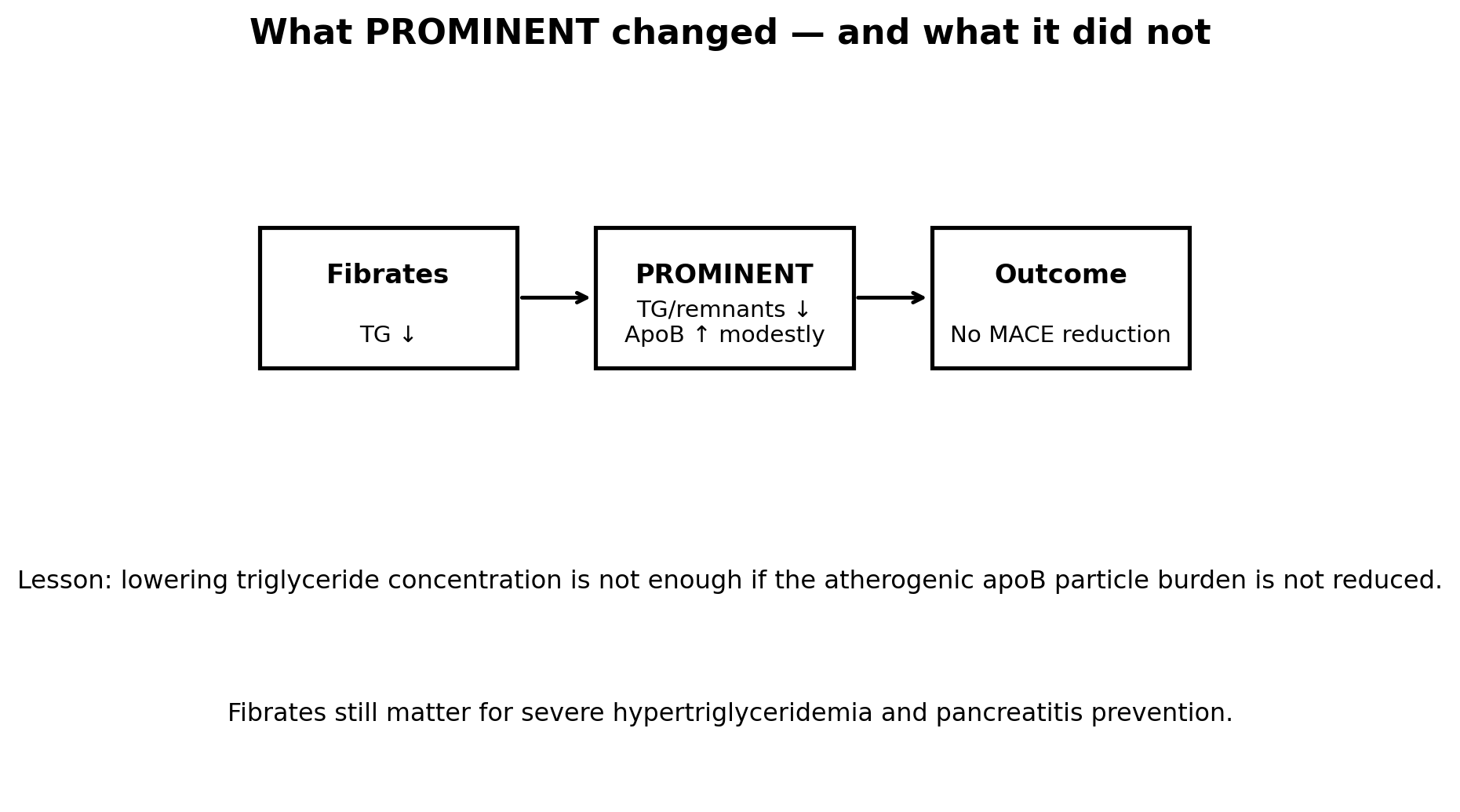
Figure 1. PROMINENT separated triglyceride lowering from ApoB lowering — and the cardiovascular outcome followed ApoB, not the triglyceride number.
1. What PROMINENT actually tested
The population was deliberately chosen to look like classic diabetic atherogenic dyslipidemia: high triglycerides, low HDL-C and LDL-C already near guideline levels.
That makes the neutral result highly relevant to routine “add a fibrate for residual risk” practice.
2. The ApoB clue
Pemafibrate improved several triglyceride-rich lipoprotein biomarkers but increased ApoB modestly. This means there were not fewer atherogenic particles overall.
The result aligns with the concept that particle number matters more than triglyceride mass alone for atherosclerotic risk.
3. What about ACCORD's high-TG/low-HDL subgroup?
ACCORD suggested a possible benefit in patients with TG ≥204 mg/dL and HDL-C ≤34 mg/dL, but the interaction was borderline and the overall trial was neutral.
This is useful hypothesis-generation, not enough to override PROMINENT and make combination fibrate therapy routine for ASCVD prevention.
4. Where fibrates still clearly matter
In severe hypertriglyceridemia, the clinical target changes: preventing pancreatitis becomes central.
The 2026 guideline considers fibric-acid derivatives reasonable at persistent TG ≥500-999 mg/dL and especially ≥1000 mg/dL after diet and secondary causes are addressed.
| Scenario | Fibrate role in 2026 |
|---|---|
| TG 200-499 mg/dL, LDL/ApoB untreated | Treat global ASCVD risk; statin/ApoB strategy first |
| TG 200-499 mg/dL on statin | Do not assume fibrate adds MACE benefit; consider IPE only in guideline-selected high-risk patients |
| TG 500-999 mg/dL | Reasonable TG-lowering option for pancreatitis-risk reduction |
| TG ≥1000 mg/dL | Often a major component of urgent chronic TG-lowering strategy after diet/secondary causes |
5. FAQ
Did PROMINENT prove triglycerides do not matter?
No. It showed that this particular biomarker-lowering strategy did not reduce events.
Should fibrates be stopped in everyone?
No. They remain clinically useful for severe hypertriglyceridemia and pancreatitis prevention.
Fenofibrate or gemfibrozil with a statin?
Fenofibrate is generally preferred when combination therapy is needed because gemfibrozil has more statin-interaction/myopathy risk.
What should I follow besides triglycerides?
Non-HDL-C and ApoB can reveal whether the total atherogenic particle burden is actually falling.
References
1. Das Pradhan A, Glynn RJ, Fruchart JC, et al. Triglyceride Lowering with Pemafibrate to Reduce Cardiovascular Risk. N Engl J Med. 2022;387:1923-1934.
2. ACCORD Study Group. Effects of Combination Lipid Therapy in Type 2 Diabetes Mellitus. N Engl J Med. 2010.
3. Keech A, Simes RJ, Barter P, et al. FIELD. Lancet. 2005;366:1849-1861.
4. Blumenthal RS, Morris PB, Gaudino M, et al. 2026 ACC/AHA Multisociety Guideline on the Management of Dyslipidemia.