Executive Summary
Family history is not just “my dad had heart disease.” The most informative history records who was affected, what event occurred, the age at onset, whether multiple relatives were affected and whether there is known severe hypercholesterolemia or Lp(a).
The 2026 ACC/AHA guideline lists premature ASCVD in a parent or sibling—before 55 years in men or 65 in women—as a risk enhancer. It can support lipid-lowering therapy even when PREVENT estimates are otherwise low.
Young adults deserve particular attention because 10-year calculators can underestimate lifetime exposure. The guideline supports earlier pharmacotherapy discussion in young adults with LDL-C ≥160 mg/dL or strong family history of premature ASCVD.
Lp(a) should be measured at least once in every adult, but a premature family history makes the result especially actionable because high Lp(a) clusters in families and is mostly inherited.
If LDL-C is markedly elevated or FH is suspected, genetic testing can be useful and cascade screening of relatives can identify affected family members before symptoms occur.
Children should now receive universal lipid screening at ages 9-11. In families with premature ASCVD or severe hypercholesterolemia/FH, cascade lipid screening can begin as early as age 2.
CAC can refine uncertainty in appropriate adults, but a zero score should be interpreted cautiously in strong family-history phenotypes, especially when multiple relatives had very premature disease.
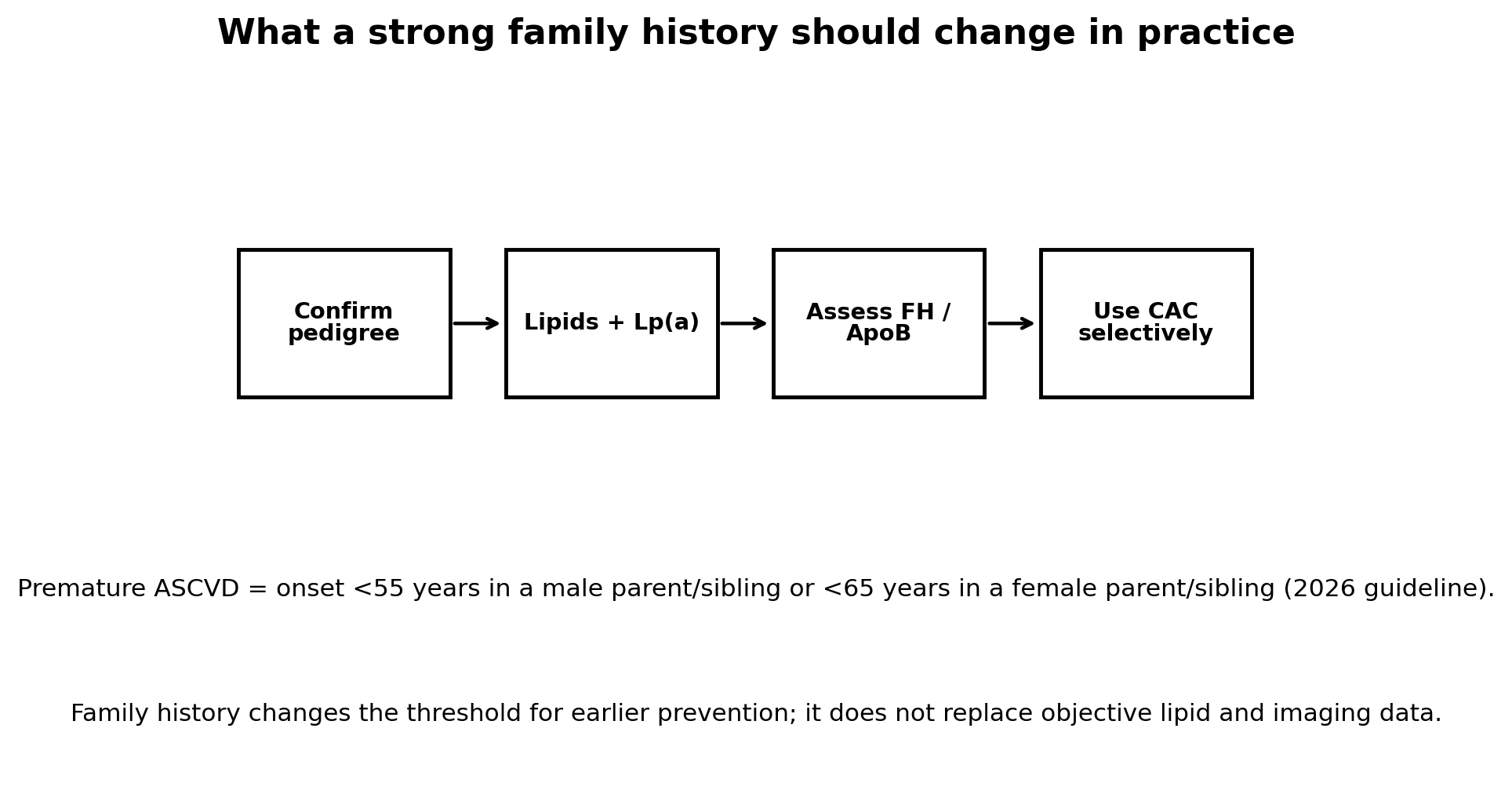
Figure 1. A family history changes the threshold for looking earlier and deeper—not just the number entered into a risk calculator.
1. Build a useful family history
For each first-degree relative, record the event (MI, coronary revascularization, ischemic stroke, peripheral arterial disease), the age at the event and major risk factors such as smoking or diabetes.
Multiple affected first-degree relatives, an event at a very young age or sudden premature death raises suspicion for inherited risk more than one late-life event.
2. What should be tested?
At minimum: standard lipid panel and Lp(a). ApoB is especially useful when triglycerides are high, diabetes/insulin resistance is present or LDL-C does not seem to fit the family phenotype.
If LDL-C is high enough to suggest FH, rule out secondary causes and consider formal clinical/genetic FH evaluation.
3. What changes in young adults?
A 32-year-old with a parent who had MI at 44 may have a low 10-year PREVENT estimate because age dominates short-term risk. The family history shifts attention to lifetime exposure and earlier prevention.
The 2026 guideline explicitly supports considering pharmacotherapy earlier in young adults with LDL-C ≥160 mg/dL or strong premature family history.
4. When does CAC help?
CAC is useful when a treatment decision remains uncertain and the patient is old enough for calcified plaque to be informative. The 2026 guideline notes CAC utility in men ≥40 and women ≥45, with selected younger high-risk use.
CAC = 0 can be reassuring, but strong family history is one of the higher-risk conditions in which a zero score should not automatically be used to defer treatment.
5. Cascade screening can prevent the next premature event
If FH or markedly elevated Lp(a) is found, screening siblings, children and parents can uncover people who look healthy but have decades of future exposure ahead of them.
This is one of the few areas of prevention where one patient’s diagnosis can directly prevent disease in several relatives.
| Family-history clue | What it should trigger |
|---|---|
| Parent/sibling ASCVD <55 male or <65 female | Formal risk-enhancer status; earlier prevention discussion |
| Multiple first-degree relatives affected | Higher suspicion for inherited/polygenic risk |
| LDL-C ≥190 or known FH in family | FH assessment + cascade screening |
| Known high Lp(a) in family | Measure Lp(a) in first-degree relatives |
| Very premature disease with “normal cholesterol” | Check Lp(a), ApoB, smoking, diabetes and consider specialist/genetic context |
| Child in FH/premature ASCVD family | Cascade lipid screening can begin as early as age 2 |
Make a one-page family pedigree with each parent and sibling, event type and age at event. Then check whether you have an Lp(a) result, untreated LDL-C/ApoB history and whether children/siblings need screening. “Heart disease runs in the family” is too vague to guide prevention; specific ages and diagnoses are actionable.
6. FAQ
Does a grandparent count?
Second-degree relatives still matter, especially when disease is very premature or clustered, but guideline “risk enhancer” wording specifically emphasizes premature ASCVD in a parent or sibling.
If my father smoked heavily, does his early MI still count?
Yes. Smoking may explain part of his risk, but the family event remains clinically relevant and can coexist with inherited risk.
Should I get genetic testing just because of family history?
Not everyone needs a panel. Testing becomes more useful when LDL-C is markedly elevated, FH is clinically suspected or the pedigree is strongly suggestive.
Can CAC 0 overrule family history?
It can lower near-term risk, but strong premature family history is specifically a condition in which the 2026 guideline cautions against automatically using CAC 0 to defer lipid-lowering therapy.
References
1. Blumenthal RS, Morris PB, Gaudino M, et al. 2026 ACC/AHA Multisociety Guideline on the Management of Dyslipidemia. Circulation. 2026.
2. American College of Cardiology. No Child Left Behind: The Case for Early Lipid Screening. 2026.
3. American College of Cardiology. Power of the Pedigree: The Family History Variable for ASCVD Risk Stratification. 2021.
4. Ranthe MF, Carstensen L, Oyen N, et al. Family History of Premature Death and Risk of Early Onset Cardiovascular Disease. J Am Coll Cardiol. 2012;60:814-821.