Executive Summary
Most heterozygous FH (HeFH) is autosomal dominant and results from pathogenic variants affecting LDL receptor biology—most commonly LDLR, and less often APOB or gain-of-function PCSK9 variants. Homozygous FH (HoFH) is much rarer and far more severe.
A healthy lifestyle does not neutralize FH. Diet and exercise improve overall cardiovascular risk, but the central problem is cumulative exposure to excessive LDL particles beginning at birth.
The 2026 ACC/AHA guideline recommends childhood lipid screening at ages 9-11 years and earlier evaluation when family history suggests premature ASCVD or FH. Early pharmacotherapy is emphasized for youth with FH.
Genetic testing can confirm a molecular diagnosis and makes cascade screening much more efficient, but a negative panel does not exclude a clinically important FH phenotype.
Treatment usually begins with maximally tolerated statin therapy, then ezetimibe and additional therapies according to residual LDL-C burden and absolute risk. PCSK9 monoclonal antibodies have outcomes evidence. Inclisiran lowers LDL-C substantially but outcomes evidence is still pending. In July 2026, the FDA approved enlicitide (Lipfendra), the first oral PCSK9 inhibitor, for adults with hypercholesterolemia including HeFH.
HoFH often requires specialist combination therapy, including evinacumab, lomitapide in selected adults and/or lipoprotein apheresis. U.S. approval for evinacumab now extends to children age 1 year and older with HoFH.
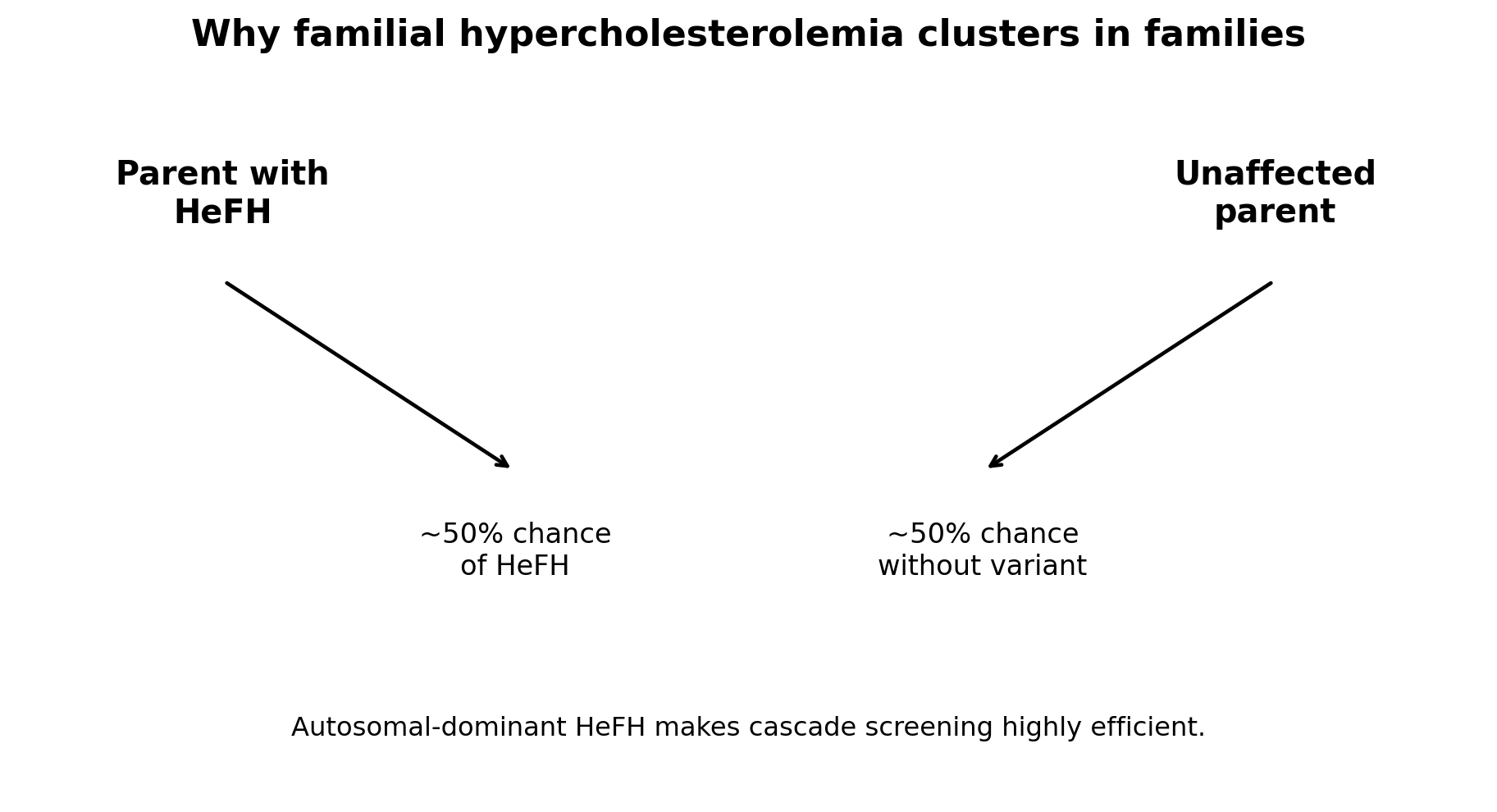
Figure 1. HeFH commonly follows autosomal-dominant inheritance, making cascade screening one of the highest-yield diagnostic strategies.
1. When to Suspect FH
Untreated LDL-C ≥190 mg/dL (4.9 mmol/L), especially when repeatedly documented.
Premature coronary disease in the patient or close relatives.
Tendon xanthomas or corneal arcus at an unusually young age.
Children or young adults with markedly elevated LDL-C.
A family pattern of very high cholesterol across multiple generations.
2. Diagnosis: Clinical and Genetic
Clinical tools such as the Dutch Lipid Clinic Network criteria combine LDL-C, family history, premature ASCVD, physical signs and genetic results. Genetic testing is particularly useful because it can convert an uncertain phenotype into a clear family-screening pathway.
| Result | What it means |
|---|---|
| Pathogenic FH variant found | Confirms monogenic FH and enables targeted cascade testing. |
| No variant found but phenotype strong | FH can still be diagnosed clinically; polygenic or undetected variants are possible. |
| LDL-C ≥190 mg/dL without clear FH | Still severe hypercholesterolemia with high lifetime ASCVD risk and treatment indication. |
| Very high LDL-C from childhood | Consider HoFH or another severe inherited disorder; specialist evaluation is urgent. |
3. HeFH vs HoFH
| Feature | HeFH | HoFH |
|---|---|---|
| Typical inheritance | One major pathogenic allele | Two pathogenic alleles / functionally equivalent variants |
| Untreated LDL-C | Often ≥190 mg/dL | Frequently 400-1000 mg/dL, but phenotype varies |
| ASCVD timing | Premature adult disease if untreated | Childhood/young-adult ASCVD possible |
| Treatment intensity | Combination LDL-lowering often needed | Multidrug therapy + specialist treatments often required |
4. Treatment Ladder in 2026
Statins remain first-line because they reduce LDL-C and cardiovascular events. Ezetimibe is a simple oral add-on. PCSK9 monoclonal antibodies provide large additional LDL-C reductions and have outcomes evidence in high-risk populations.
Bempedoic acid is useful particularly when statin intolerance limits therapy. Inclisiran offers infrequent dosing after loading but definitive cardiovascular outcomes evidence is still awaited. Enlicitide now offers oral PCSK9 inhibition for adults who need additional LDL-C reduction, including adults with HeFH.
HoFH treatment differs because LDL receptor activity can be severely impaired. Evinacumab lowers LDL-C through ANGPTL3 inhibition largely independent of LDL receptor function. Lipoprotein apheresis remains important in selected severe cases.
FH is a disease of cumulative exposure. Treating LDL-C at age 18 instead of age 48 can matter even if the eventual LDL-C target is identical.
5. Family Screening
Once FH is diagnosed, first-degree relatives should be offered lipid testing and, when a causal variant is known, targeted genetic testing. This process is called cascade screening. It identifies affected relatives before symptoms and is one of the strongest public-health arguments for genetic confirmation.
6. FAQ
Can FH be cured with diet?
No. Lifestyle helps overall risk but does not correct the inherited defect in LDL clearance.
Does LDL-C 190 automatically prove FH?
No. It defines severe hypercholesterolemia and should trigger an FH evaluation, but secondary and polygenic causes also exist.
Can someone with FH have CAC 0?
Yes, particularly at younger ages. CAC 0 lowers near-term risk but does not erase lifelong exposure or the indication to treat severe hypercholesterolemia.
Should children with FH be treated?
Yes, when diagnosis is established and age/LDL criteria are met. Modern guidance emphasizes early intervention.
Can women use lipid-lowering therapy during pregnancy?
Most lipid-lowering drugs are deferred during conception, pregnancy and lactation; individualized specialist planning is required.
References
1. Blumenthal RS, Morris PB, Gaudino M, et al. 2026 ACC/AHA/AACVPR/ABC/ACPM/ADA/AGS/APhA/ASPC/NLA/PCNA Guideline on the Management of Dyslipidemia. 2026.
2. American College of Cardiology. No Child Left Behind: The Case For Early Lipid Screening. May 2026.
3. Nordestgaard BG, Chapman MJ, Humphries SE, et al. Familial hypercholesterolaemia is underdiagnosed and undertreated. Eur Heart J. 2013.
4. Sturm AC, Knowles JW, Gidding SS, et al. Clinical genetic testing for familial hypercholesterolemia. J Am Coll Cardiol. 2018.
5. U.S. FDA. Approval of Lipfendra (enlicitide), first oral PCSK9 inhibitor, July 17, 2026.
6. U.S. FDA. Evinacumab (Evkeeza) orphan-drug approvals for homozygous familial hypercholesterolemia; pediatric indication expanded to age 1 year and older in 2025.