Executive Summary
Physical activity is one of the most consistently beneficial interventions in cardiovascular medicine. It lowers blood pressure, improves insulin sensitivity, reduces visceral adiposity, improves endothelial function, increases nitric oxide signaling, enhances cardiorespiratory fitness and is associated with lower cardiovascular and all-cause mortality.
The strongest evidence is for clinical outcomes, not for “melting plaque.” Exercise-based cardiac rehabilitation in coronary heart disease reduces myocardial infarction and hospital admissions and improves quality of life. Higher cardiorespiratory fitness is independently associated with lower mortality across age, sex and race groups.
There is nevertheless direct plaque-imaging evidence. In a randomized 60-patient IVUS trial, six months of supervised high-intensity interval training twice weekly reduced percent atheroma volume by 1.2%, while the control group showed no significant regression. Normalized total atheroma volume also fell significantly.
A separate small pilot analysis in acute coronary syndrome patients undergoing cardiac rehabilitation found substantially greater plaque regression among those averaging at least 7,000 steps per day, with the often-quoted figure of roughly −12.5% versus less than −3.6% in those below 7,000 steps. This was post hoc and should be interpreted as hypothesis-generating, not as proof that 7,000 steps causes a 12.5% reduction in plaque in the general population.
The 7,000-step target has much stronger support for overall health. A 2025 systematic review and dose-response meta-analysis found that, compared with about 2,000 steps/day, approximately 7,000 steps/day was associated with 25% lower cardiovascular disease incidence and 47% lower cardiovascular mortality.
VO₂max or cardiorespiratory fitness is a powerful prognostic marker. Observational cohorts consistently show a graded inverse relationship between fitness and mortality; a 1-MET higher exercise capacity has been associated with roughly 12-14% lower all-cause mortality in large cohorts.
A paradox deserves attention: very high lifelong endurance exercise can be associated with more coronary calcium or plaque on imaging in some master-athlete cohorts. This does not overturn the benefits of exercise. Fitness remains strongly associated with lower event risk, and a 2024 longitudinal study found physical-activity volume was not associated with faster CAC progression.
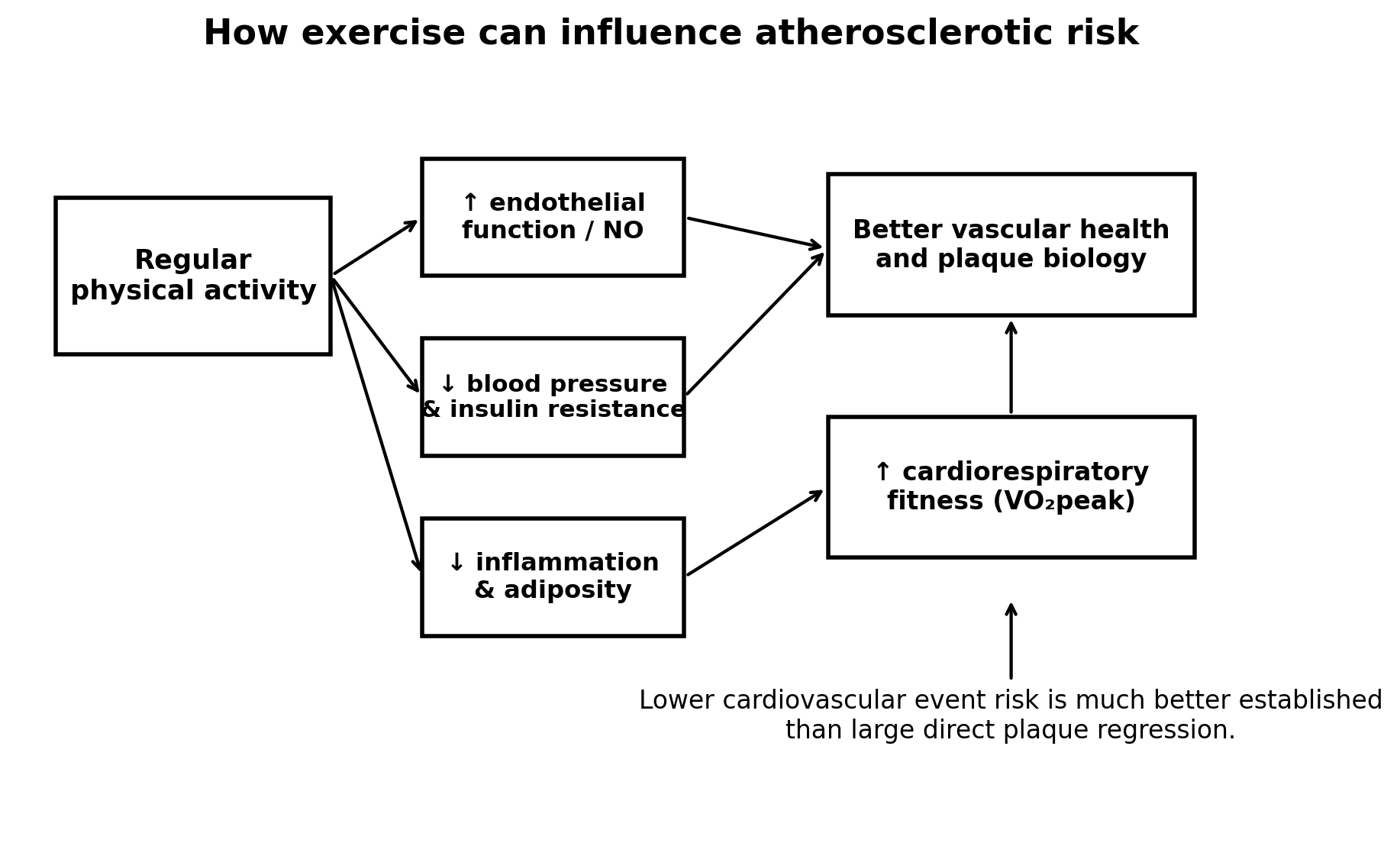
Figure 1. Exercise affects atherosclerotic risk through multiple pathways. The evidence for fewer cardiovascular events is stronger than the evidence for large direct reductions in coronary plaque volume.
1. What Does "Exercise Changes Plaque" Actually Mean?
The phrase “exercise reverses atherosclerosis” is attractive but imprecise. Coronary plaque can be described by total volume, percent atheroma volume, lipid or necrotic-core content, calcification, fibrous-cap thickness, remodeling and stenosis. An intervention may improve one characteristic while another appears unchanged or even increases.
This is why a calcium score is not a direct exercise-response marker. Exercise can reduce cardiovascular risk without producing a lower CAC score. Similarly, a small reduction in IVUS-measured atheroma volume is biologically meaningful but does not mean the artery has returned to a pre-atherosclerotic state.
The clinically important hierarchy is: fewer heart attacks and deaths first; improved functional capacity and risk factors second; favorable plaque imaging as supportive mechanistic evidence.
2. The Randomized HIIT Trial: Direct Evidence of Coronary Plaque Regression
| Feature | CENIT / IVUS plaque trial |
|---|---|
| Population | 60 patients with stable coronary artery disease after PCI |
| Randomization | 30 supervised HIIT vs 30 contemporary preventive-guideline control |
| Exercise | Two supervised sessions/week at 85-95% of peak heart rate |
| Duration | 6 months |
| Imaging | Intravascular ultrasound (IVUS) of residual coronary atheroma |
| Primary plaque findings | PAV fell 1.2% with HIIT vs +0.2% control; between-group difference −1.4 percentage points |
| Total plaque volume | Normalized TAV fell 9 mm³ with HIIT; between-group difference −12 mm³ |
| Interpretation | Evidence that structured HIIT can regress residual atheroma in selected, treated CAD patients |
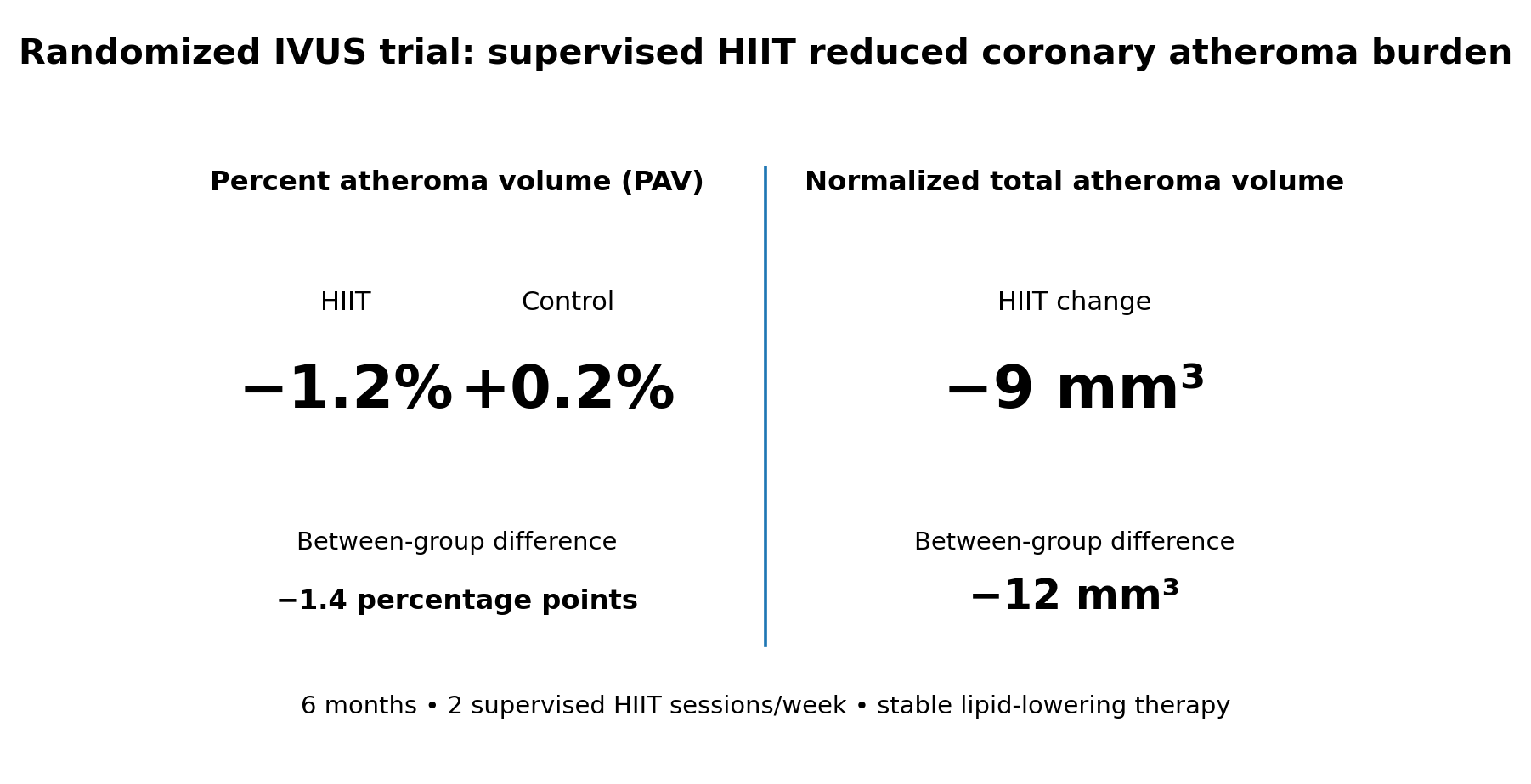
Figure 2. Six months of supervised HIIT produced modest but statistically significant regression of coronary atheroma on IVUS. Values shown are the reported PAV changes, the HIIT TAV change, and the reported between-group differences.
The study is important because it moved beyond surrogate risk factors and imaged the coronary arterial wall directly. Patients were on stable lipid-lowering therapy, which makes the result particularly relevant to the idea that exercise can add benefit on top of medical prevention.
The effect size should be kept in perspective. Percent atheroma volume declined by about 1.2 percentage points, not 12%, and the trial involved only 60 patients at a single center. It supports biological plausibility and cardiac-rehabilitation practice; it does not establish a universal prescription for unsupervised high-intensity training in every person with coronary disease.
High-intensity exercise is also not the right starting point for every patient. Symptoms, ischemia, ventricular function, arrhythmias, recent coronary events and baseline conditioning can alter safety. In known CAD, particularly after PCI or acute coronary syndrome, structured cardiac rehabilitation is the evidence-based setting in which to progress intensity.
The plaque-regression signal from HIIT is real, but it came from supervised rehabilitation in treated CAD — not from telling an unassessed high-risk patient to suddenly start maximal intervals.
3. The 7,000-Step Claim: Where the "12.5%" Figure Comes From
The statement that 7,000 steps per day produces “12.5% greater plaque reduction” is based on a much more limited evidence base than the general health benefits of walking.
A pilot analysis pooled 101 acute coronary syndrome patients from two prospective trials. All underwent PCI, serial IVUS of non-culprit coronary segments and phase-II cardiac rehabilitation. Investigators categorized patients by whether they averaged at least 7,000 steps/day and whether follow-up LDL-C was below 70 mg/dL.
The JACC State-of-the-Art review on coronary plaque regression summarized the post hoc finding this way: participants walking at least 7,000 steps/day had greater plaque regression than those walking fewer than 7,000 steps/day, approximately −12.5% versus less than −3.6%.
This is a fascinating result because it suggests that everyday movement may interact with lipid lowering to influence coronary plaque biology. But it was not a randomized comparison of 7,000 versus 6,999 steps. Step count was an observed behavior within a rehabilitation cohort, and more active participants can differ in many other ways. The result should therefore be described as an association from a small post hoc analysis.
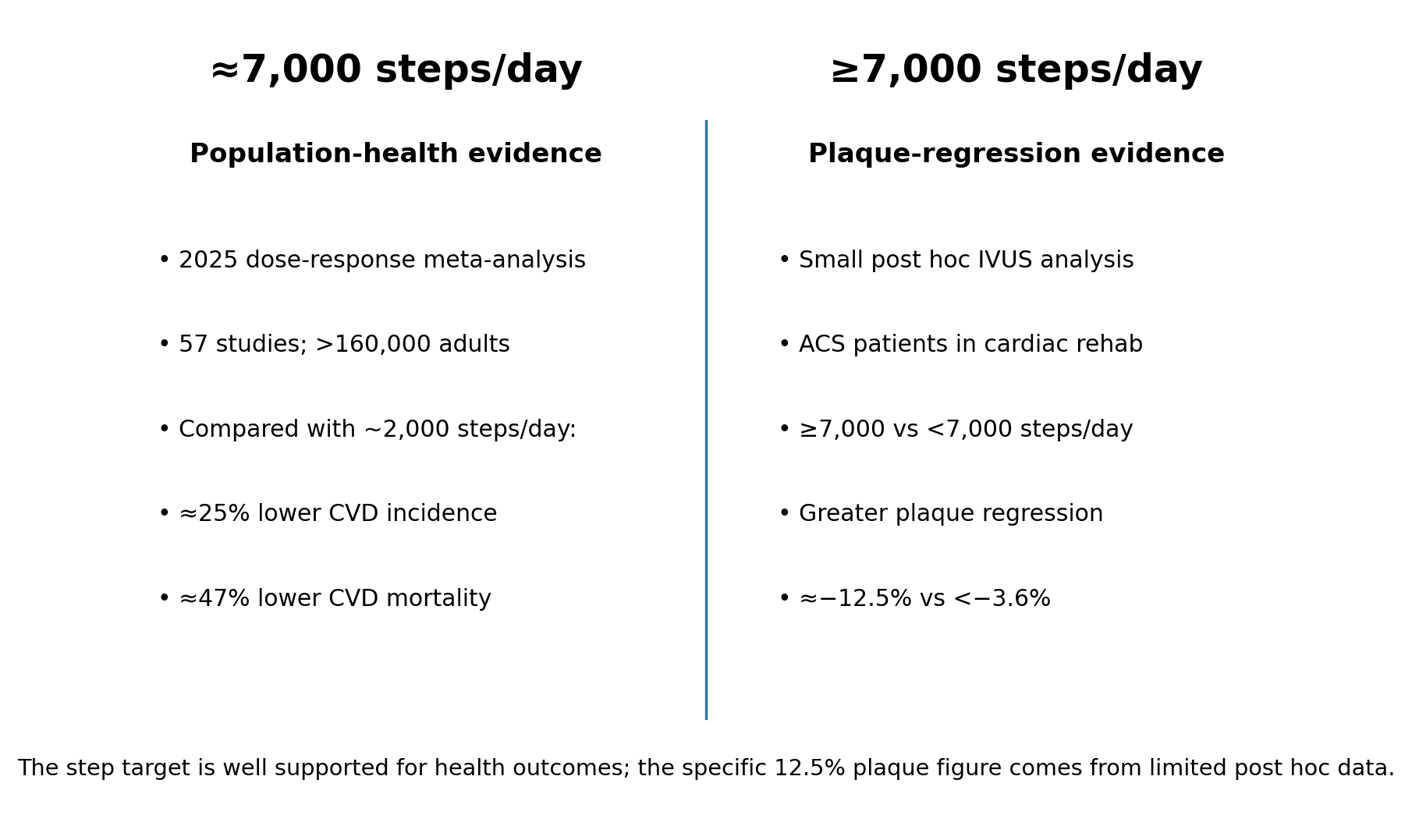
Figure 3. Two different evidence streams often get conflated. The public-health case for around 7,000 steps/day is strong; the specific coronary-plaque percentage comes from a small post hoc IVUS analysis.
4. Why 7,000 Steps Is Still a Sensible Public-Health Target
The case for roughly 7,000 steps/day does not depend on plaque imaging. In 2025, Ding and colleagues published a large systematic review and dose-response meta-analysis in The Lancet Public Health covering 57 studies from 35 cohorts and more than 160,000 adults across multiple health outcomes.
Compared with approximately 2,000 steps/day, 7,000 steps/day was associated with about 25% lower incidence of cardiovascular disease, 47% lower cardiovascular mortality and 47% lower all-cause mortality. Benefits generally accumulated as step counts rose from low levels and tended to flatten for several outcomes in the 5,000-7,000 step range, although some outcomes continued to improve at higher levels.
This makes 7,000 steps a practical behavioral target, not a magic threshold. A sedentary person moving from 2,500 to 5,000 steps may gain substantial benefit. Someone who naturally walks 9,000-12,000 steps and feels well does not need to reduce activity to 7,000.
Myth: “Exactly 7,000 steps is the plaque-regression dose.” Fact: 7,000 is a useful population-health benchmark. The dose-response is continuous, and the plaque-specific 12.5% observation is limited, post hoc evidence.
5. Walking vs "Cardio": They Solve Different Problems
| Activity | Primary advantage | What it may miss if used alone |
|---|---|---|
| Daily walking / steps | Reduces sedentary time; raises total activity; easy to sustain | May not substantially improve VO₂max if intensity never rises |
| Brisk walking / Zone 2 | Improves aerobic base, metabolic health, endothelial function | May provide less stimulus for peak fitness than intervals |
| HIIT | Efficiently improves VO₂peak and can regress plaque in selected supervised CAD cohorts | Greater acute cardiovascular stress; not appropriate unsupervised for everyone |
| Resistance training | Improves strength, insulin sensitivity, body composition and function | Does not replace aerobic training for cardiorespiratory fitness |
| Mixed program | Best matches major guidelines and real-world function | Requires progression and consistency rather than a single “perfect” modality |
Steps are excellent for reducing inactivity, but step count cannot fully describe exercise dose. Ten thousand slow household steps and a structured 40-minute brisk walk have different cardiorespiratory effects. Cycling, swimming and rowing can also deliver major cardiovascular benefit while generating few steps.
For this reason, guidelines are framed around time and intensity rather than steps alone. The American Heart Association recommends at least 150 minutes/week of moderate-intensity aerobic activity or 75 minutes/week of vigorous activity, plus muscle strengthening on at least two days. More activity can provide additional benefits.
6. VO₂max: Why Fitness Often Matters More Than the Workout Label
Cardiorespiratory fitness (CRF) reflects the integrated ability of the lungs, heart, circulation and skeletal muscle to deliver and use oxygen. VO₂max or VO₂peak is the most direct physiologic expression of this capacity.
CRF is one of the strongest prognostic markers in preventive cardiology. In a JACC cohort of more than 750,000 veterans followed for a median of 10 years, mortality risk declined in a graded fashion as exercise capacity increased; every 1-MET increase in capacity was associated with an adjusted mortality hazard ratio of about 0.86. The least-fit participants had roughly four times the mortality risk of the extremely fit group.
Another large directly measured fitness cohort found that a 1-MET increment was associated with approximately 12% lower all-cause mortality and 16% lower cardiovascular mortality. These are observational associations, not a promise that adding exactly one MET causes that precise reduction, but the consistency across datasets is striking.
For practical purposes, this means that a person who walks regularly but remains very deconditioned may benefit from gradually increasing intensity enough to improve fitness. The objective is not a specific consumer-watch VO₂max number; it is improved physiologic capacity over time.
7. Does Exercise Reduce Carotid Atherosclerosis Too?
Coronary plaque is difficult to image serially, so some exercise literature uses carotid intima-media thickness (cIMT) as a vascular surrogate. A 2022 systematic review and meta-analysis included 26 studies and 1,370 participants. Exercise was associated with an average cIMT reduction of about 0.02 mm, with aerobic exercise showing the clearest effect.
This supports a vascular benefit but should not be oversold as direct coronary plaque regression. cIMT is influenced by arterial remodeling and hypertension as well as atherosclerosis, and changes measured in fractions of a millimeter require careful imaging technique.
8. Exercise Improves the Endothelium Before It Changes the Scan
Some of exercise’s most important effects occur at the vessel surface. Repeated increases in pulsatile blood flow and shear stress stimulate endothelial nitric oxide synthase, improving nitric oxide availability and vasodilator function. Exercise also lowers sympathetic tone and blood pressure over time and improves insulin-mediated glucose disposal.
These mechanisms can reduce the environment that promotes new plaque formation even if existing calcium remains visible forever. This is one reason imaging should not be the sole measure of whether an exercise program is “working.” Blood pressure, fitness, glycemia, waist circumference, resting heart rate, exercise tolerance and symptoms may improve long before a plaque image changes.
9. What About Coronary Calcium in Endurance Athletes?
The relationship between very high-volume endurance exercise and coronary imaging is more complicated than the simple statement “more exercise equals less plaque.” Several cross-sectional studies of middle-aged male endurance athletes have reported more coronary calcium or plaque than in healthy nonathletic controls.
The 2023 Master@Heart study compared lifelong endurance athletes, late-onset athletes and healthy active nonathletes. Lifelong male endurance athletes had higher odds of calcified, noncalcified and mixed coronary plaque on CCTA despite excellent fitness and low conventional risk profiles.
These findings are observational and do not establish that endurance exercise caused the plaques. Selection, diet, lifelong risk exposure and other factors remain possible explanations. More importantly, greater fitness continues to correlate with lower event risk within CAC strata in population studies.
A 2024 longitudinal JAMA Cardiology analysis of 8,771 healthy adults found that physical-activity volume was not associated with faster CAC progression. This helped counter the concern that routine high physical activity necessarily accelerates coronary calcification.
A high CAC score in a fit athlete should not be dismissed as “healthy calcium.” Plaque is still plaque. Fitness lowers risk but does not make atherosclerosis irrelevant. Risk-factor management remains appropriate.
10. Can Exercise Make Plaque More Stable?
Direct evidence on plaque composition is smaller than evidence on volume. Earlier intravascular imaging work showed reductions in necrotic-core volume after aerobic exercise in patients with stable coronary disease, suggesting a possible stabilization effect.
Exercise also reduces several upstream drivers of plaque vulnerability, including blood pressure, insulin resistance and systemic inflammation. However, statements such as “exercise converts soft plaque into calcified stable plaque” are too strong. Plaque composition is influenced by lipid-lowering therapy, time, inflammation and local arterial biology, and the exact independent contribution of exercise remains incompletely defined.
11. How Exercise Works With LDL-C and ApoB Lowering
Exercise is not a substitute for lowering atherogenic particle exposure. An active patient with persistently high ApoB, familial hypercholesterolemia or very high Lp(a) can still develop substantial atherosclerosis. The biological processes are complementary rather than competing.
The 7,000-step pilot study is useful precisely because it examined physical activity together with LDL-C. The most favorable plaque changes were observed when activity and aggressive LDL lowering were both present. This fits the broader prevention model: reduce the number of atherogenic particles entering the arterial wall and improve the metabolic, hemodynamic and inflammatory environment around the plaque.
12. Exercise With High Lp(a)
Regular exercise does not meaningfully lower genetically determined Lp(a) in most people. That does not make it irrelevant. Lp(a) raises baseline lifetime risk, while exercise lowers several independent and interacting risk pathways.
For someone with elevated Lp(a), exercise should therefore be viewed as risk reduction around the biomarker rather than a strategy to normalize the biomarker itself. The practical priorities are fitness, blood pressure, insulin sensitivity, weight where appropriate, smoking avoidance and aggressive control of LDL-C/ApoB according to overall risk.
13. Is HIIT Better Than Zone 2?
For plaque specifically, we do not have enough randomized evidence to declare one intensity universally superior. The strongest direct coronary-regression exercise trial used HIIT, but it was small and conducted in cardiac rehabilitation.
For fitness, interval training often produces larger or faster improvements in VO₂peak than moderate continuous training, especially in coronary disease rehabilitation. Moderate exercise remains easier to sustain, carries lower acute strain and can deliver excellent cardiometabolic benefits.
A sensible program for many adults combines frequent low-to-moderate activity with some higher-intensity work once an appropriate fitness base and medical safety have been established. The best program is not the theoretically perfect protocol that is abandoned after three weeks; it is a safe program that progressively improves fitness and can be maintained for years.
14. A Practical Evidence-Based Exercise Framework
| Layer | Practical target | Why it matters |
|---|---|---|
| Move more every day | Build toward ~7,000+ steps/day if feasible; reduce prolonged sitting | Strong population evidence; achievable baseline behavior |
| Aerobic foundation | ≥150 min/week moderate or ≥75 min/week vigorous activity | Guideline-supported cardiovascular benefit |
| Improve fitness | Progress pace, incline, cycling power or intervals over time | CRF is a powerful independent prognostic marker |
| Strength | At least 2 sessions/week | Supports glucose control, function, muscle and healthy aging |
| For established CAD | Use cardiac rehabilitation / clinician-guided progression when appropriate | Provides supervised exercise, risk-factor treatment and secondary prevention |
| Do not chase scans | Track function, BP, lipids/ApoB, glucose, symptoms and adherence | CAC/plaque imaging is not a routine exercise scoreboard |
15. Frequently Asked Questions
Will 7,000 steps per day shrink my plaque by 12.5%?
We cannot say that. The 12.5% figure comes from a small post hoc IVUS analysis in ACS patients in cardiac rehabilitation. The broader evidence supports 7,000 steps as a useful health target, not a guaranteed plaque-regression percentage.
Is 10,000 steps better than 7,000?
It can be, but 10,000 is not a required threshold. Benefits rise substantially from very low step counts toward roughly 7,000, with smaller incremental gains for several outcomes beyond that.
Can walking replace statins?
No. Exercise and lipid lowering address different pathways. When a statin or another lipid-lowering therapy is indicated, walking should complement rather than replace it.
Does HIIT reverse coronary disease?
A small randomized IVUS trial demonstrated modest plaque regression with supervised HIIT in treated CAD. That does not mean HIIT erases coronary disease or is safe for every patient without assessment.
What VO₂max should I target?
There is no single universal number because age and sex strongly influence expected values. The most useful goal is to move from low fitness toward at least moderate age-appropriate fitness and to improve your own baseline.
Can exercise lower CAC?
Usually that is not the goal. CAC can remain stable or increase even while risk factors improve. Serial CAC is not a validated exercise-response test.
If athletes can have more CAC, should I avoid endurance exercise?
No. Regular exercise has overwhelming cardiovascular benefits. Very high lifelong endurance exercise has a complex association with coronary imaging in some cohorts, but physical inactivity is not the solution.
Is Zone 2 enough?
It is an excellent aerobic foundation. Adding some higher-intensity work and resistance training can improve fitness and function further when appropriate.
Should I exercise if I have CAC 400?
Many people with high CAC should and do exercise, but the appropriate intensity depends on symptoms, fitness, ischemia risk and other clinical factors. High CAC is a reason for thoughtful prevention, not automatic inactivity.
What should I track instead of plaque scans?
Consistency, steps, exercise minutes, pace/power, fitness, blood pressure, waist/weight when relevant, LDL-C/ApoB, glycemic control, resting heart rate and symptoms.
16. Editorial Verdict
Exercise has robust evidence for reducing cardiovascular events and improving longevity. Direct coronary-plaque regression data are promising but still limited. A practical target around 7,000 steps/day is evidence-based for health outcomes, while structured aerobic training that improves cardiorespiratory fitness adds a dimension that step count alone cannot capture. For patients with established coronary disease, supervised cardiac rehabilitation remains one of the most evidence-rich ways to translate exercise into safer long-term prevention.
References
1. Vesterbekkmo EK, Aksetøy ILA, Follestad T, et al. High-intensity interval training induces beneficial effects on coronary atheromatous plaques: a randomized trial. Eur J Prev Cardiol. 2023;30:384-392. doi:10.1093/eurjpc/zwac309.
2. Dawson LP, Lum M, Nerleker N, Nicholls SJ, Layland J. Coronary Atherosclerotic Plaque Regression: JACC State-of-the-Art Review. J Am Coll Cardiol. 2022;79:66-82. doi:10.1016/j.jacc.2021.10.035.
3. Kurose S, et al. Preliminary Pilot Study of Combined Effects of Physical Activity and Achievement of LDL-Cholesterol Target on Coronary Plaque Volume Changes in Patients with Acute Coronary Syndrome. J Clin Med. 2020;9:1653. PMID:32455937.
4. Ding D, Nguyen B, Nau T, et al. Daily steps and health outcomes in adults: a systematic review and dose-response meta-analysis. Lancet Public Health. 2025. doi:10.1016/S2468-2667(25)00164-1.
5. Wang Y, Wu H, Sun J, et al. Effect of Exercise on Carotid Artery Intima-Media Thickness in Adults: A Systematic Review and Meta-Analysis. J Phys Act Health. 2022;19:855-867. doi:10.1123/jpah.2022-0372.
6. Dibben G, Faulkner J, Oldridge N, et al. Exercise-based cardiac rehabilitation for coronary heart disease. Cochrane Database Syst Rev. 2021;11:CD001800. doi:10.1002/14651858.CD001800.pub4.
7. Kokkinos P, Faselis C, Samuel IBH, et al. Cardiorespiratory Fitness and Mortality Risk Across the Spectra of Age, Race, and Sex. J Am Coll Cardiol. 2022;80:598-609. doi:10.1016/j.jacc.2022.05.031.
8. Imboden MT, Harber MP, Whaley MH, et al. Cardiorespiratory Fitness and Mortality in Healthy Men and Women. J Am Coll Cardiol. 2018;72:2283-2292. doi:10.1016/j.jacc.2018.08.2166.
9. De Bosscher R, Dausin C, Claus P, et al. Lifelong endurance exercise and its relation with coronary atherosclerosis. Eur Heart J. 2023;44:2388-2399. doi:10.1093/eurheartj/ehad152.
10. Shuval K, Leonard D, DeFina LF, et al. Physical Activity and Progression of Coronary Artery Calcification in Men and Women. JAMA Cardiol. 2024;9:659-666.
11. Aengevaeren VL, Mosterd A, Sharma S, et al. Exercise and coronary atherosclerosis: observations, mechanisms, and clinical management. Circulation. Review.
12. Pelliccia A, Sharma S, Gati S, et al. 2020 ESC Guidelines on sports cardiology and exercise in patients with cardiovascular disease. Eur Heart J. 2021;42:17-96.
13. Visseren FLJ, Mach F, Smulders YM, et al. 2021 ESC Guidelines on cardiovascular disease prevention in clinical practice. Eur Heart J. 2021;42:3227-3337.
14. American Heart Association. Recommendations for Physical Activity in Adults. Current online guidance, accessed 2026.
15. Green DJ, Hopman MTE, Padilla J, Laughlin MH, Thijssen DHJ. Vascular adaptation to exercise in humans: role of hemodynamic stimuli. Physiol Rev. 2017;97:495-528.
16. Ashor AW, Lara J, Siervo M, et al. Exercise modalities and endothelial function: a systematic review and dose-response meta-analysis of randomized controlled trials. Sports Med. 2015.
17. Mora S, Cook N, Buring JE, Ridker PM, Lee IM. Physical activity and reduced risk of cardiovascular events: potential mediating mechanisms. Circulation. 2007;116:2110-2118.
18. Madssen E, Moholdt T, Videm V, et al. Coronary atheroma regression and plaque characteristics after exercise training in coronary artery disease: intravascular imaging studies.
19. Lavie CJ, Ozemek C, Carbone S, Katzmarzyk PT, Blair SN. Sedentary Behavior, Exercise, and Cardiovascular Health. Circ Res. 2019;124:799-815.
20. Ross R, Blair SN, Arena R, et al. Importance of assessing cardiorespiratory fitness in clinical practice: a case for fitness as a clinical vital sign. Circulation. 2016;134:e653-e699.
21. Lear SA, Hu W, Rangarajan S, et al. The effect of physical activity on mortality and cardiovascular disease in 130,000 people from 17 countries: the PURE study. Lancet. 2017;390:2643-2654.
22. Ekelund U, Tarp J, Steene-Johannessen J, et al. Dose-response associations between accelerometry measured physical activity and sedentary time and all-cause mortality. BMJ. 2019;366:l4570.
23. Paluch AE, Bajpai S, Bassett DR Jr, et al. Daily steps and all-cause mortality: a meta-analysis of 15 international cohorts. Lancet Public Health. 2022;7:e219-e228.
24. Puri R, Nicholls SJ, Shao M, et al. Impact of Statins on Serial Coronary Calcification During Atheroma Progression and Regression. J Am Coll Cardiol. 2015;65:1273-1282.
25. Blaha MJ, Cainzos-Achirica M, Greenland P, et al. Role of coronary artery calcium and cardiorespiratory fitness in cardiovascular risk assessment. Multi-cohort literature.
26. Sharma S, et al. Abnormal cardiovascular findings in masters athletes: joint sports-cardiology consensus. J Am Coll Cardiol. 2026.
27. Franklin BA, Thompson PD, Al-Zaiti SS, et al. Exercise-Related Acute Cardiovascular Events and Potential Deleterious Adaptations Following Long-Term Exercise Training. Circulation. 2020;141:e705-e736.
28. Thompson PD, Franklin BA, Balady GJ, et al. Exercise and acute cardiovascular events: placing the risks into perspective. Circulation. 2007;115:2358-2368.
ElevatedCholesterol.com Editorial Team • Evidence-based cardiovascular prevention