Executive Summary
People with type 2 diabetes commonly have diffuse coronary atherosclerosis and a higher burden of non-obstructive plaque, multivessel disease and microvascular dysfunction.
Insulin resistance increases VLDL/remnant production and can produce ApoB-LDL discordance, so LDL-C alone may underestimate atherogenic particle exposure.
The 2026 ADA Standards recommend SGLT2 inhibitors and/or GLP-1 receptor agonists with demonstrated cardiovascular benefit in type 2 diabetes with established ASCVD, CKD or multiple risk factors, irrespective of whether additional glucose lowering is needed.
CCTA can identify the full spectrum of coronary plaque in diabetes, but routine screening CCTA in every asymptomatic person with diabetes is not recommended. Testing should answer a clinical question that can change management.
Microvascular disease is itself a marker of systemic vascular injury. ADA 2026 recommends PAD screening with ankle-brachial index in selected older patients or those with microvascular/end-organ complications when the diagnosis would change management.
The prevention strategy is multi-axis: lower LDL-C/ApoB, control blood pressure, eliminate smoking, treat CKD/albuminuria, optimize weight and activity, and use glucose-lowering drugs with proven cardiovascular benefit.
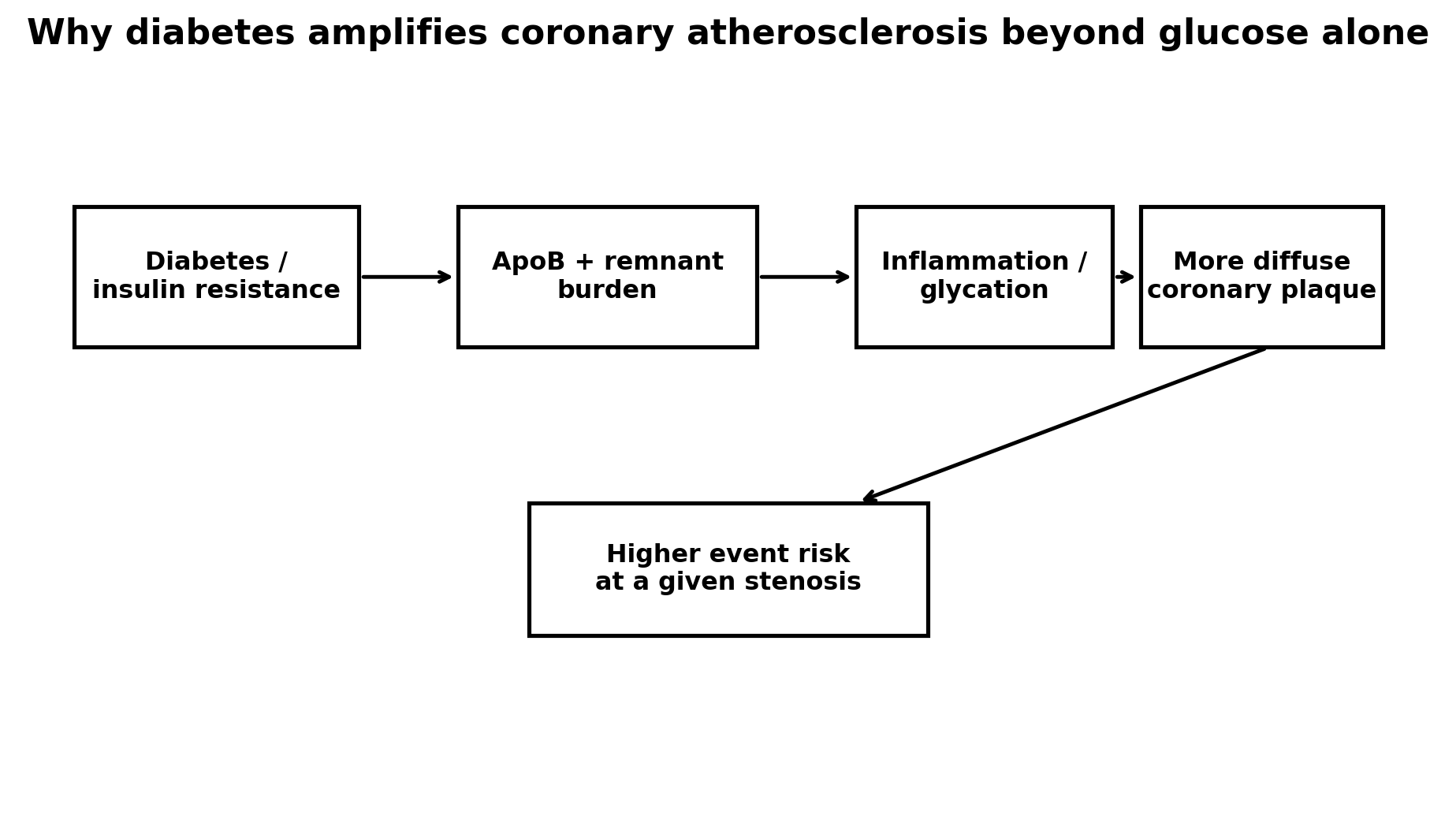
Figure 1. Diabetes accelerates coronary atherosclerosis through lipoprotein, inflammatory, metabolic and microvascular pathways.
1. Why glucose is not the whole story
HbA1c predicts microvascular complications and remains essential, but cardiovascular risk in type 2 diabetes is strongly influenced by ApoB-containing lipoproteins, blood pressure, kidney disease and obesity.
This is why an HbA1c of 6.5% does not make an LDL-C of 150 mg/dL acceptable in a high-risk diabetic patient.
2. What diabetes plaque looks like
CCTA and intravascular imaging studies consistently show more extensive and diffuse plaque in diabetes, often involving multiple coronary segments.
The risk comes from total burden and systemic biology rather than one uniquely “diabetic” plaque type.
3. GLP-1 and SGLT2 changed the treatment model
GLP-1 receptor agonists reduce atherosclerotic events in multiple outcome trials, while SGLT2 inhibitors have especially strong heart-failure and kidney benefits.
ADA 2026 explicitly recommends these therapies on cardiovascular and kidney grounds even when A1c is already near target.
4. Is coronary imaging needed routinely?
Routine anatomical screening in asymptomatic diabetes has not proved to improve outcomes enough to justify universal CCTA.
Imaging becomes more relevant when symptoms, equivocal testing, high subclinical risk or a specific management question is present.
| Risk domain | What to monitor |
|---|---|
| Atherogenic lipoproteins | LDL-C, non-HDL-C; ApoB when discordance likely; Lp(a) once. |
| Blood pressure | Standardized office + home monitoring where appropriate. |
| Kidney risk | eGFR and UACR. |
| Glycemia | HbA1c individualized to age, comorbidity and hypoglycemia risk. |
| Weight / fitness | Waist/weight trajectory, physical activity, functional capacity. |
| Clinical ASCVD | Symptoms, PAD, carotid/coronary disease as clinically indicated. |
5. FAQ
Is diabetes a "coronary disease equivalent"?
Risk is heterogeneous. Modern prevention uses absolute risk, CKD, organ damage, age and established ASCVD rather than one universal label.
Can I have diabetic coronary disease with normal LDL-C?
Yes, particularly when ApoB/remnant burden is high or other risk factors are present.
Should every diabetic patient have a calcium scan?
No. CAC is most useful when it can resolve uncertainty in prevention intensity.
Does better HbA1c reverse plaque?
Good glycemic control helps, but plaque risk requires simultaneous lipid, BP, kidney and lifestyle management.
References
1. American Diabetes Association. Standards of Care in Diabetes—2026. Cardiovascular Disease and Risk Management.
2. American Diabetes Association. Standards of Care in Diabetes—2026. Pharmacologic Approaches to Glycemic Treatment.
3. 2026 AHA/ACC/ADA/ASN CKM Syndrome Guideline.
4. Contemporary CCTA and intravascular imaging literature on diabetes and coronary plaque burden.