Executive Summary
Atherosclerosis is both a lipid-storage disease and an inflammatory disease. LDL/ApoB lowering reduces one major upstream driver, but inflammatory signaling can remain active even after LDL-C is well controlled.
COLCOT randomized patients within 30 days of MI to colchicine 0.5 mg/day or placebo and found fewer composite ischemic events.
LoDoCo2 randomized 5,522 patients with chronic coronary disease and found a 31% relative reduction in its primary cardiovascular composite with colchicine 0.5 mg/day.
The 2023 U.S. LODOCO label indicates colchicine 0.5 mg once daily to reduce risk of MI, stroke, coronary revascularization and cardiovascular death in adults with established atherosclerotic disease or multiple cardiovascular risk factors.
The 2023 AHA/ACC chronic coronary disease guideline gives low-dose colchicine a Class 2b recommendation: it may be considered for secondary prevention to reduce recurrent ASCVD events.
Colchicine has a narrow therapeutic index and important interactions. Strong CYP3A4 or P-glycoprotein inhibitors can cause dangerous toxicity, especially with renal or hepatic impairment.
The trials did not select patients solely because hsCRP was elevated. Therefore a high hsCRP is a marker of inflammatory risk, not a stand-alone prescription algorithm for colchicine.
Colchicine complements rather than replaces aggressive LDL-C/ApoB lowering, antithrombotic therapy where indicated, smoking cessation, BP control and diabetes/CKD treatment.
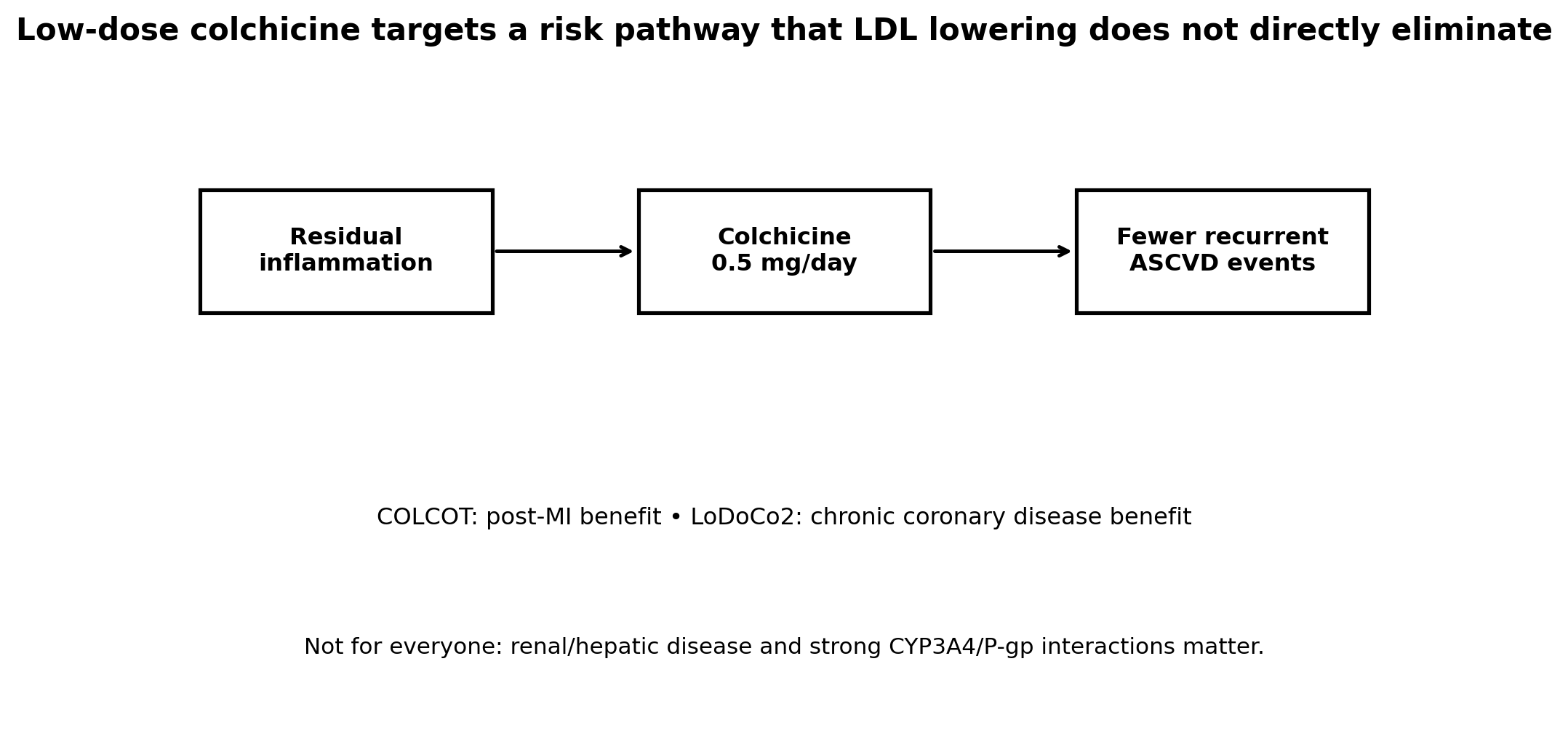
Figure 1. Low-dose colchicine targets inflammatory biology that can remain active despite conventional lipid lowering.
1. COLCOT: after myocardial infarction
COLCOT tested early secondary prevention after MI. The composite of cardiovascular death, resuscitated cardiac arrest, MI, stroke or urgent angina hospitalization leading to revascularization was lower with colchicine.
The strongest individual signals included stroke and urgent revascularization; the study was not powered to prove mortality reduction by itself.
2. LoDoCo2: stable chronic coronary disease
LoDoCo2 extended the concept to stable chronic coronary disease. The primary composite of cardiovascular death, spontaneous MI, ischemic stroke or ischemia-driven revascularization was significantly lower.
This created a second independent setting in which broad anti-inflammatory therapy reduced events.
3. Why this is not "treat the CRP number"
hsCRP can identify residual inflammatory risk, but it is nonspecific and rises with infection, obesity, autoimmune disease and many other conditions.
Neither COLCOT nor LoDoCo2 required a high hsCRP threshold. Clinical eligibility therefore rests on the evidence-based disease context and safety profile, not one biomarker.
4. Safety and interactions
GI symptoms are common. More serious toxicity can include bone-marrow suppression, neuromyopathy and multiorgan toxicity when exposure becomes excessive.
Renal failure, severe hepatic impairment and strong CYP3A4/P-gp interactions are major red flags; medication reconciliation is essential.
| Evidence | Population | Result / implication |
|---|---|---|
| COLCOT | Recent MI | Lower recurrent ischemic composite with 0.5 mg/day |
| LoDoCo2 | Chronic coronary disease | ~31% relative reduction in primary composite |
| 2023 CCD guideline | Established chronic coronary disease | Class 2b: may be considered for secondary prevention |
| U.S. LODOCO label | Established ASCVD or multiple risk factors | 0.5 mg/day cardiovascular-risk-reduction indication |
5. FAQ
Should I take colchicine because hsCRP is 3 mg/L?
Not on that fact alone. First exclude transient/infectious causes and assess whether the clinical disease context matches evidence and safety criteria.
Does colchicine lower LDL-C?
No. It targets inflammatory pathways and must be layered on top of lipid management.
Is it the same dose as gout treatment?
Cardiovascular trials used low-dose chronic colchicine, typically 0.5 mg/day; gout regimens can differ.
Can it be taken with a statin?
Often yes, but drug interactions and myopathy risk require review, especially with renal impairment or interacting medications.
References
1. Tardif JC, Kouz S, Waters DD, et al. Efficacy and Safety of Low-Dose Colchicine after Myocardial Infarction. N Engl J Med. 2019;381:2497-2505.
2. Nidorf SM, Fiolet ATL, Mosterd A, et al. Colchicine in Patients with Chronic Coronary Disease. N Engl J Med. 2020;383:1838-1847.
3. 2023 AHA/ACC/ACCP/ASPC/NLA/PCNA Guideline for the Management of Patients With Chronic Coronary Disease. Colchicine recommendation: Class 2b, Level B-R.
4. U.S. LODOCO (colchicine) Prescribing Information. 0.5 mg once daily cardiovascular indication.