Executive Summary
The old message “statins are absolutely contraindicated in pregnancy” is outdated. In 2021 the FDA removed the class-wide strongest contraindication because a small group of very high-risk pregnant patients may have more to gain from continued therapy than from automatic discontinuation.
That regulatory change did not turn statins into routine pregnancy drugs. The FDA still advises stopping statins in most pregnant patients, and the 2026 ACC/AHA guideline similarly recommends stopping them for most people at low cardiovascular risk.
For most patients planning pregnancy, statins should be stopped one to two months before conception or as soon as pregnancy is recognized, then discontinued for the duration of pregnancy and generally while lactating.
For pregnant patients with familial hypercholesterolemia or established clinical ASCVD, continuing statin therapy may be reasonable after individualized clinician-patient discussion. The 2026 women’s guidance notes preference for a hydrophilic statin such as pravastatin when such an exceptional strategy is chosen.
Bile acid sequestrants are reasonable for LDL-C lowering during pregnancy because they are not systemically absorbed, but they can worsen triglycerides and should be avoided when triglycerides are at least 300 mg/dL.
Severe hypertriglyceridemia at least 500 mg/dL may require treatment to prevent pancreatitis; the guideline allows fibrates after the first trimester or high-dose omega-3 ethyl esters in selected cases. In homozygous FH, lipoprotein apheresis is a pregnancy and lactation option.
Breastfeeding requires its own decision. Most lipid-lowering medications, including statins, ezetimibe, PCSK9 inhibitors and fibrates, should be avoided while lactating. If a mother’s cardiovascular risk requires uninterrupted statin treatment, the FDA advises against breastfeeding.
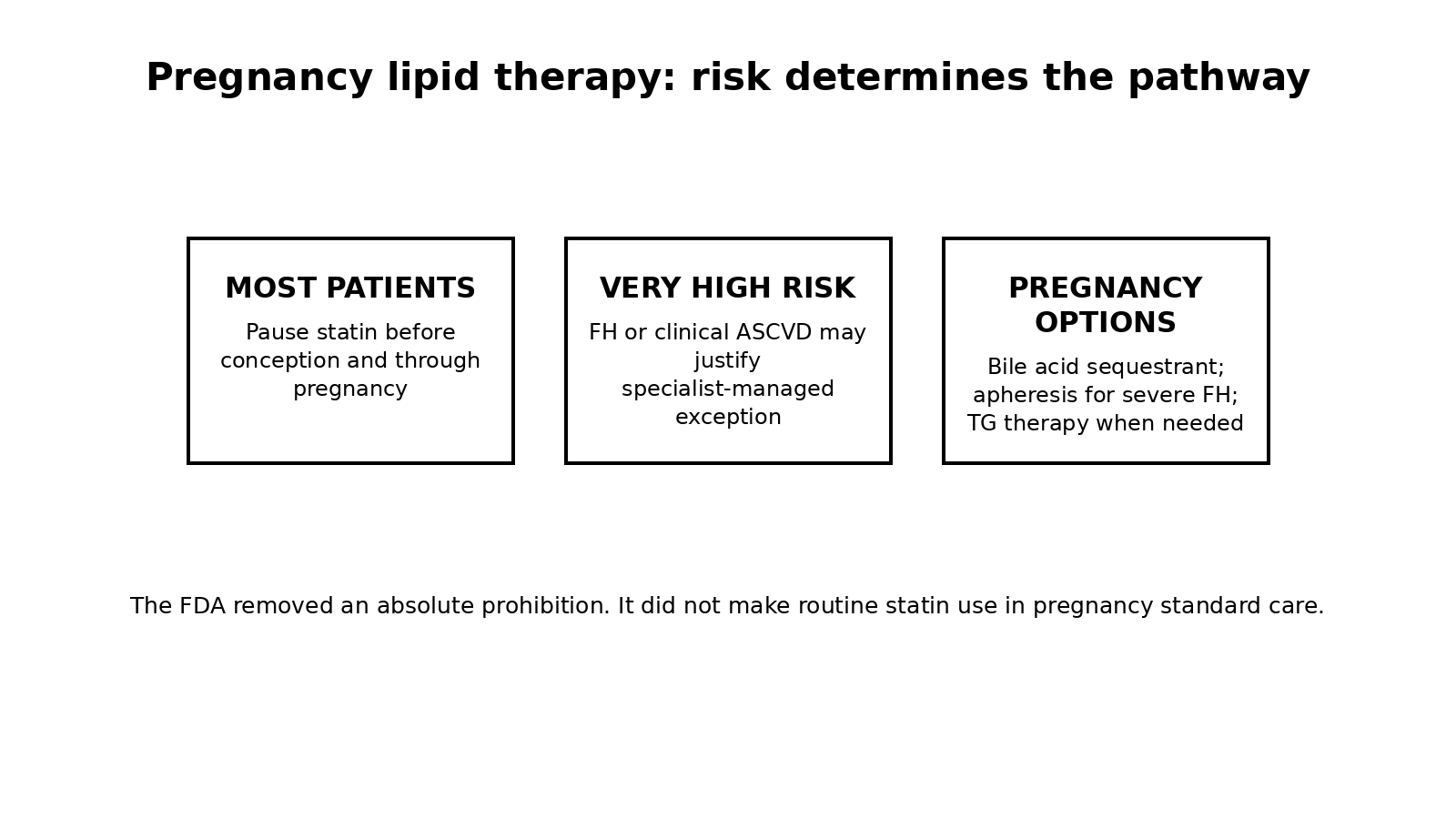
Figure 1. Pregnancy lipid management is risk-stratified: most treatment pauses temporarily, but severe inherited disease or established ASCVD can justify specialist-managed exceptions.
1. What changed with statins
In July 2021, the FDA removed the blanket pregnancy contraindication from statin labeling. The reason was not proof that routine statin use benefits pregnancy. It was recognition that a universal prohibition was inappropriate for rare patients at very high cardiovascular risk, such as homozygous FH or established ASCVD.
For most pregnancies, the practical recommendation remains to stop the statin. The 2026 guideline makes that distinction explicit and adds a structured pathway for exceptional high-risk cases rather than pretending all pregnant patients have the same risk.
2. Planning conception and accidental exposure
For most patients who are not at high ASCVD risk, the 2026 women’s clinician guidance recommends stopping statins one to two months before conception or as soon as pregnancy is recognized. This avoids unnecessary fetal exposure during a period when temporarily pausing chronic prevention has little effect on long-term risk for most people.
Accidental early exposure is not automatically evidence of fetal harm. FDA review found observational data reassuring enough to remove the absolute contraindication. The right response is to contact the obstetric and prescribing clinicians, not panic or independently stop every medication without a plan.
3. The high-risk exceptions
Pregnancy can be different for someone with clinical ASCVD, homozygous FH or severe heterozygous FH with extreme LDL burden. In such patients, the maternal risk of stopping therapy may be clinically meaningful.
The 2026 guideline states that continued statin therapy may be reasonable in pregnant patients with FH or clinical ASCVD after individualized discussion of benefits and risks, with a hydrophilic statin such as pravastatin preferred when treatment is chosen. These decisions belong in a specialist team, not a generic online protocol.
4. What can be used during pregnancy
Bile acid sequestrants are reasonable for LDL-C lowering because they are not absorbed systemically, but they can raise triglycerides and should be avoided when TG are at least 300 mg/dL. They may also interfere with absorption of medications and fat-soluble vitamins.
When severe hypertriglyceridemia reaches at least 500 mg/dL, pancreatitis prevention becomes a separate problem. After the first trimester, fibrates or high-dose omega-3 ethyl esters may be considered. For homozygous FH, lipoprotein apheresis is a non-drug option during pregnancy or lactation.
5. Breastfeeding is not just "pregnancy continued"
Most lipid-lowering therapies should be avoided while lactating, including statins, ezetimibe, PCSK9 inhibitors and fibrates. Bile acid sequestrants remain a potential option because of minimal systemic absorption.
For a patient who truly requires a statin immediately after delivery because cardiovascular risk is very high, the FDA recommends not breastfeeding and using an alternative feeding strategy. This is a values-sensitive discussion where maternal cardiovascular safety and infant-feeding goals both matter.
| Situation | 2026 guidance |
|---|---|
| Most people planning pregnancy | Stop statin 1–2 months before conception |
| Pregnancy recognized while on statin | Most should stop; accidental exposure is not automatic evidence of harm |
| FH or clinical ASCVD with very high maternal risk | Continuation may be reasonable after individualized specialist discussion |
| Bile acid sequestrant | Reasonable for LDL lowering; avoid if TG ≥300 mg/dL |
| TG ≥500 mg/dL | Consider pancreatitis-focused therapy; fibrate after first trimester or high-dose omega-3 ethyl esters |
| Lactation | Avoid most LLTs; bile acid sequestrants may be an option |
If pregnancy is possible in the near future, make a medication plan before conception. List every lipid-lowering drug, your actual cardiovascular diagnosis, latest LDL-C and triglycerides, and whether FH is suspected or confirmed. The answer for uncomplicated primary prevention is very different from the answer for prior MI or homozygous FH.
6. FAQ
Are statins banned in pregnancy?
No. The FDA removed the blanket contraindication in 2021. Most pregnant patients should still stop statins, but very high-risk patients may be considered for continued therapy after individualized specialist discussion.
I took a statin before I knew I was pregnant. Did I harm the baby?
Unintended early exposure is not considered automatic evidence of fetal harm. Contact your obstetric and prescribing clinicians promptly so they can review the specific drug, timing and your cardiovascular risk.
Can I take ezetimibe or a PCSK9 inhibitor while breastfeeding?
The 2026 guidance says most lipid-lowering therapies, including ezetimibe and PCSK9 inhibitors, should be avoided while lactating because safety data are insufficient.
What if I have homozygous familial hypercholesterolemia?
This is a high-risk specialist scenario. Lipoprotein apheresis is considered reasonable during pregnancy or lactation, and medication decisions may differ substantially from routine primary prevention.
References
1. Blumenthal RS, Morris PB, Gaudino M, et al. 2026 ACC/AHA Multisociety Guideline on the Management of Dyslipidemia. Circulation. 2026;153:e1154-e1276.
2. American Heart Association. Top Take-Home Messages for Women’s Health Clinicians: 2026 Guideline on the Management of Dyslipidemia. 2026.
3. U.S. Food and Drug Administration. FDA requests removal of strongest warning against using cholesterol-lowering statins during pregnancy; still advises most pregnant patients should stop taking statins. July 20, 2021.
4. Bateman BT, Hernandez-Diaz S, Fischer MA, et al. Statins and congenital malformations: cohort study. BMJ. 2015;350:h1035.