Executive Summary
Hypertension accelerates atherosclerosis through repeated mechanical stress, endothelial dysfunction, oxidative signaling, arterial stiffening and interaction with lipid and inflammatory pathways.
The 2025 AHA/ACC multisociety high-blood-pressure guideline defines normal BP as <120/80, elevated BP as systolic 120-129 with diastolic <80, stage 1 hypertension as 130-139 or 80-89, and stage 2 as ≥140 or ≥90 mm Hg.
The guideline's overarching treatment goal is <130/80 mm Hg for adults, with special considerations in pregnancy, limited life expectancy and institutional care.
For stage 1 hypertension, medication is recommended when clinical CVD, stroke, diabetes, CKD or PREVENT 10-year CVD risk ≥7.5% is present. Lower-risk adults should receive lifestyle therapy first, with medication if BP remains ≥130/80 after 3-6 months.
SPRINT showed that, in high-risk adults without diabetes or prior stroke, targeting systolic BP <120 rather than <140 reduced major cardiovascular events and all-cause mortality, at the cost of more hypotension, syncope, electrolyte abnormalities and acute kidney injury.
Lower BP does not need to 'shrink plaque' on CCTA to be successful. The strongest evidence is fewer clinical events. Serial plaque imaging is not required to prove benefit.
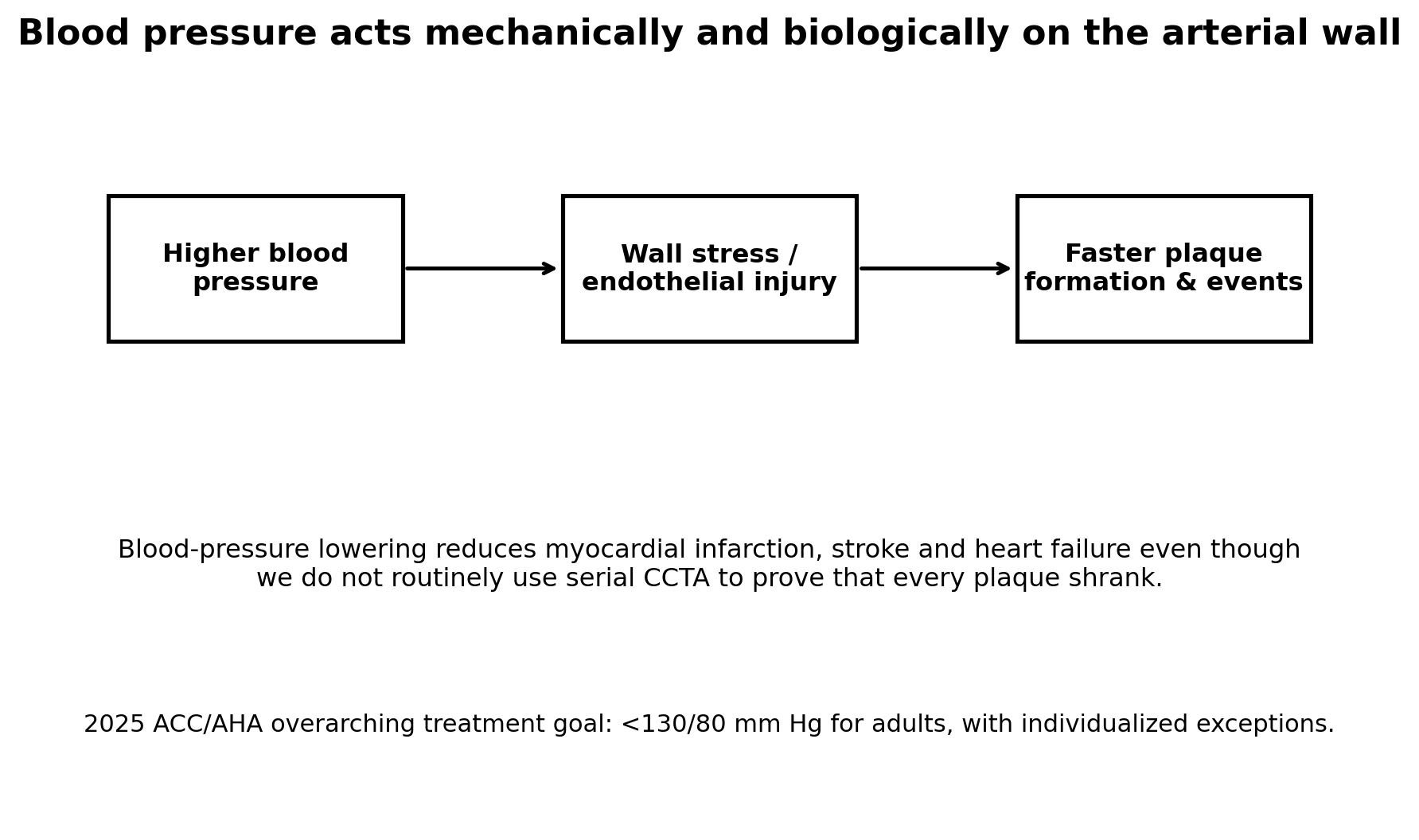
Figure 1. Blood pressure acts on the arterial wall mechanically and biologically; event reduction is the clinically validated endpoint.
1. Why pressure accelerates plaque biology
Every heartbeat transmits force to the arterial wall. Higher systolic pressure increases cyclic stress, promotes endothelial dysfunction and can enhance penetration and retention of apoB-containing particles.
Hypertension also promotes arterial stiffness, microvascular damage and left-ventricular hypertrophy, so its cardiovascular effects extend beyond plaque.
2. The 2025 ACC/AHA categories
Normal is <120/<80 mm Hg; elevated BP is systolic 120-129 with diastolic <80; stage 1 is 130-139 or 80-89; stage 2 is ≥140 or ≥90.
The numbers should be based on standardized measurements rather than a single rushed office reading.
3. Home blood pressure matters
The 2025 guideline emphasizes home BP monitoring combined with standardized treatment protocols. Validated upper-arm cuffs remain preferred; cuffless smartwatches are not considered sufficiently reliable for treatment decisions.
Several readings across multiple days are more informative than one isolated value.
4. How intensive should treatment be?
The universal treatment goal is <130/80. SPRINT provides evidence that selected high-risk adults can benefit from an even lower systolic target when measurement is standardized and adverse effects are monitored.
SPRINT's <120 target should not be copied blindly from casual home or clinic readings because measurement technique matters.
5. Blood pressure and CAC/CCTA
Hypertension is associated with greater coronary plaque and calcification in observational imaging studies. However, contemporary prevention does not use serial CAC or CCTA as a routine antihypertensive treatment endpoint.
The appropriate success metrics are validated BP control, tolerability, kidney/electrolyte safety and reduced global cardiovascular risk.
| Average BP | 2025 category | Typical management principle |
|---|---|---|
| <120/<80 | Normal | Maintain healthy lifestyle. |
| 120-129/<80 | Elevated | Lifestyle prevention; monitor. |
| 130-139 or 80-89 | Stage 1 | Lifestyle + medication when CVD/CKD/diabetes/stroke or PREVENT risk ≥7.5%; otherwise reassess after lifestyle trial. |
| ≥140 or ≥90 | Stage 2 | Medication plus lifestyle; two first-line drugs in a single-pill combination are often preferred. |
6. FAQ
Is 120/80 too low?
No; \<120/\<80 is defined as normal. Treatment targets depend on baseline risk and tolerability.
Can BP lower plaque?
It clearly lowers cardiovascular events. Direct plaque regression is not the clinical endpoint used to justify treatment.
What matters more, systolic or diastolic?
Both matter, but systolic pressure becomes particularly predictive with age. Very low diastolic pressure can require individualized review in some patients.
Should I trust a smartwatch BP reading?
Not for medication decisions unless the device has demonstrated clinical accuracy. The 2025 guideline advises against relying on cuffless devices for now.
References
1. 2025 AHA/ACC/AANP/AAPA/ABC/ACCP/ACPM/AGS/AMA/ASPC/NMA/PCNA/SGIM Guideline for the Prevention, Detection, Evaluation, and Management of High Blood Pressure in Adults. Circulation. 2025;152:e114-e218.
2. SPRINT Research Group. A Randomized Trial of Intensive versus Standard Blood-Pressure Control. N Engl J Med. 2015;373:2103-2116.
3. SPRINT Research Group. Final Report of a Trial of Intensive versus Standard Blood-Pressure Control. N Engl J Med. 2021;384:1921-1930.
4. American College of Cardiology. High Blood Pressure Focus of New ACC/AHA Guideline. 2025.
5. Pontone G, et al. Progression of non-obstructive coronary plaque: PARADIGM registry. Eur Radiol. 2024.