Executive Summary
Aspirin irreversibly inhibits platelet cyclooxygenase-1 and reduces thromboxane A2–mediated platelet activation. That is why it helps prevent recurrent arterial thrombosis after myocardial infarction, ischemic stroke and many other forms of established atherosclerotic cardiovascular disease.
The primary-prevention question is different. Modern trials such as ASPREE, ARRIVE and ASCEND showed that first-event prevention benefits are modest and often offset by gastrointestinal or intracranial bleeding. Major guidelines therefore moved away from routine aspirin use in otherwise healthy adults.
Coronary artery calcium can refine the trade-off because a high CAC score identifies people with substantially greater absolute ASCVD risk. MESA modeling suggested that CAC ≥100—and especially CAC ≥400—can identify selected primary-prevention patients in whom the expected cardiovascular benefit of aspirin may exceed bleeding harm. CAC 0 generally points the other way.
Elevated Lp(a) adds another hypothesis. Apo(a) resembles plasminogen and Lp(a) may contribute to thrombosis and impaired fibrinolysis. In a randomized ASPREE genetic subgroup analysis, carriers of Lp(a)-raising genotypes appeared to gain more benefit from aspirin than the overall trial population.
In 2024, a propensity-matched MESA analysis using measured Lp(a) found aspirin use was associated with lower coronary heart disease risk among participants with Lp(a) >50 mg/dL (HR 0.54). Because aspirin use was not randomized in that analysis, residual confounding remains possible.
No trial has yet randomized primary-prevention patients specifically because their measured Lp(a) is high. Therefore, high Lp(a) is a reason for a careful aspirin discussion—not a stand-alone prescription.
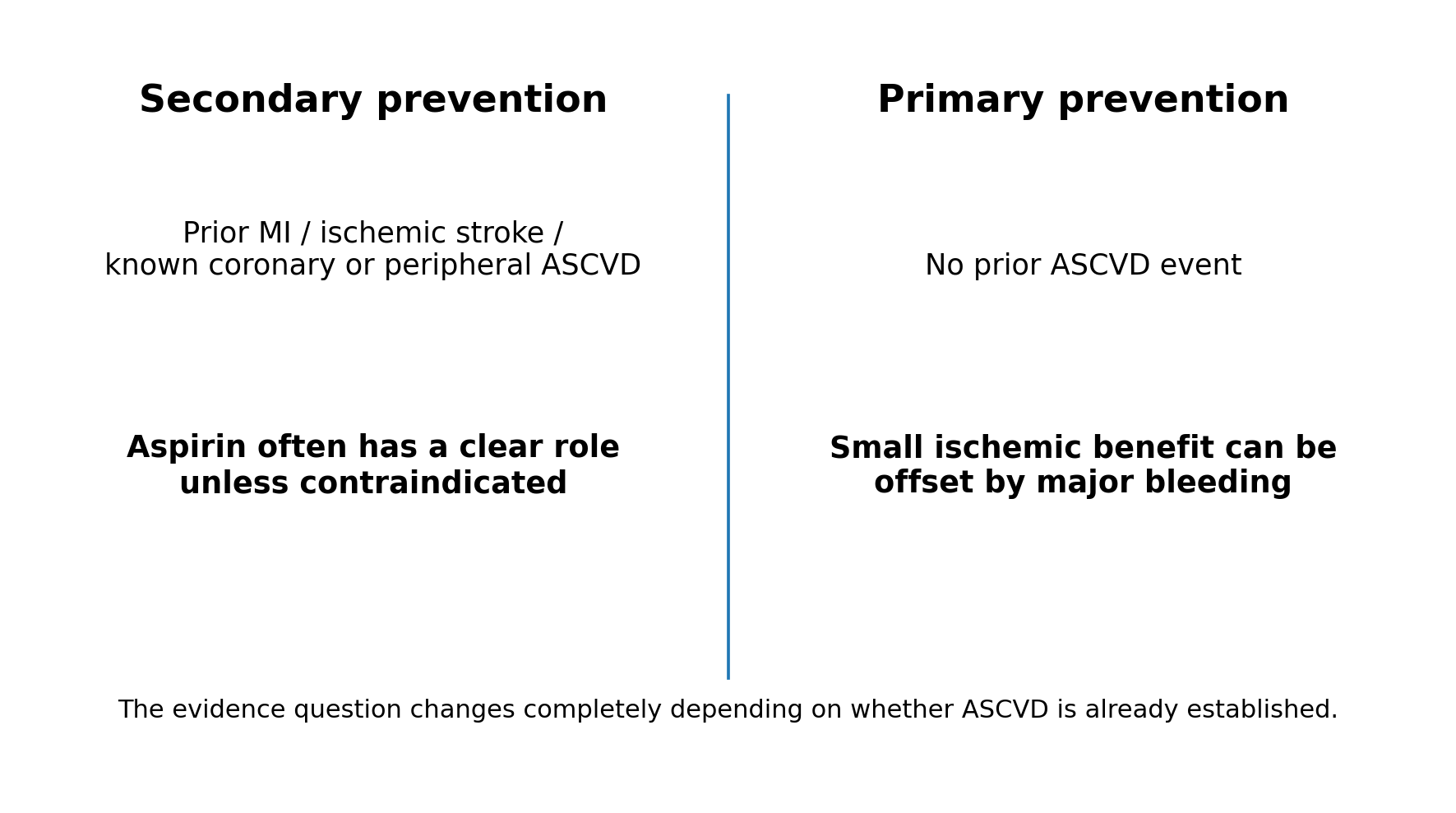
Figure 1. Aspirin has a very different evidence base in secondary versus primary prevention.
1. Why Aspirin Works --- and Why It Can Harm
Aspirin acetylates platelet cyclooxygenase-1 for the lifetime of the platelet, reducing thromboxane A2 production and platelet aggregation. This can prevent a platelet-rich thrombus from forming on a disrupted atherosclerotic plaque.
The same antiplatelet effect increases bleeding. Gastrointestinal bleeding is the most common major concern; intracranial bleeding is less frequent but potentially devastating. The clinical decision is therefore not “Does aspirin reduce clotting?” It is “Is this patient’s reduction in ischemic events likely to exceed the extra bleeding risk?”
2. Secondary Prevention: Usually a Much Clearer Decision
For patients with prior myocardial infarction, ischemic stroke, symptomatic peripheral artery disease or other established ASCVD, antiplatelet therapy is often standard unless bleeding risk or another contraindication changes the plan.
This article focuses mainly on primary prevention because that is where CAC and Lp(a) create the most debate. A person with documented ASCVD should not use a CAC score or Lp(a) value to self-start, stop or substitute antiplatelet therapy.
3. Why Routine Aspirin for Primary Prevention Fell Out of Favor
| Trial | Population | Main lesson |
|---|---|---|
| ASPREE | Healthy adults ≥70 years | No cardiovascular benefit sufficient to offset increased major bleeding |
| ARRIVE | Moderate estimated risk | Very low event rate; no meaningful primary endpoint benefit; more GI bleeding |
| ASCEND | Diabetes without known ASCVD | Fewer serious vascular events, but benefit largely counterbalanced by major bleeding |
These trials were conducted in an era of better blood-pressure control, statins and smoking reduction. As baseline event rates fell, the absolute number of events aspirin could prevent became smaller, while bleeding risk remained.
The 2019 ACC/AHA primary-prevention guideline therefore characterized aspirin as something that might be considered only in selected adults aged 40-70 at higher ASCVD risk who are not at increased bleeding risk, and advised against routine use in adults over 70 or in anyone with increased bleeding risk. The USPSTF 2022 recommendation similarly advised against initiating aspirin for primary prevention at age 60 or older and called for individualized decisions at age 40-59 when 10-year CVD risk is sufficiently high.
4. CAC: Using Actual Plaque Burden to Refine the Decision
Risk calculators estimate probability; CAC directly demonstrates calcified coronary atherosclerosis. That distinction matters for aspirin because absolute ischemic risk is central to net benefit.
In MESA analyses, CAC ≥100 identified subgroups in which modeled numbers-needed-to-treat for cardiovascular event prevention became more favorable than numbers-needed-to-harm for bleeding, while CAC 0 generally identified net harm. Later analyses incorporating contemporary meta-analysis estimates reached a similar conclusion: CAC can help identify aspirin candidates, but only when bleeding risk is low.
These are observational modeling studies, not randomized CAC-guided aspirin trials. They are useful for shared decision-making, not for an automatic CAC algorithm.
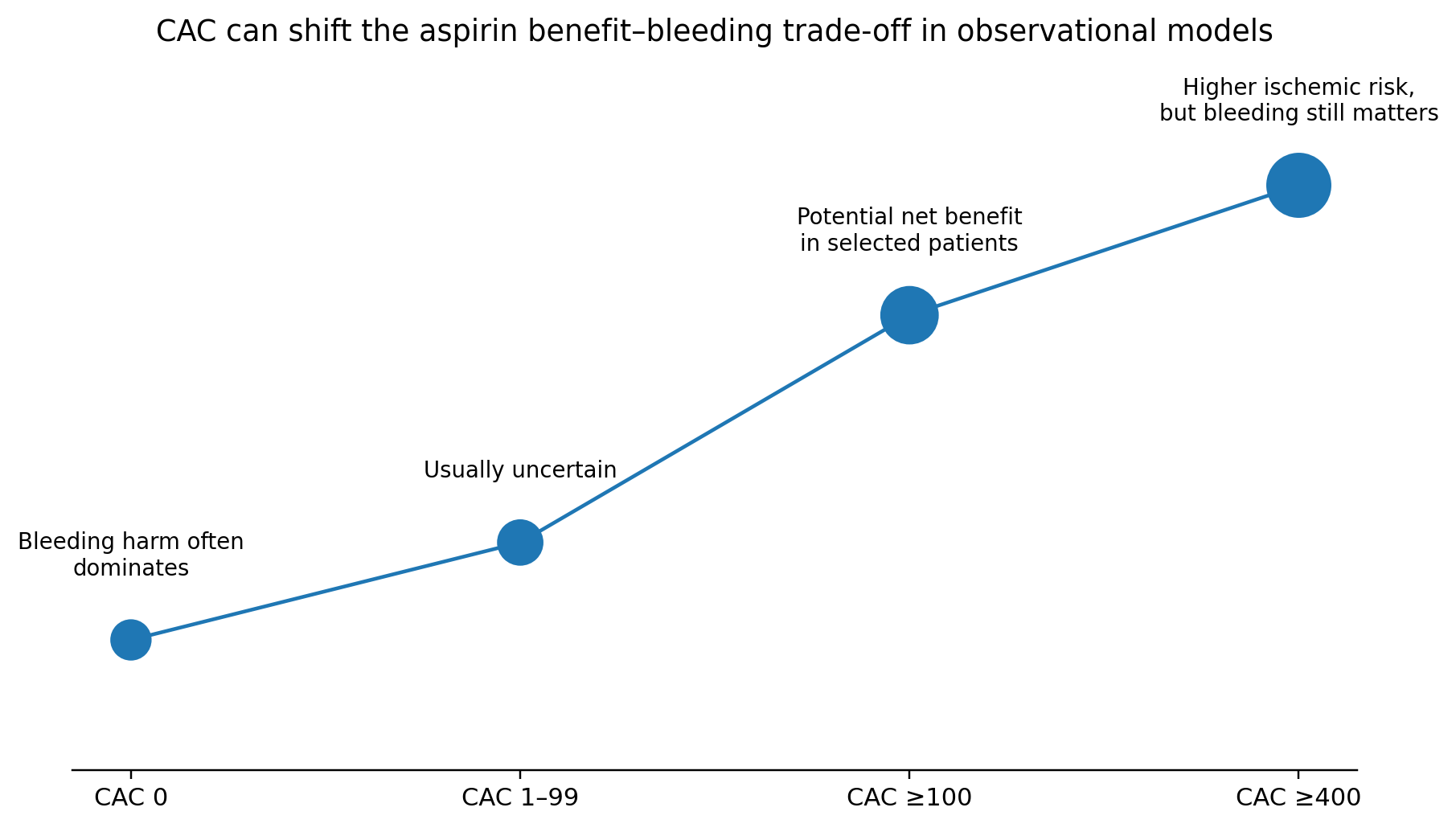
Figure 2. Higher CAC raises absolute ischemic risk and may improve aspirin’s modeled net benefit, but bleeding risk remains decisive.
5. What About CAC 100, 200, 400 or 1000?
| CAC | Aspirin interpretation in primary prevention |
|---|---|
| 0 | Usually argues against aspirin solely for ASCVD prevention because event risk is low while bleeding risk persists. |
| 1–99 | Usually insufficient by itself to create a clear net benefit; consider the entire clinical picture. |
| ≥100 | A threshold associated with potentially favorable net benefit in selected low-bleeding-risk patients in MESA models. |
| ≥400 | Very high plaque burden strengthens the ischemic-risk side of the equation; still not a prescription if bleeding risk is high. |
| ≥1000 | Extreme ASCVD burden; clinician-led prevention should be comprehensive, but aspirin still depends on primary vs secondary prevention and bleeding risk. |
6. Why Elevated Lp(a) Makes Aspirin Biologically Interesting
Lp(a) is a causal atherogenic lipoprotein, but its biology may extend beyond plaque formation. Apolipoprotein(a) shares structural homology with plasminogen, creating a longstanding hypothesis that elevated Lp(a) can impair fibrinolysis and promote a prothrombotic environment.
This does not mean every person with high Lp(a) is “hypercoagulable” in a way that demands aspirin. It means the biology provides a rationale for testing whether antiplatelet therapy might have a larger effect in this subgroup.
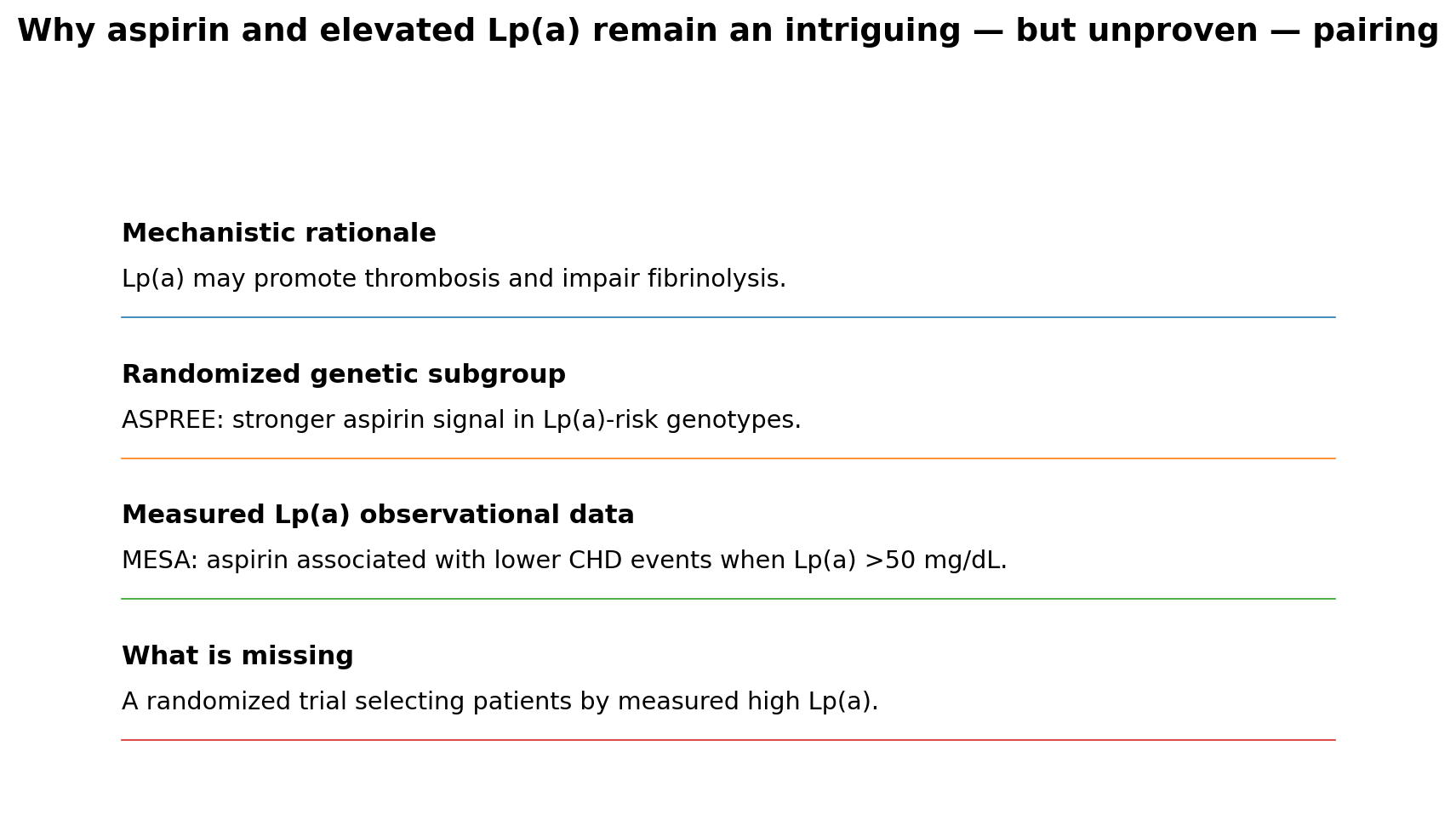
Figure 3. The evidence for aspirin in elevated Lp(a) is suggestive but stops short of a randomized trial selected by measured Lp(a).
7. ASPREE Genetic Subgroup: A Randomized Clue
Lacaze and colleagues analyzed 12,815 genotyped ASPREE participants aged 70 or older who had no prior cardiovascular disease. In the overall ASPREE population, aspirin reduced major adverse cardiovascular events by 1.7 per 1,000 person-years but increased clinically significant bleeding by the same 1.7 per 1,000 person-years—essentially no net benefit.
Among carriers of the rs3798220-C LPA variant, however, aspirin was associated with an estimated reduction of 11.4 major cardiovascular events per 1,000 person-years without a statistically significant increase in bleeding in that subgroup. A high LPA genetic risk score also showed a more favorable pattern.
This is stronger than a purely observational association because aspirin allocation was randomized in ASPREE. But the subgroup analysis was genetic, involved older adults of European ancestry, and was not the original primary endpoint of the trial. It should be viewed as an important signal, not definitive clinical guidance.
8. MESA 2024: The First Important Study Using Measured Lp(a)
The 2024 MESA study addressed a clinically more practical question: does aspirin use appear beneficial in people whose measured Lp(a) is high?
After propensity matching, 2,183 participants without baseline cardiovascular disease were analyzed; 423 had Lp(a) >50 mg/dL. In the elevated-Lp(a) group, aspirin use was associated with a significantly lower rate of coronary heart disease events (HR 0.54; 95% CI 0.32-0.94).
The result is provocative because it aligns with the ASPREE genotype finding. But MESA was not an aspirin-randomized trial. People who took aspirin could differ from those who did not despite propensity matching. The authors explicitly called for randomized confirmation.
“Aspirin was associated with lower CHD risk in high Lp(a)” is supported. “Aspirin cuts heart attacks by 46% in anyone with high Lp(a)” is not.
9. Who Has Increased Bleeding Risk?
Prior gastrointestinal bleeding or peptic ulcer disease.
Older age, especially above 70-75 years.
Concurrent anticoagulants, dual antiplatelet therapy or frequent NSAID use.
Thrombocytopenia, coagulopathy or significant liver disease.
Chronic kidney disease, uncontrolled hypertension or other conditions that raise bleeding risk.
Heavy alcohol use or recurrent falls in selected patients.
Bleeding risk can dominate the decision even when CAC or Lp(a) is high. A high ischemic-risk marker does not make hemorrhage harmless.
11. Frequently Asked Questions
I have high Lp(a). Should I take baby aspirin?
Not automatically. High Lp(a) creates an intriguing evidence signal, but a randomized trial based on measured Lp(a) is still missing. Discuss absolute ASCVD risk and bleeding risk with a clinician.
What dose is usually meant by "low-dose aspirin"?
Common preventive doses are 75-100 mg/day; 81 mg/day is common in the United States. Do not infer that more is better.
Does CAC 200 mean I should take aspirin?
CAC 200 places you above the CAC ≥100 threshold used in observational net-benefit models, but bleeding risk and the rest of your clinical profile still determine the decision.
Does CAC 0 mean aspirin is useless?
For primary prevention, CAC 0 usually predicts a low event rate and therefore makes net benefit unlikely unless another unusual indication exists.
Can aspirin lower Lp(a)?
No. The hypothesis is that it may reduce thrombotic events associated with Lp(a), not lower the concentration.
Can I use nattokinase instead of aspirin?
There is no equivalent cardiovascular outcomes evidence supporting nattokinase as a substitute for guideline antiplatelet therapy.
Should I stop aspirin before surgery?
Perioperative aspirin management depends on why you take it and the procedure. Ask the prescribing clinician and surgeon; do not stop it automatically.
Is enteric-coated aspirin safer?
It may reduce local gastric irritation but does not eliminate systemic gastrointestinal bleeding risk.
12. Editorial Verdict
For primary prevention, aspirin belongs in a narrow shared-decision space. High CAC can make the ischemic side of the equation more compelling. High Lp(a) adds biologic rationale plus intriguing genetic and observational data. But neither cancels bleeding risk, and neither has yet produced a definitive randomized “treat this subgroup with aspirin” rule.
References
1. Arnett DK, Blumenthal RS, Albert MA, et al. 2019 ACC/AHA Guideline on the Primary Prevention of Cardiovascular Disease. Circulation. 2019;140:e596-e646.
2. US Preventive Services Task Force. Aspirin Use to Prevent Cardiovascular Disease: Preventive Medication. JAMA. 2022;327:1577-1584.
3. McNeil JJ, Wolfe R, Woods RL, et al. Effect of Aspirin on Cardiovascular Events and Bleeding in the Healthy Elderly. N Engl J Med. 2018;379:1509-1518.
4. Gaziano JM, Brotons C, Coppolecchia R, et al. Use of aspirin to reduce risk of initial vascular events in patients at moderate risk of cardiovascular disease (ARRIVE). Lancet. 2018;392:1036-1046.
5. ASCEND Study Collaborative Group. Effects of Aspirin for Primary Prevention in Persons with Diabetes Mellitus. N Engl J Med. 2018;379:1529-1539.
6. Cainzos-Achirica M, Miedema MD, McEvoy JW, et al. Coronary Artery Calcium for Personalized Allocation of Aspirin in Primary Prevention of Cardiovascular Disease in 2019: The MESA Study. Circulation. 2020;141:1541-1553.
7. Miedema MD, Duprez DA, Misialek JR, et al. Use of coronary artery calcium testing to guide aspirin utilization for primary prevention: estimates from MESA. Circ Cardiovasc Qual Outcomes. 2014;7:453-460.
8. Lacaze P, Bakshi A, Riaz M, et al. Aspirin for Primary Prevention of Cardiovascular Events in Relation to Lipoprotein(a) Genotypes. J Am Coll Cardiol. 2022;80:1287-1298. doi:10.1016/j.jacc.2022.07.027.
9. Bhatia HS, Trainor P, Carlisle S, et al. Aspirin and Cardiovascular Risk in Individuals With Elevated Lipoprotein(a): The Multi-Ethnic Study of Atherosclerosis. J Am Heart Assoc. 2024;13:e033562. doi:10.1161/JAHA.123.033562.
10. Devesa A, Ibanez B, Fuster V. Lp(a): Are Antithrombotic Therapies the Key to Event Reduction? J Am Coll Cardiol. 2022;80:1299-1301.
11. Tsimikas S. A Test in Context: Lipoprotein(a): Diagnosis, Prognosis, Controversies, and Emerging Therapies. J Am Coll Cardiol. 2017;69:692-711.
12. Kronenberg F, Mora S, Stroes ESG, et al. Lipoprotein(a) in atherosclerotic cardiovascular disease and aortic stenosis: EAS consensus statement. Eur Heart J. 2022;43:3925-3946.
13. Blumenthal RS, Morris PB, Gaudino M, et al. 2026 ACC/AHA Multisociety Guideline on the Management of Dyslipidemia. Circulation. 2026.
14. Antithrombotic Trialists Collaboration. Aspirin in the primary and secondary prevention of vascular disease: collaborative meta-analysis. Lancet. 2009;373:1849-1860.
15. Zheng SL, Roddick AJ. Association of Aspirin Use for Primary Prevention With Cardiovascular Events and Bleeding Events. JAMA. 2019;321:277-287.
16. Patrono C, Baigent C. Role of aspirin in primary prevention of cardiovascular disease. Nat Rev Cardiol. Review.
17. Budoff MJ, Young R, Burke G, et al. Ten-year association of coronary artery calcium with ASCVD events: MESA. Eur Heart J. 2018;39:2401-2408.
18. Greenland P, Blaha MJ, Budoff MJ, Erbel R, Watson KE. Coronary Calcium Score and Cardiovascular Risk. J Am Coll Cardiol. 2018;72:434-447.
ElevatedCholesterol.com Editorial Team • Evidence-based cardiovascular prevention