Executive Summary
ApoC-III slows triglyceride-rich lipoprotein clearance and promotes hypertriglyceridemia. Suppressing APOC3 can therefore produce very large triglyceride reductions, especially in chylomicronemia.
Olezarsen (TRYNGOLZA) is an APOC3-directed antisense oligonucleotide injected monthly. It was first FDA-approved in December 2024 for adults with familial chylomicronemia syndrome (FCS).
On June 24, 2026, the FDA expanded TRYNGOLZA to adults with severe hypertriglyceridemia (fasting TG ≥500 mg/dL), to reduce triglycerides and the risk of acute pancreatitis. In the two pivotal sHTG trials, mean baseline TG was 1,116 mg/dL; triglyceride reductions at six months were roughly 49-72% depending on dose and trial.
Plozasiran (REDEMPLO) is an APOC3-directed siRNA administered every three months. The FDA approved it on November 18, 2025 for adults with FCS.
PALISADE showed median TG reductions of about 78-80% in persistent chylomicronemia and a lower incidence of acute pancreatitis versus placebo.
In July 2026, topline SHASTA-3/4 results in broader sHTG reported median TG reductions around 79-81% and fewer pancreatitis events, but Arrowhead stated it planned an sNDA before the end of 2026. Therefore sHTG is not yet an FDA-approved REDEMPLO indication as of this article’s evidence cutoff.
The unanswered ASCVD question is different from the pancreatitis question. Powerful TG lowering does not automatically prove fewer MI/strokes; dedicated cardiovascular-outcomes evidence in common hypertriglyceridemia is still needed.
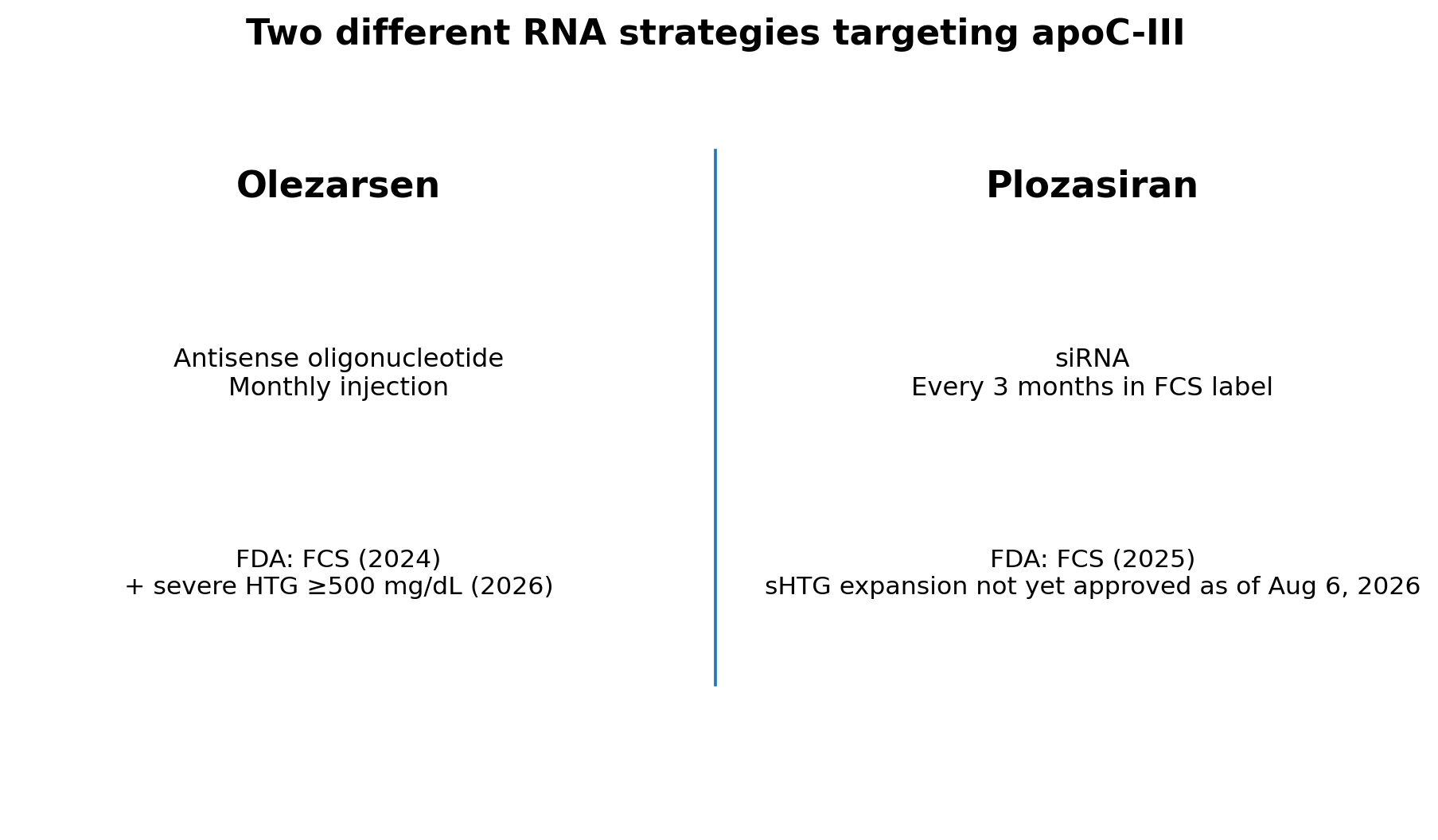
Figure 1. Olezarsen and plozasiran both suppress apoC-III, but use different RNA technologies and currently have different U.S. indications.
1. Why apoC-III is such a powerful target
ApoC-III interferes with lipoprotein-lipase-mediated and hepatic clearance of triglyceride-rich particles. In FCS, where triglyceride disposal is profoundly impaired, reducing apoC-III can produce dramatic biochemical effects.
The same pathway is relevant in multifactorial severe hypertriglyceridemia, where pancreatitis risk becomes clinically dominant.
2. Olezarsen: from FCS to common severe HTG
BALANCE established triglyceride and pancreatitis benefits in FCS. The 2026 sHTG approval is more consequential for population health because TG ≥500 mg/dL is much more common than monogenic FCS.
The FDA specifically noted that earlier triglyceride drugs had not accumulated enough pancreatitis events in trials to prove pancreatitis-risk reduction.
3. Plozasiran: quarterly RNAi
PALISADE supported the FCS approval with very large TG and apoC-III reductions and fewer pancreatitis events.
SHASTA-3 and SHASTA-4 may support expansion into sHTG, but topline data presented before regulatory approval must not be described as an approved indication.
4. ASCVD prevention remains a separate question
PROMINENT showed why this distinction matters: lowering triglyceride/remnant-related biomarkers did not reduce cardiovascular events when ApoB did not fall.
For apoC-III drugs, the crucial future question is whether reductions in ApoB-containing remnants translate into fewer atherosclerotic events in broader high-risk populations.
| Drug | Technology | U.S. status Aug 6, 2026 | Dosing |
|---|---|---|---|
| Olezarsen / TRYNGOLZA | Antisense oligonucleotide | Approved: FCS; approved: sHTG ≥500 mg/dL incl. pancreatitis-risk reduction | Monthly SC |
| Plozasiran / REDEMPLO | siRNA | Approved: FCS; sHTG expansion planned, not yet approved | Every 3 months SC in FCS label |
5. FAQ
Are these drugs for triglycerides of 200 mg/dL?
Not as routine approved therapy. Current U.S. indications focus on FCS and, for olezarsen, severe HTG ≥500 mg/dL.
Do they replace a very-low-fat diet in FCS?
No. They are adjuncts to diet; FCS still requires specialized nutrition.
Do they reduce pancreatitis?
Olezarsen now has an FDA sHTG indication that explicitly includes acute-pancreatitis risk reduction. Plozasiran also reduced pancreatitis in PALISADE FCS.
Do they prevent heart attacks?
That is not yet established as a broad class claim.
References
1. U.S. Food and Drug Administration. TRYNGOLZA (olezarsen) Drug Trials Snapshot. Original approval December 19, 2024.
2. U.S. Food and Drug Administration. FDA Approves First Treatment Shown to Reduce the Risk of Acute Pancreatitis in Adults with Severe Hypertriglyceridemia. June 2026.
3. Stroes ESG, et al. Olezarsen, Acute Pancreatitis, and Familial Chylomicronemia Syndrome. N Engl J Med. 2024.
4. U.S. Food and Drug Administration. Drug Trials Snapshot: REDEMPLO (plozasiran). Approval November 18, 2025.
5. Watts GF, et al. Plozasiran for Managing Persistent Chylomicronemia and Pancreatitis Risk. N Engl J Med. 2024.
6. Arrowhead Pharmaceuticals. SHASTA-3 and SHASTA-4 topline results in severe hypertriglyceridemia. July 22, 2026.
7. Das Pradhan A, et al. PROMINENT. N Engl J Med. 2022.