Executive Summary
Heavy alcohol use clearly increases the risk of hypertension, atrial fibrillation, cardiomyopathy, stroke and other cardiovascular outcomes.
The 2025 AHA scientific statement notes randomized evidence of increased atrial fibrillation with heavier intake and long-standing evidence linking chronic heavy use to alcoholic cardiomyopathy.
Observational studies often report a J-shaped relationship in which light-to-moderate drinkers appear healthier than abstainers. This can be distorted by socioeconomic differences, diet, exercise, “sick quitter” bias and underreporting.
The 2026 AHA dietary guidance says: if alcohol is not consumed, do not start; if it is consumed, limit intake.
Red wine is not a cardiovascular medication. Polyphenols such as resveratrol can be obtained from non-alcoholic foods without ethanol exposure.
Alcohol can also worsen triglycerides, sleep quality, blood pressure and arrhythmia risk—important considerations in people already managing atherosclerotic risk.
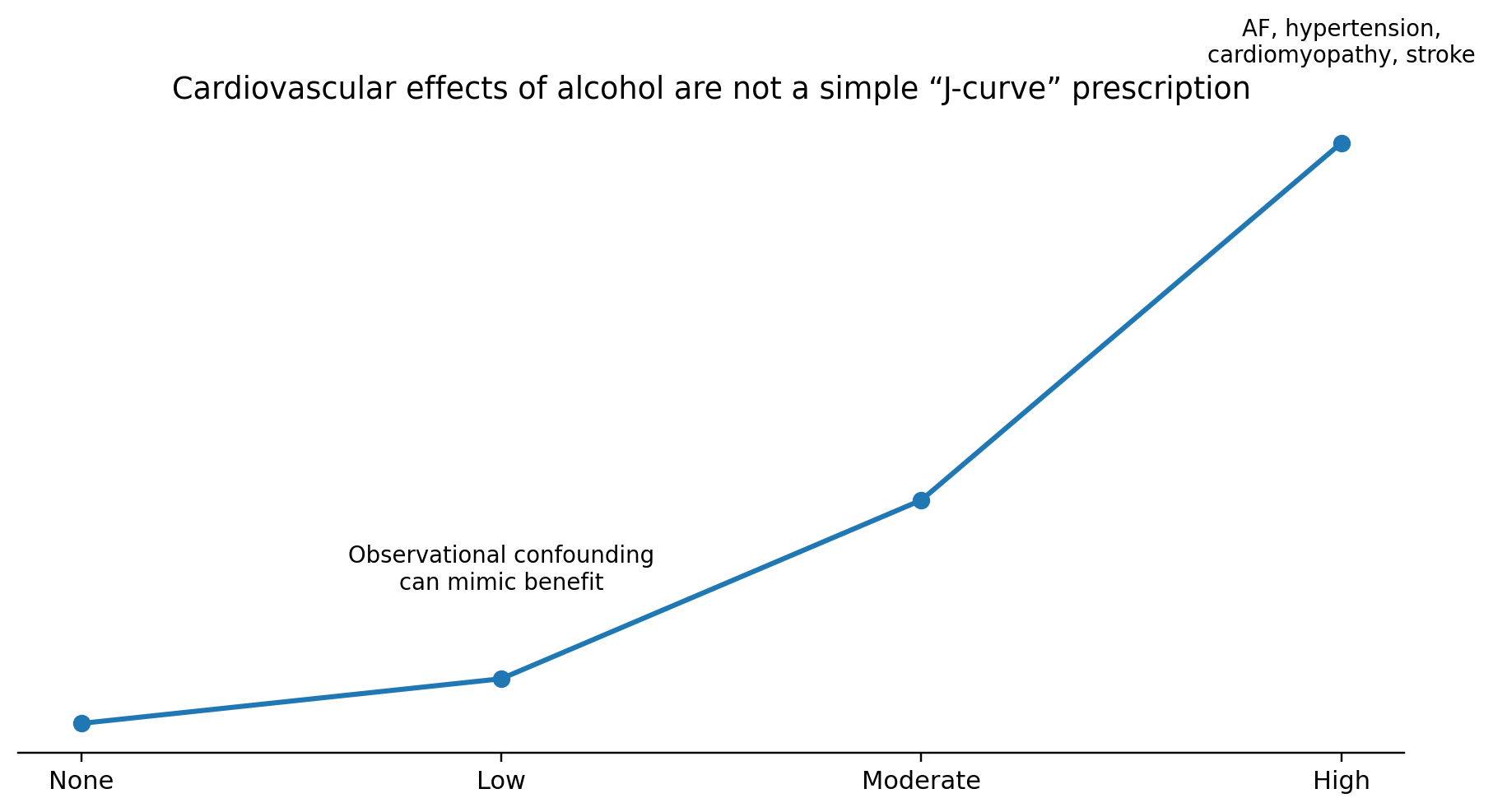
Figure 1. The old “J-curve” should not be interpreted as a prescription to drink. Confounding can make low intake appear protective.
1. Why alcohol can harm the heart
Ethanol increases sympathetic activity and can raise blood pressure. At higher exposures it damages myocardium, promotes atrial electrical instability and increases stroke risk.
Binge drinking can trigger atrial fibrillation even in people without chronic alcohol dependence.
2. What about one drink per day?
The precise cardiovascular effect of low-dose alcohol remains uncertain because long-term randomized trials are lacking.
The AHA does not recommend starting alcohol for heart protection. If someone chooses to drink, keeping intake low is more defensible than treating alcohol as a health intervention.
3. Red wine and HDL
Alcohol can raise HDL-C, but raising HDL-C pharmacologically has not reliably reduced ASCVD events. A higher HDL number does not prove benefit.
Red-wine polyphenols do not justify the ethanol exposure when similar compounds are available in grapes, berries and other plant foods.
4. Alcohol and triglycerides
Alcohol can substantially raise triglycerides in susceptible individuals and is an important secondary cause of hypertriglyceridemia.
People with severe triglyceride elevation or pancreatitis risk may need to avoid it entirely.
5. FAQ
Is one glass of red wine good for the heart?
It is not recommended as cardiovascular therapy. Any apparent observational benefit is uncertain and can be obtained through healthier dietary patterns without alcohol.
What is a standard drink?
In the U.S., roughly 14 g alcohol: about 12 oz beer, 5 oz wine or 1.5 oz 80-proof spirits.
Does alcohol raise blood pressure?
Yes, especially with regular higher intake. Reducing alcohol can lower BP in many people.
Can alcohol trigger atrial fibrillation?
Yes. The relationship is particularly clear at heavier intake and with binge drinking.
References
1. Piano MR, Marcus GM, Aycock DM, et al. Alcohol Use and Cardiovascular Disease: A Scientific Statement From the American Heart Association. Circulation. 2025.
2. Lichtenstein AH, Khera A, Anderson CAM, et al. 2026 Dietary Guidance to Improve Cardiovascular Health. Circulation. 2026.
3. American Heart Association. Alcohol Use and Cardiovascular Disease fact sheet. 2025.