Executive Summary
Urine albumin-to-creatinine ratio (UACR) corrects albumin concentration for urine dilution by indexing it to creatinine. A spot urine sample is usually sufficient.
Albuminuria is not only a kidney marker. It reflects vascular and glomerular injury and independently predicts cardiovascular events, heart failure and mortality.
KDIGO uses A1 <30 mg/g, A2 30-300 mg/g and A3 >300 mg/g. The older term “microalbuminuria” is less precise and is increasingly replaced by “moderately increased albuminuria.”
A single elevated UACR can be transient after strenuous exercise, fever, infection, uncontrolled blood pressure, marked hyperglycemia or menstruation. Confirmation is important before diagnosing chronic albuminuria.
ADA 2026 recommends annual quantitative UACR assessment in diabetes because it guides ACE/ARB therapy, BP goals and selection of cardiorenal drugs.
SGLT2 inhibitors and finerenone can reduce albuminuria and, more importantly, reduce kidney and cardiovascular events in appropriately selected patients.
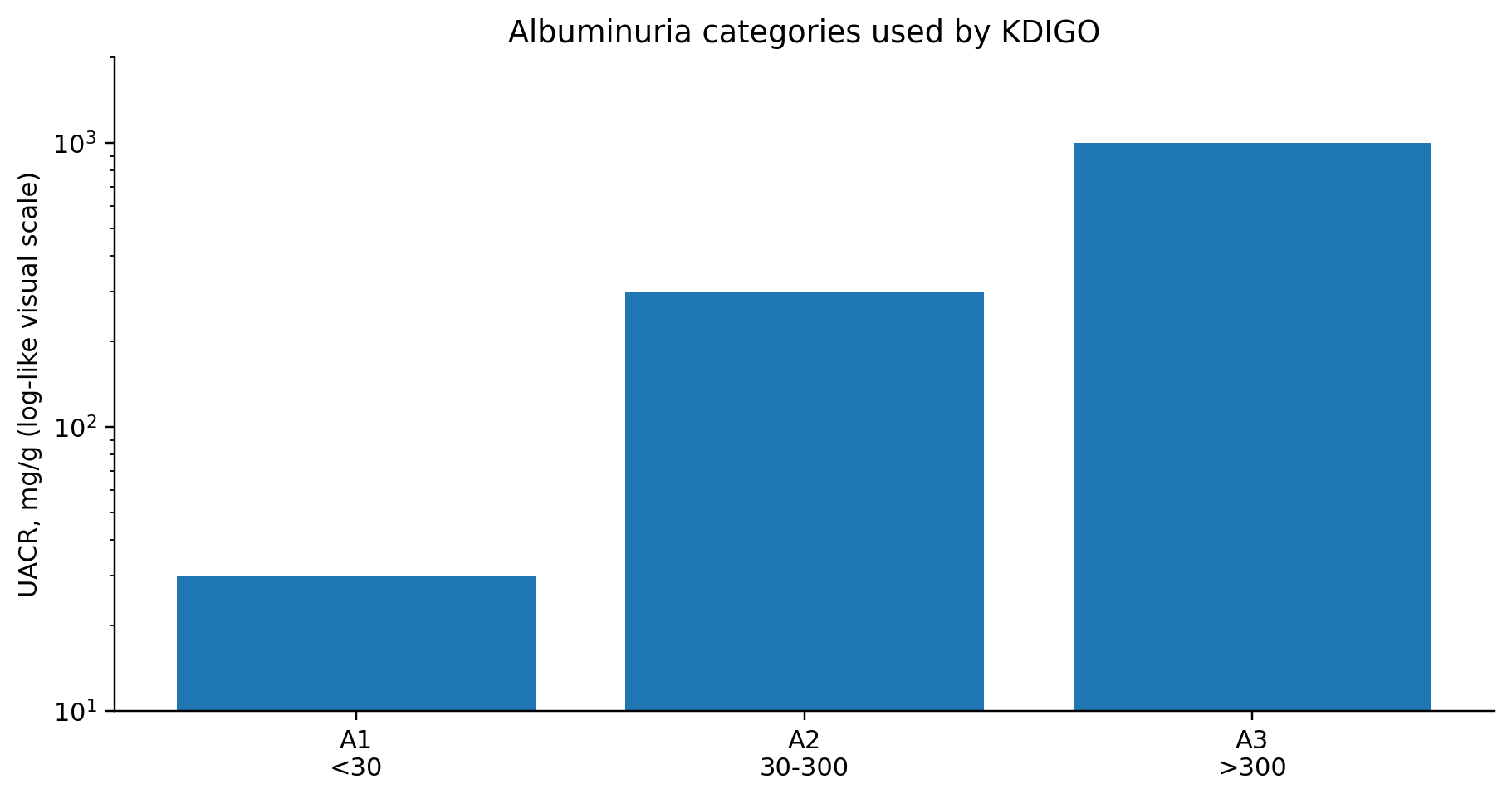
Figure 1. KDIGO albuminuria categories. The bars are shown on a logarithmic visual scale because risk spans a wide range.
1. Why albumin appears in urine
The healthy glomerular filtration barrier keeps most albumin in the bloodstream. Increased albumin excretion signals glomerular and endothelial injury.
Because urinary creatinine helps correct for concentration, UACR is usually more practical than raw urine albumin concentration.
2. How to confirm an abnormal result
An elevated result should generally be repeated when the patient is clinically stable. Recent intense exercise, urinary infection, fever or marked hyperglycemia can create transient elevations.
Persistent elevation over at least three months supports chronic kidney disease when other criteria are met.
3. Why cardiovascular risk rises with UACR
Albuminuria tracks with diffuse endothelial dysfunction and microvascular injury. The relationship with cardiovascular events is continuous, even below classic disease thresholds.
UACR therefore contributes both to kidney staging and to overall CKM risk.
4. Treatment is cause-specific
Blood-pressure control is central. In diabetes or hypertension with albuminuria, ACE inhibitors or ARBs are commonly used when indicated and tolerated.
SGLT2 inhibitors and, in type 2 diabetes with persistent albuminuric CKD despite RAAS blockade, finerenone can reduce clinical events. Therapy should not be judged solely by whether UACR normalizes.
| Category | UACR | KDIGO term | Risk meaning |
|---|---|---|---|
| A1 | <30 mg/g | Normal to mildly increased | Lowest albuminuria category; overall risk still depends on eGFR and comorbidity. |
| A2 | 30-300 mg/g | Moderately increased | Clinically important risk marker; confirm persistence. |
| A3 | >300 mg/g | Severely increased | High kidney and cardiovascular risk; warrants active evaluation. |
5. FAQ
Do I need a 24-hour urine collection?
Usually no. Spot UACR is the standard practical test.
Can exercise raise UACR?
Yes, strenuous exercise can transiently increase urinary albumin.
If eGFR is normal, can UACR still be important?
Absolutely. Albuminuria can identify CKD and cardiovascular risk before filtration falls.
Is lower always better?
Generally yes, but the clinical goal is reduced kidney/CV events, not chasing a single urine number in isolation.
References
1. KDIGO 2024 Clinical Practice Guideline for the Evaluation and Management of Chronic Kidney Disease.
2. American Diabetes Association. Standards of Care in Diabetes—2026. Chronic Kidney Disease and Risk Management.
3. 2026 AHA/ACC/ADA/ASN CKM Syndrome Guideline.